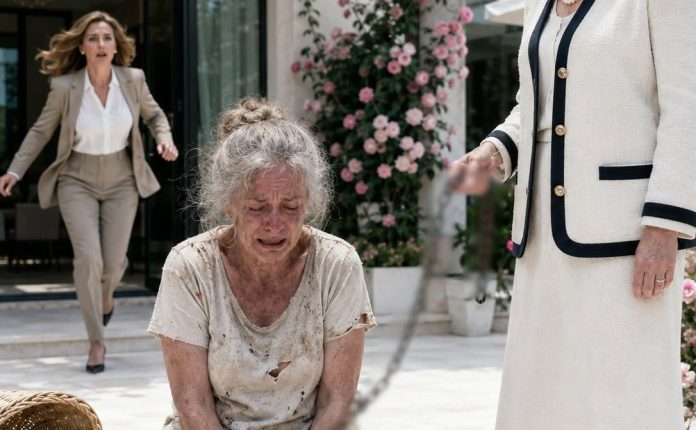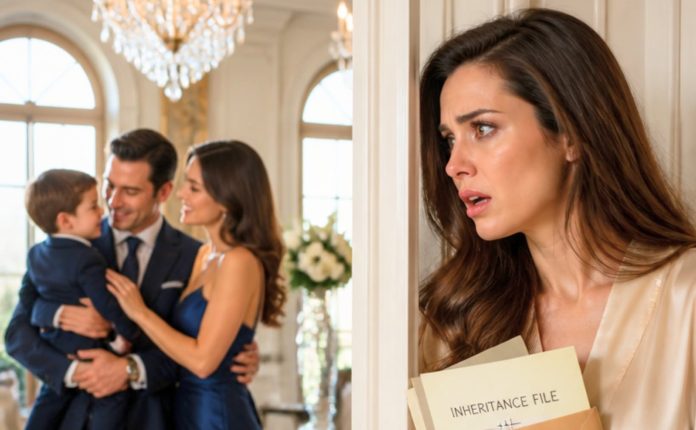
My husband and I commute together and came home on Valentine’s Day to find our apartment door covered in paper hearts with messages, two big “Happy Valentine’s Day” balloons, and a gift bag. The messages on the hearts were extremely lovey-dovey, with some classic “Come visit soon! Miss you!!” ones thrown in. One glance was enough to know the culprit. We live 20 minutes away from MIL and FIL and see them about every 2-3 weeks, though it’s never enough for them, and we constantly get messages about how much they want to see us. But this time, the gift in the bag was MUCH WEIRDER than usual. My MIL gave my husband a hand-painted ceramic bowl filled with dirt, a single rusted key, and a pressed, yellowing flower that looked like it had been plucked from a graveyard.
I stood in the hallway of our building, the plastic of the “Happy Valentine’s Day” balloons squeaking against the ceiling as a draft blew through the corridor. Mark, my husband, was holding the box, staring down at the items with a look of utter bewilderment. We were exhausted from a long day at the office, looking forward to a quiet glass of wine and perhaps a movie. Instead, we were met with a scene that looked like a cross between a primary school project and a cryptic message from a mystery novel.
“Is this… a joke?” I asked, poking at one of the paper hearts taped to our deadbolt. It had “Love you to the moon and back, Mommy” written in Evelyn’s unmistakable, shaky cursive.
Mark sighed, a long, weary sound that echoed in the quiet hallway. “You know Mom. She doesn’t have a ‘stop’ button. But the dirt… that’s a new one even for her.”
For many of you who have raised children and now find yourselves in the golden years of life, you might recognize this situation. We want to stay connected. We want our children to know they are always on our minds. But for Evelyn, my mother-in-law, that desire often manifested as a total disregard for boundaries. She didn’t have a key to our apartment—or so we thought—yet here she was, decorating our door on a workday afternoon.
We stepped inside, the balloons bobbing behind us like giant, jubilant specters. I began peeling the hearts off the door while Mark placed the “dirt bowl” on the kitchen island. As I worked, I reflected on our relationship. I loved Mark’s parents, truly. Evelyn was a woman who had survived the lean years of the sixties, raised three boys on a teacher’s salary, and kept a home that always smelled of lemon polish and simmering soup. She belonged to a generation where family was the sun around which everything else orbited. But in this fast-paced modern world, Mark and I often felt like we were being pulled into a gravitational field we couldn’t escape.
I walked over to the island and looked closer at the gift. “Mark, look at the key. It has a tag.”
He picked it up. The tag was made of old cardboard, the edges frayed. On it, in fading ink, was a single word: *Sanctuary.*
“What does that mean?” I asked. “And why the dirt?”
Mark poked his finger into the soil. “It’s not just dirt, Sarah. Look.” He pulled out a small, waterproof plastic pouch buried beneath the surface. Inside was a collection of photographs, protected from the damp earth.
We sat down at the table, the wine forgotten. The first photo was of a young man, barely twenty, standing in front of a blooming garden. He was wearing a military uniform, his eyes bright with a mixture of fear and hope. It was Arthur, my father-in-law. The second photo showed Evelyn, looking radiant in a simple cotton dress, holding a tiny, swaddled bundle that I realized was my husband.
But it was the third photo that made my heart skip a beat. It was a picture of a house—a small, clapboard cottage nestled in a grove of oak trees. It looked derelict, with vines climbing the porch and windows that stared like empty eyes.
Suddenly, my phone buzzed. It was a text from Evelyn: *”I know you want your space, but some things belong to the earth before they belong to us. Come to the old mill road on Saturday. Please. Before the shadows get too long.”*
For the older generation reading this, you know that there are times when your gut tells you that a “meddling parent” isn’t just being annoying—they are trying to tell you something they don’t know how to say out loud. I looked at Mark. His initial annoyance had faded into a somber curiosity.
“We go,” he said.
The drive to the old mill road took us past the outskirts of the city, through landscapes that looked like they hadn’t changed since 1950. The trees were bare, their branches reaching up like gnarled hands against the grey winter sky. We found the cottage from the photograph. It was even more beautiful and haunting in person. Waiting at the gate were Evelyn and Arthur. They weren’t wearing their “grandparent” clothes. They were in old denim and work jackets, looking like the farmers they had once been.
Evelyn stepped forward, her eyes wet. “You found the key,” she said, her voice a mere whisper.
“Mom, what is this?” Mark asked, gesturing to the house. “Why did you leave dirt on our door?”
Arthur cleared his throat, a sound like gravel turning in a drum. “That dirt in the bowl, son… that’s from this garden. The soil your grandfather broke with a mule because he couldn’t afford a tractor. This house was the sanctuary he built for us when we had nothing but a suitcase and a dream. We’ve kept the taxes paid on it for forty years, but we never lived here. We wanted to keep it for the day when the world felt too loud for you.”
Evelyn reached out and took my hand. Her skin was like fine parchment, etched with the history of a life well-lived. “Sarah, you think I’m an old, clingy woman who doesn’t understand privacy. And maybe I am. But I’ve watched you and Mark rush through your lives. I’ve seen the way the light in your eyes dims after a day in that city. You have no garden. You have no silence. You have no earth under your fingernails.”
She looked at the house. “We didn’t just give you a weird gift. We’re giving you the legacy. This is where we come from. This is the ground that produced the man you love. We wanted to show you that Valentines isn’t about balloons and chocolates. It’s about the roots that hold you when the wind starts to blow.”
The meaningfulness of the moment hit me like a physical wave. For years, I had viewed Evelyn’s intrusions as a threat to my independence. I had been so focused on building my “modern” life that I hadn’t realized I was building it on sand. Here, in the quiet of the oak grove, I realized that her constant messages and her “hearts on the door” were her way of trying to tether us to something durable. She wasn’t trying to control us; she was trying to save us from becoming ghosts in our own lives.
To those of you who are grandfathers and grandmothers, you know the pain of watching your children drift into the currents of “busyness.” You know that your wisdom is a gift they often aren’t ready to unwrap. Evelyn had chosen a “weird” way to get our attention, but it was the only way she knew how to break through the noise of our schedules.
We spent the afternoon in the cottage. It was dusty and cold, but as Arthur told stories of how he had repaired the roof by hand after the Great Storm of ’68, the walls seemed to warm up. He spoke of a time when neighbors didn’t just “connect” on a screen, but walked across the field with a loaf of bread when they saw your chimney wasn’t smoking. He spoke of the dignity of manual labor and the peace of a quiet evening on a porch.
“The world expects you to be fast, children,” Arthur said, sitting on a crate in what used to be the kitchen. “But the earth… the earth expects you to be patient. You can’t hurry a crop, and you can’t hurry a family. You have to tend to them. You have to give them space to grow, but you also have to make sure they don’t grow so far that they forget the soil they started in.”
I looked at Mark, who was holding his father’s old rusted key. I saw a tear track through the dust on his cheek. He realized, as I did, that our “independence” had come at the cost of our heritage. We were 20 minutes away, but we might as well have been on the moon for all the emotional distance we had maintained.
As the sun began to set, casting long, golden shadows through the empty windows, we walked back to our cars. The “weird gift” in the dirt bowl finally made sense. The dirt was the foundation. The key was the access. The pressed flower was the reminder that beauty survives even when the seasons change.
“I’m sorry for being so difficult, Evelyn,” I said, pulling my mother-in-law into a hug. The scent of her perfume—lavender and peppermint—felt more like home than my own apartment ever did.
“Oh, Sarah,” she chuckled, patting my back. “I was a young wife once, too. I remember wanting to lock the doors and hide from the world. But the world is a big, cold place if you don’t have a kitchen table to come back to.”
In the months that followed, our life changed irrevocably. We didn’t move to the cottage—not yet—but we started going there every weekend. We cleared the vines. We painted the shutters. We planted a new garden with his father, using the very soil that had been in that ceramic bowl. Mark and Arthur spent hours together, fixing the foundation, their conversations moving from sports and weather to the deeper things that fathers and sons rarely discuss.
To my older readers, I hope this story serves as a reminder that your children need you more than they say. They might roll their eyes at your “old-fashioned” ways, and they might complain about your phone calls, but you are the keepers of their history. You are the only ones who can tell them who they were before they became the people the world told them to be.
The next Valentine’s Day, I was the one who went to Evelyn’s house early. I covered her door in paper hearts. But my messages weren’t about “visiting soon.” They were about “thank you.” I left a gift bag on her porch, too. Inside was a framed photo of all four of us sitting on the porch of the cottage, our hands dirty, our faces tired, but our eyes bright with a sense of belonging we hadn’t known we were missing.
We learned that a marriage isn’t just about the two people in it. It’s about the ancestors who built the house and the grandchildren who will one day play in the garden. It’s about the continuity of love through the decades. Evelyn and Arthur showed us that a family is like a tree: the branches can reach for the sky as far as they want, but if the roots aren’t deep, the first storm will take it down.
As a woman who has now seen the gray start to creep into her own hair, I look back on that “weird gift” with profound gratitude. It was the moment the scale tipped from frustration to understanding. I realized that my mother-in-law wasn’t my rival for Mark’s attention; she was my mentor in the art of endurance.
Life is short, but heritage is long. Don’t be afraid to meddle a little, dear friends. Don’t be afraid to be “weird” if it means saving the people you love from the emptiness of a busy life. In the end, the only thing we take with us are the memories we forged and the hands we held.
The cottage on the old mill road has its lights on tonight. The chimney is smoking, and the garden is dormant beneath a blanket of frost, waiting for the spring. And inside, four people are sitting around an old wooden table, drinking tea and listening to the house breathe. We are home. And we are finally, truly, in sync with the generations that came before us.
May your own Valentine’s Days be filled with the kind of gifts that don’t fit in a box. May you have the courage to break the silence and the wisdom to know that a bowl of dirt is sometimes the most precious treasure of all. Welcome to the family, Sarah. Welcome to the soil. And thank you, Evelyn, for never giving up on us. The hearts are still on the door, but now, they beat in time with our own. Safe, nurtured, and loved. Forever.