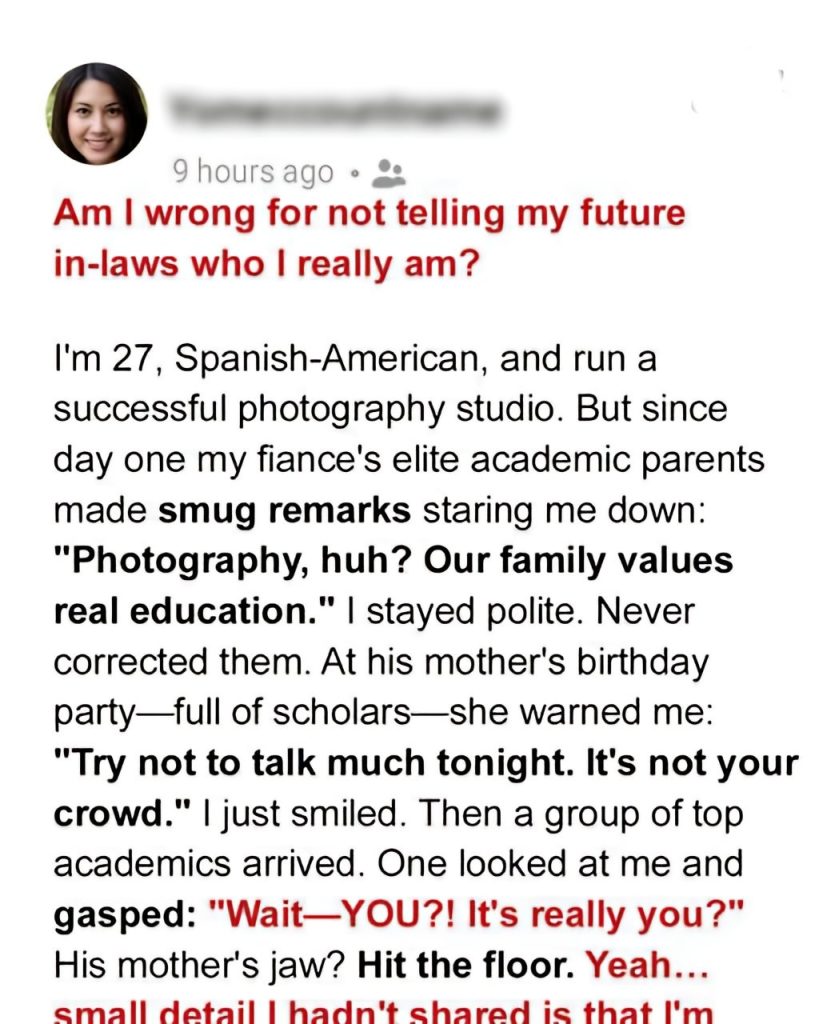
Am I wrong for not telling my future in-laws who I really am? I’m 27, Spanish-American, and run a successful photography studio. But since day one my fiance’s elite academic parents made smug remarks staring me down: “Photography, huh? Our family values real education.” I stayed polite. Never corrected them. At his mother’s birthday party—full of scholars—she warned me: “Try not to talk much tonight. It’s not your crowd.” I just smiled. Then a group of top academics arrived. One looked at me and gasped: “Wait—YOU?! It’s really you?” His mother’s jaw? Hit the floor. Yeah… small detail I hadn’t shared is that I’m actually Dr. Sofia Rodriguez, a former child prodigy who earned a dual PhD in Theoretical Physics and Mathematics from MIT by age twenty-one, and I happened to be the youngest recipient of the MacArthur “Genius Grant” in history.
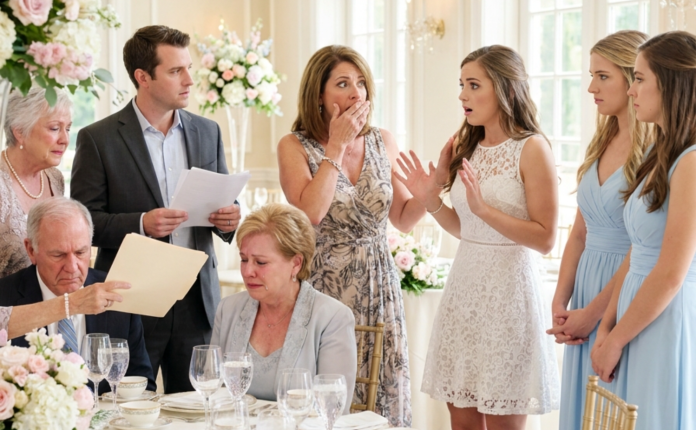
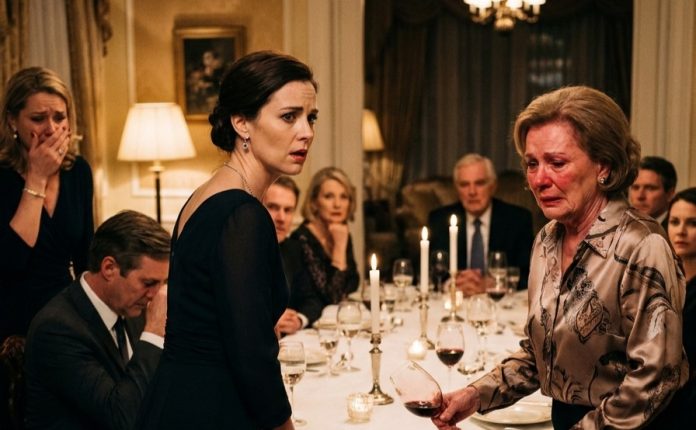
The air in the room, which had been thick with the scent of expensive cologne and the dry rustle of academic posturing, suddenly felt electrified. My mother-in-law, Beatrice, stood frozen with a glass of vintage Chardonnay halfway to her lips. She had spent the last three months treating me like a pleasant but ultimately vacuous accessory to her son’s life. To her, my “Spanish-American heritage” meant I was passionate and good at cooking, and my “photography studio” meant I took pretty pictures of weddings for a living. She had categorized me as “low-brow,” a girl who had likely scraped through a community college art program and caught her brilliant son’s eye with nothing more than a youthful smile.
The man who had gasped was Dr. Julian Thorne, a Nobel Laureate whose work on quantum entanglement was the very reason Beatrice’s husband, Arthur, had spent forty years in a lab. Julian didn’t wait for an introduction. He strode across the polished mahogany floors, pushing past deans and department heads, and took both of my hands in his.
“Sofia! We thought you had disappeared into the ether!” Julian exclaimed, his eyes bright with genuine admiration. “The paper you published on non-linear dynamics before you left the field—it’s still the most cited work in the department. Why on earth are you at a party in the suburbs of Connecticut? And why are you holding a camera?”
I felt my fiancé, Leo, squeeze my hand. He knew the truth, of course. He had been the one to find me in a small cafe in Madrid four years ago, hiding behind a Leica camera, trying to capture the way light hit a cobbler’s hands. He had fallen in love with the woman who could explain the universe’s most complex equations but preferred to photograph the way a child looks at a blooming flower. He had respected my wish to leave that high-pressure world behind, to live a life where my worth wasn’t measured by the number of grants I secured or the prestige of the journals that published me.
Beatrice finally found her voice, though it sounded thin and brittle. “Julian, surely you’re mistaken. This is Jessica—I mean, Sofia—Leo’s fiancée. She… she does photography. For weddings and such.”
Dr. Thorne turned to Beatrice with a look of profound confusion. “Beatrice, do you have any idea who this woman is? This isn’t just a ‘photographer.’ This is the mind that solved the Varga Conjecture while your husband was still trying to figure out his tenure. She was the youngest full professor in the history of the university. We begged her to stay. We offered her the world.”
The silence that followed was heavy and meaningful. For those of you who have lived long enough to see the world change, you know that true class isn’t about the degree you hang on your wall; it’s about how you treat the people you think have none. Beatrice and Arthur had spent decades in the “ivory tower,” believing that their intellectual status gave them a license to be condescending to anyone who worked with their hands or followed a creative path. They had forgotten the basic human decency that my grandmother in Spain had taught me: that every person has a story, and you are a fool if you think yours is the only one worth telling.
I looked at Beatrice. The smug, superior mask she had worn since the day Leo introduced us had completely shattered. She looked small. She looked like someone who had just realized they had been mocking a queen while she was disguised as a peasant.
“I didn’t lie to you, Beatrice,” I said quietly, my voice steady and calm. “You asked what I do, and I told you: I run a photography studio. I love my work. I love capturing the truth of a moment. You were the one who decided that because I wasn’t a ‘scholar,’ I wasn’t worth listening to. You were the one who told me it ‘wasn’t my crowd’ tonight. But the truth is, I’ve spent my whole life in rooms like this, and I realized a long time ago that all the brilliance in the world doesn’t matter if you don’t have the heart to go with it.”
Arthur, Leo’s father, stepped forward. He looked at me with a mix of shame and a newfound, almost fearful respect. “Sofia… Dr. Rodriguez… we had no idea. We thought—”
“You thought I was ‘just’ a girl from a different background with a ‘hobby’ for a job,” I interrupted gently. “But photography isn’t a hobby. It’s how I see the world. Physics taught me how the universe works, but art taught me why it matters. I didn’t hide my past to trick you. I just wanted to see if you would accept me for the person I am today, not for the titles I earned when I was twenty.”
The party continued, but the atmosphere had shifted irrevocably. The “elite” academics were no longer huddled in their exclusive circles; they were queuing up to talk to me. They wanted to know about my research, sure, but more than that, they were fascinated by my choice to walk away. I found myself talking to an elderly professor emerita named Eleanor, a woman who had been a pioneer for women in science in the 1960s.
“You did the right thing, dear,” Eleanor whispered to me, her hand resting on my arm. Her skin was like fine parchment, etched with the wisdom of a century. “I spent my life fighting for a seat at the table, only to realize that the most important conversations happen in the garden, or over a camera lens, or with a person who loves you for your soul and not your brain. Don’t let their small-mindedness make you feel small. You’ve mastered the hardest equation of all: happiness.”
Leo and I left the party early. As we walked to our car—a reliable, modest SUV that Beatrice had often called “charming in its simplicity”—I felt a sense of profound peace. I hadn’t gone there to “expose” them or to seek revenge. I had gone there to be myself, and the universe had simply provided the mirror they needed to see their own reflection.
“Are you okay?” Leo asked as he started the engine.
“I am,” I said, leaning my head against the window. “I realized something tonight. People like your parents aren’t ‘elite’ because they know more. They’re isolated because they think they do. I’m glad I’m a photographer, Leo. I’m glad I’m the woman you fell in love with in that cafe.”
The wedding, which happened six months later, was a beautiful, sun-drenched affair in a vineyard. It was full of family—my cousins from Spain who laughed loudly and danced until their feet hurt, and Leo’s academic colleagues who looked slightly uncomfortable but eventually joined in. Beatrice and Arthur were there, too. They were quieter now, more observant. They had started visiting my studio on weekends, watching me work. They saw me directing a family of five, capturing the chaos and the love of a toddler’s first birthday, and they began to see the “education” in it. They saw the patience, the eye for detail, and the profound emotional intelligence it took to do what I do.
To the readers who remember a time when your reputation was built on your character and the sweat of your brow, you will understand the lesson my in-laws learned. We live in a world that is obsessed with “branding” and “credentials,” but those things are just wrappers. The real substance is what’s inside. Whether you’re a doctor, a baker, a teacher, or a photographer, your value lies in how you use your gifts to serve others and how much grace you show to those around you.
I never did go back to physics. I still keep up with the journals, and sometimes Leo and I sit on our porch and talk about the stars until the sun comes up. But my “Genius Grant” money is sitting in a trust for our future children, and my Leica is always around my neck.
Beatrice eventually sent me a note, written in her perfect, scholarly script. *“Dear Sofia, thank you for the portrait you took of Arthur and me for our anniversary. I’ve looked at ourselves in the mirror for forty years, but I never saw the love in our eyes until you showed it to me. I’m sorry I was so blind to the genius of your heart. You are exactly the crowd we needed.”*
It was a small victory, but a meaningful one. It reminded me that even the most hardened hearts can be softened by a little bit of light—especially if that light is captured at just the right angle.
Am I wrong for not telling them? Perhaps. But I think the silence was necessary. It allowed them to fail, and in failing, it allowed them to grow. And as I grow older, I realize that the best stories aren’t the ones we write about ourselves, but the ones others discover about us when they finally take the time to look.
My studio is thriving. I’ve started a new project, photographing “hidden geniuses”—the people society overlooks: the elderly gardener who can predict the weather by the feel of the leaves, the waitress who knows exactly when a customer needs a kind word, and the “simple” daughter-in-law who holds a universe in her mind but chooses to hold a camera in her hand.
Life is long, and the degrees we earn are just chapters in a much larger book. What matters is the ending, and the people who are there to read it with you. I have Leo, I have my art, and I finally have a family that knows exactly who I am. Not because of a Nobel Laureate’s gasp, but because of the love we share in the quiet moments between the flashes. And that, more than any equation or grant, is a life truly well-lived.
To the grandfathers and grandmothers out there who are watching their children marry into families that seem “different” or “lesser,” I hope you remember Sofia’s story. Don’t look at the job title; look at the eyes. Don’t listen to the accent; listen to the laughter. You might just find that the person you were ready to dismiss is the one who will eventually bring the most light into your home. The world is full of “small details” that can change everything, if only we are humble enough to see them.
Beatrice now has a framed photo of me on her desk at the university. People ask her who the beautiful woman is. She doesn’t say “a MacArthur Fellow” or “a world-class physicist.” She smiles, a real, warm smile this time, and says, “That’s my daughter-in-law. She has the most incredible eye for the truth.” And in the end, that’s the only title I ever really wanted.