Six months after the incident, the Grand Regent's revised procedures were producing encouraging results.
Employees were resolving reservation discrepancies more consistently, and the management team had begun reviewing complaints that previously might have been closed with a refund and a short apology.
But I wanted to understand something the reports couldn't tell me.
Whether the guests we'd failed had regained any trust in the company.
Nadia arranged for our guest-relations team to contact people whose earlier complaints had been substantiated. They were offered explanations of the findings and, where appropriate, a review of documented expenses.
Nobody was required to participate.
Some people appreciated hearing from us.
Others weren't interested.
Helen and Arthur Price, the older couple who'd been turned away during the medical conference, agreed to speak with Nadia.
They remembered the incident clearly.
Arthur had recently completed a demanding course of medical treatment, and the trip was their first opportunity to travel together in several months.
They'd chosen the Grand Regent because it was close to the conference venue and offered the accessibility arrangements they needed.
When their reservation couldn't be located, they were sent elsewhere.
The alternative hotel was farther away, and the unexpected move disrupted their plans.
The Grand Regent had refunded the deposit, but nobody had explained why the original reservation wasn't found.
When Nadia described the review's findings, Helen thanked her.
Then she said something that stayed with me.
"We appreciate the explanation. But we don't plan to return."
Nadia asked whether there was anything further the hotel could do.
Helen was polite.
"No. We made our decision."
I read the account afterward.
For a moment, I felt the urge to offer them an extraordinary stay, complimentary transportation, or some other gesture that might persuade them to reconsider.
Then I stopped.
They'd already told us what they wanted.
They wanted the hotel to understand what happened.
They didn't want another reservation.
I needed to respect that.
A sincere apology didn't entitle us to another chance.
Rebecca Lawson's response was different.
She appreciated the additional review and accepted reimbursement of the documented extra transportation and accommodation costs that the company determined were appropriate.
But she also said she didn't want her children involved in any publicity about the incident.
I understood immediately.
She had already endured an exhausting night with them. She wasn't interested in turning their experience into a corporate success story.
We respected her request.
Then she offered to provide feedback on the revised guest-assistance procedures.
She wanted to know what would happen if a parent arrived with children and a reservation that couldn't immediately be located.
Nadia explained the process.
The receptionist would verify the booking through the available systems, contact the designated support team when necessary, and ensure the guest received clear information while the issue was investigated.
Rebecca listened.
Then she asked whether employees would actually have time to follow those steps during a busy evening.
It was the most important question.
Nadia explained the staffing and performance changes being tested at the Grand Regent.
Rebecca asked for a copy of the public summary when it became available.
We agreed.
Afterward, I sent her a short personal letter.
I thanked her for describing what happened and acknowledged that the hotel's earlier response had been inadequate.
I didn't ask her to forgive us.
I didn't ask her to return.
I simply thanked her for helping us understand a failure we should have addressed when she first reported it.
Her reply arrived a week later.
She said she appreciated the letter and hoped the changes would help other families.
Then she added one sentence.
My children still remember being told there was no room for us.
I sat quietly after reading it.
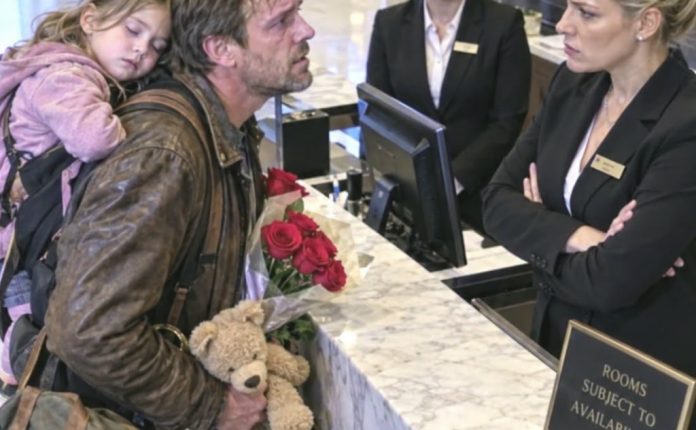
Lily still remembered the Grand Regent lobby too.
She remembered Patricia's expression, Karla's laughter, and the fear that we might have to leave.
The difference was that I could explain what happened and show her the steps we were taking to address it.
Rebecca's children had lived with the experience for months before anyone from the hotel contacted them properly.
That lost time couldn't be returned.
I looked through the updated guest-service report.
The procedures were improving.
But I finally understood that preventing future harm and repairing past harm were separate responsibilities.
We needed to do both where we could.
And where people chose not to return, we needed to accept that our opportunity to earn their trust had already passed.
Click here to continue reading: PART 18: A New Guest Arrived With a Missing Reservation, and This Time the Front Desk Did What It Should Have Done From the Beginning
The Exhausted Father at the Reception Desk Had a Confirmed Reservation, but Two Employees Decided He Didn’t Belong in Their Luxury Hotel
Part 17 of 20