The staff meeting was held the following Thursday in one of the Grand Regent's conference rooms.
Nadia arranged separate sessions for employees on different shifts so that attendance wouldn't disrupt the hotel's operations. The purpose wasn't to identify someone to blame in front of their colleagues.
It was to understand how the hotel actually functioned.
I attended the first session with Daniel, Nadia, Helena, and several department managers.
About forty employees were present.
Some looked curious.
Others looked nervous.
I introduced myself and explained that I wanted to hear their experiences without expecting them to defend the company's existing procedures.
Then I made something clear.
Nobody was required to praise management, and concerns about supervision would be handled through appropriate channels.
We weren't going to turn the meeting into a performance where employees competed to tell the owner what he wanted to hear.
Nadia began with questions about reservation problems and cross-department cooperation.
A front desk employee named Amir raised his hand.
He explained that the secondary reservation system was often difficult to use during busy events. New employees received training, but they rarely practiced unusual booking scenarios until a real guest arrived with a problem.
When the queue grew long, supervisors sometimes told employees to move on rather than spend time investigating.
Another employee confirmed that the practice was common.
Then a concierge explained that guests occasionally arrived with corporate confirmation numbers the front desk couldn't immediately match.
The concierge team could sometimes help, but employees weren't always sure when they were permitted to intervene.
I thought about Lupita.
She'd known exactly what to suggest, but Karla treated her involvement as a challenge to her authority.
Then someone from housekeeping spoke.
Her name was Teresa.
She said the departments operated as though they were separate businesses sharing the same building.
Housekeeping employees were expected to report guest problems, but they weren't always included in the discussions needed to resolve them.
If a guest asked about a missing reservation, she was supposed to direct the person to reception.
If reception was overwhelmed, she had no clear process for obtaining additional help.
Teresa looked toward the managers.
"Sometimes we see a problem, but nobody wants us involved until someone complains."
Several employees nodded.
Another housekeeper said staff were discouraged from spending too much time assisting guests because their assigned rooms still had to be completed.
Helping someone could create a scheduling problem.
I looked toward Nadia.
She was taking notes.
Then Lupita raised her hand.
The room became quiet.
She said she'd attended the cross-department training because she wanted to understand how the hotel worked beyond housekeeping.
She liked her job, but she also wanted to develop her skills.
When she helped me, she hadn't intended to take over another department's responsibility.
She simply knew a possible solution and didn't want to watch a guest leave without anyone trying it.
Then she said something I couldn't forget.
"We see things because we're everywhere. We enter the rooms, walk the hallways, and pass through the public areas. Sometimes we notice someone needs help before the person reaches the front desk."
She looked around the room.
"But it doesn't mean much if we're told to stay quiet."
I felt my throat tighten.
Sarah had always said housekeeping employees were among the hotel's most knowledgeable people because they understood how guests actually used the rooms.
Now I was hearing the same insight from someone who'd been told to remember her position.
I thanked Lupita.
Then I asked the employees what would make it easier to help guests without neglecting their assigned work.
The answers were practical.
They wanted a clear method for contacting a manager.
They wanted training that included common problems across departments.
They wanted enough staffing to handle unexpected situations.
And they wanted supervisors to recognize that helping a guest wasn't automatically interfering with another team's authority.
We discussed those ideas without promising that every change could happen immediately.
Nadia explained that the operational review would include staffing, scheduling, and training requirements.
Several employees volunteered to participate in smaller working groups.
Then an employee from the kitchen raised another issue.
He said staff were often praised when they helped important guests, but ordinary travelers rarely received the same attention.
During the gala, employees had been instructed to prioritize certain arrivals because they represented valuable corporate accounts.
I understood why large accounts received coordinated service.
But the employee's concern wasn't about prepared arrangements.
It was about the assumption that other guests mattered less.
I asked whether he'd seen that distinction affect service.
He nodded.
"Sometimes we're told a guest is important before we even meet them."
I looked around the room.
"Every guest is important. Some need special arrangements, but that shouldn't determine whether we treat everyone else respectfully."
The employee nodded.
Then he said, "We need the managers to believe that too."
The room became quiet again.
I looked toward Daniel.
He didn't defend himself.
Instead, he asked the employee to explain where the current procedures created those differences.
The conversation continued for nearly another hour.
When it ended, I remained behind with Nadia and Helena.
I felt exhausted.
Not because the employees had been hostile.
Because they'd described problems that seemed obvious once someone took the time to listen.
The reservation screen wasn't the only issue.
The hotel had developed a culture in which employees were encouraged to focus on the guests, departments, and tasks considered most valuable.
Helping someone outside those categories required extra effort.
And the people who made that effort weren't always supported.
I looked at Nadia.
"We need employees involved in designing the changes."
She nodded.
"I agree."
Then Helena reminded me that staff participation needed to be voluntary and that employees shouldn't have to share personal concerns in a large meeting to receive help.
I agreed.
The next phase would involve confidential feedback, smaller working groups, and a review of the actual procedures.
As I prepared to leave, Lupita approached.
She looked nervous.
"Mr. Vance?"
"Yes?"
"Thank you for listening."
I smiled.
"Thank you for speaking."
She hesitated.
Then she said, "I hope the next person who needs help doesn't have to wait until the owner finds out."
I looked at her.
"So do I."
Click here to continue reading: PART 12: Ethan Brought the Problem Before the Company’s Board and Had to Admit That His Own Leadership Had Helped Create It
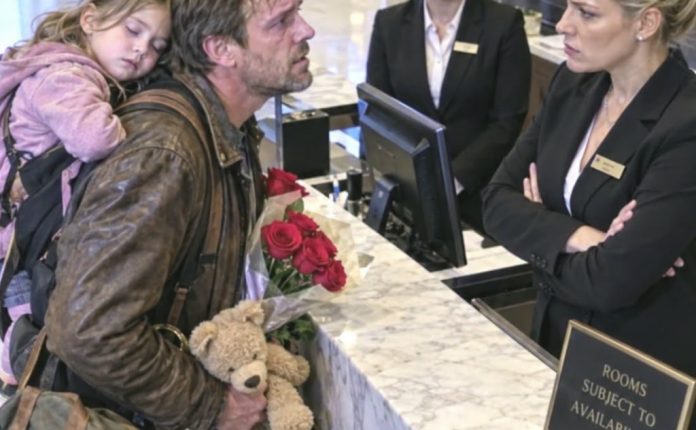
The Exhausted Father at the Reception Desk Had a Confirmed Reservation, but Two Employees Decided He Didn’t Belong in Their Luxury Hotel
Part 11 of 16