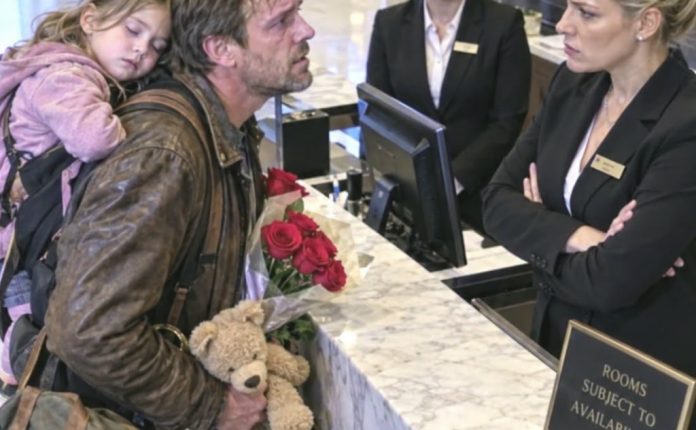
The Grand Regent began testing its revised reservation procedure during a busy summer conference.
Nadia chose the timing deliberately.
A system that worked only when the lobby was quiet wouldn't solve the problem we'd identified.
The new process needed to function when guests arrived in groups, phones were ringing, and employees were handling several requests at once.
The pilot included additional training for the front desk and a designated escalation contact during peak arrival periods.
Employees were instructed to verify alternate booking records before concluding that a reservation didn't exist.
They were also expected to explain what they were doing so guests weren't left standing in uncertainty.
The first week revealed several practical problems.
Some employees had difficulty navigating the secondary screen because the information was organized differently from the primary system.
Others weren't sure when to contact corporate booking support.
Nadia and the working group adjusted the instructions.
They also discovered that the hotel's internal telephone directory contained outdated numbers for several support departments.
That problem seemed minor until a staff member tried to use one of the numbers during a busy shift.
The call went nowhere.
The directory was corrected.
I appreciated those discoveries.
The purpose of the pilot wasn't to prove our first draft was perfect.
It was to identify what needed improvement before the new process became standard across the company.
During the second week, a guest arrived with a reservation made through a corporate travel agency. The primary system couldn't locate the booking.
The receptionist checked the secondary screen and found a matching record, but the room category hadn't transferred correctly.
Instead of sending the guest away, she contacted the designated support employee.
The team confirmed the reservation and arranged appropriate accommodation.
The issue took longer than an ordinary check-in.
But the guest received the room she'd booked.
The incident was recorded as a successfully resolved reservation discrepancy.
Under the old performance system, employees might have viewed the additional time as a failure.
Under the revised measures, the important question was whether they handled the problem properly.
Nadia included the case in her next report.
I read it with relief.
Then she showed me another example.
A guest arrived with a confirmation number that didn't match any record in the hotel or corporate booking systems.
The team contacted the booking provider and discovered that the reservation had been made for a different property.
The Grand Regent was genuinely full.
The receptionist explained the situation and helped the guest contact the correct hotel.
The guest left disappointed about the mistake but thanked the employees for helping him understand what happened.
That mattered.
We couldn't guarantee that every person entering the hotel would receive a room.
But we could require employees to handle problems honestly and respectfully.
Then Nadia sent me the results of the first staffing review.
The Grand Regent needed adjustments to front desk coverage during peak arrival periods. The existing schedule placed too much responsibility on a small number of employees whenever several group arrivals overlapped.
The review also recommended more consistent cross-training between reception and guest relations.
Housekeeping's staffing needs were assessed separately, taking into account room types, occupancy patterns, and the actual time required for different assignments.
The recommendations weren't simple or inexpensive.
But they were based on the work employees were expected to perform rather than on the assumption that everyone could simply move faster.
Melissa reviewed the financial implications.
We agreed on a phased implementation that addressed the most urgent needs first while allowing the company to evaluate the results.
I didn't want the hotel to spend money carelessly.
I also didn't want to pretend that high standards could be maintained indefinitely without adequate people and resources.
During the pilot, Patricia remained away from guest-facing duties while completing the required training and supervised assessment.
Her program included reservation procedures, communication skills, accurate incident reporting, and recognizing inappropriate assumptions about guests.
She also participated in a session about how bias could affect decisions made under pressure.
Helena made it clear that completing the training wouldn't automatically erase her disciplinary record.
Patricia would need to demonstrate that she could apply what she'd learned.
When the assessment was complete, she returned to the reception team under closer supervision.
Her first several shifts were uneventful.
Then a guest arrived wearing work clothes and carrying a large duffel bag.
His reservation wasn't immediately visible.
Patricia paused.
For a moment, she felt the old urge to assume he'd come to the wrong hotel.
Then she asked for his confirmation number.
She checked the secondary system.
The reservation appeared.
It belonged to a construction contractor whose company had booked accommodation for several employees working nearby.
Patricia completed the check-in.
The guest thanked her and went upstairs.
There was no applause.
No camera.
No announcement that she'd learned an important lesson.
It was simply the ordinary service she should have provided all along.
Later, her supervisor documented that she'd followed the correct procedure and treated the guest respectfully.
When Helena received the report, she added it to Patricia's ongoing review.
I appreciated the progress.
But I knew one successful check-in didn't prove a permanent change.
Trust had to be rebuilt through consistent behavior over time.
The hotel had made the same mistake at an organizational level.
We couldn't declare the problem solved after one successful pilot.
We needed to keep examining what happened during ordinary shifts, when there were no cameras, no visiting executives, and no reason for employees to believe their behavior would become public.
Click here to continue reading: PART 16: Lupita Applied for a New Role, but Ethan Refused to Turn Her Kindness Into a Publicity Stunt or an Unearned Promotion
The Exhausted Father at the Reception Desk Had a Confirmed Reservation, but Two Employees Decided He Didn’t Belong in Their Luxury Hotel
Part 15 of 20