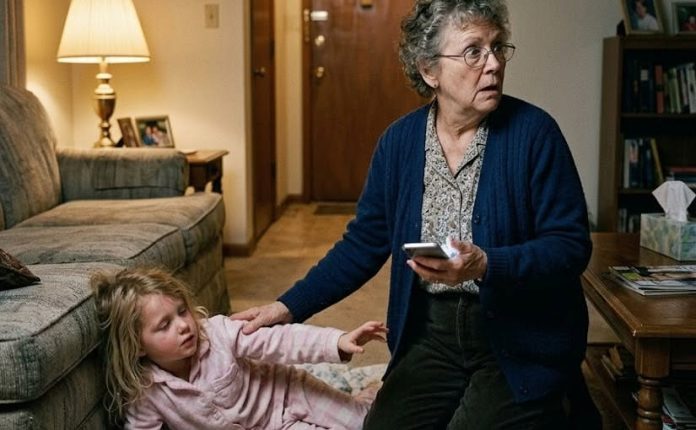
Eighteen months after the call at 1:55 in the morning, Noah asked to visit the old house.
Daniel had sold it nearly a year earlier.
New owners lived there.
So technically, visiting was impossible.
But he meant the neighborhood.
I understood.
“Why?”
He shrugged.
“I want to see it.”
I looked at his therapist.
She did not answer for him.
Good.
“Does Dad know?”
“Yes.”
“And?”
“He said okay if you go.”
That surprised me.
“Why me?”
Noah thought.
“Because you opened the door.”
My throat tightened.
The basement door.
Except I had not opened it physically.
Firefighters did.
Still.
I understood what he meant.
We drove past on a Saturday afternoon.
The house looked ordinary.
New flowers.
Different curtains.
A bicycle on the lawn.
No evidence of terror.
Trauma rarely leaves signs visible from the road.
Noah stared.
“That’s weird.”
“What?”
“It looks small.”
I smiled sadly.
“Things often do after you grow.”
“I mean everything.”
We parked down the street.
Did not intrude.
Did not photograph.
Just sat.
After a while, Noah said:
“I used to think the basement was huge.”
“Fear changes measurements.”
He considered that.
“Dad said he hates that house.”
“How do you feel?”
“I don't know.”
Still one of his most honest answers.
Then:
“I don't hate Dad anymore.”
I kept my face calm.
“Okay.”
“I did.”
“Okay.”
“Do you?”
“No.”
“Did you?”
I thought.
“Yes.”
His eyes widened.
“You said you didn't.”
“I said I loved him.”
“That’s different?”
“Sometimes.”
He grinned.
“You adults make everything complicated.”
“Correct.”
Then he became serious.
“I hated him and missed him at the same time.”
“I know.”
“I thought that was bad.”
“It isn't.”
He looked at the house.
“I still don't like basements.”
“Reasonable.”
We drove home.
By then, the custody transition had moved further.
Daniel had the children four nights most weeks.
I had them three.
Legally, he was moving toward restored primary custody with substantial continuing time for me under the family plan.
Emotionally, we stopped keeping score.
School nights.
Appointments.
Soccer.
Music lessons.
Who could drive?
Who had work?
What did the children need?
The opposite of the old household.
Nothing hidden.
Shared calendar.
Medical portal access for appropriate caregivers.
School contacts.
No one-person gatekeeping.
Daniel insisted on it.
“If I start shutting people out again, somebody needs to notice.”
That was one of the wisest things he ever said.
He also rebuilt his relationship with money.
Slowly.
Painfully.
His wages went through a budget.
No betting apps.
Credit frozen against impulsive borrowing.
Recovery meetings.
The trust remained independently administered.
Daniel made monthly restitution under the accounting settlement.
Sometimes only a few hundred dollars.
Not dramatic.
Consistent.
When he complained once that it would take years, I said:
“It took years to create.”
He looked annoyed.
Then laughed.
“Fair.”
The children’s funds began recovering.
Not because I replaced them.
That had been my first instinct.
Write a check.
Fix the number.
Maya stopped me.
“If you want to contribute separately, you can.”
Then:
“But don't erase Daniel’s repayment responsibility.”
She was right.
So I opened separate education savings accounts for the children.
My contribution.
My choice.
Not repair for his conduct.
Daniel's debt remained Daniel’s.
That distinction protected all of us.
Lily turned eight.
For her birthday, she asked for a stethoscope.
Not a toy doctor kit.
A real inexpensive one.
“Why?”
She put it around her neck.
“I’m going to be a nurse.”
My heart squeezed.
“Because of the hospital?”
She thought.
“Maybe.”
Then:
“The nurse believed me when I said my head hurt.”
I had to turn away.
Children remember belief.
More than adults realize.
I bought her the stethoscope.
Then became her first patient.
She listened to my chest with intense concentration.
“Your heart is loud.”
“I've been told.”
She nodded professionally.
“You need cookies.”
“Excellent medical practice.”
Noah turned eleven.
He stopped journaling daily.
That worried me until his therapist said:
“Maybe he no longer needs to document every day to trust that it happened.”
I cried in my car afterward.
The notebook had started as evidence.
Then coping.
Now it was becoming history.
He still kept the original page.
For Grandma or Police or Anybody.
We had copies preserved with case records.
I asked once whether he wanted me to keep the original for him.
“No.”
“What do you want?”
He thought.
“Put it in my memory box.”
So we did.
Beside Rebecca’s photographs.
His first soccer medal.
A birthday card she wrote before she died.
Not shrine to suffering.
Part of his life.
Daniel's criminal supervision eventually ended after he completed all conditions.
He called me the day the paperwork came.
“Finished.”
“Congratulations.”
“Feels weird.”
“How?”
“I thought I'd feel free.”
“And?”
“I mostly feel responsible.”
I smiled.
“That may be healthier.”
“Probably.”
Then:
“Mom?”
“Yes?”
“Thank you.”
I sighed.
“We have discussed this.”
“I know.”
“You don't owe me gratitude for calling an ambulance.”
“No.”
He paused.
“I’m thanking you for not giving up on me while refusing to rescue me.”
That silenced me.
“Those are very different things.”
“I know now.”
There it was.
Know now.
Not cheap anymore.
Because behavior had followed it for nearly two years.
Our relationship never returned to what it was before Rebecca died.
Good.
That relationship had contained problems too.
Daniel resented my competence.
I feared his anger.
We avoided honesty because we loved each other.
Now we talked more plainly.
Sometimes too plainly.
One Sunday he said:
“You know you can be incredibly controlling.”
I stared.
He immediately smiled.
“Healthy feedback?”
“Dangerous feedback.”
He laughed.
“I’m serious.”
“So am I.”
Then I listened.
He was right sometimes.
Emergency guardianship had trained me to monitor everything.
Appointments.
Homework.
Medication.
Food.
Bedtimes.
As Daniel became safer, my vigilance did not automatically disappear.
I corrected how he packed lunches.
Reminded him of school events he already knew.
Asked too many questions after visits.
One evening he said:
“Mom, you need to let me parent.”
That sentence returned us both to the old wound.
We froze.
Then Daniel added:
“And if you see something unsafe, say it immediately.”
Different.
Not:
Don't interfere.
Not:
Stay out.
Just:
Let me parent, but don't disappear.
That became our new balance.
Boundaries with windows.
Autonomy with accountability.
Love without silence.
Two years after the emergency, the children returned to Daniel as their primary home under court-approved arrangements.
I expected devastation.
Instead, I helped them pack.
Lily had accumulated enough stuffed animals to populate a small country.
Noah had grown two shoe sizes.
We loaded boxes into Daniel’s car.
My house looked enormous afterward.
Too quiet.
At the doorway, Lily hugged me.
“I'm still sleeping here Friday?”
“Yes.”
“Promise?”
“Yes.”
She narrowed her eyes.
“You said adults can break promises.”
“That was an inconvenient lesson.”
She smiled.
“Then how do I know?”
I repeated Daniel’s old answer.
“You watch what I do.”
She hugged me again.
Noah stood behind her.
He did not cry.
Neither did I.
At least not until they left.
Then I walked into the blue room.
Sat on the bed.
And sobbed.
Not because they were unsafe.
Because they were safe enough to leave.
That is a peculiar grief.
The goal of protecting children is not to make them need your protection forever.
It is to help create a world where they need less of it.
Friday came.
Daniel dropped them off exactly on time.
The house became loud again.
Walter tolerated them.
Pancakes happened Saturday morning.
Life found a rhythm.
Then something unexpected happened.
Daniel asked me to come to his recovery meeting’s family night.
I hesitated.
“Why?”
“Because they ask us to identify the people who saw us at our worst.”
“Comforting.”
“And the people we hurt.”
“Better.”
He smiled.
“And the people we keep trying to turn into rescuers.”
I pointed at him.
“That part.”
At the meeting, Daniel stood.
No last names.
No family spectacle.
He said:
“When my wife died, I decided grief gave me permission to become unreachable.”
I sat quietly.
“I rejected help because help made me feel weak.”
Another breath.
“Then I used gambling and alcohol to avoid feeling anything.”
Another.
“My children became responsible for managing the house around me.”
His voice cracked.
“My son became his sister’s protector because I stopped acting like their father.”
I looked down.
“And my mother kept trying to help until I trained her to believe helping was disrespecting me.”
My eyes filled.
“Then one night my daughter got sick.”
The room became still.
“My son asked me to take her to a doctor.”
Daniel swallowed.
“I locked him in the basement.”
No excuse.
No dilution.
“I left.”
He wiped his face.
“My mother came.”
A pause.
“For a long time, I hated her for what happened after.”
He looked toward me.
“She did not ruin my life.”
My throat tightened.
“She interrupted the part of my life that was ruining my children.”
I cried.
So did he.
After the meeting, we stood in the parking lot.
“That was difficult.”
“Good.”
He laughed.
“You’re impossible.”
“Genetic.”
He hugged me.
Then asked:
“Do you ever wish you had come sooner?”
The question hurt.
“Yes.”
“Would it have changed anything?”
“I don't know.”
We stood quietly.
Then he said:
“I would have pushed you away.”
“Probably.”
“I might have hidden things better.”
“Possibly.”
He smiled.
“You love that word.”
“I do.”
The truth was, regret is useful only until it becomes another form of self-absorption.
I had missed warning signs.
That mattered.
I learned.
But Daniel made Daniel’s decisions.
The children were not helped by me spending the rest of my life punishing myself for not seeing sooner.
So I stopped.
Not completely.
Enough.
On the third anniversary of the emergency, Lily called me at 1:55 in the morning.
My heart nearly stopped when I saw her name.
I answered instantly.
“What happened?”
Giggles.
Then:
“Grandma?”
“Lily.”
More giggling.
Behind her, Daniel said:
“I told you not to call her at two in the morning.”
Lily whispered loudly:
“I lost my tooth.”
I stared into the darkness of my bedroom.
“What?”
“It fell out!”
“You called me at 1:55 because you lost a tooth?”
“Yes!”
I covered my face.
Daniel took the phone.
“I am so sorry.”
I started laughing.
Hard.
The kind of laughter that comes from somewhere grief once lived.
“It’s fine.”
“No, it isn't.”
“Let her talk.”
Lily returned.
“There was blood.”
“Teeth do that.”
“Dad helped.”
My laughter faded into a smile.
“He did?”
“Yeah. He got water and a towel.”
Simple.
Ordinary.
Exactly what mattered.
“Put it under your pillow.”
“I am.”
“Go to sleep.”
“Okay.”
Then:
“Grandma?”
“Yes?”
“Thanks for answering.”
My throat closed.
“Always.”
I ended the call.
Lay back.
Stared at the ceiling.
Three years earlier, that same hour had meant fever.
Fear.
A locked basement.
A child whispering:
Please don’t tell Dad I called.
Now it meant a missing tooth.
Giggles.
A father already awake and helping.
The emergency had ended so gradually I had not noticed when fear stopped being the first language of our family.
A few weeks later, Daniel invited me to dinner.
The children were at the table.
Spaghetti.
Garlic bread.
Too much Parmesan.
Normal chaos.
Afterward, Noah asked:
“Can we show Grandma?”
“Show me what?”
They led me to the hallway.
Daniel had renovated the small storage room beneath the stairs into a reading nook.
Not a basement.
Not locked.
Open doorway.
Lamp.
Beanbag chairs.
Books.
On the wall, a little wooden sign.
DOORS STAY OPEN.
I looked at Daniel.
He seemed embarrassed.
“Too much?”
“No.”
Lily climbed into the beanbag.
“This is our secret room.”
Noah corrected her.
“Not secret.”
“Private.”
“Different.”
I smiled.
They had learned that too.
Private does not mean hidden.
Boundaries do not mean isolation.
A door can close without becoming a prison.
A door can stay open without erasing ownership.
That night, driving home, I thought about Rebecca.
I still wished she were here.
I always would.
I wondered what she would think of all of us.
Daniel.
Me.
The children.
The mistakes.
The recovery.
The trust account.
Court.
Therapy.
Maybe she would be furious.
Maybe relieved.
Probably both.
I imagined her saying:
You finally learned to help each other without taking over.
Maybe that was generous.
But I liked it.
My son had once told me not to interfere.
For a long time, I treated that sentence like a commandment.
Then his daughter called.
His son pushed a note under a locked door.
And I learned something I should have understood sooner.
Respecting an adult child does not require ignoring danger.
Helping grandchildren does not automatically mean stealing a parent's role.
And protecting someone from consequences can sometimes be the most dangerous kind of love.
I did interfere that night.
I called an ambulance.
I called police.
I opened records.
I told social workers the truth.
I accepted temporary custody.
I testified when asked.
I refused to return frightened children simply because their father loved them.
Then, later, I did something equally difficult.
I loosened my grip.
Allowed Daniel to rebuild.
Allowed the children to love him.
Allowed myself to become Grandma again instead of permanent rescuer.
Both acts required love.
Different kinds.
Noah is twelve now.
Lily is nine.
Daniel remains in recovery.
Not perfect.
Recovery never promised perfect.
He still has difficult anniversaries.
He calls people now.
He attends meetings.
He tells the children when he needs quiet without making them responsible for providing it.
He has learned to say:
“I’m having a hard day, but you are safe.”
Those words matter.
I still have Noah’s original note.
Technically it belongs to him.
He lets me keep a copy.
Sometimes I think about that first line:
For Grandma or Police or Anybody.
A child trying to find somebody who would believe him.
I used to feel ashamed reading it.
Now I feel grateful.
He kept trying.
Lily kept trying.
And eventually, someone answered.
The bravest person in that house was never me.
It was a six-year-old girl with a fever who called when she had been told not to.
It was a nine-year-old boy who kept asking his father to help her even after being punished for it.
Children should not have needed that courage.
But they had it.
My responsibility was simply to honor it.
A month ago, Noah asked me:
“Grandma, do you think Dad is a good dad now?”
I thought carefully.
Children deserve answers that can survive reality.
“I think your dad is doing good fathering.”
Noah frowned.
“That’s weird.”
“Probably.”
“Why not just say good dad?”
“Because people aren't permanent labels.”
I said.
“Good people can make terrible choices.”
He listened.
“People who make terrible choices can change.”
Another.
“But change is something you do.”
I looked toward Daniel in the kitchen helping Lily with homework.
“Not something people owe you belief in.”
Noah nodded slowly.
Then:
“Dad says things like that now.”
“Terrible.”
He smiled.
“Old people.”
“Rude.”
He laughed.
And life continued.
Not perfectly.
Honestly.
That is better.
The basement door from the old house is gone from our lives now.
The new owners probably replaced it.
Maybe painted it.
Maybe never knew what happened behind it.
That is fine.
We do not need a monument.
The door that mattered most was never wood.
It was the one fear had closed between our family members.
Daniel locked himself behind grief.
I locked myself behind politeness.
The children were trapped in the middle.
That night at 1:55, Lily opened the only door she still could.
She called me.
And I answered.
I will always be grateful that I did.
END PART 5