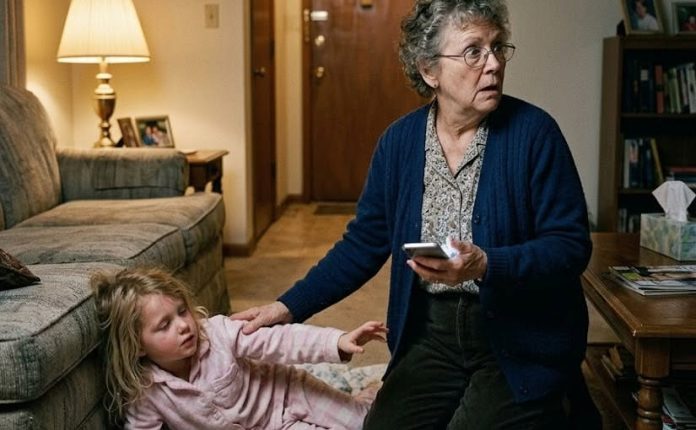
By Christmas, my house no longer felt temporary.
That concerned me.
Not because I regretted the children being there.
Because temporary arrangements have a way of becoming emotionally permanent before courts, adults, and children are ready to name them.
Noah’s books covered one shelf in my living room.
Lily’s drawings occupied the refrigerator.
Their shoes gathered beside my door.
I knew which cereal each preferred.
Which nightmares meant I should sit quietly and which required a hug.
Walter the cat slept on Noah’s bed almost every night despite claiming to hate children.
Routine formed.
Routine is safety.
Safety becomes home.
Then Daniel arrived every Saturday morning and reminded us another home still existed.
The first unsupervised daytime visit happened in November.
Four hours.
Daniel took them to a public park.
Then lunch.
The caseworker required check-ins.
He complied.
I spent all four hours reorganizing a pantry that did not need reorganizing.
At 1:45, my phone rang.
Daniel.
My stomach dropped.
“What happened?”
“Nothing.”
I gripped the counter.
“Then why are you calling?”
“Because Lily wants to know if she can have another hot chocolate.”
I closed my eyes.
“Daniel.”
“What?”
“You do not need my permission for cocoa.”
Silence.
Then he laughed.
A real laugh.
I hadn't heard it in years.
“I guess I’m overcorrecting.”
“Possibly.”
Lily shouted in the background:
“Grandma says yes!”
“I did not say yes.”
She laughed.
Daniel did too.
For one second, our family sounded normal.
That was dangerous.
Normal can make people rush.
I refused to.
When they returned, Noah looked happy.
Lily had chocolate on her coat.
Daniel stood outside instead of entering.
“Good day?”
Noah nodded.
“Dad let us get fries.”
“I heard.”
Daniel smiled.
Then asked:
“Can I talk to you?”
I hesitated.
“Outside.”
We stood on the porch.
He kept distance.
“I want to thank you.”
I almost laughed.
“Don't.”
“No.”
He shook his head.
“Not for taking them.”
“Good.”
“For not making them hate me.”
My throat tightened.
“I wouldn't.”
“I might have.”
That honesty surprised me.
“What do you mean?”
“If our positions were reversed.”
He looked ashamed.
“I would have told them everything you did wrong.”
“Maybe.”
“I think I would have needed them on my side.”
I leaned against the railing.
“That is why children should not be sides.”
He nodded.
“I’m learning.”
Then:
“I found a new job.”
“What kind?”
“Warehouse operations.”
Different from finance.
Lower pay.
Fixed schedule.
No remote nights.
“I start Monday.”
“Good.”
“I told them about treatment.”
That surprised me.
“All of it?”
“Enough.”
“And?”
“They still hired me.”
He looked almost amazed by that.
I smiled.
“People can know the truth and still give you a chance.”
His eyes filled.
“I wish I'd believed that earlier.”
So did I.
Daniel moved from the house where the children had been neglected.
That mattered too.
He could not afford it after financial restructuring anyway.
The mortgage had been manageable only when he was employed in his old job.
He sold.
After closing costs and debt, little remained.
He rented a modest two-bedroom townhouse.
No basement.
When he showed me the listing, I almost laughed at how relieved that made me.
He understood.
“I specifically avoided basements.”
“Good.”
Noah chose his room during a supervised tour.
Blue walls.
Window facing a maple tree.
Lily’s room was smaller.
She loved it because the closet had a built-in shelf she immediately called “the doll hospital.”
Still, they did not move in.
Not yet.
January brought overnight trial visits.
One night.
Then back to me.
The first Friday, Lily packed three stuffed animals and six pairs of socks.
“You’re gone one night.”
“I know.”
“Why six socks?”
“What if some get wet?”
Fair.
Noah packed his notebook.
I noticed.
Said nothing.
Daniel arrived.
Rang the bell.
Waited.
Always now.
“Ready?”
Lily froze.
I saw fear flash.
Then she ran back and hugged me.
“What if I get sick?”
I looked at Daniel.
His face broke.
But he did not rush to reassure in a way that erased her fear.
He knelt.
“If you get sick, we call Grandma if you want.”
Lily looked at him.
“And doctor?”
“If you need one.”
“Promise?”
“Yes.”
She looked at me.
“Can adults break promises?”
Oh, sweetheart.
“Yes.”
Her face fell.
“So how do I know?”
Daniel answered before I could.
“You don't know yet.”
I looked at him.
He continued.
“You watch what I do.”
Lily thought.
Then nodded.
That was the right answer.
Not:
Trust me.
He had used those words too cheaply.
The overnight went well.
Not perfectly.
Noah called me at eleven.
“Grandma?”
“Yes?”
“Nothing’s wrong.”
“Okay.”
“I just wanted to know your phone works.”
My throat tightened.
“It works.”
“Okay.”
“Good night.”
“Good night.”
That became his ritual for three overnights.
Then he stopped calling.
I missed it.
And celebrated it.
By February, Daniel’s gambling treatment had reached ten months without reported betting.
He attended recovery meetings.
Submitted financial monitoring.
His trust restitution plan was active.
The independent fiduciary remained in control of the children's funds.
That arrangement would continue regardless of custody.
Good.
One of the most useful outcomes of the entire crisis was removing money from the emotional battlefield.
The children's funds had rules.
Documentation.
Oversight.
No parent or grandparent could simply redefine need.
Daniel hated it initially.
Then said:
“I shouldn't be trustee again.”
That mattered.
“Maybe someday.”
“No.”
He shook his head.
“I don't want it.”
“Why?”
“Because I know what I did when shame and money got mixed.”
I nodded.
Self-knowledge can be protection.
The legal case arising from the night of the emergency moved separately.
Daniel ultimately accepted responsibility under a negotiated resolution related to child endangerment and the confinement of Noah, subject to the specific terms reached through counsel and the court.
I did not celebrate.
He received probationary conditions, treatment requirements, and continued compliance expectations.
No dramatic prison sentence.
No public spectacle.
Some relatives thought that was too little.
Others thought any legal consequence was too harsh.
I stopped debating.
The criminal system was not my revenge mechanism.
My concern remained the children.
Daniel's accountability mattered because minimizing would have made reunification unsafe.
He had to say:
I did it.
Not:
I was grieving.
Not:
Mom interfered.
Not:
The children exaggerated.
I did it.
And eventually he did.
One evening, after a therapy session, Noah came home angry.
He threw his backpack.
Not at me.
Onto the floor.
“I hate therapy.”
“Okay.”
“It’s stupid.”
“Possibly.”
He glared.
“You always say that.”
“What?”
“Possibly.”
“I find it useful.”
He almost smiled.
Then cried.
“I don't want to go back to Dad.”
There it was.
I sat.
“You don't have to decide tonight.”
“They keep asking what I want.”
“Who?”
“Everybody.”
Therapist.
Advocate.
Caseworker.
Lawyers indirectly.
Adults trying to honor his voice had accidentally made him feel responsible for the outcome.
“What if I say I want to stay here?”
“Then they'll listen.”
“Dad will be sad.”
“Yes.”
“What if I say I want Dad?”
“I might be sad.”
His face crumpled.
Exactly.
Choice became betrayal either way.
I moved closer.
“Noah.”
He looked at me.
“You are not deciding which adult wins.”
He cried harder.
“No one should ask you to choose a winner.”
“What am I supposed to say?”
“The truth.”
“I don't know the truth.”
“That is a truth.”
He stared.
“You can say you love Dad.”
He nodded.
“You can say you feel safe here.”
Another nod.
“You can say you want more time.”
His shoulders dropped.
“Can I?”
“Yes.”
“You won't be mad?”
“No.”
“Dad?”
“I cannot promise how he feels.”
I thought.
“But he is responsible for managing it.”
That phrase became important.
Adults manage adult feelings.
Children do not.
At the next family meeting, Noah said:
“I want Dad. But not full-time yet.”
Daniel cried.
Then nodded.
Lily said:
“I want Grandma’s house for school nights and Dad’s house for some weekends.”
The professionals listened.
No immediate full reunification.
Instead, a gradual shared transition.
That was harder administratively.
Probably healthier emotionally.
Daniel accepted it.
Then spring arrived again.
One year since the emergency.
Easter.
I dreaded it without knowing why.
No bad Easter history existed before.
Still, holidays carry anniversaries whether calendars ask permission.
Daniel invited us to lunch at his townhouse.
Not a grand family gathering.
Me.
Noah.
Lily.
Daniel.
He cooked chicken badly.
Mashed potatoes well.
Lily made cupcakes.
At one point, she knocked over a glass.
It shattered.
Everyone froze.
Noah went pale.
Lily began crying instantly.
“I’m sorry!”
Daniel stood.
For half a second, I saw the old family panic.
Then he stopped.
“Nobody move.”
His voice was calm.
“Glass on the floor.”
He got shoes.
Swept carefully.
Checked Lily’s feet.
No anger.
No lecture.
No:
Look what you did.
When everything was cleaned, Lily whispered:
“Are you mad?”
Daniel knelt.
“No.”
“You sure?”
“Yes.”
“It was an accident.”
“I know.”
She hugged him.
I looked away.
Not because I was emotional.
Because some moments belong to the people repairing them.
After lunch, Daniel walked me to my car.
“Did I pass?”
I frowned.
“What?”
He smiled nervously.
“Glass.”
“Daniel.”
“I know.”
His smile disappeared.
“Wrong question.”
“Yes.”
He nodded.
“I keep wanting a grade.”
“Recovery doesn't work like school.”
“So everybody tells me.”
I looked at him.
“You handled it well.”
His eyes filled.
“Thank you.”
Then:
“I've been thinking about that night.”
“I know.”
“No. About your part.”
I waited.
“I hated you for coming.”
My chest tightened.
“I know.”
“I thought you took everything from me.”
Silence.
“The kids. Control. Privacy.”
He looked toward the townhouse.
“But you didn't take them.”
“No.”
“I lost the right to be alone with them for a while because of what I did.”
“Yes.”
That sentence mattered.
Language mattered.
He continued.
“And when I started getting things back, it wasn't because you gave them back.”
Another.
“It was because I became safer.”
“Yes.”
He nodded slowly.
“I think that's the first time I understand.”
I believed him.
Not completely.
Trust rarely returns completely.
But enough.
The final permanency hearing came six weeks later.
By then, Daniel had maintained employment.
Treatment.
Financial compliance.
Stable housing.
Expanded overnight parenting.
Positive reports.
The children wanted increased time with him but did not want to abruptly leave my home.
The court approved a transition plan.
Not immediate full custody restoration.
Shared placement first.
Then review.
I sat outside afterward feeling strange.
Jasmine hugged me.
“You did good.”
I laughed.
“I mostly worried.”
“That too.”
“What happens to me now?”
She smiled.
“You become Grandma again.”
The sentence unexpectedly hurt.
I had been Grandma the whole time.
But also driver.
Medical contact.
School contact.
Nightmare responder.
Lunch packer.
Temporary legal guardian.
What did I do with the space when they were gone more often?
The first weekend both children stayed with Daniel for two nights, I wandered through my house like I had forgotten my own life.
Walter the cat followed me suspiciously.
I made tea.
Left it untouched.
Watched half a movie.
At 9:30, I almost called.
Stopped.
At 9:42, Lily video-called me.
Her face filled the screen.
“Grandma!”
Relief flooded me.
Then guilt.
“Hi.”
“We made popcorn.”
Daniel appeared behind her.
“Not after nine next time.”
Lily rolled her eyes.
“Dad says rules.”
I smiled.
“Terrible.”
Noah shouted:
“Grandma, look!”
He showed me a model airplane.
They were okay.
Happy, even.
I hung up.
Cried.
Then slept.
My job was changing.
Not ending.
Changing.
That was hard.
A year earlier, I had learned when to interfere.
Now I was learning when to loosen my grip without disappearing.
Both require courage.
END PART 4