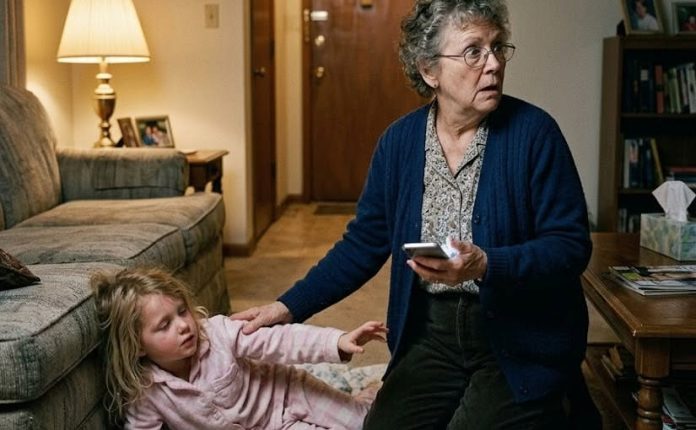
Lily remained hospitalized for two nights.
Noah came home with me the first afternoon.
I had expected relief once he was safely inside my house.
Instead, he stood in my entryway holding a plastic hospital bag and looked as though he was waiting for instructions in a place he had visited hundreds of times.
“You can put your things anywhere.”
He stared.
“Anywhere?”
“Yes.”
“Can I use the blue room?”
The blue room had always been his.
Not officially.
It was simply where he slept during visits.
Twin bed.
Bookshelf.
Old wooden train set.
A quilt Rebecca had made before Lily was born.
“Of course.”
He nodded.
Then didn't move.
I realized he was waiting for permission to walk upstairs.
That realization hurt in a way I could not name.
“Go ahead, honey.”
He climbed slowly.
I followed several steps behind.
At the doorway, he turned.
“Can I close it?”
“Yes.”
“Lock it?”
The bedroom did not have a key lock.
Only a simple privacy button.
“Yes.”
His shoulders loosened.
That was the first time I understood a locked door could mean safety to one child and punishment to another.
I went downstairs.
Sat at the kitchen table.
Then cried.
Not dramatically.
Quietly.
Hands over my face.
Because during the emergency, there had been no space for guilt.
Now there was.
I thought about every time I had told myself not to interfere.
Every time Daniel looked irritated when I asked a question and I backed away.
Every visit cut short because he said the kids needed routine.
Every unanswered call I accepted as grief.
I had respected his boundaries.
But boundaries are supposed to protect people.
Not isolate them from witnesses.
My phone rang.
Carmen.
She told me a caseworker would visit that afternoon.
Temporary kinship placement required background checks, home assessment, sleeping arrangements, medication review, school coordination.
None of it offended me.
I wanted everything documented.
For years, our family had operated through assumptions.
No more.
The caseworker, Jasmine Wells, arrived at three.
She was younger than I expected.
Maybe mid-thirties.
Efficient.
Warm without being sentimental.
She walked through the house.
Checked smoke detectors.
Food.
Bedrooms.
Medications.
Asked whether I had firearms.
“No.”
Alcohol?
“Wine in the pantry.”
She noted it.
Pets?
“One ancient cat named Walter.”
As if summoned, Walter appeared and glared at her.
Noah almost smiled.
That mattered.
Jasmine sat with him privately.
I went outside.
Not because I wanted to.
Because children deserve to speak without watching the adults they love react.
Thirty-five minutes later, Jasmine called me back.
Noah was sitting on the sofa holding Walter.
He looked exhausted.
Jasmine asked:
“Do you have access to the children's school portal?”
“No.”
“Daniel does.”
“Can the school grant me temporary access?”
“With documentation, likely.”
She paused.
“Noah says he has missed school.”
“How much?”
He stared at Walter.
“Some.”
Jasmine waited.
“Like Fridays.”
“Every Friday?”
“Not every.”
“Why?”
He shrugged.
“Dad sleeps.”
My stomach tightened.
“What does that mean?”
Noah looked at me.
“I’m not supposed to say.”
Jasmine answered gently.
“You're allowed to tell the truth.”
“He stays up late.”
“Doing what?”
“I don't know.”
“Then what happens in the morning?”
“Sometimes I make cereal.”
“For Lily too?”
He nodded.
“Do you get yourselves ready?”
“Yes.”
“Who takes you to school?”
“Dad.”
“And when he doesn't wake up?”
“We stay home.”
My mouth went dry.
“How often?”
“Sometimes.”
Jasmine did not push further then.
She shifted topics.
Food.
Discipline.
Bedtime.
Doctor visits.
Then:
“Has your father ever hit you?”
Noah thought.
“No.”
“Grabbed you?”
“Sometimes.”
“Where?”
“Arm.”
“Hard enough to hurt?”
Another pause.
“Sometimes.”
“Any marks?”
“Not usually.”
I closed my eyes briefly.
Not usually.
The phrase should never belong to a nine-year-old describing a parent.
When Jasmine left, she asked me to gather school and medical records as they became available.
Then she looked at me.
“Felicia?”
“Yes?”
“Do not interrogate him.”
“I won't.”
“You will want answers.”
“I already do.”
“I know.”
She softened.
“Let him have dinner.”
That was excellent advice.
I made spaghetti.
Too much.
Noah ate two plates.
Then a third half-portion.
He kept glancing toward the refrigerator.
“You can have more.”
He shook his head.
“I'm full.”
Later, I found two wrapped dinner rolls inside the pocket of his sweatshirt.
He saw me see them.
His face went white.
“I wasn't stealing.”
My heart broke.
“No.”
“I was saving them.”
“For tomorrow?”
“For Lily.”
I sat beside him.
“There will be breakfast.”
He stared.
“And lunch.”
Nothing.
“And dinner.”
His eyes filled.
“Every day?”
I had to look away for a second.
“Yes.”
Every day.
He nodded.
Then handed me the rolls.
“Can we still keep them?”
“Yes.”
We put them in the breadbox together.
The next morning, Noah wanted to go to school.
I was surprised.
“You don't have to today.”
“I want to.”
“Why?”
“My teacher will worry.”
His teacher.
Not his father.
His teacher.
I drove him.
The school office already had temporary placement information.
Ms. Alvarez, his fourth-grade teacher, came out.
The moment she saw Noah, her face changed.
She hugged him only after asking.
“Can I?”
He nodded.
She held him.
Then looked at me.
“Can we talk?”
I arranged for Noah to go to class.
Ms. Alvarez led me into an office.
She closed the door.
“I've been trying to reach Daniel for months.”
My stomach tightened.
“About what?”
“Attendance.”
“How much?”
She opened a record.
Twenty-seven absences.
Fourteen tardies.
Since September.
It was March.
I stared.
“Why wasn't I told?”
“You aren't listed as an educational contact.”
Of course.
“Did anyone do home visits?”
“The attendance office attempted one.”
“What happened?”
“No response.”
I covered my mouth.
Ms. Alvarez continued.
“Noah has also been taking food.”
My chest tightened.
“Stealing?”
“No.”
She immediately shook her head.
“Nothing like that.”
She explained.
Extra crackers.
Unopened milk.
Fruit.
He would ask if leftovers from class events could go home.
Once, he took two breakfast bars from a donation basket and apologized so intensely when asked that the counselor became concerned.
“What did Daniel say?”
“That Noah had anxiety about food after his mother died.”
I stared.
That was plausible.
Which made it perfect.
“Did you believe him?”
“At first.”
Then other things.
Noah falling asleep.
Wearing the same sweatshirt repeatedly.
Getting nervous when school forms required parent signatures.
Lily’s kindergarten teacher reportedly had concerns too.
I asked:
“Were reports made?”
Ms. Alvarez became careful.
“I can only speak generally about mandated reporting procedures.”
That was fair.
But her eyes told me concerns had not remained inside the school.
Someone had been noticing.
The system had pieces.
Nobody had yet seen the whole.
I thanked her.
Before leaving, she gave me a zippered backpack.
“Noah left this yesterday.”
I recognized it.
Black with a green stripe.
At home, I set it on the kitchen table.
I did not search immediately.
Then I remembered Jasmine asking for records.
I called.
She told me I could secure school materials but not destroy or alter anything potentially relevant.
So I opened it.
Math workbook.
Pencils.
A broken ruler.
Lunchbox.
Then notebooks.
One was labeled:
Things I Need To Remember.
My stomach dropped.
The first pages were ordinary.
Spelling words.
Homework.
Dates.
Then the entries changed.
Jan 9 Dad slept all day.
Jan 14 Lily sick.
Jan 15 no milk.
Jan 19 Dad said stop telling Grandma stuff.
I sat down.
Jan 23 school called Dad. He got mad.
Feb 2 Dad took my tablet.
Feb 4 Lily cried because hungry.
Feb 7 Grandma brought food. Dad said we already had food.
I remembered February seventh.
I had dropped off groceries.
Daniel met me at the door.
Would not let me inside.
He laughed.
“Mom, we're not starving.”
I apologized.
Drove home embarrassed.
Noah had written:
Dad put groceries in garage then later took some away.
My hands started shaking.
Where?
Why?
I called Jasmine.
She came within an hour.
We reviewed the notebook together.
Then she asked:
“Do you know whether Daniel has financial problems?”
“No.”
That answer felt wrong.
I thought.
“Rebecca had life insurance.”
Jasmine looked up.
“How much?”
“I don't know exactly.”
Then I did.
Rebecca once told me.
$250,000 through work.
Plus survivor benefits for the children.
She had also inherited around $40,000 from her grandmother.
After her death, Daniel told me the insurance paid the mortgage and created a college reserve.
I never asked for statements.
Why would I?
He was their father.
Trust again.
Jasmine said:
“Financial issues may or may not be relevant. Don't investigate beyond what you're legally authorized to access.”
Good advice.
So I called the attorney who had handled Rebecca’s estate.
Margaret Levin.
She remembered me.
I explained the emergency.
She could not disclose confidential details casually.
But she could tell me something crucial.
“Rebecca created a testamentary trust through her estate documents.”
I froze.
“A trust?”
“For portions of funds intended for the children.”
“Daniel told me everything went through him.”
“Not everything.”
My heartbeat changed.
“Who is trustee?”
Margaret paused.
“You were named successor trustee under certain circumstances.”
I nearly dropped the phone.
“What?”
“You did not know?”
“No.”
Rebecca had named Daniel first.
Then me if Daniel became unable or was removed.
I sat down.
“Has the trust been administered?”
Another careful pause.
“I recommend you have your attorney contact me with the emergency custody documentation.”
That meant something was wrong.
Not necessarily theft.
But wrong.
I called Maya Patel.
Yes, the same Maya who had helped me years earlier with my own estate planning.
By evening, she had started coordinating with Margaret.
Meanwhile, Lily’s doctor called.
Her infection was responding well.
They wanted one more night.
I drove to the hospital.
Noah came with me.
The moment Lily saw him, she cried.
He climbed carefully beside her after the nurse allowed it.
“I told them.”
Lily looked frightened.
“What?”
“Everything.”
Her eyes shifted toward me.
“Dad will be mad.”
I sat.
“Dad’s feelings are not your job.”
She stared at the blanket.
Then whispered:
“He says if people know stuff, they take kids away.”
My chest tightened.
“Has he said that before?”
She nodded.
“When?”
“When school asks questions.”
Noah added:
“He says foster homes are worse.”
I felt physically sick.
Daniel had weaponized their fear of separation.
Jasmine arrived during visiting hours.
She spoke separately with Lily.
Later, she told me only what I needed to know.
Lily reported being sick for at least three days.
Daniel had given her medicine inconsistently.
She had asked for a doctor.
He said doctors cost money.
I had been paying their health-insurance premiums.
Rebecca’s former employer benefit continued some coverage.
Money was not the reason.
Or not the full reason.
That night, Daniel called again.
This time his voice sounded tired instead of angry.
“Mom.”
“Yes?”
“Can we talk?”
“About the children?”
“Yes.”
“Go ahead.”
“They're exaggerating.”
I closed my eyes.
“Which part?”
“Noah has always been dramatic.”
“Twenty-seven absences?”
Silence.
“How do you know?”
“School.”
“I can explain.”
“Then explain.”
“I've been depressed.”
That stopped me.
Not because it excused anything.
Because it was plausible.
Grief.
Depression.
Exhaustion.
“I've had bad mornings.”
“Twenty-seven.”
“I know.”
“Why no food?”
“We had food.”
“Noah was saving bread.”
Daniel exhaled.
“He does that.”
“Why?”
“Rebecca's death messed him up.”
The phrase made me angry.
Not because grief wasn't real.
Because every concern became Rebecca's ghost.
“Why was he locked in the basement?”
“He wouldn't stop.”
“Stop what?”
“Yelling at me.”
“He says he asked you to help Lily.”
“He wouldn't listen.”
“To what?”
“That she was fine.”
“She was not fine.”
“I didn't know.”
“You could have taken her to a doctor.”
“I couldn't.”
There.
Not wouldn't.
Couldn't.
“Why?”
Silence.
“Daniel.”
“I was dealing with things.”
“What things?”
“None of your business.”
I nearly laughed.
“Your daughter was hospitalized.”
“Don't do this.”
“Then what?”
His voice broke.
“You have always thought you could do better than me.”
No.
There it was again.
The old wound.
“I don't want your children.”
“You're taking them.”
“Temporarily, because they cannot safely return today.”
“You love this.”
I almost hung up.
Instead:
“Do you really believe I wanted to find Lily on the floor?”
Silence.
“Do you think I wanted Noah behind a locked door?”
Nothing.
“Do you think I wanted to learn they were afraid to call me?”
His breathing changed.
“I made mistakes.”
“Yes.”
“I lost Rebecca.”
“So did they.”
That silenced him.
Not forever.
Long enough.
After the call, Maya arrived at the hospital cafeteria with a folder.
Her face was serious.
“What?”
“The trust.”
I sat.
“Tell me.”
Rebecca’s documents had created approximately $120,000 in protected funds after specified debts and expenses.
Daniel had authority to request distributions for the children's health, education, and support.
He had made distributions.
Many.
Some legitimate.
School clothing.
Therapy initially.
Medical copays.
Then the requests changed.
Cash reimbursements.
Household expenses.
“Emergency repairs.”
Margaret had questioned several.
Then Daniel stopped providing complete documentation.
The trust still held money.
But far less than expected.
“How much?”
“About forty-one thousand.”
My stomach dropped.
“Where did the rest go?”
“We don't know yet.”
“What about life insurance?”
“That was separate.”
I felt dizzy.
“Can we find out?”
“Potentially through the custody case and financial discovery if relevant.”
I stared at the cafeteria table.
“Why would he do this?”
Maya looked at me.
“We don't know that he misused all of it.”
Fair.
“Don't outrun the evidence.”
I nodded.
Then my phone buzzed.
Unknown number.
I answered.
“Mrs. Morgan?”
“Yes.”
“This is Patrick Doyle. I work with Daniel.”
Worked.
Past tense in his tone.
“I’m sorry to call this late.”
“What happened?”
He sounded uncomfortable.
“Police came by the office.”
My stomach tightened.
“And?”
“Daniel hasn't worked here in four months.”
I froze.
“What?”
“He told you?”
“No.”
Patrick exhaled.
“He was terminated in November.”
“For what?”
“I probably shouldn't discuss personnel details.”
“Then why are you calling?”
“Because Daniel listed you as an emergency contact, and… Mrs. Morgan, people here are worried.”
“About what?”
A pause.
“Gambling.”
My hand tightened around the phone.
“What?”
“He was borrowing money.”
Another pause.
“Using payday apps.”
Another.
“He asked two guys to cover his sportsbook balance.”
I closed my eyes.
Everything began rearranging.
The missing food.
The trust withdrawals.
The unopened bills.
The missed school.
The bar.
Patrick continued:
“We thought somebody in the family knew.”
“No.”
“I’m sorry.”
After the call, I sat alone in the hospital cafeteria.
For two years, I had thought Daniel's life looked chaotic because grief had broken his routines.
Now another possibility emerged.
Grief had opened a hole.
And Daniel had been feeding something else into it.
Money.
Time.
Attention.
Maybe the children too.
The next morning, Margaret obtained additional account records through proper legal channels connected with the trust administration.
One withdrawal description repeated.
Child Support Expense Reimbursement.
But the destination account was not a grocery store.
Not school.
Not hospital.
It was an online payment processor frequently used by gaming and betting platforms.
Maya looked at me.
“This still needs verification.”
I nodded.
But my heart already knew what my brain was refusing to conclude.
The hidden truth was not one bad night.
My son had been unraveling for months.
And while everyone around him worried about respecting his grief, his children had been quietly paying the price.
END PART 2