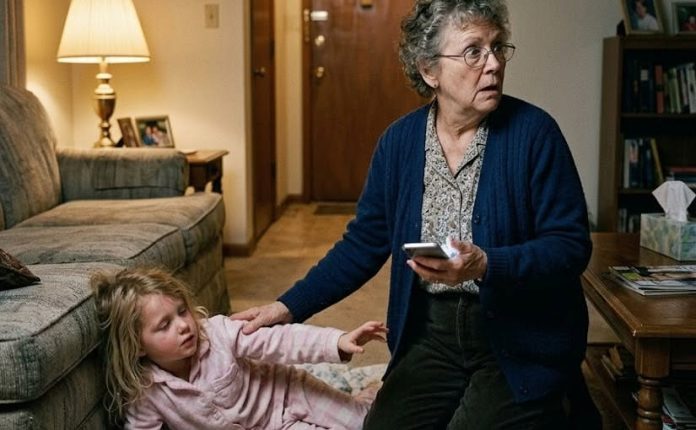
Three days after Lily came home from the hospital, Daniel appeared at my front door.
Not unannounced.
Technically.
He called from the driveway.
“Can I see them?”
I looked through the curtain.
He stood beside his truck.
Unshaven.
Same jacket he had worn the night Rebecca died at the hospital.
That detail nearly broke me.
“No.”
Silence.
“Mom.”
“The current safety plan does not allow unsupervised contact.”
“I didn't ask unsupervised.”
I closed my eyes.
“Did you arrange through Jasmine?”
“No.”
“Then no.”
His voice hardened.
“They're my children.”
“Yes.”
“Open the door.”
“No.”
“Mom.”
I looked toward the living room.
Noah was doing homework.
Lily colored beside him.
Both became still when they heard Daniel’s voice through my phone.
Lily’s crayon stopped.
That decided it.
“Leave.”
He swore.
Then:
“You're enjoying this.”
I ended the call.
Daniel remained in the driveway eleven minutes.
I documented it.
Not because I wanted evidence against him.
Because I was learning that memory becomes unreliable under pressure, and my son had built his defense partly on making everyone question theirs.
The next supervised visit happened three days later at a family-services center.
I did not attend.
That was deliberate.
The children needed space that was not triangulated through me.
Afterward, Noah said almost nothing.
Lily cried in the car.
“What happened?”
She shook her head.
I remembered Jasmine’s instruction.
Don't interrogate.
So I drove.
Ten minutes later, Lily whispered:
“Dad said he misses us.”
“I’m sure he does.”
“He cried.”
I kept my eyes on the road.
“That can happen.”
“Am I bad because I wanted to go?”
My throat tightened.
“No.”
“He asked if Grandma tells us bad things.”
I gripped the steering wheel.
“What did you say?”
“That you don't.”
Good.
Not because I needed loyalty.
Because it was true.
I had made one rule for myself.
I would not make Daniel’s children carry my anger at Daniel.
They deserved truth.
Not recruitment.
The family-court process moved quickly at first, then slowly.
Emergency orders often do that.
Immediate safety.
Then hearings.
Evaluations.
Plans.
Daniel obtained a lawyer.
Good.
I meant that.
Even when people have done terrible things, fair process matters.
His attorney argued that the incident was an isolated failure during acute grief and depression.
The children had never previously been removed.
No serious prior injuries.
Daniel had been a functioning parent for years after Rebecca’s death.
He agreed to therapy.
Substance screening.
Parenting education.
A financial-management plan.
He denied gambling had impaired his parenting to the extent alleged.
Then discovery started.
The financial records did not support him.
Sports betting.
Online casino transactions.
Large.
Frequent.
Often late at night.
Some losses were paid from his own checking.
Then credit cards.
Then personal loans.
Then funds transferred from accounts connected to the children’s trust reimbursements.
The exact legal characterization required attorneys and accounting.
But morally?
The picture became harder to escape.
Maya warned me repeatedly:
“Do not call him a thief unless the court makes that finding.”
I listened.
Words matter.
Especially when family stories become evidence.
But nobody had to use the word thief to understand that money intended to support Noah and Lily had been diverted while Noah hid food in his sweatshirt.
That fact haunted me.
Then came the life-insurance policy.
Rebecca’s $250,000 policy had paid directly to Daniel as beneficiary.
Legally his, subject to no trust restriction unless otherwise specified.
Daniel used part of it to pay the remaining mortgage.
Good.
Some to pay funeral expenses.
Good.
Some for a minivan.
Reasonable.
Then nearly $70,000 disappeared over eighteen months.
Debt payments.
Cash withdrawals.
Gaming transactions.
Hotels.
Alcohol purchases.
Not one dramatic weekend.
A slow leak.
Grief monetized into avoidance.
Daniel’s lawyer did not deny the records.
Instead, they reframed them.
Addiction.
Depression.
Untreated trauma.
I agreed with all three possibilities.
What I rejected was the idea that explanation restored safety automatically.
At the first major hearing, Daniel looked at me across the courtroom.
He seemed smaller than my son had ever seemed.
For one dangerous second, maternal instinct took over.
I wanted to cross the aisle.
Sit beside him.
Tell the judge:
He is hurting.
He needs help.
Please don't destroy him.
Then I looked at Noah.
Sitting outside with a child advocate, not in the courtroom.
The child who had written:
Please make sure she is okay.
My instinct changed.
Help Daniel.
Yes.
But not by sacrificing them.
The judge continued temporary placement with me.
Supervised visitation.
Treatment requirements.
Full evaluation.
School attendance protections.
Medical decision oversight under the temporary order.
Nothing permanent.
Daniel cried.
I did too.
Afterward, he caught me near the courthouse elevator.
His lawyer stood nearby.
“Happy?”
I stopped.
“No.”
“You got them.”
“That is not what happened.”
“It is exactly what happened.”
“You think I wanted this?”
“You always thought Rebecca and I were irresponsible.”
I stared.
“No.”
“You thought you could raise them better.”
“No.”
“You questioned everything.”
“Because things were wrong.”
“After Rebecca died.”
“No.”
He flinched.
“Daniel.”
My voice softened.
“You were a good father before things got bad.”
His eyes filled.
That hurt him.
Maybe because it meant I remembered.
“You loved those children.”
“I still do.”
“I know.”
“Then give them back.”
I closed my eyes.
“That isn't my decision.”
“You could tell CPS you're comfortable.”
“I’m not.”
His face hardened.
“There.”
“What?”
“The truth.”
“Yes.”
I looked at him.
“I am not comfortable sending them back today.”
He swallowed.
“Because of gambling?”
“Because Lily was sick on the floor while you were at a bar.”
His eyes closed.
“Because Noah was locked in a basement.”
He looked away.
“Because they were afraid to call for help.”
“I know.”
“No.”
I stepped closer.
“You know the facts.”
Then:
“I don't know if you have let yourself understand what those facts felt like from the other side of the door.”
He began crying.
Quietly.
“I couldn't handle them anymore.”
There.
The first unvarnished confession.
“What do you mean?”
“They needed things constantly.”
“They're children.”
“I know.”
“Then?”
His shoulders shook.
“Every time Lily got sick, I remembered Rebecca.”
My anger softened around the edges.
Not disappeared.
Changed.
“She used to handle that.”
“I know.”
“No.”
He shook his head.
“You don’t understand.”
“Then tell me.”
He leaned against the courthouse wall.
“When they cried, I heard her dying.”
My breath caught.
“When Noah asked for help with homework, I remembered her doing it.”
He wiped his face.
“When Lily called for me at night, sometimes I would stand outside her door and feel like I couldn't breathe because Rebecca should have been answering.”
I said nothing.
“So I started drinking.”
“Then betting.”
He nodded.
“When I bet, everything shut up.”
There it was.
Not greed.
Escape.
Still damaging.
Still chosen repeatedly.
But human.
“I could focus on one thing.”
He stared at the floor.
“A number.”
“A game.”
“A score.”
“Anything except the house.”
My throat hurt.
“Why didn't you tell me?”
His laugh was bitter.
“Because you'd come take over.”
“I would have helped.”
“Exactly.”
He looked at me.
“I didn't want you seeing I couldn't do it.”
“So you hid it until the kids couldn't do it either.”
His face crumpled.
“Yes.”
I cried then.
Not for custody.
Not for court.
For my son.
For the boy with injured birds.
For the husband who lost Rebecca.
For the father who let shame mutate into secrecy until his children learned to survive around him.
I said:
“You need help.”
“I know.”
“No.”
I remembered our earlier conversation.
“Knowing afterward is cheap.”
He looked at me.
“So what do you want?”
“I want you to do the work when nobody is applauding.”
He wiped his face.
“What if it isn't enough?”
“For what?”
“To get them back.”
I thought carefully.
“If the only reason you get healthy is to win custody, then every setback becomes their fault.”
He stared.
“Get healthy because you are alive.”
Silence.
“Become safe because you are their father whether they live with you next month or not.”
He nodded slowly.
That conversation changed something.
Not instantly.
Daniel still resisted.
Still blamed.
Still had bad weeks.
But he entered treatment.
Gambling addiction program.
Grief therapy.
Alcohol monitoring.
Parenting classes.
He began attending consistently.
The children changed too.
Lily recovered physically within two weeks.
Emotionally?
Slower.
She asked permission for everything.
“Can I get water?”
“Can I sit here?”
“Can I wake you up if my stomach hurts?”
That one broke me.
“Yes.”
Every time.
Noah started sleeping with his bedroom light on.
Then stopped after a month.
He continued keeping notes.
Not secret evidence anymore.
A journal.
His therapist encouraged it.
At first, he wrote factual lists.
Grandma picked me up.
Lily went to doctor.
Dad visit Thursday.
Then feelings appeared.
I was mad.
I miss Dad.
I don't want to go home yet.
The last sentence devastated me.
Because love and fear occupied the same child.
One evening, Noah asked:
“Do you hate Dad?”
“No.”
He studied my face.
“Are you lying?”
“No.”
“Then why can't he come here?”
“Because loving someone does not mean pretending everything they do is safe.”
He thought.
“Do you love him more than us?”
My breath stopped.
“No.”
“Who do you love most?”
Children love impossible questions.
I smiled sadly.
“I love you differently.”
“That’s cheating.”
“Probably.”
He almost smiled.
Then:
“If Dad gets better, do we have to leave you?”
There it was.
Another fear.
Placement had created safety.
Safety created attachment.
Now reunification sounded like loss.
I sat beside him.
“You will never have to choose which adult you're allowed to love.”
His eyes filled.
“Even Dad?”
“Especially Dad.”
I meant it.
If Daniel became safe, I wanted his children to have their father.
Not because biology guarantees access.
Because healthy repaired relationships are valuable when they are real.
But I would not rush them to produce a happy ending for adults.
Meanwhile, the trust issue deepened.
The court appointed an independent fiduciary temporarily.
Good.
I did not want control of the money simply because I had custody.
That would repeat the pattern of mixing love and financial authority without oversight.
Records showed approximately $52,000 in questionable reimbursements over two years.
Not every dollar was proven improper.
Some covered household expenses that genuinely benefited the children.
Others were impossible to justify under trust terms.
The fiduciary and attorneys worked through it.
Daniel eventually signed an accounting agreement acknowledging amounts to be restored over time if determined improper.
He sold his truck.
Canceled memberships.
Liquidated a small investment account.
The process was not dramatic.
It was humiliating.
That mattered.
Consequences often look like spreadsheets.
One afternoon, Margaret called.
“Felicia, I found a letter.”
“What letter?”
“Rebecca's.”
My heart stopped.
Rebecca had written a private letter to Daniel to be delivered with the estate papers.
Margaret had retained a copy in the file because it related to trustee guidance.
She could share it through counsel now that the trust dispute was active.
The letter began:
Daniel, if you are reading this because something happened to me, I am sorry you are carrying what we were supposed to carry together.
I could barely continue.
Rebecca wrote about the children.
Their routines.
Their fears.
Noah pretending not to care when frightened.
Lily needing reassurance before sleep.
Then:
Please let your mom help. I know you hate feeling managed, but Felicia loves our children without needing to own them. If grief makes you shut down, do not shut her out too.
I covered my mouth.
Rebecca had known them both.
Then:
The trust is not because I doubt you. It is because grief can make good people bad at numbers, and because money meant for children should have more than one set of eyes.
I cried harder.
That sentence could have prevented so much if Daniel had allowed it to guide him.
Margaret asked:
“Do you want Daniel to receive a copy?”
“Yes.”
Immediately.
“Are you sure?”
“Yes.”
It was written to him.
Not weapon.
Not courtroom exhibit for emotional effect.
His wife’s voice belonged to him.
Daniel received it through his attorney.
He missed the next supervised visit.
I was furious.
Then Jasmine called.
“He checked into an inpatient stabilization program voluntarily.”
My anger disappeared.
Not because inpatient treatment proved everything.
Because for the first time, he responded to pain by moving toward help instead of away from it.
Two weeks later, he wrote the children separate letters.
Not asking forgiveness.
Not asking them to come home.
No promises.
No guilt.
No:
Dad needs you.
Instead:
I made choices that scared you. Adults are responsible for getting help before children have to rescue them. Noah, you should never have been put in the basement. Lily, you should have been taken to a doctor. None of that was because you were difficult.
Noah read his three times.
Then asked:
“Did somebody make him write this?”
I smiled despite myself.
“I don't know.”
His therapist later asked him what he thought.
Noah said:
“I think Dad finally sounds like Dad.”
That sentence gave me hope.
Careful hope.
The dangerous kind.
Hope with paperwork attached.
By summer, Daniel had completed inpatient treatment and moved into structured outpatient care.
Visits expanded.
Still supervised.
Then partially supervised.
He arrived on time.
Brought no gifts unless approved.
Did not ask the children to keep secrets.
Did not blame me.
One visit, Lily became sick to her stomach.
Nothing serious.
She had eaten too much ice cream.
But Daniel panicked.
I watched through the observation window.
For one second, his face went white.
Then he did something different.
He called the supervising worker.
Asked for guidance.
Stayed calm.
Got Lily water.
Did not disappear.
Did not get angry.
Did not tell her she was fine.
He said:
“I’m here.”
I went home and cried.
Because improvement can hurt too.
It shows you how reachable different choices might have been.
Then autumn came.
The court scheduled a permanency review.
Daniel’s attorney would ask for expanded parenting time.
Possibly a gradual return plan.
I should have been happy.
Instead, I was terrified.
Not because I wanted to keep the children.
Because I had learned how much could hide behind apparent improvement.
The night before court, Noah came downstairs.
“Grandma?”
“Yes?”
“If Dad gets us back tomorrow, do we have to go immediately?”
My heart dropped.
“No.”
“Promise?”
“I can't promise what a judge decides.”
His face fell.
“But I can promise something else.”
“What?”
“I will keep telling the truth.”
He stared.
“Even if Dad gets mad?”
“Yes.”
“Even if I say I miss him?”
“Yes.”
“Even if I say I’m scared?”
“Yes.”
He nodded.
Then hugged me.
The next morning, inside family court, the judge listened to therapists, caseworkers, attorneys, the children’s advocate, and Daniel’s treatment providers.
Then she looked at my son.
“Mr. Morgan, progress is not the same as completion.”
Daniel nodded.
“I understand.”
“Your children love you.”
He cried.
“Yes.”
“They are also afraid of another collapse.”
His face tightened.
“I know.”
The judge continued placement with me.
Expanded visits.
Weekend daytime contact.
No overnights yet.
Another review in four months.
Daniel closed his eyes.
For a second I expected the old anger.
Instead, he said:
“Thank you.”
The judge looked surprised.
“So am I to understand you're not opposing continued placement?”
Daniel wiped his face.
“I want them home.”
Then he looked toward me.
“But I want them safe more.”
That was the first time my son chose their needs while losing something he wanted.
And that was the moment I began believing he might actually become their father again.
END PART 3