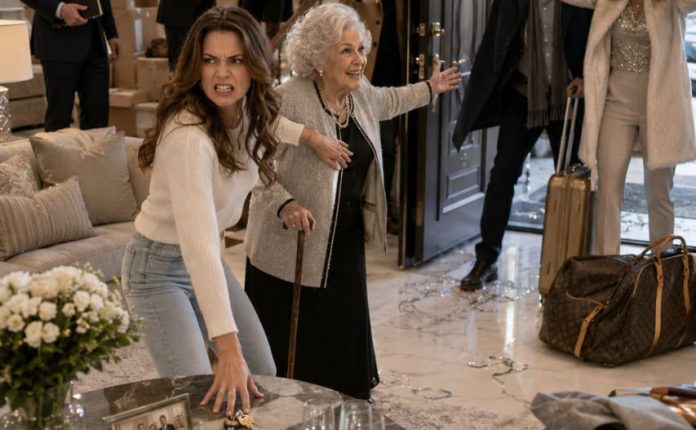
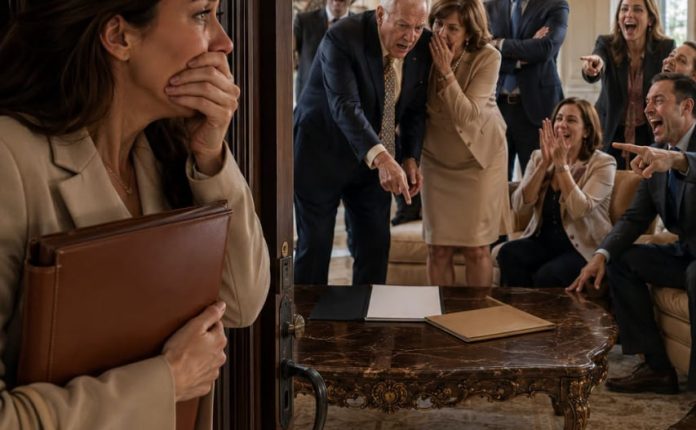
The retaliation began politely, which somehow made it worse. My cousin Rachel texted the next morning. “Hey, Claire. Is Grandma doing okay? Your mom says she’s been confused lately.” I stared at the message.
Grandma had chaired a board meeting three days earlier. Another relative called that afternoon and said, “I don’t want to get involved, but people are worried you’ve been influencing Margaret.” Then came an aunt I had not heard from since Christmas.
“She’s elderly, Claire. Sometimes older people make decisions they don’t understand.” The wording kept changing, but the accusation remained identical. Grandma was confused. I was controlling her. Sophie was bait. Vanessa was only concerned.
By the end of the week, our family group chat had become a courtroom. Vanessa finally wrote, “For everyone asking, Grandma signed major documents while under emotional pressure. Claire has been encouraging Sophie to manipulate her.”
“This is not about money. We are concerned about Grandma’s well-being.” I read the final sentence twice and laughed. Few things announce that something is about money as clearly as someone insisting, “This is not about money.”
Sophie walked into the kitchen while I stared at my phone. “Is Aunt Vanessa talking about me?” I locked the screen. “You don’t need to worry about it.” Sophie immediately replied, “That means yes.” She was twelve, not stupid.
I pulled out the chair beside me. “Sit.” She did. “This is not happening because of you.” Sophie looked down. “But if Grandma hadn’t picked me—” I stopped her. “No. If Grandma had chosen somebody else, Vanessa would have found someone else to blame.”
Sophie stared toward the floor. “I don’t even want the company if everybody hates me.” That hurt more than anything Vanessa had said. I reached across the table and took her hand.
“You do not make decisions about your future based on people who enjoy making you feel small.” Sophie nodded slowly. That evening, I created a folder on my laptop. Screenshots. Emails. Voicemails. I saved everything.
Then I drove to Grandma’s house. Her kitchen smelled like coffee and cinnamon, exactly as it had when I was little. She sat beneath the yellow light above the breakfast table, reading Vanessa’s messages without changing expression.
When she finished, she handed my phone back. “So that’s her strategy.” I said, “They’re telling people you don’t understand what you signed.” Grandma looked almost insulted. “Interesting.”
“Can they challenge it?” I asked. “They can challenge anything.” My stomach tightened, and Grandma noticed. “That doesn’t mean they’ll win.” The following morning, her attorney sent formal letters warning relatives to stop making false claims and directing estate questions to counsel.
That should have calmed everything. Instead, it changed the flavor of the attack. My parents became openly angry. Dad left a voicemail saying, “Claire, stop embarrassing this family. Tell your grandmother to fix this before you do permanent damage.”
I saved it. Mom sent a longer message. “We love you. Vanessa made a mistake, but destroying everyone financially isn’t normal. Think about what you’re teaching Sophie.” I saved that too.
Several days later, my doorbell camera alerted me while I was making dinner. I opened the app and felt my stomach sink. Mom. Dad. Vanessa. Brandon. All three children. They were standing on my porch holding flowers and a bakery box.
A peace offering. Or a performance. I opened the door but kept one hand against the frame. Mom smiled. “Sweetheart.” I answered, “No.” Her smile faltered. “We haven’t said anything.”
“You brought Vanessa.” My sister stepped forward with a soft expression. “We came to apologize.” Dad sighed. “Can everybody stop acting ridiculous for five minutes?” There was the real message.
I stared at him. “Is that your apology?” His jaw tightened. Mom pushed the flowers toward me. “We all got emotional.” I replied, “No. Sophie got humiliated. You got consequences.”
Vanessa’s smile twitched. “Claire, come on. You know I love her.” I answered, “No, I don’t.” Brandon looked away. Mom lowered her voice. “Just tell Grandma you misunderstood Vanessa’s joke. Tell her emotions were high.”
I stared at my mother. “You want me to lie.” She answered, “We want our family back.” I said, “No. You want your money back.” Vanessa’s face hardened immediately.
“That is disgusting.” I asked, “Then why haven’t any of you asked Sophie how she is?” Silence. Not one of them answered.
Behind me, footsteps sounded in the hallway. Sophie appeared. Vanessa immediately brightened. “There she is!” Sophie stopped several feet away. Vanessa smiled sweetly. “Hey, st—”
She caught herself. Sophie heard it. So did I. Vanessa laughed awkwardly. “Sorry. Habit.” My hands turned cold. Then, almost under her breath, she added, “Although she does smell like that sewing room half the time.”
Sophie’s face crumpled. Mom hissed, “Vanessa.” Too late. I looked directly at my sister. “Get off my porch.” Her eyes widened. “You’re serious?” “Yes.” Dad stepped forward.
“Claire—” I pointed toward the driveway. “Everyone. Leave.” Vanessa’s mask disappeared. “You think you can shut us out forever?” I answered, “I’m going to try.” Then I closed the door.
Through the wood, Dad shouted, “This isn’t over.” I listened to their footsteps retreat and then turned around. Sophie had already gone upstairs.
I found her sitting on the edge of her bed beside the navy dress. She had folded it neatly. Too neatly. “Mom?” she whispered. “Yeah?” Sophie looked down at the fabric. “I don’t want to wear this anymore.”
I sat beside her. That was when I understood what Vanessa was truly trying to destroy. Not Grandma’s estate plan. Not the company. Sophie’s confidence. I promised myself my sister would never get close enough to do it again.
Unfortunately, Vanessa had already decided she did not need my permission. A few days later, I came home and knew immediately that something was wrong. My house had a certain sound whenever Sophie was alone.
Normally, music came from her bedroom or I could hear the steady mechanical hum of the sewing machine. That afternoon there was nothing. Then I heard crying. I dropped my keys.
“Sophie?” I rushed into the living room and stopped. My daughter sat at the dining table with tears running down her cheeks. Vanessa stood beside the kitchen island.
Brandon hovered near the back door. Mason, Brooke, and Paige were gathered around Sophie’s sewing area. For a second, I honestly could not process what I was seeing.
Vanessa smiled. “Oh. Hey.” My voice came out dangerously calm. “What are you doing in my house?” She answered, “We came to talk.”
“I told you not to come here.” Vanessa shrugged. “Sophie let us in.” My daughter flinched. I went straight to her. “Sweetheart?” Sophie’s voice cracked. “They said they were sorry.”
Vanessa opened her hands. “We are.” I looked at her. “What did you say to Sophie?” She replied, “Nothing terrible.” I turned back to my daughter. “Sophie?”
She wiped her face. “They said Grandma made a mistake.” Vanessa rolled her eyes. “We said Grandma might have been emotional.” Sophie continued before she could interrupt.
“They said if I told Grandma Aunt Vanessa is nice to me, maybe Grandma would change the papers.” My stomach turned. Brandon finally spoke. “That’s not exactly—” I looked at him. “Be quiet.” He did.
Sophie’s words came faster. “They said everybody is losing things because of me. Aunt Vanessa said Grandma only did this because she feels sorry for me.” Vanessa snapped, “I said it’s possible.”
Sophie looked at me. “And she said if the family breaks apart, someday I’m going to realize it was my fault.” Everything inside me went completely still.
I crouched in front of her. “Look at me.” She did. “This is not your fault.” Sophie started to protest, but I stopped her.
“Nothing adults choose to do because they don’t like consequences is your responsibility.” She began crying harder. Behind me came a metallic click. I turned and saw Mason standing beside the sewing machine.
“Move away from that.” He shrugged. “We weren’t doing anything.” Brooke held a piece of navy fabric between two fingers while Paige giggled. Sophie’s unfinished jacket lay across the table, and immediately I could tell something was wrong.
I walked over. Thread had been tangled around the tension assembly. The needle was bent sideways. The handwheel would not move. Sophie’s small plastic case containing spare needles sat open.
“You touched this?” I asked. Mason smirked. “It’s just an old machine.” I answered, “It wasn’t broken before you came.” Vanessa sighed dramatically.
“Oh my God, Claire. They’re kids.” Behind me, Sophie whispered, “I told them to stop.” I turned toward her. “What happened?” She said Mason kept forcing the wheel after it jammed.
Mason rolled his eyes. Brooke muttered, “Who cares?” Then Paige, still staring at the fabric, said quietly, “Mom said she only has all this because Grandma feels bad for her.”
Vanessa’s head snapped toward her. “Paige.” Too late. There it was. The poison traveling downhill. Sophie’s cousins had not invented their contempt. They had learned it.
I walked to the front door and opened it. “Leave.” Vanessa laughed. “You cannot be serious.” I said, “Get out of my house.” She protested, “We came here to fix this!”
“You came here to pressure a twelve-year-old.” Dad was not there to tell me to keep the peace. Mom was not there to rewrite what happened. Vanessa had nowhere to hide.
She pointed toward me. “You are turning her against us.” I glanced at Sophie’s damaged machine. “No. You’re doing that all by yourself.” Brandon touched Vanessa’s arm. “We should go.”
She jerked away. “Fine.” She called the children. As Mason passed, he muttered, “This is stupid.” I looked directly at him. “You’re old enough to know better.”
His expression changed—not into guilt, but surprise. Adults probably did not say that to him often. When the door finally closed, Sophie immediately began apologizing.
“Mom, I’m sorry. They said they wanted to make things right.” I took both her hands. “Stop.” She said, “I shouldn’t have opened—” I interrupted gently. “You trusted family. That was their failure, not yours.”
After Sophie calmed down, I photographed everything: the tangled thread, bent needle, jammed handwheel, and open storage case. The next morning, I took the machine to a repair shop.
The technician examined it. “This didn’t happen from normal use.” I said nothing. He turned the wheel carefully. “Someone forced it while the mechanism was jammed.” He printed an estimate and documented the damage.
I added everything to the growing folder and called Grandma. I told her exactly what happened. She remained silent for a long moment. Finally, she asked, “Did they pressure Sophie directly?”
“Yes.” “And they damaged her machine?” “Yes.” Grandma’s voice became extremely quiet. “Send everything to my attorney.” I started, “Grandma—” She interrupted. “Claire.”
I stopped. She said, “I have spent your entire life watching that family mistake kindness for permission.” Grandma exhaled. “I should have stopped it sooner.” The following day, formal notices went out.
No contact with Sophie. No uninvited visits. All estate-related communication through attorneys. Grandma also hired security for upcoming company events and removed my parents’ and Vanessa’s unrestricted access to company property.
Vanessa called from another number. I did not answer. Her voicemail began sweetly. “Claire, this is getting completely out of hand.” Then the tone changed.
“You think you can hide behind lawyers? You think Sophie can take everything from us and there won’t be consequences?” I forwarded the voicemail. That evening, Grandma called again.
“They’re escalating.” I looked through the doorway toward Sophie’s room. She sat silently where her sewing machine used to be. “I know.” Grandma paused. “Then they’re about to learn something.”
“What?” I asked. Grandma answered, “The papers they’re fighting over are only part of what I changed.” I sat down slowly. “What else did you do?”
There was a brief silence. Then Grandma said, “They’ll find out when the next distribution doesn’t arrive.” Until that moment, I knew the family received money from Bennett & Rowe. I simply had never known how much because I never asked.
Grandma believed family should live comfortably. Over the years, she had arranged monthly support and consulting payments for my parents and Vanessa. The word consulting was generous.
Dad occasionally attended corporate events. Mom represented the family at charity dinners. Vanessa posed for photographs and sometimes gave opinions nobody had requested. Between them, they received roughly twelve thousand dollars every month.
That did not include occasional bonuses, travel, employee discounts, or other perks. Now the total would be zero. The morning the first expected payment failed to arrive, my phone looked like it had developed a heartbeat.
Mom called. Dad called. Vanessa called. Mom again. Then came a text: “Please call me. This is serious.” I made coffee. Another message followed. “We have bills.”
I stared at the words. So did everybody else. Vanessa sent another message. “You need to tell Grandma she can’t just cut people off without notice.” I almost replied.
Then I remembered something Grandma once told Sophie while teaching her to sew: “Every unnecessary stitch gives the fabric another place to fail.” I decided Vanessa did not need another opening.
That afternoon, Grandma called. “They came to the office.” I asked who. “Your father, Vanessa, and Brandon.” Of course. “They demanded to see me.”
“What happened?” I asked. Grandma answered, “Security said no.” I pictured Vanessa standing in Bennett & Rowe’s polished lobby being told that she could no longer simply walk upstairs whenever she wanted.
I disliked how satisfying the image felt. Grandma continued. “Your father shouted that it was his family company.” I closed my eyes. “What did security say?”
“That his name wasn’t on the access list.” I laughed before I could stop myself. Grandma barely laughed too. Then her voice became serious again. “They initially refused to leave. It has been documented.”
“Good.” Grandma hesitated. “I’m sorry you and Sophie are in the middle of this.” I looked toward the stairs. “No. We were always in the middle of it. We simply didn’t have boundaries before.”
That night, Sophie asked if she could visit Grandma. I drove her to the company the following Saturday. The lobby smelled of coffee and new fabric samples, and sunlight poured through the tall front windows.
Security greeted Sophie by name. That startled her. “Why do they know me?” Grandma appeared in the hallway. “Because eventually you should know them.” Sophie immediately looked terrified.
Grandma noticed. “Come with me.” She took us upstairs, not to the executive offices but to the design room. Fabric bolts lined one wall. Pattern pieces covered a large cutting table, and unfinished samples hung from forms beside the windows.
Grandma placed a notebook in front of Sophie. “This company is not a prize.” Sophie swallowed. “Okay.” Grandma continued. “It is jobs. Payroll. Deadlines. Mistakes. Customers. People depending on decisions you make.”
Sophie nodded. Grandma said, “If one day you decide you don’t want it, you are allowed to walk away.” Sophie blinked. “Really?” Grandma answered, “Absolutely.”
Then she looked briefly at me. “That part matters.” She turned back to Sophie. “But nobody gets to convince you that you’re incapable before you’ve had the chance to find out.”
Something changed in Sophie’s posture. Barely, but I saw it. She opened the notebook. Grandma spent the afternoon showing her production calendars and sketches. There was no discussion of inheritance or money.
Only work. That was when I finally understood exactly why Grandma had chosen her. Vanessa wanted what the company provided. Sophie wanted to understand what the company did.
Several weeks later, Vanessa’s public campaign began collapsing. Grandma continued attending meetings, signing correspondence, speaking with employees, and making sharp business decisions.
The “confused old woman” story became difficult to sell while the supposedly confused woman negotiated corporate contracts. Grandma’s attorney also responded directly to several relatives, explaining that she had completed independent estate planning with her own counsel.
The calls slowed. Messages became desperate instead of righteous. Mom wrote, “Regardless of what happened, grandchildren shouldn’t be used to punish adults.” I never replied.
Vanessa wrote, “I lost opportunities because I spent years helping Grandma’s company.” That one nearly impressed me. Helping, apparently, meant posing next to products.
Then Dad sent the message that removed whatever remaining doubt I had. “You’ve made your point. Tell Margaret to restore the payments and we can all move forward.”
Not Sophie. Not “we’re sorry.” Not “how do we repair this?” Payments. I showed the message to Grandma. She read it once and deleted it from her screen.
“Do you feel guilty?” she asked me. “Sometimes.” “Why?” I admitted, “Because I know they’re struggling.” Grandma leaned back.
“Claire, discomfort is not the same as harm.” I looked at her. She continued. “They are adults who became dependent because I made it easy.” Her expression tightened. “That part is my fault.”
Before I could answer, Sophie entered carrying a garment bag. “Grandma?” She looked nervous. “I finished something.” Grandma stood while Sophie slowly unzipped the bag.
Inside was a charcoal-gray jacket. Grandma ran two fingers across one seam. Her expression revealed nothing. Sophie watched anxiously. Finally, Grandma pointed toward the sleeve.
“This is wrong.” Sophie groaned. “I knew it.” Grandma almost smiled. “Fix it.” Instead of looking crushed, Sophie grabbed the jacket. “Okay.” For the first time since the celebration, she sounded like herself again.
Then my phone buzzed. A message from an unknown number contained a photograph of my parents’ house. A real-estate sign stood in the yard. Beneath it was a single sentence.
“Happy now?” I stared at it. I knew immediately who had sent it. Vanessa. And that was the moment the consequences stopped being theoretical.