On Wednesday evening, Travis came to my house. Through the front window, I watched Melissa’s older vehicle pull up instead of either commercial truck the bank had taken. Travis parked partly across the curb and slammed the door hard enough to make the side mirror shake.
He looked different from the man who had smiled at my party. His work shirt was wrinkled, his jaw covered with dark stubble, and his eyes moved rapidly over the front of my home as though mentally inventorying everything I possessed. Then he began pounding on my door.
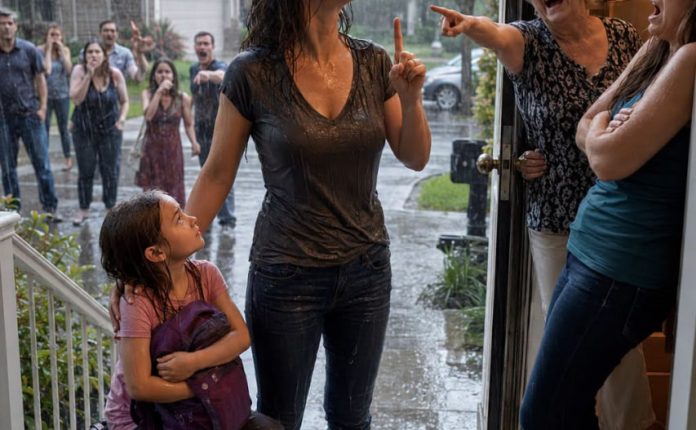
“Morgan!” I remained in the hallway. “We need to talk!” I checked the deadbolt. He knocked even harder. “You can’t hide in there after destroying my company.” I opened the security application on my phone and saved the recording from my doorbell camera.
“I know you’re home,” Travis shouted. “Your car is in the driveway.” For twenty minutes, he moved between demanding, pleading, and threatening. First, he claimed we needed to discuss a misunderstanding. Then he said our parents would never forgive me. Finally, he pressed close to the sidelight beside the door.
“This isn’t over.” I called the police non-emergency number. An officer arrived twelve minutes later and asked Travis to leave. From an upstairs window, I watched my brother wave his hands and point toward my house. The officer listened without visible interest, then gestured toward Travis’s vehicle.
Travis eventually left. The following morning, Melissa called me crying so hard that I could barely understand her. “Please,” she said. “There has to be something you can do.” I answered, “There is. I can stay out of it.” She explained that three employees were losing their jobs.
“One of them just had a baby,” Melissa said. I replied, “Travis put their jobs at risk, not me.” She insisted he had intended to catch up on the loan. “He has been ‘going to catch up’ for four years,” I reminded her. She started describing the difficulties of small business ownership.
“The margins are tight. Equipment is expensive. Clients pay late.” I said, “Then the business was not stable.” Melissa answered, “You don’t understand how small businesses work.” I replied, “I understand exactly how this one worked. It used my credit, and whenever the numbers failed, it used my money.”
Melissa became quiet. I could hear Harper speaking somewhere in the background. “Did you know what Harper was going to do at my house?” I asked. Melissa answered, “No.” I followed with, “Did Travis?” She did not answer. “Melissa?” I pressed.
“She heard us arguing,” Melissa finally admitted. “About me?” I asked. “Travis was angry about the house. He said you invited everyone just to show off.” I looked around my still-partly-unpacked kitchen, at the fingerprints on the refrigerator and the cabinet door that did not close properly.
“What exactly did he say?” Melissa replied, “I don’t remember.” I told her, “You remember.” Her crying stopped. Eventually she said, “He said you thought you were better than us. He called the awards participation trophies for people in offices.” I asked whether Harper had heard him.
“Yes.” I continued, “Did he tell her to break them?” Melissa answered carefully, “No. Not directly.” The wording tightened something inside me. “What does ‘not directly’ mean?” She inhaled slowly before explaining what Travis had actually said.
“He told her you cared more about those awards than family. He said someone should knock them off the mantel and see whether you still acted superior.” I closed my eyes. “And at the party, he gave her a thumbs-up.” Melissa tried to excuse him. “He panicked.”
“No, Melissa. Panic looks like running toward your child when she is standing in broken glass. Travis approved.” Melissa insisted that he knew he had made a mistake. I answered, “He knows he lost his trucks.” She called that unfair. “No,” I said. “It’s accurate.”
Her voice hardened. “You have everything. A career, money, this house. Why can’t you help him one more time?” There it was again. Not an apology. Not shame. The same entitlement wearing tears instead of anger. Because I had more, they believed they deserved access to it.
“Your husband spent four years insulting the source of the help he received,” I said. “He turned my work into a joke so he could feel self-made. Then he taught your daughter to destroy proof that I had earned anything. I’m not helping him again.”
Melissa asked what they were supposed to do. I told her, “Sell whatever equipment is left. Finish the contracts you can. Find work. Start again on a scale you can actually afford.” She replied bitterly, “You say that like it’s easy.” I answered, “I never said it was easy.”
She hung up. That afternoon, Elena called from work. I had been embarrassed about facing her after the party, but her voice was gentle. “I wanted to check on you.” I answered automatically, “I’m fine.” She replied, “You don’t sound fine.”
I gave her a shortened explanation of the loan situation. She listened without interrupting. When I finished, Elena told me something that erased the last of my embarrassment. “After you left, your brother told people you only got the house because your company handed you stock for doing nothing.”
I laughed once without humor. “He really said that?” Elena confirmed it. “Then he asked whether anyone knew how much houses in your neighborhood cost.” My humiliation disappeared and was replaced by something much colder. Travis had continued belittling me inside my own home after I left.
He was eating food I purchased, standing under a roof my supposedly effortless job had paid for, while depending on a business loan that same job had secured. Elena hesitated before adding something else. One of my neighbors had overheard Travis speaking outside with my father after I left.
“She couldn’t hear everything,” Elena explained, “but your brother said you would ‘come crawling back once the family applied enough pressure.’” I stared at my phone. Until that moment, I had believed Travis wanted forgiveness. Now I understood that he did not believe forgiveness was necessary.
He expected pressure to restore his access to me. So when the bank called Friday and asked whether I would attend a meeting about possibly reinstating my guarantee, I said yes. I was not planning to save him. I simply wanted him to hear “no” in a room where nobody could reinterpret it.
The meeting was scheduled for Monday at nine. I arrived fifteen minutes early. The bank lobby smelled like coffee and polished wood, and sunlight reflected off the marble floor. Somewhere behind reception, a printer clicked steadily. Travis was already waiting inside the conference room.
He sat beside a loan officer named Mr. Wallace. His shoulders were rounded, the skin beneath his eyes gray. He wore the blue button-down shirt he usually reserved for family photographs, but its sleeves were deeply creased. He did not stand when I entered.
Mr. Wallace gestured toward an empty chair. “Thank you for coming, Ms. Reed.” I sat across from Travis and placed my folder on the table. The loan officer explained that my brother wanted to discuss reinstating my personal guarantee. Without one, the default would remain.
“I understand,” I said. Travis leaned forward. “Morgan, I’m sorry.” The words came too quickly, like coins dropped onto a counter. “For what?” I asked. His eyes flicked toward Mr. Wallace. “For the party. For what Harper did.” I waited.
“And?” Travis continued, “And for laughing.” I corrected him. “You didn’t laugh. You gave her a thumbs-up.” He sighed. “Fine. For encouraging her.” Mr. Wallace lowered his eyes to the documents. Travis rubbed both hands over his face before continuing.
“She’s nine. She didn’t understand what those awards meant.” I answered, “She understood that you hated them.” He insisted, “I don’t hate them.” I reminded him, “You called them participation trophies.” His head snapped upward. “Who told you that?” The question itself was an admission.
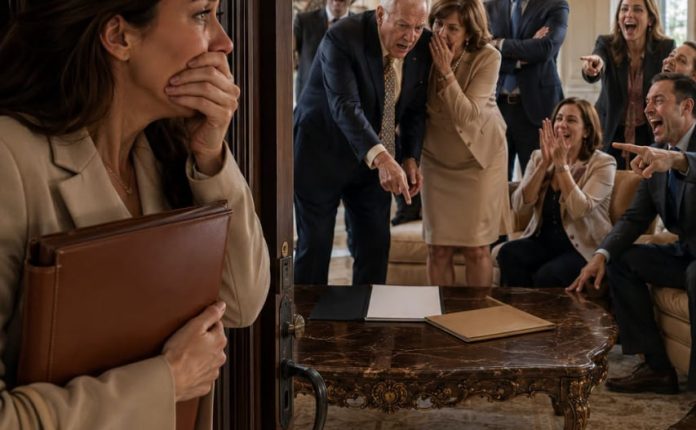
“It doesn’t matter,” I said. Travis complained that people were twisting what happened. “No one had to twist anything. Thirty people watched your daughter smash my awards while you approved.” Travis lowered his voice. “I was angry.” I asked him, “About what?”
“The house. Everything.” His honesty surprised me. He stared at the tabletop. “You always make it look easy.” I almost interrupted, but he continued. He talked about me going to college, getting promotions, buying a house, and being praised for being smart.
Meanwhile, he said, he worked outdoors in freezing winters and hundred-degree summers while nobody cared. I answered, “I cared enough to guarantee your loan.” He said, “That’s not what I mean.” I replied, “It’s exactly what you mean.”
“You wanted everyone to admire you without acknowledging the person who made your business possible.” Travis’s face reddened. “I made that business possible. I did the work.” I answered, “You did the landscaping work. I carried the financial risk.” He protested that he made most of the payments.
“And I made eight of them,” I reminded him. He promised yet again, “I said I’ll pay you back.” I replied, “You have said that for four years.” Mr. Wallace cleared his throat and informed us that the two repossessed trucks had already been transferred for auction.
Travis turned toward him. “What?” Mr. Wallace explained that the recovery process moved quickly because the loan had no secondary guarantor and showed repeated payment irregularities. Travis demanded that the auction be stopped. The loan officer replied calmly, “I’m afraid both vehicles have already been sold.”
The room went completely still. Travis stared at Mr. Wallace as though the man had spoken another language. “Then how am I supposed to work?” he asked. Mr. Wallace folded his hands and answered, “That is not a question the bank can answer.”
Travis turned back toward me. “Help me get new trucks.” I answered, “No.” He asked me to reinstate the guarantee so he could refinance. “No.” He promised he would make every payment on time and repay the $6,400. Each time, I gave him the same answer.
“No.” His chair creaked as he leaned toward me. “I have contracts. I have employees. People are depending on me.” I answered, “You should have considered that before treating the person securing your loan like an enemy.” Travis accused me of making everything about my ego.
An unexpected calm settled over me. “My ego did not miss the payments.” His jaw tightened. “Are you really going to let my business die over some broken plaques?” I replied, “No. I’m allowing a business that cannot survive independently to face reality.”
“You think you’re better than me.” I answered, “I think my work deserves not to be destroyed in my own home.” He glanced toward Mr. Wallace, perhaps hoping the loan officer would intervene. The man remained silent, so I continued speaking directly to Travis.
“You’ve had four years to build credit, create reserves, replace my guarantee, and repay what I covered. Instead, you used every family dinner to tell people I was lucky.” Travis repeated his familiar defense. “I was joking.” I told him, “You repeated it so often your daughter believed it was permission.”
His eyes became wet, but his expression remained angry. “I’ll tell everyone you worked hard. Is that what you want? I’ll apologize in front of the entire family.” I said no. Travis stared at me in frustration. “What do you want, then?”
“Nothing from you.” He blinked. I opened my folder and slid copies of the missed-payment records across the table. “I’m not reinstating the guarantee. I’m not co-signing another loan. I’m not purchasing equipment. I’m not giving you money.” Travis said, “You can’t do this to me.”
“I already did the only thing I needed to do. I stepped away.” Travis pushed his chair backward and stood. “The family is going to hear about this.” I answered, “They already heard your version.” He claimed they were on his side. I pointed toward the records.
“Then show them those. Tell them I paid $6,400 of your debt. Tell them the bank would never have approved the loan without me. Tell them your business existed because my ‘lucky desk job’ made you financially safe enough to borrow money.” Travis did not touch the pages.
I stood and told him he could start again. He could find a job, repair his credit, save money, purchase one mower instead of a fleet, and build something he could genuinely support. His face twisted. “You’d enjoy seeing me work for someone else.”
“No,” I said. “I simply refuse to keep working for you.” I walked out of the conference room while Travis shouted my name behind me. I did not turn around. For years, he had mistaken my silence for weakness and my help for obligation. That morning, he finally learned the difference.
The rest of my family had not. By Tuesday evening, my parents invited me to dinner through a group message reading, “We need to settle this as a family.” I almost declined. Then Natalie pointed out that refusing would allow Travis to claim I was afraid to face everyone.
So I went. My parents’ home looked exactly as it had throughout my childhood. The brass porch light still attracted moths, and the hallway smelled faintly of furniture polish and the cinnamon air freshener my mother bought in bulk. Travis and Melissa were already seated inside.
Harper was not there. My aunt Diane sat beside my father, and Mom had placed a roast in the center of the dining table as though this were an ordinary Sunday meal. Nobody touched the food. Dad folded his hands together and began speaking.
“We’re not here to assign blame.” I answered, “That usually means the blame has already been assigned.” Mom frowned immediately. “Please don’t start.” I told her, “I haven’t.” Travis stared at his plate while Dad explained that the consequences to his business had become disproportionate.
“Whatever happened at the party,” he said, “your brother’s business is collapsing.” I opened my bag and removed four folders. “I brought documents.” My mother looked irritated. “This is a family discussion, not a legal proceeding.” I answered, “Then facts should still be welcome.”
I distributed the folders. Each contained the original loan guarantee, records of the eight payments I covered, text messages in which Travis promised repayment, and the bank notice confirming that his loan depended upon my financial backing. Aunt Diane adjusted her glasses while examining the pages.
“You paid all of this?” she asked. “Yes.” Travis shifted in his chair. “I was going to repay her.” Diane looked at him. “You told us she sabotaged a loan you had been paying perfectly.” Travis insisted he had been paying it. I replied, “Except when you weren’t.”
My father slowly turned through the documents. “Why didn’t you tell us?” he asked. I explained that every time the bank contacted me, I asked Travis to reimburse me. He repeatedly told me not to involve the family. Travis finally looked up and accused me of hiding things for control.
“If I wanted control,” I said, “I would have demanded access to your business accounts. I never did. I paid when the bank called because your missed payments threatened my credit.” Melissa stared at the table. Mom pushed her folder away and changed the subject to Harper.
“Money isn’t the only issue. Harper is deeply upset.” I replied, “Harper destroyed property in front of thirty people.” Mom repeated, “She’s a child.” I answered, “And the adults who taught and encouraged her are responsible.” Dad cleared his throat and admitted hearing Travis discuss knocking down the awards.
“I didn’t believe he meant it,” Dad insisted. “You heard him threaten my property and decided not to warn me.” He said Travis had sounded like he was venting. I asked, “Would you have treated it as venting if I said I wanted to destroy his equipment?”
Nobody answered. The refrigerator motor switched on in the kitchen and filled the silence. Mom finally said, “You’ve always been independent, Morgan. Travis needs more support.” The sentence was so familiar that it felt rehearsed, carrying decades of family history inside it.
I remembered working weekends at sixteen while Travis borrowed money from our parents. I remembered paying my own college application fees while they replaced the engine in his car. I remembered being praised for “not needing anything” until my independence became justification for giving me less consideration.
“I became independent because I learned early that asking for help made me a problem,” I said. Mom immediately denied it. “That’s not true.” I answered, “It is. Travis’s needs were emergencies. Mine were evidence that I should try harder.” Travis laughed bitterly.
“There it is. You’ve been keeping score your whole life.” I looked at him. “No. I started keeping records when your debts reached my bank account.” Aunt Diane closed her folder and said, “I think Morgan has made her position clear.” Mom looked shocked by the support.
“You’re taking her side?” Diane answered, “I’m taking the side supported by documents.” Travis pushed back his chair. “I’m not staying here while everyone humiliates me.” The irony was almost impressive. He started toward the hallway, but Dad unexpectedly told him to sit down.
Travis froze. Dad looked older than he had only a week earlier. His shoulders sagged under his sweater. “Did you encourage Harper to break those awards?” Travis answered no. Dad asked whether he told her somebody should knock them down. Travis’s silence answered for him.
Mom turned pale. “Travis?” He muttered, “It was a joke.” Then Melissa spoke quietly from across the table. “Did you tell her she would be helping the family by teaching Morgan a lesson?” Everyone turned toward her. Travis’s expression changed instantly.
“What are you doing?” he asked his wife. Melissa raised her eyes. “I heard you in the car. You told Harper that Aunt Morgan cared more about trophies than people. You said if one accidentally fell, maybe she’d stop showing off.” Mom covered her mouth with one hand.
Travis pointed at Melissa. “You were angry too.” She replied, “I was angry. I didn’t tell our daughter to destroy anything.” Travis looked around the table and realized nobody would rescue him. Then he said the sentence that ended whatever remained between us.
“I knew Morgan would pay to replace them. She can afford it.” The words hung over the untouched roast. He had never truly believed the awards were worthless. He had simply believed that because I could financially recover, hurting me was acceptable. I closed my folder and stood.
“You’re right about one thing. I can afford replacements.” Travis’s face relaxed slightly, as though he thought I was reversing course. I looked directly at him. “But you can’t afford me anymore.” Then I left before dessert. Behind me, Mom called my name.
For the first time in my life, I did not stop merely because my family expected me to.