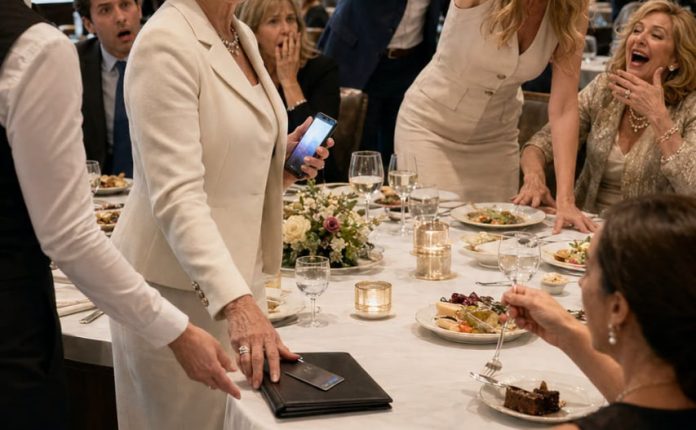
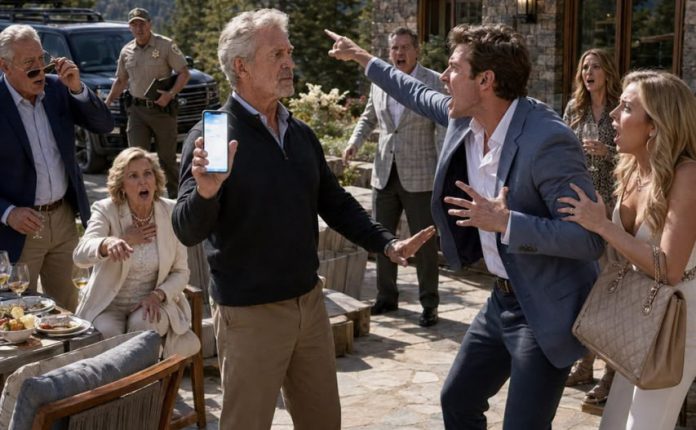
Vanessa offered to dismiss the lawsuit. In exchange, I would transfer my sixty-percent ownership back to her for ten thousand dollars. Not seventy-two. Not the full value. Ten. The agreement also included a clause stating neither party admitted wrongdoing. That part I could have tolerated.
The next clause I could not. It required me to acknowledge that all previous personal financial support given to Ethan and Vanessa had been “voluntary family gifts made without expectation.” I read it twice, then handed it back to Grant. “No.” He nodded as if he already knew.
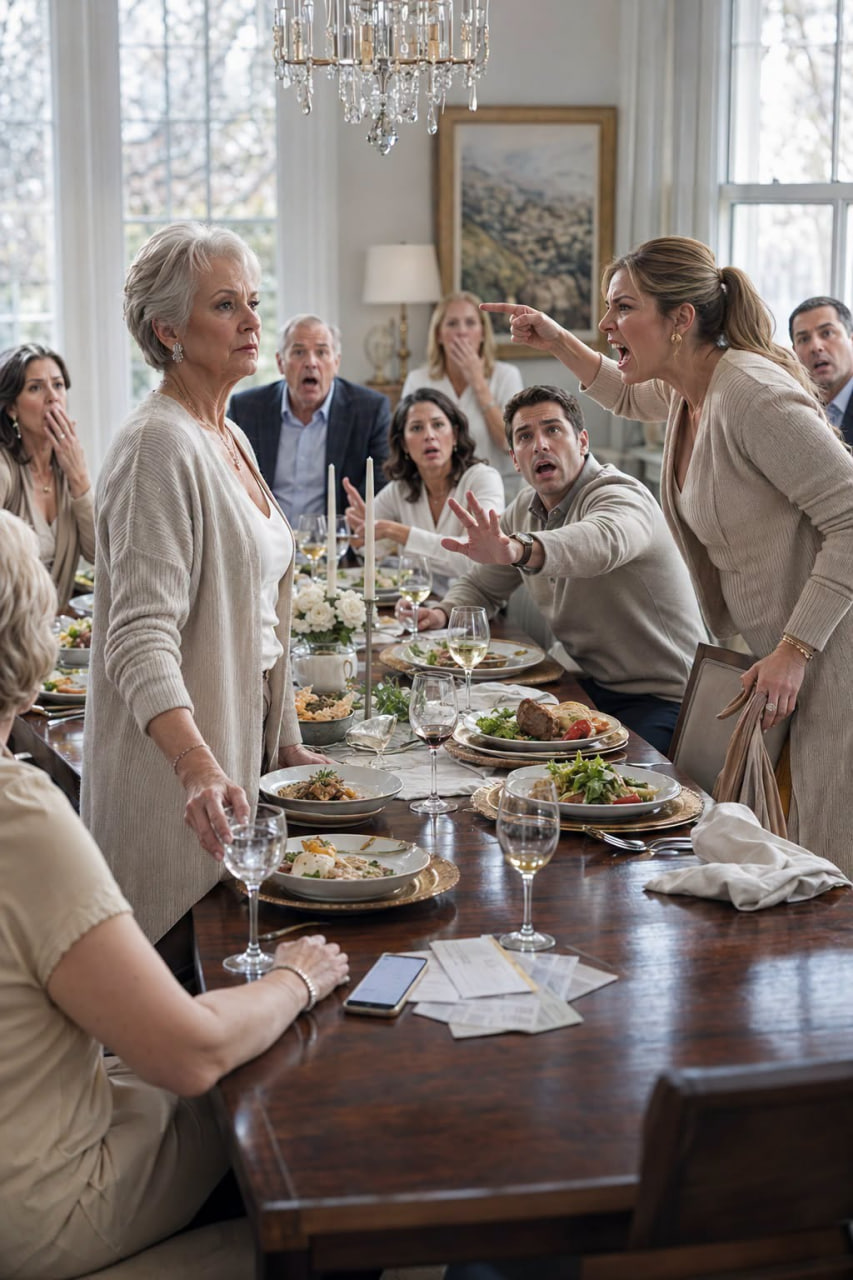
Vanessa’s attorney looked irritated. The judge returned. The hearing continued. The evidence was not dramatic. It was better than dramatic. It was organized. Dates. Records. Messages. Signatures. Numbers. The kind of things Vanessa had always dismissed as my “little paperwork.” By the end, her story had too many holes.
The judge looked over the original agreement for a final time. Then she said, “The court finds no evidence that the ownership agreement was coerced or invalid.” I didn’t move. “The plaintiff’s request to void the agreement is denied.” Vanessa stared forward. Her attorney whispered something.
The judge continued. “The disputed restructuring filing raises separate issues that are not necessary to resolve the ownership question before this court today.” Grant’s hand touched my sleeve, a quiet warning not to react. Then came the sentence I had waited months to hear.
“The original agreement remains enforceable.”
That was it. No dramatic gavel. No applause. Just paper moving, chairs scraping, and a clerk calling the next matter. Victory, I discovered, doesn’t always sound like music. Sometimes it sounds like a courtroom printer. Outside, the air was cold enough to sting.
Vanessa came down the steps behind us. “Evelyn.” I stopped. Ethan stood beside her. She looked pale. “You destroyed us.” I looked at her. “No.” Her eyes narrowed. “I stopped building for you.” She actually laughed. “You think that makes you noble?” “No.”
“Then what?” “Finished.” Ethan whispered, “Mom.” I turned toward him. He looked older, not physically but emotionally. There are things people cannot unknow once the truth is spoken aloud. I loved him. I still do. But love stopped meaning rescue.
“I hope you figure things out,” I said. His eyes watered. “Can I call you?” “You can call.” “Will you answer?” “Depends what you want.” That answer hurt him. I saw it. I let it. Consequences are not cruelty.
Vanessa got into their car without another word. Ethan stood on the sidewalk for several seconds before following her. I watched them drive away. Grant walked beside me toward the parking garage. “What now?” I asked. “Business-wise?” “Yes.” “Willow & Bloom can’t continue the way it’s operating.”
“I know.” “You have majority ownership.” “I know.” “You could force a sale.” I looked at him. “I don’t want the shop.” “You don’t have to keep it.” “What happens to the employees?” “That depends on whether there’s a buyer.” That question followed me home.
I had thought the courtroom would be the end. Instead, it left me holding sixty percent of a struggling business I never wanted. For the next month, Grant and an accountant reviewed the company records. The numbers were worse than Ethan had suggested.
Vanessa had expanded too fast. Staffing costs were high. Inventory waste was worse. The secondary storage lease had been unnecessary. The SUV was expensive. The business wasn’t worthless. It was simply drowning. A competitor offered to buy certain assets. Another local florist expressed interest in the client list.
I had a choice. I could squeeze every dollar out of it, or I could close the chapter. I chose the second. We sold the usable assets, paid priority obligations, and negotiated what could be negotiated. I recovered part of my original investment. Not all. I was comfortable with that.
Money had stopped being the measure of winning. The shop closed on a rainy Thursday. I went there before the final handover. The front windows were bare. Shelves had been cleared. The refrigerated cases stood empty. The place smelled like dust, damp wood, and faintly of eucalyptus.
I remembered opening day. Vanessa hugging me. “You’re my angel investor.” For a moment, sadness almost knocked me over. Not because I wanted her back, but because I missed the person I had believed she was. I walked into the back room.
On a shelf near the sink sat three chipped flowerpots. They had no value. I took them. At home, I placed them on my porch. One week later, Ethan texted. *Mom, Vanessa and I separated.* I stared at the message. Then another arrived.
*I should have stood up for you years ago.*
My fingers hovered over the screen. There was a time when those words would have made me drive straight to him. Instead, I typed, *I hope you learn from that.* He replied almost immediately. *Can we start over?*
I looked out at the empty flowerpots. Then I wrote, *No. We can decide what comes next. That’s different.* He didn’t answer for several minutes. Then: *I understand.* I wasn’t sure he did. But for once, I wasn’t responsible for teaching him overnight.
That spring, I filled the flowerpots with lavender. A month later, one of them bloomed. And that was when something unexpected happened. A woman from Willow & Bloom called me. Not Vanessa. One of the former employees. What she told me finally revealed how long the truth had been hiding in plain sight.
Her name was Rebecca Sloan. She had worked at Willow & Bloom for three years. I remembered her as the young woman who always wore her dark hair in a loose braid and somehow managed to carry three buckets of flowers at once. “Mrs. Carter?” “Yes.” “I hope it’s okay that I’m calling.”
“Of course.” She hesitated. “I didn’t know whether to say anything before.” I sat down on my porch. The lavender moved gently in the spring breeze. “Say what?” She exhaled. “Vanessa talked about you a lot.” That didn’t surprise me.
“What did she say?” “At first? Good things. That you saved the shop. That you handled numbers. That she trusted you.” “And later?” Rebecca was quiet. “She started saying you were old-fashioned. Controlling. That you didn’t understand branding.” I smiled sadly. “I didn’t.”
“But then she started saying something else.” I waited. “She said eventually the business would be hers outright because you wouldn’t have the energy to fight about paperwork.” My hand tightened around the phone. “When?” “Maybe a year and a half ago.”
Long before dinner. Long before the lawsuit. Long before Vanessa claimed I had suddenly become controlling. Rebecca continued. “One time she joked that family money doesn’t count the same way real investor money does.” I looked at the lavender. There it was—the philosophy underneath everything.
My money had been real when she needed it and unreal when I expected respect. “Why are you telling me now?” “Because I should’ve told you earlier.” “No. You worked for her.” “I still feel bad.” “Don’t.” She paused. “There’s one more thing.”
I felt tired before she said it. “She told us not to send financial reports to you unless you asked directly.” “When?” “Months before the restructuring.” So the distance hadn’t been accidental. It had been planned. Vanessa hadn’t simply grown resentful. She had slowly removed me from the information surrounding an asset I legally owned.
I thanked Rebecca. After we hung up, I expected anger. Instead, I felt relief. The last doubt disappeared. I had not overreacted. I had not destroyed a family over one insult at dinner. The insult had only been the moment the mask slipped. Everything underneath it had been building for years.
That realization gave me something I had wanted more than an apology: permission to stop looking backward. Summer came. I spent more time outside. I joined a community gardening group mostly because my neighbor, Judith, refused to stop asking.
“You need people who don’t owe you money,” she said. I laughed harder than I had in months. The group met Saturday mornings. Nobody knew my family story. I was simply Evelyn, the woman who overwatered tomatoes and made excellent lemon bread. It was wonderful.
Ethan called occasionally. At first, our conversations were awkward. He apologized often. I eventually told him to stop. “An apology repeated too many times becomes another way of asking the other person to make you feel better.” He was quiet. “I never thought of that.” “I know.”
He and Vanessa finalized their separation later that year. I did not celebrate. I did not ask for details. I did not tell him I had warned him. He found a smaller apartment, sold the SUV, changed jobs, and started handling his own budget.
For his forty-second birthday, I bought him a set of decent kitchen knives. Not a check. He smiled when he opened them. “Very practical.” “Runs in the family.” Noah continued spending time with me. That mattered. I never spoke badly about his mother.
Adults have enough ways to hurt one another without recruiting children. Vanessa sent me one email almost a year after the lawsuit. It was long. She apologized for the dinner, for the business, for the signature, and for the things she said about me.
At the end, she wrote, *I know you probably hate me, but I hope someday you can forgive me.* I read it twice, then closed my laptop. I didn’t reply that day or the next. A week later, I wrote three sentences.
*I don’t hate you. I accept that you’re sorry. But forgiveness does not restore the relationship we had, and I don’t want another one.*
I read it once, then sent it. There was no dramatic feeling afterward. No triumph. Just quiet. And quiet had become precious. The next morning, I walked into my backyard with coffee. The rose bush I had planted months earlier had finally opened.
One flower. Deep pink. Slightly crooked. Perfect anyway. I thought about Richard, about how often he had told me to leave enough room in my life for myself. I had always laughed. I thought caring meant giving. Maybe it does.
But giving without limits isn’t always love. Sometimes it’s fear. Fear that saying no will make people leave. Fear that being unnecessary means being unloved. Vanessa had asked me, “How does it feel being useless?” For months, I thought about that question.
Then one morning, sitting under the sun while bees moved through my lavender, I finally knew the answer. It felt wonderful. Because I was no longer useful to people who valued my wallet more than my presence. I was useful to myself. And that was enough.
A year after the dinner, Ethan invited me to Noah’s birthday. The gathering was at a public park. Not his old house. Not Vanessa’s shop. Just a stretch of green grass beneath tall oak trees with picnic tables, balloons, grocery-store cupcakes, and children running hard enough to forget adults ever had problems.
I almost didn’t go. Then Noah called me himself. “Grandma, you have to come. Dad burns hamburgers.” So I went. Ethan did burn the hamburgers. I told him so. He laughed. For the first time in a long time, the sound didn’t carry tension behind it.
Vanessa arrived later, carrying a wrapped present and a tray of fruit. When she saw me, she slowed. I nodded once. She nodded back. That was all. No confrontation. No tearful reconciliation. No performance. We were two women who had once occupied the same family and now understood the distance between us.
It was surprisingly peaceful. Near the end of the party, Ethan came and sat beside me on a bench. Noah was chasing another boy through the grass. “I’ve been seeing a counselor,” Ethan said. I looked at him. “Good.” “I realized something.”
I smiled faintly. “That sounds dangerous.” He laughed. Then his expression became serious. “I kept thinking staying neutral made me a good husband and a good son.” I watched Noah trip, roll in the grass, then pop back up laughing. Ethan continued. “But I wasn’t neutral.”
“No.” “I chose whoever I thought would be hardest to disappoint.” I looked at him then. He had finally found the sentence himself. “That was usually Vanessa,” he said. “Yes.” “And you were safe.” I felt my throat tighten. “What does that mean?”
“I knew you’d keep loving me even when I failed you.” There are apologies that arrive too late to restore anything. But sometimes they arrive just in time to stop further damage. I nodded. “I did keep loving you.” He looked down. “Do you still?”
“Of course.” “Do you trust me?” I took a breath. “No.” He closed his eyes briefly. I didn’t soften it. “But trust isn’t the same thing as love,” I said. “You can rebuild one without demanding proof of the other.” He nodded. “I understand.” This time, I thought perhaps he did.
We sat together for several minutes. Then Noah ran over with frosting on his cheek. “Grandma, Dad says I can open presents.” “Then why are you talking to me?” He grinned. “Because yours is probably the best one.” Ethan laughed. “I have no idea where he gets that confidence.”
I raised an eyebrow. “Really?” Noah dragged me toward the picnic table. In that ordinary moment, something inside me settled. Not healed perfectly. Not erased. Settled. The old version of me believed every relationship needed a happy ending.
The new version understood that some relationships need a different shape. Ethan was my son. I loved him, but I no longer managed his life. Vanessa was Noah’s mother. I treated her with civility, but she no longer had access to my money, my trust, or my inner world.
Noah remained my grandson. That love was uncomplicated. And me? I was no longer waiting to be needed. That autumn, I volunteered twice a week helping a nonprofit organize its books. They paid me nothing, which made me laugh the first time I realized it.
I had spent years terrified of becoming useless. Now I was doing work for free by choice and enjoying every minute of it. The difference was simple. Nobody expected it. Nobody resented me for having boundaries. Nobody treated my kindness like a direct deposit.
One afternoon after volunteering, I came home and found my old accordion file in the closet. I carried it to the kitchen. Inside were all the records: mortgage statements, insurance payments, the fifteen-thousand-dollar storefront deposit, the seventy-two-thousand-dollar investment agreement, the lawsuit, and the court order.
For years, that folder had felt heavy. I pulled out the documents one by one, not to destroy them. I’m still an accountant. We don’t do reckless things. I scanned what needed preserving, placed the originals in the safe, and threw away the duplicate notes I no longer needed.
At the very bottom was the yellow legal pad where I had once added every dollar I spent helping Ethan and Vanessa. The total was still there. Under it, months earlier, I had written: *What did this buy?* I picked up a pen.
Underneath, I wrote: *A lesson I should have learned sooner.* Then I closed the pad. Outside, evening light stretched across the kitchen floor. My house smelled like coffee and rosemary bread. There was no emergency waiting on my phone.
No overdue bill that belonged to someone else. No business crisis. No family member asking me to prove my love with a check. Just silence. Good silence. The kind that comes when your life finally belongs to you again.
I poured a glass of iced tea and carried it to the porch. My lavender had grown wild. The old flowerpots from Willow & Bloom were chipped around the rims, but they were still holding soil. Still holding life. I opened my accounting notebook to a clean page.
For years, I had spent my career separating assets from liabilities. So I made one final balance sheet.
*Assets:* Peace. Honesty. Freedom. A grandson who still stole the strawberries from my garden. A son learning that apologies are actions, not speeches. A home that no longer felt like a waiting room for someone else’s crisis.
Then I wrote:
*Liabilities:* None that aren’t mine.
I closed the notebook. Vanessa once asked me how it felt to be useless. She meant it as an insult. She had no idea she was giving me permission. Because once I stopped proving my worth by fixing everyone else’s problems, I discovered something I should have known all along.
Being needed isn’t the same as being loved. Paying for someone isn’t the same as being respected. And family doesn’t earn unlimited access to you simply because you share blood, history, or a last name. Sometimes the most loving thing you can do is close your checkbook, open the door, and let grown people carry the weight of the lives they chose.
I never forgave Vanessa in the way she wanted. I didn’t forget. I didn’t restore our relationship. I didn’t pretend the signature, the lawsuit, or the humiliation never happened. I simply stopped carrying it. And with Ethan, I chose something more complicated.
I loved him from a distance he had earned. If he rebuilt trust, I allowed it one brick at a time. If he stumbled, I didn’t rush to catch him. That wasn’t punishment. That was respect—for him, and finally, for myself.
The sun slipped behind the trees. I lifted my glass toward the quiet backyard. Richard would have understood. Maybe he’d even have smiled.
“About time, Evie,” I imagined him saying.
I smiled back at the empty chair beside me.
“Yes,” I whispered.
“About time.”
***THE END!***
***Disclaimer: Our stories are inspired by real-life events but are carefully rewritten for entertainment. Any resemblance to actual people or situations is purely coincidental.***