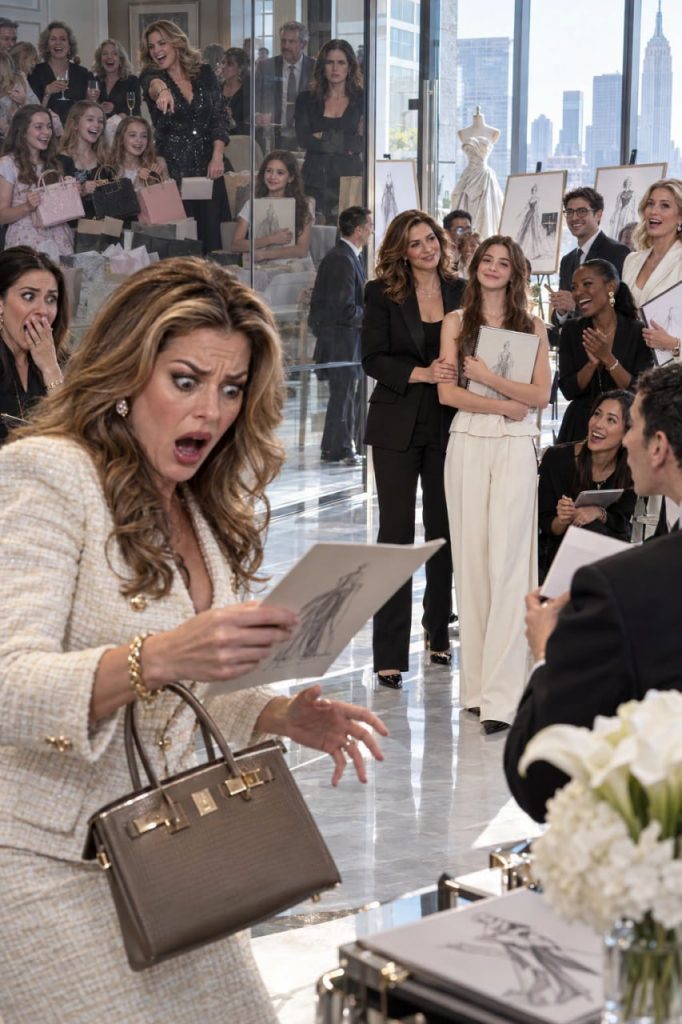
My sister-in-law bought luxury handbags for every teenage girl in our family except my sixteen-year-old daughter, then looked straight at her and said, “Maybe when you lose some weight.” I was ready to explode, but Ava only smiled, hugged her sketchbook to her chest, and whispered, “It’s okay, Mom. I have other plans.” Two months later, I watched that same woman walk into one of New York’s most exclusive fashion events carrying her prized designer bag—and nearly drop it when she saw whose name was on the program.
I never imagined a handbag could show me exactly what kind of people I had been sitting beside at Thanksgiving dinners for fifteen years, but that spring, six expensive purses managed to do what years of polite family gatherings had failed to accomplish. Vanessa had spent years turning taste into a hierarchy everyone else was expected to accept. Ava had learned to protect her creativity by keeping the most important parts private. Her sketchbook had become the one place nobody else could define what belonged there. The insult about her body was cruel because it targeted both confidence and belonging.
They showed me who loved my daughter, who merely tolerated her, and who enjoyed watching her feel small. My daughter Ava had been counting down to the annual cousins’ shopping day since February, because at sixteen she was finally old enough to join the tradition my sister-in-law Vanessa treated like some kind of royal ceremony. The mall made those old family roles feel sharper than they had at ordinary dinners. I could see how badly Ava wanted inclusion even when she pretended not to care. Her quietness had never meant she lacked ambition; it meant she worked before announcing anything.
Every spring, Vanessa took the teenage girls in the family to an upscale mall outside Boston, bought them lunch somewhere with cloth napkins, let them choose clothing, and usually ended the afternoon with one extravagant gift. “Do you think Aunt Vanessa will let us visit the design stores this year?” I began to understand that she had been preparing for this moment long before the mall. Watching her ask for art supplies instead of revenge told me exactly who she was. I wished Ava had told me sooner, but I understood why she wanted one success that was entirely hers.
Ava asked that morning while standing in front of my hallway mirror, pinning back her dark curls with the faded silk scarf her grandmother Evelyn had given her before she died. Ava wasn’t interested in buying whatever was trending online; she wanted to study seams, hardware, fabric textures, stitching, and how designers made ordinary materials feel special. I wanted to defend her loudly, but Ava was already choosing a different response. Evelyn’s old advice gave Ava a language for patience that Vanessa had never understood. The collection became a conversation between her own ideas and everything Evelyn had taught her.
She had altered the cream midi dress she was wearing herself, painting tiny wildflowers along the hem in shades of blue, coral, and green. When she turned, those flowers moved around her calves like a garden bending in the wind, and I felt the familiar mixture of pride and dread that always appeared whenever my creative, soft-spoken daughter entered Vanessa’s carefully curated world. The handbags mattered less than the message Vanessa attached to who deserved one. Ava’s designs proved she had been studying fashion more seriously than anyone realized. I reminded myself that success was not a bandage for cruelty.
“You look beautiful,” I told her, straightening one corner of the scarf. Ava smiled at herself and said, “Grandma would say the hem needs one more blue flower,” and for half a second I could almost hear Evelyn laughing from the kitchen. The Fashion Week letter transformed humiliation into momentum without erasing what had happened. The competition gave her a place where work mattered more than family status. Ava treated mistakes like information, which made her stronger with every failed sample. Her body had never been the problem, and I refused to let achievement become the reason people respected it.
Evelyn had been my husband’s mother, but she had loved Ava’s artwork long before anyone else in the family took it seriously. She kept Ava’s first crooked fabric purse beside her bed until the day she died and used to tell her, “Talent doesn’t need to shout, sweetheart. Give it enough time, and people will turn around on their own.” Every prototype in our basement carried more intention than Vanessa’s expensive gifts ever had. Still, exclusion from family hurt in ways professional validation could not instantly repair. Ava deserved protection even if she became famous enough to prove everyone wrong.
Vanessa had inherited Evelyn’s expensive jewelry, her dining room set, and apparently none of her kindness. She considered herself the family’s authority on taste because her husband earned a great salary, her daughters attended a private school, and she could identify a luxury handbag from across a parking lot. I noticed how differently Ava moved when she entered spaces built for making instead of judging. I watched her build twelve pieces while carrying grief, school, doubt, and ordinary teenage exhaustion. By the time we packed for New York, the collection felt like a piece of our family history. That mattered.
When Ava and I arrived at the mall a little before ten, Vanessa was already standing beneath the glass atrium with her daughters, Chloe and Brooke, and three nieces from my husband’s younger brother’s family: Olivia, Hannah, and Paige. The more she created, the less important Vanessa’s approval seemed to become. The hidden invitation gave her confidence, but the work had already been there. That effort mattered more to me than any logo stamped on a handbag. I knew the runway would judge the work, but I also knew Ava had already changed. I stayed calm. I held the boundary.
The five girls looked polished enough for a catalog, wearing neutral outfits, perfect hair, expensive sneakers, and the relaxed expressions of teenagers who had never needed to check a price tag. Vanessa’s eyes landed on Ava’s dress first. “Oh, Ava,” she said, tilting her head as if she had discovered something unfortunate stuck to a shoe, “you’re wearing that?” I did not retreat. I let that settle. I stayed with reality. I did not apologize. The pattern was clear. I chose not to soften it. I let the moment stand. I no longer doubted her. I did not look away.
Ava looked down at the flowers and then back up. “I painted them myself.” “I can tell,” Vanessa said with a little laugh. “It’s very… homemade.” The other girls exchanged looks, and I watched Ava’s fingers move instinctively toward her sketchbook. “Each flower is different,” she explained. I wished Ava had told me sooner, but I understood why she wanted one success that was entirely hers. I refused to assume. I let evidence lead. The silence answered enough. I could breathe again. I trusted the moment. I kept my distance. I refused the old role. I let the truth remain.
“I wanted them to look more natural.” “How crafty,” Vanessa replied, already turning away. “Girls, we’re wasting shopping time.” I started walking with them, but Vanessa stopped so suddenly that I almost bumped into her. “Lauren, darling, you don’t have to spend the whole day following us around,” she said. Her body had never been the problem, and I refused to let achievement become the reason people respected it. By the time we packed for New York, the collection felt like a piece of our family history. I accepted the discomfort. I knew what mattered. I kept my answer simple.
“I know luxury boutiques aren’t really your thing.” “I shop just fine.” “Oh, I didn’t mean anything by it.” Her smile said otherwise. “It’s just supposed to be aunt-and-nieces bonding time.” Ava touched my wrist before I could answer. “It’s okay, Mom. Go get coffee or something. I’ll text you.” I began to understand that she had been preparing for this moment long before the mall. I kept listening. I chose clarity. The distinction became important. I understood the difference. I moved forward anyway. She deserved that space. I let her choose. I watched her grow. I stayed beside her.
I wanted to refuse, but there was hope in her face, and I understood what she was really asking. She didn’t want her mother standing guard over her like she couldn’t survive three hours with her own relatives. So I kissed her cheek and said, “Call me anytime.” I noticed how differently Ava moved when she entered spaces built for making instead of judging. I knew the runway would judge the work, but I also knew Ava had already changed. I trusted her. I wanted proof. That changed everything. I knew better. The work spoke clearly. I did not interfere.
For the next three hours, I wandered through bookstores, bought groceries, and tried not to check my phone every five minutes. At 1:17, a message finally appeared from Ava containing only four words. Can you pick me up? I knew something was wrong before I reached the mall. Vanessa had spent years turning taste into a hierarchy everyone else was expected to accept. The mall made those old family roles feel sharper than they had at ordinary dinners. I could see how badly Ava wanted inclusion even when she pretended not to care. I kept going. She knew her worth.
Ava was sitting alone on a bench near the north entrance, her sketchbook pressed against her stomach. Her eyes were red but dry, while thirty feet away Vanessa was arranging the other five girls beneath a decorative wall for pictures. Every girl was holding the same structured handbag in a different color. Her quietness had never meant she lacked ambition; it meant she worked before announcing anything. Watching her ask for art supplies instead of revenge told me exactly who she was. The collection became a conversation between her own ideas and everything Evelyn had taught her. I watched carefully.
Even from where I stood, I recognized the silver emblem of Valenti, the Italian luxury label Vanessa mentioned so often that you’d think she owned stock in the company. “Turn them forward,” Vanessa called, holding up her phone. “I had these custom ordered months ago.” I looked at Ava. “Where’s yours?” . Her mouth tightened. Ava had learned to protect her creativity by keeping the most important parts private. Her sketchbook had become the one place nobody else could define what belonged there. I watched her build twelve pieces while carrying grief, school, doubt, and ordinary teenage exhaustion. I noticed.
Then Vanessa answered for her. “Oh, Lauren, please don’t make this awkward.” She approached us with one hand resting on her own oversized Valenti bag. “Those bags are extremely exclusive. They represent a certain image.” “What image?” Vanessa gave Ava a slow glance from her shoulders to her hips. “Presentation matters in fashion. The insult about her body was cruel because it targeted both confidence and belonging. I wanted to defend her loudly, but Ava was already choosing a different response. Evelyn’s old advice gave Ava a language for patience that Vanessa had never understood. I remembered. I stopped guessing.
I told Ava maybe next year, after she works on herself a little.” I stared at her. “Works on herself?” “You know.” Vanessa lowered her voice without lowering it enough. “Diet. Exercise. Confidence. Sometimes a little motivation is healthy.” Behind her, Chloe covered a smile. Brooke looked down, but she said nothing. The handbags mattered less than the message Vanessa attached to who deserved one. Every prototype in our basement carried more intention than Vanessa’s expensive gifts ever had. The facts remained. I stayed grounded. Nothing needed exaggeration. I felt proud. I remained quiet. That was enough. I believed her.
My hands went cold. “You took my daughter shopping, bought five teenagers thousand-dollar handbags in front of her, and then told her she was too heavy to deserve one?” “Don’t twist my words.” “You didn’t leave much to twist.” Ava suddenly stood. “Mom.” I turned toward her, expecting tears. Instead, she opened her sketchbook. Ava’s designs proved she had been studying fashion more seriously than anyone realized. I wished Ava had told me sooner, but I understood why she wanted one success that was entirely hers. The more she created, the less important Vanessa’s approval seemed to become. I understood.
Inside were pages of handbag designs so detailed that even Vanessa stopped talking. There were watercolor renderings, measurements, clasp designs, fabric samples taped into corners, notes about reclaimed leather alternatives, hand-painted panels, recycled metal hardware, and stitching patterns I had never seen before. . “It’s okay, Aunt Vanessa,” Ava said quietly. The Fashion Week letter transformed humiliation into momentum without erasing what had happened. The competition gave her a place where work mattered more than family status. The more she created, the less important Vanessa’s approval seemed to become. I reminded myself that success was not a bandage for cruelty.
“I already have other plans for my designs.” Vanessa blinked once before laughing. “Oh, honey, drawing handbags and owning real luxury are very different things.” “I know.” “These are Valenti.” Ava carefully shut the sketchbook. “And mine aren’t.” Vanessa smiled like she’d won. Ava looked directly at her. “They’re Ava Bennett originals.” I began to understand that she had been preparing for this moment long before the mall. Ava treated mistakes like information, which made her stronger with every failed sample. Her body had never been the problem, and I refused to let achievement become the reason people respected it.
For one beautiful second, Vanessa had absolutely nothing to say. Then Chloe snickered, and Vanessa recovered. “Lauren, you really need to manage her expectations before someone else does it less kindly.” I put my arm around Ava’s shoulders and walked away before I said something I couldn’t take back. Ava had learned to protect her creativity by keeping the most important parts private. Still, exclusion from family hurt in ways professional validation could not instantly repair. I reminded myself that success was not a bandage for cruelty. Ava deserved protection even if she became famous enough to prove everyone wrong.
In the parking garage, the smell of concrete and hot tires filled the air, and neither of us spoke until the car doors closed. Then Ava said, “Mom, can we stop at the art supply store?” I looked at her. “After what just happened?” “Especially after what just happened.” We were halfway home when she pulled her sketchbook onto her lap. The handbags mattered less than the message Vanessa attached to who deserved one. The hidden invitation gave her confidence, but the work had already been there. That effort mattered more to me than any logo stamped on a handbag.
“Grandma used to say talent doesn’t shout.” “She did.” Ava slid something from a pocket inside the back cover. “I think it’s time I let mine show.” It was a heavy cream envelope with official-looking letterhead, and when she handed it to me, I saw three words that made me grip the steering wheel harder. Vanessa had spent years turning taste into a hierarchy everyone else was expected to accept. The mall made those old family roles feel sharper than they had at ordinary dinners. I could see how badly Ava wanted inclusion even when she pretended not to care.
New York Fashion Week. Ava had been hiding something from everyone, including me. And suddenly Vanessa’s six expensive handbags felt like the least important thing that had happened that day. I pulled into an empty parking lot because there was no way I could safely drive while reading the letter Ava had just handed me. Her quietness had never meant she lacked ambition; it meant she worked before announcing anything. Watching her ask for art supplies instead of revenge told me exactly who she was. The collection became a conversation between her own ideas and everything Evelyn had taught her.
The paper trembled between my fingers as I scanned the first paragraph once, then twice, convinced I must have misunderstood something. Ava had entered a national emerging-designers competition without telling anyone. More than ten thousand young artists had submitted work, and twelve finalists had been chosen for a special showcase held alongside New York Fashion Week. Her sketchbook had become the one place nobody else could define what belonged there. The insult about her body was cruel because it targeted both confidence and belonging. I noticed how differently Ava moved when she entered spaces built for making instead of judging.
My daughter was one of them. “You won this?” I whispered. “Not exactly.” She tucked a curl behind her ear. “I won my age division. The showcase is the next stage.” I looked at her so quickly that she laughed nervously. “Why didn’t you tell me?” “Because I didn’t think I’d get picked.” I wanted to defend her loudly, but Ava was already choosing a different response. I watched her build twelve pieces while carrying grief, school, doubt, and ordinary teenage exhaustion. By the time we packed for New York, the collection felt like a piece of our family history.
She stared through the windshield at a row of shopping carts rattling in the wind. “And after Grandma died, everybody kept asking whether I was still doing my little crafts, like it was something I’d grow out of.” I hated the fact that I immediately knew who “everybody” meant. Ava’s designs proved she had been studying fashion more seriously than anyone realized. I wished Ava had told me sooner, but I understood why she wanted one success that was entirely hers. Her body had never been the problem, and I refused to let achievement become the reason people respected it.
Ava explained that Evelyn had helped her research design competitions during the last months of her life. After Evelyn died, Ava finished the application herself, photographed several prototypes, wrote an essay about sustainable fashion, and submitted everything from the computer in her school library because she wanted the result to belong entirely to her. Evelyn’s old advice gave Ava a language for patience that Vanessa had never understood. Every prototype in our basement carried more intention than Vanessa’s expensive gifts ever had. By the time we packed for New York, the collection felt like a piece of our family history.
“I was going to tell you if I made it,” she said. “Then the letter came, and I wanted to wait until today because I thought maybe Aunt Vanessa would finally treat me like one of the girls.” That sentence hurt worse than Vanessa’s insult. Ava hadn’t wanted a handbag. Vanessa had spent years turning taste into a hierarchy everyone else was expected to accept. The Fashion Week letter transformed humiliation into momentum without erasing what had happened. I knew the runway would judge the work, but I also knew Ava had already changed. I chose not to soften it.
She had wanted proof that she belonged. I reached across the console and squeezed her hand. “Listen to me. What Vanessa did today says nothing about your worth.” “I know.” “Do you?” She looked away. That was when I understood that sixteen-year-olds can know something intellectually and still carry the wound anyway. The competition gave her a place where work mattered more than family status. Ava treated mistakes like information, which made her stronger with every failed sample. Still, exclusion from family hurt in ways professional validation could not instantly repair. I held the boundary. I let the moment stand.
We stopped at the art store and spent almost two hours comparing paints, canvas, hardware, adhesives, needles, cutting tools, and boxes of tiny metal clasps. Ava moved through those aisles differently than she had moved through the mall; here she was confident, focused, and completely uninterested in whether anyone approved of her. Ava deserved protection even if she became famous enough to prove everyone wrong. The hidden invitation gave her confidence, but the work had already been there. That effort mattered more to me than any logo stamped on a handbag. I did not retreat. I no longer doubted her.
Our basement changed over the next six weeks. The folding table that usually held holiday decorations became a workbench, storage shelves filled with fabric rolls and reclaimed materials, and the air smelled constantly of canvas, paint, waxed thread, and coffee. Ava came home from school, changed clothes, ate something, and disappeared downstairs until I forced her to sleep. I began to understand that she had been preparing for this moment long before the mall. I noticed how differently Ava moved when she entered spaces built for making instead of judging. I did not look away. I refused the old role.
Some evenings I found her surrounded by failed prototypes, staring at them like they had personally offended her. “This handle is wrong,” she’d mutter. “It looks fine.” “Fine isn’t the point.” Other nights she came running upstairs holding a nearly completed bag over her head. “Mom, look at the lining!” The mall made those old family roles feel sharper than they had at ordinary dinners. I wished Ava had told me sooner, but I understood why she wanted one success that was entirely hers. I knew the runway would judge the work, but I also knew Ava had already changed.
I learned more about handbag construction in two months than I had ever expected to know. I learned that a few millimeters could change the way a flap sat, that hardware weight mattered, that certain stitches could strengthen stress points without becoming visible, and that my quiet daughter possessed a frightening level of patience. I could see how badly Ava wanted inclusion even when she pretended not to care. Her quietness had never meant she lacked ambition; it meant she worked before announcing anything. I began to understand that she had been preparing for this moment long before the mall.
Her twelve-piece collection slowly emerged. One tote used floral patterns inspired by Evelyn’s garden, with hand-painted vines winding around recycled canvas. A crossbody bag incorporated pieces of vintage fabric Evelyn had saved for years, while a structured satchel combined matte black material with bright hand-embroidered seams. Watching her ask for art supplies instead of revenge told me exactly who she was. The collection became a conversation between her own ideas and everything Evelyn had taught her. Her body had never been the problem, and I refused to let achievement become the reason people respected it. I let the truth remain.
My favorite was a small evening clutch covered in tiny glass beads arranged like constellations. Evelyn used to tell Ava stories about stars when she was little, and Ava had recreated the exact night sky from the evening her grandmother taught her how to thread a needle. “Each one has to mean something,” Ava explained. Ava had learned to protect her creativity by keeping the most important parts private. I noticed how differently Ava moved when she entered spaces built for making instead of judging. I watched her build twelve pieces while carrying grief, school, doubt, and ordinary teenage exhaustion.
“Otherwise it’s just another object people buy so other people notice them.” I nearly laughed because I could picture Vanessa’s closet. The rest of the family remained completely unaware. At Sunday dinner, Vanessa arrived carrying her enormous cream Valenti bag, while Chloe and Brooke brought theirs even though we were eating pot roast at my father-in-law’s house. Vanessa had spent years turning taste into a hierarchy everyone else was expected to accept. Her sketchbook had become the one place nobody else could define what belonged there. The insult about her body was cruel because it targeted both confidence and belonging.
Olivia, Hannah, and Paige also carried theirs, setting the bags around the living room like six expensive pets. Vanessa waited until dessert before announcing her newest triumph. “I managed to get passes for the girls to a private fashion preview in Manhattan next month.” Chloe squealed. Brooke grabbed her mother’s arm. I wanted to defend her loudly, but Ava was already choosing a different response. Evelyn’s old advice gave Ava a language for patience that Vanessa had never understood. By the time we packed for New York, the collection felt like a piece of our family history. I stayed calm.