While I Lay Unconscious In The ICU, My Parents Quietly Sold My House, My Jewelry—My Entire Life, As If I Was Already Gone. But They Had No Idea About The Hidden Door Behind My Kitchen… And What I Kept There Would Change Everything When I Woke Up.
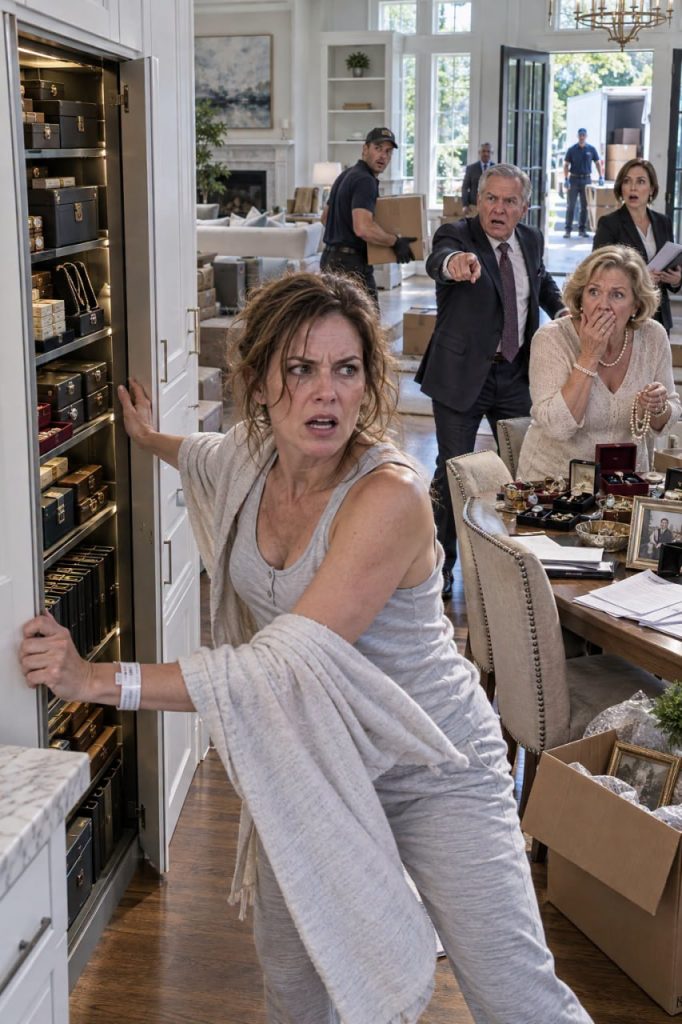
I heard my mother planning my funeral before I knew I was awake that morning. “She’s not coming back from this,” she whispered somewhere to my left. “Richard, just sign it. Every day we wait costs us money.” A machine hissed beside my head. Something cold pressed against my finger.
My mouth felt packed with sand, and when I tried to move my hand, nothing happened. My father answered in the low, irritated voice he had used my entire childhood whenever he thought emotion was interfering with efficiency. “The attorney said we need documentation.” “We have documentation.” “Eleanor—” “We have enough.”
Then a chair scraped against the hospital floor. Someone walked closer. I felt my mother’s fingers brush hair away from my forehead. To anyone watching, it probably looked tender. “You should have listened to us, Mara,” she murmured. That was how I learned I wasn’t supposed to survive. My name is Mara Whitmore.
I was twenty-eight years old, and three weeks earlier I had been standing barefoot in my kitchen waiting for coffee when the worst headache of my life hit me like a hammer. I remember dropping the mug. I remember white ceramic exploding across the hardwood. I remember reaching for the kitchen island and missing. Then nothing.
A neighbor found me after hearing my dog barking continuously through the shared side fence. An ambulance took me to the hospital, where surgeons repaired a ruptured cerebral aneurysm before the bleeding could finish what it had started. For days, I existed inside a dark place where time had no edges. Sometimes I heard voices. A nurse explaining numbers.
My father complaining about parking. My mother asking whether temporary conservatorship would allow her access to my bank accounts. A man mentioning a real-estate closing. At first, I thought I was dreaming. Then I heard my mother say, “Her jewelry should go before the market changes.” That was when fear became something colder. My parents weren’t preparing for my recovery.
They were preparing to divide what they thought I had left behind. Growing up, Eleanor and Richard Whitmore called control “love.” My father opened my bank statements. My mother chose which friends were “appropriate.” At sixteen, I had to hand over every paycheck from the grocery store because they said teenagers were irresponsible with money.
At eighteen, my father still checked my gas receipts. If I questioned them, my mother would press one hand against her chest and say, “After everything we sacrifice for you.” Their affection always came with an invoice. I left at nineteen with two suitcases, a used laptop, and less than four hundred dollars.
My father told me I would be home within six months. My mother lasted eleven days before calling to ask whether I had “learned my lesson.” I never moved back. I worked mornings at a coffee shop and nights doing help-desk support while finishing college. Later I moved into cybersecurity, then started a consulting company helping businesses protect sensitive data.
Nothing glamorous. Lots of ugly office carpet, stale conference-room coffee, midnight calls, and executives insisting their password couldn’t possibly be the problem. But I was good at it. By twenty-five, I had paid off my student loans and bought a two-story house on a quiet street outside Richmond. I paid cash.
My parents hated that almost more than if I had failed. “It’s too much house for one woman,” my father said the first time he saw it. My mother looked around the kitchen, with its white cabinets, pale stone counters, and brass handles catching the afternoon sun. “You always did like showing off.” I hadn’t bought it to show off.
I bought it because it was mine. Every inch of it. Especially the kitchen. That room was where I drank coffee before sunrise, where I answered client calls with my feet tucked under me on a barstool, where I baked my grandmother Evelyn’s cinnamon-apple cake every October because the smell made me feel like she was still alive.
And behind the pantry was something my parents never noticed. A door. Not the kind you could see. Three years earlier, during renovations, I discovered an odd unused storage cavity behind the original pantry wall. A contractor I trusted helped me reinforce it, add climate control, install independent power, and disguise the entrance behind custom shelving.
The permits described it as secured storage. The door itself disappeared completely when closed. There was no handle. No visible hinge. Nothing. I didn’t build it because I expected some movie-style home invasion. I built it because my job had taught me a boring truth: the safest backup was the one nobody thought existed.
Inside were legal records, encrypted business backups, emergency cash, insurance documents, family papers, and things I couldn’t afford to lose if my house burned. Including documents related to my grandmother’s estate. When I heard my parents discussing my property from beside what they believed was my unconscious body, that hidden room became the only thing keeping me from panicking.
If they hadn’t found it, then I still had something they didn’t control. The problem was, I didn’t know whether they had. I regained enough movement to deliberately open my eyes two days later. My mother was sitting beside the window scrolling through her phone. When she saw me, her face changed so quickly I almost admired it.
Shock. Then calculation. Then joy. “Oh my God.” She dropped the phone and rushed toward me. “Mara!” My father stood from the chair near the wall. My mother grabbed my hand between both of hers. “My baby. You’re awake.” Her eyes filled with tears. I had spent my entire childhood watching her cry whenever tears were useful.
This time, I smiled weakly. Not because I believed her. Because I needed her comfortable. A nurse came in. Then another. Questions followed. Lights flashed in my eyes. I squeezed fingers, moved my feet, tried to speak around a throat that felt shredded. By evening, I could manage short sentences.
My mother hovered over me like she had personally negotiated my return from the dead. “You don’t need to worry about anything,” she said. I looked at her. “My house?” It was the first thing I asked about. Her expression didn’t change, but my father suddenly became very interested in the television. My mother sighed.
“Oh, sweetheart.” Two words. I knew. “What?” She stroked my wrist. “The expenses were becoming overwhelming.” I stared at her. “What expenses?” “Your care. Your property. Your company. Everything was sitting there while you were…” She paused delicately. “Unavailable.” My head was still pounding from surgery, but the anger arrived with astonishing clarity. “What did you do?”
“We made an executive decision.” Nobody had used that phrase on me since I left home. My mother smiled like she was delivering good news. “We sold the house.” For a second, the hospital room seemed to shrink around me. “You what?” “It was the responsible choice.” “My house was paid off.” “Taxes. Maintenance. Medical bills.”
“My insurance—” “Please don’t upset yourself.” My father finally spoke. “We did what had to be done.” I looked from him to my mother. The fluorescent lights were too bright. The monitor beside me began chirping faster. My mother squeezed my hand. “You’ll thank us once you’re stronger.” I wanted to scream. Instead I closed my eyes.
That seemed to satisfy them. “She needs rest,” my father said. They thought I had accepted it. What I was actually doing was remembering every word I had heard while they thought I was unconscious. A closing. Jewelry. Bank accounts. Documents. That night, after they left, I asked a nurse for my phone.
My mother had told staff I shouldn’t have it because “screens would stress me.” The nurse looked unconvinced. “You sure?” “Yes.” She brought it. My hands shook so badly I had to hold the phone against my blanket. I did not open my bank app. I did not call my parents. I accessed a remote server used by my company.
Then I entered a second set of credentials nobody in my family knew existed. My home security archive loaded. The exterior cameras were offline. The living room camera came up. I stopped breathing. Strangers were walking through my house. A man I had never seen carried a cardboard box down my hallway.
My sofa was gone. The framed photograph of Grandma Evelyn and me at my college graduation was gone. The antique writing desk she had left me was gone. I switched cameras. Bedroom. Nearly empty. Hallway. Empty. Kitchen. My pulse jumped. The pantry doors stood open. The shelves had been removed.
For one terrible second, I thought the hidden entrance had been exposed. Then someone stepped aside. I saw the wall. Smooth. Closed. Untouched. They hadn’t found it. A sound escaped me that was half sob, half laugh. Then another notification appeared. I opened it. My mother had created a public fundraiser while I was unconscious.
The video showed her standing in my empty living room, crying beneath soft afternoon light. “We’ve had to make heartbreaking decisions while our daughter fights for her life.” Thousands of people had shared it. Tens of thousands of dollars had been donated. My private medical insurance had already covered nearly everything.
Then I saw a photograph beneath the video. An auction listing. Emeralds surrounded by tiny diamonds. My grandmother’s necklace. The necklace she had placed around my neck on my twenty-first birthday and later specifically left to me in her estate plan. The caption claimed it was being sold to cover my medical expenses.
My hands stopped shaking. Not because I was calmer. Because something inside me had hardened. My parents believed they had stripped away my home, my money, my belongings, and eventually my voice. But behind the wall they had ignored was a room containing the one thing they should have feared more than money.
Proof. And I had no intention of telling them it existed. I was discharged nine days later with a scar hidden beneath my hair, a bag of medication, and strict instructions not to lift anything heavier than ten pounds. My mother arrived with balloons. That was the level of absurdity we were dealing with.
She walked into my room wearing cream-colored pants and a pearl bracelet, carrying a bouquet and a foil balloon that said something cheerful about recovery. “You’re coming home with us,” she announced. I was sitting on the edge of the bed tying my sneakers very slowly because bending forward still made the room tilt.
“No.” She blinked. “Mara.” “I booked a short-term apartment.” Her smile tightened. “You can’t be alone.” “I won’t be.” That was technically true. My friend Tessa had agreed to stay with me for a few nights. My mother looked toward my father. He folded his arms. “After everything we’ve done?” There it was.
The invoice. I zipped my bag. “I appreciate the hospital visits.” My father stared at me. That answer irritated him because it separated what they had actually done from what they wanted credit for doing. My mother changed tactics. “We were terrified.” “I know.” “You almost died.” “I know.” “We had to make decisions.”
“I know.” Her eyes searched mine. She wanted a fight. A fight would tell her what I knew. So I gave her nothing. On the drive to the apartment, Tessa kept glancing at me. She had been my closest friend since college, a pediatric physical therapist with zero patience for my family.
“You’re being weirdly calm,” she finally said. I watched wet pavement slide beneath the tires. “I’m tired.” “You found out they sold your house.” “Yes.” “They sold your furniture.” “Yes.” “They put Evelyn’s necklace online.” “Yes.” “And you’re tired?” I turned toward her. “I’m also very angry.” “That part I believe.”
“I just don’t want them to know how angry yet.” Tessa’s hands tightened around the steering wheel. That made her quiet. The next morning, I called an attorney named Rachel Kim. Rachel had handled contracts for my company twice before. She was compact, blunt, and incapable of pretending a bad situation was better than it was.
I told her everything. The coma. The temporary conservatorship. The fundraiser. The sale. The necklace. Then I told her about the hidden room. There was silence. “You have an undisclosed secured room inside the property?” “It’s not legally undisclosed. The renovation permits exist. It just doesn’t look like a room.”
“And there’s property inside it?” “Yes.” “Documents?” “Yes.” “Important ones?” “Very.” She exhaled. “Do your parents know?” “No.” “Keep it that way.” Those four words were the first thing anyone had said all week that made me feel safer. Rachel spent two days obtaining court filings. What she found was worse than I expected.
My parents had petitioned for emergency temporary authority over my finances while I was unconscious. That part was legal. What they had told the court was not. According to their sworn statements, I faced catastrophic uncovered medical costs, my company had stopped operating, and my house required immediate liquidation to prevent financial loss.
None of those things were true. My business continued operating under contingency procedures. My insurance had already confirmed coverage. My house had no mortgage. Worse, the sale price was nearly fifteen percent below the recent appraisal. “Why sell it that fast?” Tessa asked when I told her. “That’s what I want to know.”
Rachel advised me not to challenge the buyer immediately. “If he bought in good faith, he may have protections,” she said. “The cleanest target is your parents and the representations they made to obtain authority. But first, we need your records.” Which brought me back to the kitchen. I couldn’t simply break into a house I no longer legally possessed.
So I contacted the buyer. His name was Ethan Caldwell. He was thirty-six, according to the property record, and had moved from North Carolina after accepting a job managing logistics for a medical equipment company. I emailed through Rachel’s office rather than hiding behind an anonymous account. No games. Just enough information to make him answer.
There may be personal property and legal documentation secured inside a concealed storage space that was not removed before transfer. The contents are not included in the sale. We request supervised retrieval. He called within twenty minutes. “You’re Mara?” His voice sounded cautious. “Yes.” “The previous owner?” “Yes.” There was a pause.
“I was told you were medically incapacitated.” “I was.” Another pause. “I was told the family was selling because your bills were enormous.” “That’s why we need to talk.” We met two days later. Walking up my old front steps felt stranger than seeing my scar for the first time. Someone had replaced the doormat.
That bothered me more than it should have. My brass planter was gone. New curtains hung in the front windows. Through the glass, I could see unfamiliar boxes stacked where my reading chair used to sit. Ethan opened the door. He was tall, dark-haired, wearing jeans and a gray pullover. His expression was not defensive.
It was uncomfortable. “I’m sorry,” he said immediately. I hadn’t expected that. “For what?” “I didn’t know.” That answer made me like him more than I wanted to. He stepped aside. The house smelled different. Fresh paint and cardboard instead of coffee and cedar cleaner. I stopped in the living room.
My living room. Except it wasn’t. Not anymore. “Your parents said you might never regain consciousness,” Ethan said. “They said selling quickly was part of avoiding liens.” “There were no medical liens.” His face changed. “They said there were.” “I figured.” Rachel opened her folder. “We’re not accusing you of wrongdoing, Mr. Caldwell.
But there are serious questions regarding the authority and disclosures behind the transfer.” He rubbed the back of his neck. “Great.” I almost smiled. “Welcome to my family.” He looked at me, then gave a short humorless laugh. That broke some of the tension. We walked into the kitchen. The island was still there.
My pendant lights were still there. But the shelves inside the walk-in pantry had been removed because Ethan planned to redesign it. That had come dangerously close to exposing everything. I stepped inside. My fingertips found a seam near the back panel. Press once. Pause. Slide left. A magnetic lock clicked. Ethan’s eyebrows rose. The panel shifted several inches.
Cold air brushed my face. I pulled the door wider. For the first time since waking up, I felt like I had entered a place my parents could not reach. The narrow room had steel shelving along both walls. A fireproof cabinet was bolted to the floor. Small status lights blinked on the backup drives.
Everything smelled faintly metallic and dry. Ethan stayed at the entrance. “You built this?” “I reinforced an existing storage cavity.” “That is the most cybersecurity-consultant sentence I’ve ever heard.” I glanced at him. “You should hear me explain passwords.” He almost smiled. I opened the fireproof cabinet. The first folder held property records.
The second contained my original revocation of an old financial power of attorney my parents had pressured me to sign when I was nineteen. The third contained Grandma Evelyn’s estate documents. I touched that one and hesitated. My grandmother had been the only person in my family who ever said, “Mara, love that demands obedience is just control wearing perfume.”
She died two years before I bought the house. I still heard her voice whenever my mother tried to make guilt sound like affection. I pulled out the folder. Then the encrypted drive containing years of personal financial backups. Then a sealed white envelope. I had forgotten about that. My grandmother’s handwriting was on the front.
For Mara, if there is ever a dispute regarding my estate. My stomach tightened. I remembered her giving it to me after a meeting with her estate attorney. “Put this somewhere Eleanor can’t accidentally find it,” she had joked. I had never opened it. At the time, there had been no dispute.
Now my mother was trying to sell the necklace Grandma had left me. Rachel saw my face. “What is it?” “Something my grandmother gave me.” “Open it.” I did. Then I stopped. “Not here.” Something about the room made me cautious. Maybe instinct. Maybe years of knowing that when my family wanted something badly enough, there was always another layer.
I packed the documents into two cases. Before we left, Rachel handed Ethan copies of the insurance confirmation, appraisal, and emergency conservatorship petition. He read the first page. Then the second. His mouth tightened. “They told me the house needed to close immediately because creditors were coming.” “No creditors were coming,” I said.
“I pushed the closing forward because I thought I was helping.” “I know.” He looked genuinely sick. That mattered. Not because it fixed anything, but because after weeks of watching my parents turn my near-death into an opportunity, simple human decency felt almost shocking. At the door, Ethan stopped me. “There’s something else.”
I turned. “Your mother came by after closing.” “When?” “Four days ago.” My pulse slowed. “Why?” “She said she’d left personal property.” “What did she take?” “She didn’t take anything. I wouldn’t let her inside without documentation.” Good. Then he added, “But she asked me a strange question.” “What question?” He glanced toward the kitchen.
“She wanted to know whether I’d started tearing out the pantry wall yet.” The hallway seemed to go silent. My mother knew there was something behind that wall. Maybe not what. Maybe not how to open it. But enough to come back looking. For the first time since waking up, I realized the secret room wasn’t something they had missed.
Someone had told them to look for it. I opened my grandmother’s envelope that night. Not immediately. First, I sat at the little dining table in my rented apartment staring at it while rain tapped the windows. Tessa made tea. I forgot to drink mine. The envelope had yellowed slightly around the edges.
Grandma Evelyn’s handwriting leaned forward in the same impatient way she had moved through life. For Mara, if there is ever a dispute regarding my estate. “You want me to stay?” Tessa asked. “Yes.” I slid a finger beneath the seal. Inside were four pages and a business card from an estate attorney named Samuel Vance.
I read the first page twice. Then I called Rachel. She came over that evening. The document was not a new will. It was a signed memorandum explaining the reasoning behind a trust amendment Grandma had made shortly before her death. Most of her estate had been divided normally. Some assets went to my mother.
Some to an uncle. Several investment properties remained inside a family trust that would eventually be distributed after certain conditions were met. The emerald necklace was specifically mine. So were a few other heirlooms. But one paragraph had Rachel leaning closer to the page. “This is interesting.” “What?” “Your grandmother anticipated interference.” That sounded exactly like Grandma.
The memorandum referenced a protective clause inside the trust. If any beneficiary intentionally concealed, sold, transferred, or interfered with another beneficiary’s specific inheritance through fraud or coercion, that person could forfeit their remaining interest in the trust. I stared at Rachel. “My mother still has money coming from that trust.” “Yes.” “How much?” “I don’t know yet.”
The answer came two days later. Enough. Enough that my parents had spent years talking about “Grandma’s legacy” whenever they imagined what they would eventually receive. Enough to explain why my mother had once screamed at me for suggesting Grandma should donate more of her money while alive. But Rachel held up one finger. “Do not celebrate yet.”
“I’m not.” “You look like you are.” “I look like someone who has finally discovered that my grandmother knew exactly who her daughter was.” “That’s fair.” The clause alone wasn’t enough. We needed to prove intentional interference. Fortunately, my parents had been documenting their intentions almost daily. My mother’s fundraiser had crossed seventy thousand dollars.
She had uploaded several videos. In one, she stood beside the hospital chapel talking about “impossible choices.” In another, my father explained that they had “sacrificed their own financial security” to save me. The comments were painful to read. Your daughter is lucky. What amazing parents. God bless you for putting her first.
I stopped reading after a woman wrote that she had donated part of her grocery money because she had lost a daughter to a brain hemorrhage. That one made me physically ill. My parents weren’t just stealing from me. They were stealing from strangers who believed they were helping a dying woman. I hired a forensic accountant named Adrian Patel.
Within three days, he traced nearly every donation. The fundraising platform deposits entered an account opened by my parents shortly after my surgery. Then the money moved. Not toward the hospital. Not toward my care. Some went to credit-card debt. A large transfer went toward the remaining loan on my parents’ vacation condo.
Several thousand went to a luxury furniture retailer. My father had even used part of the money for a golf-club membership renewal. I stared at the report. “They used donations for golf?” Adrian adjusted his glasses. “Technically, that payment came from an account receiving commingled funds, so we’ll phrase it more carefully.” “Emotionally, I’m going with golf.”
He almost smiled. Rachel did not. “This is serious enough that we stop thinking only civilly.” She contacted the fundraising platform, sent preservation notices, and referred records to the appropriate investigators. Then she filed suit on my behalf. The claims were ugly when written plainly. Fraudulent misrepresentation. Breach of fiduciary duty. Conversion of personal property.
Financial exploitation during incapacity. Improper disposal of specifically inherited assets. I expected my parents to call immediately. They waited three hours. My mother called first. I answered on speaker with Rachel sitting beside me. “Mara.” No hello. “Yes?” “What have you done?” Her voice shook with outrage, not fear. “I hired an attorney.” “You’re suing your parents.” “Yes.”
“After we saved your life?” That almost impressed me. “You did not perform brain surgery.” “We handled everything while you were helpless.” “That’s what the lawsuit is about.” My father’s voice appeared in the background. “Give me the phone.” Then louder. “Mara, stop this before you embarrass yourself.” I looked at Rachel. She raised an eyebrow. “I’m listening.”
“You don’t understand the documents you signed.” “I was unconscious.” Silence. A small one. But I heard it. Then my father said, “The court gave us authority.” “Based on information you provided.” “We acted in your best interest.” “You sold a paid-off house below appraisal.” “It needed to move quickly.” “Why?” “To cover expenses.” “My insurance covered my medical treatment.”
Another silence. My mother jumped back in. “You have no idea what we went through.” That sentence finally made me angry. Not explosive angry. Something worse. “You’re right,” I said. “I was busy having brain surgery.” Rachel put a hand over her mouth. My mother inhaled sharply. “We will not be spoken to like this.”
“Then don’t call.” I ended the call. My hand shook afterward. Rachel noticed. “You okay?” “No.” It was the truth. Fighting people who had raised me did not suddenly make me fearless. Every conversation with them still pushed old buttons. The difference was that now I knew the buttons had been installed deliberately. The next attack came publicly.
My mother posted a new video. This time, there were no tears. She said I was “confused after a traumatic medical event.” She said outsiders were manipulating me. She said my parents had made painful but legal decisions while doctors were uncertain whether I would survive. She never mentioned the donations funding their condo. Comments split almost immediately.
Some defended them. Others asked questions. Then one person found my company website. Another discovered I had returned to limited remote work. My mother deleted questions faster than they appeared. That evening, a message arrived from a woman named Hannah. She wrote: I donated because your mother said insurance had denied your ICU stay. My husband and I sent $500.
Is that true? I read the message three times. Then I sent one sentence. No. My insurance did not deny my ICU stay. Within forty-eight hours, more donors contacted Rachel. The story was no longer my parents versus me. It was my parents versus dozens of people who wanted to know where their money had gone.
Then came the auction house. Grandma’s emerald necklace had not yet sold. Rachel obtained an emergency order preventing transfer. When the auction house requested proof of ownership, my mother produced a handwritten inventory document claiming Grandma had left the jewelry collection jointly to her daughters and granddaughter. There was one problem. The signature was wrong.
Not dramatically wrong. Just wrong enough. Grandma always signed her middle initial with a loop that crossed backward through the first letter of her surname. This signature didn’t. Rachel sent it to a document examiner. The preliminary assessment arrived the next morning. Likely simulation. My mother had not merely tried to sell my inheritance.
Someone appeared to have manufactured a document to make it look like she owned it. That afternoon, Ethan called. “I think you need to see something.” “What?” “I started removing the pantry cabinetry today.” My chest tightened. “The hidden room is empty.” “Yes, I know.” “That’s not what I mean.” He sent me a photograph.
Behind the cabinetry, several inches from the concealed door mechanism, someone had drilled three small exploratory holes into the drywall. They had been patched. Painted. Hidden. The work was older than Ethan’s purchase. I enlarged the image. My parents had been searching for the room before my collapse. And suddenly the timing of everything felt different.
They hadn’t discovered an opportunity after I nearly died. They had already been looking for whatever I had hidden. There are moments when your entire childhood rearranges itself. Things that felt irritating become suspicious. Things that felt cruel become strategic. Things you dismissed because you were young suddenly make perfect sense.
I stared at Ethan’s photograph of the patched holes until my vision blurred. Then I remembered Christmas. Seven months before my aneurysm, my parents had visited for dinner. My mother spent an unusual amount of time in the kitchen while I was outside helping my father load something into his car.
When I came back, she was standing inside the pantry. “I’m looking for foil,” she said. The foil was in a drawer beside the stove. At the time, I had rolled my eyes. Now my stomach turned. Rachel had the patched wall examined. The repair compound was several months old.
There was no way to prove who drilled the holes. But we didn’t need to. Because the most important mystery was answered by Grandma Evelyn’s former attorney. Samuel Vance was retired and living in Maryland. When Rachel contacted him, he remembered my grandmother immediately. “She was formidable,” he said during our video call.
That made me smile. “She was.” He also remembered the trust clause. And he remembered why she created it. “Your grandmother believed your mother had been pressuring her about several heirlooms.” I leaned closer. “What kind of pressure?” “Questions about values. Questions about changing beneficiaries. Questions about whether you were responsible enough to receive property directly.”
Of course. I could almost hear my mother. Mara is too young. Mara is impulsive. Mara will waste it. Samuel continued. “Evelyn was especially concerned about the emerald necklace. She told me Eleanor believed it should stay with her branch of the family.” “I am her branch of the family.” Samuel gave a dry smile.
“I don’t believe your mother defined it that way.” Before Grandma died, she had created the protective clause specifically because she feared one beneficiary would interfere with another’s inheritance. She also kept an explanatory memorandum. The one sitting on my table. More importantly, Samuel still had archived correspondence. One email from my mother stood out.
If Mara becomes unable to manage her affairs someday, surely the family should have authority to consolidate property for her benefit. The email was six years old. Six years. Long before my house. Long before the secret room. Long before my aneurysm. My mother had been thinking about controlling my assets while I was incapacitated when I was twenty-two.
I sat back. Tessa, who had come over for moral support, whispered, “That is creepy.” Rachel looked grim. “It’s useful.” By the time we reached court, I no longer cared about having a dramatic confrontation. I wanted records. Records were cleaner than arguments. The hearing room smelled like old carpet and coffee. My parents sat at the opposite table.
My mother wore navy and looked smaller than usual. My father looked furious. Neither looked at me when I entered. I took my seat beside Rachel. The first hour was almost boring. That was what made it devastating. Insurance records. Bank statements. Property appraisal. Conservatorship petition. Closing documents. Fundraiser deposits. Auction correspondence. No shouting.
No tears. Just dates. Numbers. Signatures. My parents’ attorney argued that they had made emergency decisions under extraordinary emotional stress. Rachel responded by showing that the house had been listed before the hospital issued any estimate of my long-term prognosis. My father had contacted the realtor while surgeons were still evaluating whether I would regain consciousness.
The fundraiser had been created the same day. My mother claimed she believed my insurance coverage was uncertain. Rachel displayed an email proving my insurer had confirmed coverage before my mother published the first video. My mother’s face changed. Then came the bank transfers. The vacation condo. Credit cards. Furniture. Country-club expenses.
The judge stared at my parents over his glasses. “Can you identify any direct medical expense paid from these donated funds?” Their attorney stood. “Your Honor—” “I asked a factual question.” Silence. My father whispered something. Their attorney answered. “Not from the records presently before the court.” My mother started crying. Real tears, maybe.
I didn’t know. I realized I didn’t care. The strange thing about finally seeing manipulation fail is that it doesn’t feel triumphant. It feels quiet. Like realizing a magic trick was just a mirror. Then the necklace came up. The auction house representative testified that my mother had claimed ownership. Rachel introduced Grandma’s executed estate documents.
Then she introduced the inventory sheet my mother had provided. Then the document examiner. The signature was not conclusively declared forged that day because criminal investigators would handle that question separately. But the expert testified that it contained multiple indicators of imitation rather than natural writing. My mother went pale. My father looked at her.
That look told me something I hadn’t known. He had not known about the inventory sheet. For one moment, their alliance cracked. Good. Then Rachel turned to the family trust. My parents’ attorney objected immediately. The judge allowed limited argument because the trust clause directly related to the property dispute. Samuel Vance testified remotely.
He explained Grandma’s concern. He confirmed the clause. He authenticated the memorandum. Then Rachel read the operative language. Any beneficiary who intentionally concealed, converted, transferred, encumbered, or attempted to deprive another beneficiary of specifically devised property through fraud, coercion, or abuse of fiduciary authority could forfeit remaining discretionary interests in the trust.
My father leaned toward his attorney. My mother whispered, “What does that mean?” I knew exactly what it meant. The remaining trust assets included investment accounts and two rental properties. My mother’s projected interest was substantial. My father’s financial plans had clearly included it. They had spent years assuming Grandma’s money would eventually become theirs.
Instead, their attempt to take one necklace had placed all of it at risk. The judge did not make the final trust determination immediately. That required a separate proceeding. But on the claims before him, the ruling was brutal enough. My parents had breached their fiduciary obligations. They had materially misrepresented my financial condition while seeking emergency authority.
They were ordered to account for and restore improperly transferred property and funds. The necklace remained mine. Proceeds from the house sale were frozen pending full accounting and damages. The court referred evidence concerning fundraising representations and disputed documents to investigators. My parents’ temporary authority over anything belonging to me was terminated permanently.
Then the judge said something that felt more important than the numbers. “Medical incapacity is not financial consent.” My mother closed her eyes. I did not. Outside the courtroom, my father came after me. “Mara.” I kept walking. “Mara, stop.” Rachel and Tessa were several steps ahead. I turned. My father looked older than he had a month earlier.
“You’ve made your point.” I almost laughed. “My point?” “We made mistakes.” “You sold my home while I was unconscious.” “We thought you might die.” “That makes it worse.” His jaw tightened. “You don’t know what it feels like to think you’re losing a child.” I stared at him. “No.
I know what it feels like to wake up and discover your parents were checking which parts of your life they could sell.” My mother approached behind him. Mascara had smudged beneath one eye. “Mara, please.” There had been a time when that word from her could make me surrender almost anything.
Please. Family. After everything. We love you. I had finally learned they were all tools from the same box. “We can work this out privately,” she said. “You had that option before posting videos of my supposed medical debt to strangers.” “I was scared.” “You bought furniture.” Her mouth opened.
Nothing came out. My father lowered his voice. “Your grandmother would hate seeing the family destroyed over money.” And there it was. The last weapon. A dead woman’s love. I stepped closer. “This was never about money.” He frowned. “It was about believing my silence belonged to you.” I walked away.
Two weeks later, the trust court issued its determination. My mother’s remaining beneficial interest under Grandma Evelyn’s trust was forfeited. Because my father’s future interest flowed through hers, most of what they had expected to receive disappeared with it. The redirected share passed according to the trust’s alternate beneficiary provision. To me.
When Rachel called with the news, I stood alone in my rented kitchen listening to the refrigerator hum. My parents had tried to profit because they believed I would never wake up. Instead, they had lost the inheritance they had spent years waiting to control. But there was still one question left.
What did I do with the house they stole from me? I could have fought to unwind the sale. Rachel told me that. Because of the misrepresentations surrounding the emergency authority, we had grounds to challenge parts of the transaction. But Ethan had purchased the house in good faith. He had sold his previous home.
He had moved states. He had started renovations. And none of what happened was his fault. The first time I stood inside that kitchen after waking up, I thought losing the house would break me. A month later, I understood something. The building had never been the part my parents couldn’t take.
That part was me. So I made Ethan an offer. Not to buy it back. To settle. My legal claims remained against my parents and the improperly handled proceeds. Ethan cooperated fully, provided testimony about what he had been told, and allowed professionals to carefully document the hidden storage room.
In return, I agreed not to pursue any unnecessary claim that would leave him trapped inside a lawsuit he had not caused. He looked genuinely surprised when I told him. “You sure?” We were standing at the kitchen island. The same place where I had collapsed. Sunlight spread across the counter. For a second, I smelled coffee that wasn’t there.
“Yes.” “This was your home.” “It was.” He glanced toward the pantry. “You want the hidden room removed?” “No.” He raised an eyebrow. “It comes with the house.” “You know most sellers advertise a finished basement.” “I’m trying something different.” He laughed. It was the first time I had laughed inside that house since the aneurysm.
Before I left, I ran my hand over the brass handle of the kitchen cabinet. Then I closed the front door behind me. I didn’t look back. The financial recovery took months. My parents had already spent some of what they took, which meant restitution wasn’t as simple as reversing transactions. Their vacation condo was sold.
Other assets were liquidated. The fraudulent fundraiser became part of a separate investigation, and donors received reimbursement through a combination of recovered funds and platform procedures. The disputed inheritance document brought additional scrutiny I was advised not to discuss publicly. I didn’t need every detail to feel vindicated. I needed them unable to do it again. That happened.
The court required strict accounting. Their access to my finances was gone. The trust interest was gone. My mother’s carefully constructed public image collapsed when records became impossible to explain away. The same people who had called them heroic started asking why donations intended for an unconscious daughter had helped pay personal expenses. My mother deleted her videos.
Then her social accounts. Then she called me. I didn’t answer. She left voicemail after voicemail. At first she was angry. “You’re allowing strangers to misunderstand us.” Then defensive. “We never meant to hurt you.” Then nostalgic. “You were such a sweet little girl.” Then sickeningly affectionate. “I miss my daughter.” Finally, desperate. “Please don’t throw your parents away.”
That message almost worked. Not because I wanted them back. Because guilt is muscle memory. You can know someone is manipulating you and still feel the old reflex telling you to fix their pain. I listened to the message twice. Then deleted it. My father tried email. His messages were shorter. He blamed lawyers. Then my mother.
Then stress. Then me. One line stayed with me. We made decisions based on the information we had at the time. I replied once. You had information that my insurance covered my treatment. You had information that my house was paid off. You had information that the necklace belonged to me. You had information that I was alive.
Then I blocked him. People sometimes imagine cutting off family as a dramatic moment. A slammed door. A screaming match. A final speech. Mine looked like tapping two buttons on a phone. Block Caller. Confirm. That was it. The silence afterward felt enormous. For the first few weeks, I kept expecting them to appear.
Every car slowing near my apartment made my chest tighten. Every unknown number felt like a threat. Tessa kept reminding me that recovery wasn’t only about my skull healing. I had spent my entire life anticipating my parents’ reactions. Even after removing them, my body still expected punishment. So I started building a life where nobody needed permission.
I returned to work gradually. My employees had kept the company running while I was hospitalized, which turned out to be one of the most humbling parts of the whole experience. I had always thought being independent meant never needing anyone. I was wrong. Independence meant choosing people who could be trusted when you did need them.
My operations manager, Leah, had protected the business. Tessa had sat beside my hospital bed when my parents went home. Rachel had believed me before every document was assembled. Ethan had allowed me back into a house he legally owned because he understood that human decency mattered more than inconvenience. None of them demanded ownership in return.
That was new for me. Six months after the aneurysm, I bought another house. Smaller. One story. Huge windows. A fenced backyard. The kitchen had dark green cabinets instead of white ones, because I discovered I didn’t actually need to recreate the past. On the morning I received the keys, Tessa brought coffee and a bakery box.
“You putting in another secret room?” she asked. I looked around the empty kitchen. “Absolutely.” She laughed. “I knew it.” “But smaller.” “Growth.” “Maybe two locks instead of four.” “Look at you healing.” I laughed until my scar ached. I installed secured storage again. Not because I was terrified. Because good backups are still good backups.
But this time, the most important things in the room were different. Copies of my legal documents. Encrypted business data. Emergency funds. Grandma’s estate papers. And the emerald necklace. The auction house returned it in a velvet case. For months, I couldn’t bring myself to wear it. It felt contaminated by everything my mother had done.
Then one October evening, I opened the case. The emeralds caught the kitchen light. I remembered Grandma fastening the necklace around my neck years earlier. She had looked at me in the mirror and said, “Never confuse inheritance with worth. You were valuable before anybody left you anything.” I finally understood why she had said it.
I put the necklace on. Not for a party. Not for a photograph. I wore it while making her cinnamon-apple cake. Flour covered the counter. Butter softened near the stove. Outside, rain tapped against the windows. For the first time since I was nineteen, I wasn’t proving anything to anyone. My phone buzzed.
An unknown number. I almost ignored it. Then I saw the preview. Mara, this is Mom. Please. Your father and I are getting older. We cannot spend the rest of our lives like this. I looked at the message. There was no apology for the house. No apology for the fundraiser.
No apology for Grandma’s necklace. No apology for speaking about my death beside my hospital bed while I was still breathing. Only another deadline disguised as love. We’re getting older. Time is running out. Give us what we want before it’s too late. The old Mara might have called. She might have tried to explain.
She might have wanted a confession badly enough to accept excuses. I wiped flour from my fingers. Then I typed: I hope you build a peaceful life. It just won’t include me. My mother answered almost immediately. We’re your family. I looked around my kitchen. Tessa had left her ridiculous pink umbrella by the door.
A framed photograph of my team sat beside the coffee maker. Grandma’s cake filled the house with cinnamon. My life was full. I typed one final sentence. Family does not mean permanent access. Then I blocked the number. A year after my surgery, I went back to the hospital. Not as a patient.
I brought pastries to the neurology floor and asked whether one particular nurse was working. Her name was Denise. She had been the nurse who quietly returned my phone when my mother insisted screens were “too stressful.” When she saw me, she smiled. “You look different.” “I feel different.” She hugged me carefully. We talked for several minutes.
Before I left, she said, “Your parents used to sit beside your bed and talk like nobody could hear them.” I froze. “You noticed?” “Sometimes.” “Why didn’t you say anything?” “You had just had brain surgery. And I didn’t know what you remembered.” I hesitated. “Did they ever mention my house?” She thought for a moment. Then nodded.
“Your mother once asked your father whether he thought the ‘wall compartment’ was worth tearing the kitchen apart for.” A chill ran across my arms. Even a year later. “So they did know.” “Know what?” I smiled. “Not enough.” That was the final piece. They had suspected the room existed. Maybe Grandma had mentioned my habit of hiding important documents.
Maybe my mother had noticed something during Christmas. Maybe they had drilled into the wall searching for it. They had come close. But they had never found the latch. They had never opened the door. And because they never opened it, the original documents survived. The backups survived. Grandma’s memorandum survived. The evidence survived.
For months, I had thought the hidden room saved me. Eventually, I understood that wasn’t quite true. Preparation saved me. Patience saved me. The people I chose after escaping my parents saved me. Most of all, the part of me they had spent years trying to weaken had survived. My ability to say no. My parents thought unconscious meant powerless.
They mistook silence for surrender. They mistook temporary authority for ownership. They thought that if I never opened my eyes, the story would belong to whoever spoke the loudest. They were wrong. I survived the aneurysm. I survived losing my house. I survived learning exactly what my parents were capable of when they believed there would be no consequences.
And I never forgave them. Not because I spend my days angry. I don’t. Most days, I barely think about them. That is the part people misunderstand about refusing forgiveness. Sometimes it isn’t hatred. Sometimes it’s simply refusing to reopen a door after you finally understand why you locked it.
My new kitchen has a hidden door too. Behind it are documents, backups, and one velvet jewelry box. The latch is invisible. The wall is seamless. Only I know how to open it. And unlike the first secret door, I no longer think of it as protection from my parents.
They don’t have access to my home. They don’t have access to my accounts. They don’t have access to my company. They don’t have access to my future. The most important door I ever closed was never the one behind my kitchen. It was the one I closed on them.
THE END!
Disclaimer: Our stories are inspired by real-life events but are carefully rewritten for entertainment. Any resemblance to actual people or situations is purely coincidental.