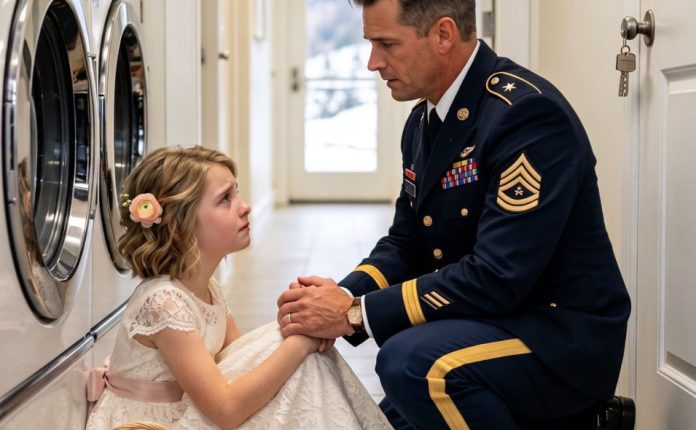
After my husband Terence died, I kept my $500 million inheritance a secret. I did not hide it because I was ashamed. I wanted to discover who would still treat me with respect when they believed I had nothing left.
Terence had warned me for years that money changed the way people behaved. His family had built a luxury real-estate empire, and nearly every holiday conversation eventually turned toward properties, investments, status, and who controlled what.
I met Terence in a small bookstore in Boston when he knocked a stack of travel guides onto my coffee. He apologized, bought me another drink, and spent the next hour helping me dry the pages of my ruined notebook.
For six months, I thought he worked in commercial development. Technically, that was true. What he never mentioned was that the company carrying his last name owned hotels, office towers, resorts, and private residences across several countries.
By the time I learned how wealthy he was, I already loved him. Terence seemed relieved when I laughed instead of being impressed. He later told me that my reaction was exactly why he had waited so long to explain.
His mother, Beatrice, never liked me. She smiled beautifully in photographs and insulted people so politely that they sometimes needed several minutes to realize what had happened. To her, I was ordinary, inconvenient, and beneath her son.
Howard, Terence’s father, was quieter but no kinder. He rarely insulted me directly. Instead, he behaved as though I were temporary, someone Terence would eventually outgrow once marriage stopped feeling romantic and family expectations became impossible to ignore.
Terence’s younger sister, Camille, copied whatever attitude her parents displayed. At family dinners, she praised my inexpensive dresses with exaggerated enthusiasm and asked whether I wanted the names of designers who made “something more suitable” for formal events.
Terence always defended me. Sometimes he did it loudly. More often, he squeezed my hand beneath the table and reminded me afterward that we could build our own traditions without asking anyone else for permission or approval.
We were married for eleven years. We never had children, though we tried for several. Eventually, we stopped treating our life like something incomplete and became grateful for the quiet home, friendships, travel, and ridiculous Sunday breakfasts we shared.
Then Terence collapsed during a business trip in Chicago. A hidden heart condition nobody knew he had took him within hours. I reached the hospital fifteen minutes after he died and spent the night staring at his empty bed.
I remember his wedding ring more clearly than anything else. Someone had placed it inside a plastic bag beside his watch. I kept thinking it was impossible that eleven years of marriage could suddenly fit inside something so small.
The funeral was enormous. Business partners flew in from Europe. Politicians sent flowers. Former employees stood outside because there were no seats left. Beatrice wore black silk and received condolences with the composure of someone hosting an important event.
I barely remember the service. I remember holding Terence’s ring. I remember his empty place beside me. Most of all, I remember Howard asking our family attorney, Julian Price, whether “the estate situation” had already been handled.
Julian looked toward me before answering. That glance told me more than Howard realized. Terence had updated his will only eight months earlier, and Julian knew exactly what my husband intended to happen after his death.
The next morning, Julian arrived before sunrise carrying two folders. He explained that Terence had left instructions requiring him to speak with me privately before giving the rest of the family any detailed information about the estate.
The first folder contained the will. Terence had left me controlling ownership of several private companies, investment accounts, properties, and trusts valued at slightly more than $500 million after taxes, outstanding obligations, and planned charitable commitments.
I stared at Julian for nearly a minute because the number felt unreal. He assured me there was no mistake. Terence had deliberately separated much of his personal wealth from the family corporation years before we married.
The second folder contained a handwritten letter from Terence. I recognized his slanted handwriting immediately and had to stop reading twice because tears blurred the page before I could make sense of his final instructions.
He wrote that he hoped we would grow old together and laugh about how unnecessary the letter had been. But if I was reading it, he wanted me to remember that inheritance and love were never the same thing.
Near the bottom, Terence had written, “Watch what people do before they know what you have. Then decide who deserves a place beside you afterward.” That sentence stayed with me longer than any number in the will.
Julian asked whether he should notify the family immediately about the estate distribution. I surprised both of us by saying no. Several assets were private, and there was no legal requirement that I personally announce anything that morning.
Twenty-four hours after the funeral, Beatrice arrived at our house with Howard, Camille, and two employees from the family company. I assumed they had come to discuss memorial arrangements or help organize Terence’s remaining belongings.
Instead, Beatrice dragged a suitcase across the lawn and dropped it near my feet. “Now that Terence is gone, you get nothing,” she said, as though she had been waiting years for permission to finally say it.
Howard explained that the house was “a Whitmore family property,” even though Terence had purchased it personally. Camille stood nearby holding her phone at chest height, quietly recording every second while two employees entered the house.
One employee carried a box from my bedroom and accidentally dropped my wedding album onto the wet grass. Mud splashed across the cover. Beatrice looked down at it and gave a small laugh that I would remember forever.
“You should keep the sentimental things,” she said. “I’m sure Terence would have wanted that.” I bent down, picked up the muddy album, brushed grass from the edge, and felt something inside me become completely calm.
“You’re right,” I said quietly. “I have nothing.” Camille smiled behind her phone. Howard looked satisfied. Not one of them knew Julian was sitting inside his car across the street, watching everything happen.
I left with one suitcase, my wedding album, Terence’s ring, and the handwritten letter he had left me. I did not tell them the house legally belonged to me because I wanted to see how far they would go.
For the next week, I stayed with my friend Nadia in a small apartment outside the city. She knew about the inheritance because I trusted her completely, and she could barely believe I was allowing the Whitmores to stay inside my house.
Julian advised me to document everything. The family changed the locks, removed furniture, and announced internally that Howard would assume responsibility for Terence’s private holdings. That last decision became far more important than any of them understood.
Howard began contacting banks and business managers as though he expected Terence’s private assets to flow automatically back into the family company. One by one, those institutions told him they could speak only with the legal beneficiary.
He assumed the beneficiary was some trust controlled by the board. He never imagined it was me. Meanwhile, Beatrice began telling relatives that I had been financially dependent on Terence and had chosen to leave quietly afterward.
Camille posted carefully edited photographs showing the family gathering at my former home. Beneath one photograph, she wrote, “Protecting Terence’s legacy from people who never understood it.” I took a screenshot and saved it without responding.
For the first month, nobody from Terence’s family called to ask whether I was safe, where I was staying, or whether I needed help. Then people they considered unimportant began reaching out to me instead.
Terence’s former driver, Anthony, offered me his spare bedroom because he thought I had nowhere else to stay. Our housekeeper, Rosa, tried to send me part of her paycheck before I stopped her and explained that I was safe.
A retired accountant named Mr. Lewis mailed me a handwritten note. It said, “You were always kind when nobody important was watching. If you need help, call me.” That message meant more to me than any inheritance document.
I began keeping two lists. One contained the people who contacted me when they believed I had nothing. The other contained the people who disappeared. Howard, Beatrice, and Camille were nowhere near the first list.
Three months after Terence’s death, Julian finally informed Howard that significant portions of Terence’s private estate had been transferred outside the family company. Howard demanded the beneficiary’s name, but Julian refused to disclose more than legally required.
That was when Howard started panicking. He hired investigators, accountants, and lawyers to trace assets Terence had deliberately separated years earlier. At the same time, he continued spending money as though he expected access to that fortune eventually.
The Whitmore Foundation’s annual charity gala was approaching, and Howard pledged five million dollars during planning meetings. There was only one problem. The foundation’s largest donor for the previous decade had been Terence personally, not the family company.
Without Terence’s contributions, the gala faced a major funding gap. Howard apparently believed he could replace the money once the estate issue was resolved, and he began promising new projects based on assets he did not control.
Six months after the funeral, Julian called me and explained that Howard planned to announce a major waterfront development at the gala. Several lenders and potential investors would attend, and Howard intended to cite Terence’s private portfolio as financial support.
By then, I had spent months reviewing every company, trust, property, foundation commitment, and investment Terence left behind. I did not want to remain a passive beneficiary. I wanted to understand his work well enough to protect it.
The invitation to the gala arrived three days before the event. Camille had apparently added my name as a joke and written across the bottom, “Come see what real family legacy looks like.” I decided to accept.
Nadia helped me choose a simple black gown. I wore no diamonds and planned no dramatic entrance. Terence’s wedding ring hung on a chain beneath the fabric, close enough that I could touch it whenever I needed courage.
When I entered the ballroom, conversations slowed one table at a time. Beatrice saw me first and looked irritated. Camille whispered to the woman beside her. Howard simply stared as though I had walked into a room where I no longer belonged.
I walked past all three of them and greeted Anthony, Rosa, and Mr. Lewis first. Their surprise quickly became warm smiles. Howard intercepted me near the center of the ballroom and asked through clenched teeth what I was doing there.
“I was invited,” I told him. Howard glanced toward Camille, who suddenly looked less amused. Then he lowered his voice and warned me not to create embarrassment during an evening that was extremely important to the family.
I almost laughed. Six months earlier, his wife had thrown my wedding album into the mud while his daughter recorded me. Now Howard was worried about embarrassment. I promised him I had no intention of creating a scene.
The gala program began twenty minutes later. Howard took the stage and spoke about family legacy, generosity, integrity, and continuing Terence’s vision. Listening to him use my husband’s name that way made my hands tremble beneath the table.
Then Howard announced the foundation’s five-million-dollar pledge. Applause filled the ballroom. He continued by revealing plans for a major waterfront development that he claimed would be supported by the private investment portfolio established by Terence.
Several bankers leaned forward with interest. Julian, seated three tables behind me, did not clap. Instead, he stood and calmly told Howard that he had no authority over Terence’s private portfolio or the assets inside it.
The room slowly quieted. Howard’s face hardened as he told Julian this was neither the time nor the place. Julian answered that Howard had made it the place by publicly representing assets he did not legally control.
Every head turned. Then Howard looked directly at me. Something finally clicked, and I could almost see the last six months rearranging themselves in his mind. Beatrice whispered, “No,” before I even stood.
I walked toward Howard until only a few feet separated us. Then I said the sentence I had imagined for weeks. “Terence left every dollar to me.” The ballroom became so silent that I could hear someone set down a glass.
Howard’s face lost its color. Camille laughed once as though she believed I was joking. Julian stepped onto the stage and confirmed that I was the controlling beneficiary of Terence’s private estate, worth approximately five hundred million dollars.
Howard stared at me. “You told us you had nothing.” I looked toward Beatrice and answered, “No. Your wife told me I had nothing. I agreed because I wanted to know how you would treat me if you believed her.”
Camille stood and accused me of turning the last six months into some kind of test. I looked at the phone in her hand and reminded her that she had been filming the day they threw me out.
Then I explained that I would honor every legitimate charitable commitment Terence had approved before his death. The five-million-dollar pledge Howard had announced, however, had never been authorized by Terence or by me.
I had already created a separate charitable trust in Terence’s name. It would support cardiac research, bereavement counseling, housing assistance for widowed spouses, and emergency grants for long-term employees who faced sudden financial hardship.
The first advisory members were Anthony, Rosa, and Mr. Lewis. Howard stared at me in disbelief and asked why I had placed employees on the board. I answered, “Because I chose people who proved they were loyal.”
Beatrice finally approached me and accused me of enjoying the humiliation. I looked at her for a long moment before answering that I would trade every dollar I had inherited to have her son standing beside me again.
Her anger disappeared for a moment. She looked exactly like what she was: a mother who had lost her child. I softened my voice but not my position. “Grief explains cruelty,” I told her. “It does not excuse it.”
Howard asked whether I intended to take control of the family company. I told him no. Terence had deliberately kept his private wealth separate because he no longer trusted the company’s borrowing practices, and I would respect that decision.
The waterfront project collapsed the next morning. Two lenders withdrew after learning Howard had misrepresented his access to Terence’s portfolio. Within six months, the Whitmore Group sold several properties, reduced its debt, and survived without my money.
I returned to my house one week after the gala. Technically, I could have returned months earlier, but I needed time to decide whether I still wanted to live in a place carrying so many memories.
Rosa met me at the front door. The furniture Beatrice removed had been returned. My wedding album sat on the dining table, still marked by a dark mud stain along the bottom edge.
I could have replaced the cover. I chose not to. That stain reminded me that I had learned exactly who people were when they thought I had nothing left to offer them.
I sold the house the following year and bought a smaller place near the ocean. One room became a library because Terence and I had first met among books, and keeping that memory nearby felt better than keeping the mansion.
Anthony became director of transportation for the charitable trust. Rosa’s children received scholarships through an independent program. Mr. Lewis became one of my closest financial advisers, and Nadia remained exactly what she had always been: my friend.
Beatrice wrote to me several months after the gala. Her first letter contained excuses, so I did not answer. Her second contained fewer excuses. The third simply said she had treated my value as though it ended when Terence died.
I answered that third letter. We did not become close, but slowly and cautiously, we became civil. Camille took almost two years before apologizing for filming me and admitting she had expected my humiliation to become a funny family story.
Howard never offered the apology I wanted. Eventually, however, he stopped pretending Terence’s estate belonged to him. That distance was enough for me to move forward without waiting for a confession that might never come.
The $500 million changed my life, but not in the way people imagined. Money could not bring Terence home, replace Sunday mornings, finish our conversations, or restore the sound of his key turning in the front door.
What the money gave me was choice. I could protect his work, help people he cared about, and stop measuring family by blood alone. I could finally decide who deserved access to my time, trust, and future.
Months after the gala, I opened Terence’s handwritten letter again. Near the bottom, beneath the sentence about watching how people treated me, he had written one final line that I had barely noticed the first time.
“The people who stay when they think you have nothing are the ones worth sharing everything with.” I finally understood that Terence had not left me a fortune merely to make me wealthy. He had left me freedom.
The morning Beatrice dragged my suitcase onto the lawn, she thought she was showing me how little I mattered without her son. Instead, she showed me something far more useful about respect, loyalty, and the people around me.
Six months later, when I walked into that glittering ballroom and told Howard that Terence had left every dollar to me, I was not revealing my wealth. I was revealing theirs—not what they owned, but who they were.