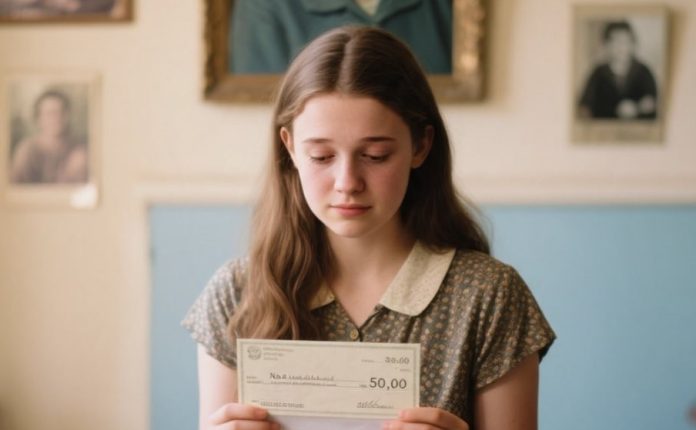
At 14, My Stepmom Accused Me Of Hurting Her Son. By Nightfall, My Entire Family Had Disowned Me. My Dad Left Me Alone In The Hospital, Saying, “Don’t Ever Call Us Again.” I Thought I Had Lost Everything. Two Hours Later, The Hospital Received One Phone Call… And The Nurse Suddenly Started Calling Me “Miss.”
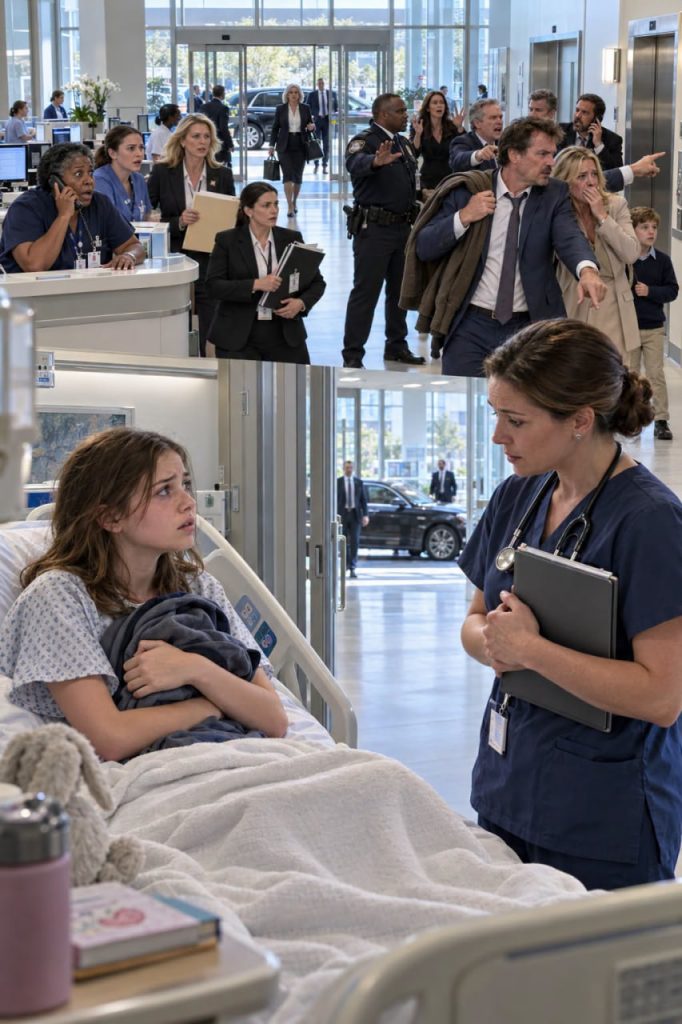
My name is Claire Mercer, and I’m twenty-nine now. But whenever October comes around and the air starts smelling like wet leaves and chimney smoke, I still think about one Tuesday night when I was fourteen.
That was the night I learned how quickly a family could turn a child into a stranger. My mother died when I was nine. For the first two years afterward, it was just my father, Grant, and me in our two-story house outside Columbus, Ohio.
We weren’t especially close, but we had routines that made the emptiness bearable. Friday pizza. Sunday grocery runs. My mother’s old ceramic bowl filled with apples on the kitchen counter because neither of us could bring ourselves to put it away. Then Dad married Denise Caldwell.
Denise moved in with her twelve-year-old son, Nolan, when I was eleven. She never openly announced that I was less important than him. She didn’t have to. It showed in small things. If Nolan left his muddy shoes in the hallway, Denise laughed and called him messy.
If I left a textbook on the dining table, she asked why I couldn’t respect her home. Nolan got the larger bedroom because he “needed room to grow.” His school projects became family emergencies. Mine were things I should learn to handle independently.
Still, I tried. I helped Nolan with fractions because math frustrated him. When he missed curfew one summer night because he stayed too long at a friend’s house, I told Denise he’d been helping me look for my lost bracelet.
Once, when he desperately wanted a pair of expensive basketball shoes, I quietly gave him three weeks of my allowance. I wasn’t trying to buy his affection. I simply wanted the four of us to feel like something close to a family.
Nolan wasn’t cruel to me, at least not then. Sometimes he was annoying in the way younger brothers are annoying. He drank juice straight from the carton. He barged into my room without knocking. He stole the television remote and pretended he had no idea where it was.
But we also laughed together. That detail mattered later, because Denise would tell everyone I had always resented her son. The Tuesday everything happened began so ordinarily that I remember almost nothing about school. I remember rain drying on the sidewalks by afternoon.
I remember the smell of tomato sauce when I walked into the house. I remember Nolan sitting on the kitchen floor with a wrench in one hand, arguing with Denise about his bicycle. “Leave the garage alone,” Denise told him.
“I’m just fixing my chain.” “Your chain doesn’t require you messing around with anything else in there.” Nolan rolled his eyes after she turned away. I saw it. So did Denise. “Nolan.” “I heard you.” That should have been the end of it.
Dad wasn’t home yet, and Denise left about half an hour later to pick up something from the pharmacy and grocery store. She told me to finish my homework. She told Nolan to stay out of trouble.
I sat at the kitchen table with my geometry book open, chewing the end of a pencil while an old ceiling fan clicked above me. Through the window, I could see part of the driveway and the detached garage beyond the back fence.
At some point, I heard metal rattling. I looked up. Then silence. I went back to my homework. A few minutes later came a scream so sharp that my pencil rolled off the table.
I was outside before I fully understood I had moved. “Nolan?” The garage door was tilted strangely, one side lower than the other. Nolan was on the concrete beside his bicycle, gripping his forearm against his chest.
His face had gone pale. There was blood soaking through a tear in his sleeve. I dropped beside him. “What happened?” He didn’t answer. “Nolan, look at me.” His eyes moved toward the crooked garage door. “I don’t know.”
“Did it fall?” He began crying harder. I ran inside and called Dad. Then Denise. Dad was closer and arrived first, his work shirt half untucked as he rushed through the gate. Denise came moments later.
The second she saw Nolan, she shoved past me. “What happened to my son?” “The garage door came down,” I said. She looked at me. Not at the door. Not at the bicycle. At me. “How?” “I don’t know.
I was inside.” Nolan stared at the ground. Dad helped him toward the car while Denise wrapped a clean dish towel around his arm. I followed without being told because it never occurred to me that I shouldn’t.
During the drive, Nolan sat beside me in the back seat. His breathing came in small, frightened bursts. I wanted to take his hand, but he kept it tucked against his stomach. “It’ll be okay,” I whispered. He turned toward the window.
At the hospital, everything became fluorescent lights, rolling carts, antiseptic smell, and hurried voices. Nolan was taken behind a curtain while Dad filled out paperwork. I sat in a plastic chair with my backpack between my shoes.
That was when I noticed Denise whispering to my father. At first I thought she was discussing Nolan’s treatment. Then I heard my name. “Claire was alone with him.” Dad said something too quietly for me to hear.
Denise shook her head. “She’s always been jealous.” My stomach tightened. I stood. “What are you talking about?” Neither of them answered. “Denise?” She folded her arms. “I’m talking to your father.” “About me.” Dad finally looked over.
“Just sit down, Claire.” Something in his tone scared me more than Nolan’s injury had. When the doctor eventually came out, he told us Nolan’s arm would heal. The injury looked frightening but wasn’t as severe as we’d feared.
Relief rushed through me so fast I almost cried. Then the doctor asked Nolan what had happened. I was standing near the doorway. Nolan looked at Denise first. Then Dad. Then me. His face crumpled. “Claire did it.” For a second, nobody reacted.
I actually thought I’d misheard him. “What?” Nolan swallowed. “She pushed the garage door down.” The room seemed to shrink. “Nolan, what are you saying?” He looked away. “I told her to stop.” My chest went cold. “That’s not true.”
Denise made a sound that was almost a gasp. “I knew it.” “Denise, I didn’t—” “I knew something was wrong with you.” The doctor raised a hand. “Everyone needs to stay calm.” But Denise was already crying. Not quiet tears.
Dramatic, shaking sobs as she pulled Nolan against her. “You hated him from the beginning.” “No, I didn’t!” “You couldn’t stand him having a mother when yours was gone.” That sentence hit harder than anything else she said. I turned to my father.
“Dad.” He was staring at me. I had never seen that expression before. Not anger exactly. Disgust. “Tell them,” I said. “I was doing homework. Tell them I wouldn’t hurt him.” He rubbed both hands over his face. “Why would Nolan lie?”
“I don’t know!” My voice cracked. That seemed to make things worse. Denise stepped between Nolan and me as if I might attack him right there. “Stay away from my son.” I backed up. A nurse near the desk looked over.
Dad began asking Nolan questions, but every answer came after Nolan glanced at his mother. I noticed it. Nobody else seemed to. Within an hour, Denise had called relatives. I knew because I heard pieces of her conversations. “She hurt him.” “Yes, deliberately.”
“We always worried about her jealousy.” Each version became more certain than the one before it. My aunt apparently believed her immediately. So did my uncle. My grandmother didn’t call. That hurt most. By then, I had stopped trying to explain.
Every time I said, “I didn’t do it,” Denise answered with another accusation. Every time I became upset, she treated my tears like evidence. Finally, Dad walked toward me in the hallway. People moved around us carrying coffee cups and flowers.
Somewhere nearby, a machine kept beeping at steady intervals. I thought he was going to tell me we would talk at home. Instead, he said quietly, “I can’t even look at you right now.” “Dad—” “Don’t.” “I didn’t do anything.” His jaw tightened.
“Don’t ever call us again.” I stared at him. I honestly didn’t understand the sentence. “What?” “You heard me.” Then he turned. Denise was already walking toward the exit with Nolan. Dad followed them. I watched the automatic doors open. Close.
And just like that, all three of them disappeared into the parking lot. Nobody came back. I was fourteen years old, standing in a hospital with my school backpack still over one shoulder, wondering whether my own father had actually abandoned me.
I sat down because my legs stopped working properly. The chair was hard blue plastic. My backpack smelled faintly like pencil shavings and the strawberry gum I’d forgotten in the front pocket. My geometry homework was still inside, unfinished.
That absurd detail nearly broke me. That morning, my biggest problem had been a test. Now I didn’t know where I was sleeping. A nurse passed twice before stopping. “Honey, where are your parents?” I looked toward the doors. “They left.”
Her expression changed. “They’re coming back?” I stared at the floor. “My dad told me never to call them again.” The nurse became very still. She crouched in front of me. “What’s your name?” “Claire.” “Claire what?” “Claire Mercer.”
She asked my age. When I told her, she glanced toward the nurses’ station. Then she said, “Stay right here for me, okay?” I nodded. I thought she was going to find my father. Instead, I watched her pick up the phone.
And what happened because of that phone call would become the first crack in the lie everyone had already decided to believe. For a while, nobody told me anything. Adults kept moving around the waiting area while I sat beneath lights so bright they made every surface look washed out.
A vending machine hummed against the wall. Every few minutes, the automatic doors opened and let in a gust of cold October air. I watched families leave together. A woman walked out holding her husband’s hand.
A sleepy little boy rested his head against his mother’s coat. An older man carried flowers for someone. I remember thinking that being unwanted must somehow be visible, because I felt as if everyone who passed could see it on me.
The nurse who had spoken to me returned with a paper cup of water and a packaged sandwich. “I’m not hungry,” I said. “That’s okay. Keep it anyway.” She sat beside me. “Do you have another relative nearby?” “My grandmother.”
“Do you know her number?” I shook my head. Back then, I knew friends’ numbers from memory but not Grandma’s new home number. It was stored in Dad’s contacts, and Dad had driven away with everything except my backpack.
“What about your mother?” “She’s dead.” The nurse paused. “I’m sorry.” I hated when adults said that. Not because they meant badly, but because those two words usually ended the conversation. This time they didn’t. She stayed.
“Your father is your legal guardian?” “Yes.” “And he left after telling you not to contact him?” I nodded. I could see her choosing her next words carefully. “Claire, another person is coming to speak with you.” My stomach tightened.
“Am I in trouble?” “No.” “You believe Nolan?” “I haven’t spoken to Nolan.” That answer surprised me. She wasn’t telling me I was innocent. She wasn’t telling me I was guilty. She was simply refusing to pretend she knew something she didn’t.
It felt strangely safe. About twenty minutes later, a woman named Rebecca Lang arrived. She carried a canvas bag and wore a gray cardigan over a navy blouse. She didn’t look like anyone from television. No badge. No dramatic entrance.
She introduced herself as a hospital social worker. Then she said, “Miss Mercer, I’d like to ask you a few questions.” Miss Mercer. Nobody had ever called me that before. Teachers called me Claire. Adults called me sweetheart or kiddo.
Denise occasionally called me “young lady” when she was angry. But Miss Mercer sounded different. It sounded like I was a person whose answer might matter. Rebecca took me into a small consultation room with two chairs, a table, and a box of tissues.
She asked what happened from the beginning. I told her. I described sitting at the kitchen table. The metal sound. Nolan’s scream. The crooked garage door. I told her I hadn’t touched him. “Did you argue with Nolan earlier?” “No.”
“Have you ever threatened him?” “No.” “Has he ever accused you of hurting him before?” “No.” “Has Denise ever suggested you were jealous of him?” I hesitated. “Sometimes.” Rebecca waited. That patience made me talk. I told her about the comments.
About Denise saying it must be difficult watching Nolan have a mother. About her joking once during Christmas that I was “territorial” about Dad. About how she always interpreted disagreements between Nolan and me as jealousy.
None of those things had seemed important before. Now, sitting in that room, they felt like pieces of something I hadn’t known I was assembling. Rebecca wrote notes. “Did your father hear those comments?” “Some of them.” “What did he do?”
“Usually nothing.” That answer hurt more than I expected. Rebecca put down her pen. “Claire, I’m going to make some calls. You’re not leaving by yourself.” “What if Dad doesn’t want me?” Her face softened, but she didn’t offer fake reassurance.
“Then we’ll make sure you’re somewhere safe tonight.” Safe tonight. Not home. The distinction landed heavily. She left me with the nurse. Time stretched. At some point, I went to the bathroom and stared at myself in the mirror.
My ponytail had nearly fallen out. There was a faint smear of Nolan’s blood on the cuff of my sweatshirt from when I’d tried to help him. I scrubbed it under cold water until my fingers went numb.
When I returned, the nurse was answering the phone. I wouldn’t have noticed except she suddenly looked toward me. “Yes,” she said. “She’s still here.” My pulse jumped. The nurse listened. “No, her father is not currently present.”
Another pause. Her posture changed. “Can you repeat that?” She grabbed a pen. I watched her write something. Then she said, “I’m going to put you on hold while I get the attending physician.” My mouth went dry.
Rebecca came back into the waiting area just as the nurse waved her over. They spoke quietly. Then both of them looked at me. I stood. “Is Nolan okay?” “He’s fine,” the nurse said. “Then what happened?” Rebecca walked toward me.
“Claire, we’re still verifying some information.” “What information?” Before she could answer, the hospital phone rang again. This time Rebecca answered it. The conversation lasted only a few minutes, but I could tell something enormous had shifted.
She asked for the caller’s full name. She asked whether anyone else was present. She repeated parts of the story back in a calm voice. Then she hung up. “Claire,” she said, “Nolan has changed his account of what happened.”
I couldn’t move. “What does that mean?” “It means he says you did not cause his injury.” The waiting room went silent even though people were still moving around us. I heard the vending machine. A cart wheel squeaking.
Someone coughing far down the hallway. Nothing else. “He said that?” Rebecca nodded. “According to the call we just received, Nolan admitted the garage door came loose while he was doing something he’d already been told not to do.
He panicked because he thought his mother would be angry.” I stared at her. “Then why did he say I did it?” Rebecca’s expression told me there was more. “He apparently believed blaming you would keep him from getting in trouble.”
I laughed once. It wasn’t amusement. It was shock. “He ruined my life because he thought he’d get grounded?” Nobody answered. My eyes filled. “Where’s my dad?” Rebecca glanced at the nurse. “He has been contacted.”
That should have relieved me. Instead, I felt afraid. Because until that moment, part of me had been desperately waiting for Dad to return and say he’d made a mistake. Now he had no excuse not to.
A few minutes later, Rebecca explained something I hadn’t understood. The nurse had already reported my abandonment before Nolan confessed. The words Dad spoke in the hallway had been overheard. “Don’t ever call us again.”
A legal guardian leaving a fourteen-year-old alone at a hospital after saying that wasn’t treated like a normal family argument. The hospital had documented it and contacted the appropriate child welfare personnel. Then Denise’s phone call came. She hadn’t called because she suddenly cared about me.
According to what Nolan later told investigators, he’d confessed in the car almost immediately after leaving the hospital. He had started sobbing and saying, “Claire didn’t do anything.” Dad pulled over. Denise initially told him to calm down.
Then Nolan repeated it. The garage door had slipped while he was messing with something he had been warned to leave alone. He knew Denise would explode. In his panic, he remembered all the times she’d said I resented him.
So he used the easiest lie available. Me. What happened next would bother me for years. Denise’s first response wasn’t, “We need to go back for Claire.” It was, “We need to fix what he said before this becomes a legal problem.”
She called the hospital. Not Dad. Denise. The woman who had spent hours telling relatives I was dangerous suddenly needed everyone to know there had been a misunderstanding. But there was a problem. She had already said too much.
Dad had already left. And the hospital had already started documenting everything. The lie was dead. The damage wasn’t. I was still trying to understand that when the automatic doors opened. My father walked in alone. His face was pale.
His coat wasn’t zipped. He spotted me sitting beside Rebecca. “Claire.” For a split second, the fourteen-year-old part of me wanted to run into his arms. Then I remembered the parking lot doors closing behind him. I stayed seated.
Dad came closer. “Claire, sweetheart, I am so sorry.” I looked at Rebecca. Then at him. “Why did you come back?” His face collapsed. “Because Nolan told us the truth.” I don’t know what he expected me to say.
Maybe he thought the truth would reset everything. Maybe he thought being wrong was the same thing as being forgiven. I stood. “You only came back because he admitted it?” Dad’s eyes filled. “Claire—” “If Nolan hadn’t confessed, would you have come back?”
He opened his mouth. Nothing came out. And in that silence, I learned the answer. Dad tried to hug me. I stepped backward. The movement was small, but everyone in that hospital hallway noticed it. His arms dropped. “Okay,” he whispered.
He looked embarrassed, almost wounded, and part of me hated myself for noticing. Children are trained to read their parents’ emotions even when their parents have failed to read theirs. “I messed up,” he said. “I panicked.” “You left me here.”
“I know.” “You told me never to call you again.” “I didn’t mean it.” That sentence made something inside me harden. Adults say things they don’t mean all the time. They say them because they’re angry, afraid, overwhelmed, embarrassed.
But children still hear them. At fourteen, I didn’t know how to explain that. So I asked one question. “Where did you think I was going to sleep tonight?” Dad looked away. Rebecca stepped in before he could answer.
“Mr. Mercer, we’re going to need to discuss the discharge plan separately.” “She’s coming home with me.” The confidence in his voice startled me. Rebecca remained calm. “That has not been determined.” Dad blinked. “I’m her father.” “Yes.”
“I made a mistake.” Rebecca folded her hands. “And your daughter was left without a guardian in a medical facility after being accused of intentionally injuring another child. We need to make sure she feels safe.” “I would never hurt Claire.”
I almost laughed again. He believed that sentence defended him. Maybe physically, he never would have hurt me. But hurt comes in more forms than adults like admitting. Rebecca asked whether there was another relative I trusted.
“My grandmother,” I said immediately. Dad looked at me. “Mom?” I nodded. My grandmother, Evelyn Mercer, lived forty minutes away in a small brick house filled with old photographs and the smell of cinnamon tea.
Before Dad remarried, I had spent nearly every weekend there. After Denise moved in, visits became less frequent. Denise said Grandma “interfered.” Dad agreed because agreeing was easier. Rebecca asked Dad for Grandma’s number. He gave it reluctantly.
When Grandma answered, Rebecca spoke first. I only heard one side of the conversation. “This is Rebecca Lang calling from Riverside Medical Center.” Pause. “Yes, Claire is physically okay.” Another pause. “Mrs. Mercer, she is here without a guardian.”
The next pause was longer. Then Rebecca moved the phone away from her ear slightly. Even from where I stood, I could hear my grandmother’s voice rising. She arrived wearing house slippers. I will never forget that.
Grandma Evelyn had driven forty minutes in a wool coat thrown over her nightgown and blue house slippers because she’d been told I was alone. When the doors opened, she rushed in carrying her purse with both hands. “Claire!”
I stood. She wrapped me against her chest so tightly I could barely breathe. For the first time all night, I cried like a child. Not quietly. Not politely. I sobbed into her coat. Grandma rubbed my back.
“I’ve got you.” Dad approached. “Mom.” She turned. Her expression changed so sharply that I stopped crying. “What did you do?” “Mom, please.” “Did you leave her here?” “It was complicated.” Grandma stared at him. “She’s fourteen.”
Dad lowered his voice. “Nolan said she hurt him.” “And you believed him.” “We all did.” “No.” Grandma pointed toward me. “You did.” Dad flinched. I learned later that Denise had called Grandma earlier, but Grandma hadn’t answered.
Denise had left a vague voicemail saying there had been “an incident with Claire.” Grandma had been preparing to call Dad back when the hospital contacted her. For months afterward, I was grateful she hadn’t heard Denise’s full version first.
I needed at least one person who came to me before making up her mind. Grandma took me home that night. It wasn’t as simple as her putting me in the car and driving away.
There were conversations with Rebecca, documentation, calls, and follow-up plans. I sat in another room while adults discussed my future as if it were something that could be rearranged with signatures. But eventually, I walked into the parking lot beside Grandma.
Dad followed us outside. “Claire.” I stopped. Grandma didn’t. She walked a few steps ahead and waited near her Buick, giving me space without leaving me alone. Dad stood beneath a parking lot lamp. “I love you.” I said nothing.
“I’m sorry.” Still nothing. “I’ll fix this.” That made me look at him. “How?” He swallowed. “I’ll make it right.” “Can you make me not remember what you said?” His shoulders dropped. “No.” “Then you can’t fix it.”
I got into Grandma’s car. For the first few weeks, everyone expected the situation to return to normal. Dad called constantly. I refused most calls. Denise sent a long letter explaining that she’d been “terrified as a mother.”
She said Nolan’s statement triggered her protective instincts. She said grief could make blended families complicated. She said she hoped someday I would understand. She never wrote, “I lied about you.” She never wrote, “I turned your relatives against you.”
She never wrote, “I used your dead mother to make you sound dangerous.” I threw the letter away. Nolan didn’t contact me at all. That bothered me more than I wanted to admit. I could understand fear.
I could even understand a stupid lie told in panic. What I couldn’t understand was silence afterward. Weeks passed. I started attending school from Grandma’s address. She cleared out her sewing room and turned it into a bedroom for me.
One Saturday, she painted the walls a pale blue because I said the old floral wallpaper made me feel like I was sleeping inside someone’s attic. She never asked me to forgive Dad. That mattered. Other relatives did.
My aunt called and said, “Your father made a terrible mistake, but he’s still your father.” My uncle said, “You don’t want one bad night to destroy your family.” One bad night. People loved that phrase.
As though the worst moments of your life should be measured by duration instead of consequence. I began asking everyone the same question. “If Nolan hadn’t told the truth, what would you believe about me right now?” Nobody had a good answer.
My father and Denise began fighting soon after. I only knew because Dad told Grandma during one of his many phone calls. Denise blamed him for abandoning me publicly. Dad blamed Denise for accusing me before hearing the facts.
Denise reminded him that he had chosen to believe her. For once, she was right. Their marriage cracked under the weight of mutual blame. But another detail surfaced that made everything worse. Nolan’s original lie hadn’t come entirely from nowhere.
During a follow-up conversation with a counselor, he admitted Denise had spoken about me differently when Dad wasn’t around. She had told him I might be jealous. She had told him to be careful with his possessions around me.
Once, after he and I argued over a video game, Denise told him, “Claire doesn’t like seeing you happy because she’s had such a difficult life.” Nolan had absorbed all of it. So when he panicked in that garage, the lie was already waiting for him.
It had been built piece by piece. When Dad learned that, he came to Grandma’s house and demanded to speak with me. I agreed. We sat at the kitchen table while Grandma made tea in the next room.
Dad looked ten years older. “Denise and I are separating.” I stared at him. He seemed to expect a reaction. “I’m sorry,” I said finally. “You don’t have to be.” “I know.” He rubbed his forehead.
“I should have protected you.” “Yes.” “I should have known.” “Yes.” “I want you to come home.” “No.” His eyes lifted. “Claire—” “I don’t want to live there.” “Denise is leaving.” “It’s not about Denise.” That surprised him.
For weeks, he’d treated Denise as the entire explanation. I leaned forward. “She said horrible things. Nolan lied. But you’re my dad.” His face tightened. “You’re the person who was supposed to know me.” “I do know you.” “No.
You believed I could crush a twelve-year-old boy’s arm because I was jealous that his mom was alive.” Dad looked as if I’d struck him. I continued. “And then you left.” Silence filled Grandma’s kitchen. “I don’t know how to come back from that,” I said.
He cried. It was the first time I’d ever seen my father cry. And the terrible thing was, I loved him enough that seeing it hurt. But loving someone and trusting them are not the same thing.
I was learning that much earlier than I should have. What I didn’t know yet was that Dad’s marriage ending would not be the last consequence of that night. Because months later, Nolan finally came to see me.
And what he admitted changed the way I understood his lie all over again. Nolan was thirteen by the time he showed up at Grandma’s house. Almost a year had passed. I was fifteen and had grown several inches.
I wore my hair shorter. I had new friends who knew nothing about the hospital unless I chose to tell them. Grandma had made pancakes that Saturday morning when someone knocked. She looked through the front window. Then she turned to me.
“It’s Nolan.” My stomach tightened instantly. “Do you want me to send him away?” That was one of the things I loved most about Grandma. She never disguised decisions as obligations. I considered it. Then I said, “Let him in.”
Nolan stepped inside wearing jeans, a gray hoodie, and the expression of someone arriving for a punishment he had volunteered to receive. He looked older. Still young. That was difficult to reconcile. In my memory, he’d become the villain who destroyed my family.
Standing in Grandma’s living room, he was just a skinny thirteen-year-old boy with acne on his forehead and trembling hands. Grandma stayed nearby. “I need to talk to Claire,” Nolan said. “You can talk right here.” He nodded. We sat across from each other.
For several seconds, neither of us spoke. Finally, he said, “I’m sorry.” I waited. “I know that’s not enough.” “No.” His eyes dropped. “I think about it every day.” I didn’t know what to do with that information. “Why did you do it?”
“I was scared.” “You already told everyone that.” “No. I mean before.” He swallowed. Then he told me something nobody had explained clearly. The week before the accident, Nolan had damaged part of the garage door while messing around inside.
Denise had discovered it and exploded at him. She told him if he touched anything in the garage again, he’d lose his bike, his games, and a planned trip with friends. On the night of the accident, he’d ignored her.
When the door slipped and injured him, he believed Denise would blame him immediately. Then I ran outside. And he remembered something his mother had said days earlier. “If anything ever happens between you and Claire, you tell me the truth.
I’ll believe you.” At twelve, Nolan had heard something else inside that sentence. Mom will believe me over Claire. So when the doctor asked what happened, he used it. “I didn’t think your dad would leave you,” he whispered.
I stared at him. “You thought what would happen?” He rubbed his palms against his jeans. “I thought I’d get out of trouble. I thought they’d yell at you. Then later I’d say I wasn’t sure.”
“You accused me of hurting you on purpose.” “I know.” “My dad left me in a hospital.” “I know.” “No, you don’t.” He began crying. I didn’t. “I could have been taken away,” I said. “Everyone thought I was dangerous.”
“I know.” “You keep saying that.” He covered his face. Grandma remained silent. After a while, Nolan said, “When we were driving home, Mom kept saying she always knew you were bad. She was calling people. She sounded happy.”
That word chilled me. “Happy?” “Not happy like smiling. More like… like she was finally right about something.” My skin prickled. Nolan continued. “That’s when I got scared.” He said Dad had been driving while Denise called relatives from the passenger seat.
Nolan listened as his mother transformed the story. Claire lost control. Claire had been jealous for years. Claire had deliberately tried to hurt him. By the third call, Nolan barely recognized the lie he’d started.
“I told Mom to stop,” he said. “What did she say?” “She told me I was upset because of the pain.” “And then?” “I told her you didn’t do it.” According to Nolan, Denise immediately told him to be quiet.
Dad heard. He pulled the car onto the shoulder. “What do you mean Claire didn’t do it?” Dad asked. Nolan confessed. The garage door had slipped. I had been inside. He had lied. Dad wanted to turn around immediately.
Denise stopped him. Not physically. With words. She said they needed to think carefully because Nolan had already made a statement at the hospital. She worried about “how this would look.” She worried that people might think she’d encouraged the accusation.
Only when Dad threatened to call the hospital himself did Denise make the call. That detail was new. “She didn’t call because she felt bad?” I asked. Nolan shook his head. “She called because Dad said he would.” I sat back.
For months, part of me had given Denise the smallest scrap of credit. She had corrected the lie. Now even that disappeared. “What happened after?” Nolan stared at the carpet. “Mom told me I destroyed everything.” Of course she did.
When the truth became inconvenient, Denise blamed the child who finally told it. I should have felt satisfied. I didn’t. I just felt tired. Nolan wiped his face. “Do you hate me?” I thought about it. “No.” He looked surprised.
“But I don’t trust you.” His chin trembled. “Will you ever?” “I don’t know.” That was the truth. People often imagine forgiveness as a door. You either open it or keep it closed. For me, it was more like a burned house.
I could stop wishing the people responsible would suffer. I could accept that they were human. I could move forward. But none of that rebuilt the rooms. Nolan left after less than an hour. Before he went, he placed something on Grandma’s coffee table.
An envelope. Inside was every dollar he’d saved from birthday money and odd jobs. There was a note. I won’t reproduce it word for word because it belongs to the boy he was, not the man he became.
But the message was simple. He knew money couldn’t repair anything. He wanted to give back the allowance I’d once sacrificed so he could buy those basketball shoes. I mailed the money back. But I kept the note.
Not because I forgave him. Because it was the first apology anyone had given me without an excuse attached. Dad and Denise finalized their divorce several months later. Denise moved to another state. I never saw her again.
She sent two more letters over the years. I returned both unopened. Dad tried harder. He attended my high school graduation even though I gave him only one ticket and told him not to bring anyone.
He sat in the back. When I crossed the stage, I saw him standing and clapping. I felt almost nothing. That frightened me. At eighteen, I left Ohio for college in North Carolina.
I studied social work, partly because of Rebecca Lang, although I didn’t admit that until years later. I wanted to understand what happened to children when adults failed them. I wanted to become one of the adults who stayed.
Dad helped pay tuition. I accepted the money because it came from the college account my mother had started before she died. He occasionally tried to turn financial support into proof that our relationship was healing.
I wouldn’t let him. “We can be civil,” I told him once. “That doesn’t mean we’re going back.” “Back to what?” I stared at him. He seemed to realize the answer before I said it. “There is no back.”
By twenty-five, I was working with teenagers in crisis intervention. By twenty-seven, I had my own apartment, a ridiculous collection of coffee mugs, a rescue dog named Pepper, and a life that didn’t feel like something I’d merely survived into.
Nolan contacted me occasionally. He became an electrician. He had a daughter. When she was born, he sent me one photograph and a message. “I understand things differently now.” I believed him. I still didn’t become his sister again.
Dad, meanwhile, grew increasingly sentimental as he got older. Birthdays. Holidays. My mother’s anniversary. He sent messages about second chances. Then, three months before my twenty-ninth birthday, he asked me to meet him at Grandma’s old house.
Grandma had died peacefully the previous winter. Her house was being prepared for sale. I almost said no. Then Dad wrote one sentence that made me change my mind. “There’s something of your mother’s I should have given you years ago.”
So I went. And standing in that kitchen where I had once told him I would never come home, I finally understood why he had asked me there. Dad looked smaller than I remembered. Not physically.
He was still tall, still broad-shouldered, still had the same habit of pushing his glasses higher whenever he was nervous. But age had softened him. We sat at Grandma’s kitchen table, although it wasn’t Grandma’s kitchen anymore. The refrigerator had been emptied.
Her curtains were gone. Pale rectangles remained on the walls where photographs had hung for decades. Dad placed a wooden box between us. I recognized it immediately. It had belonged to my mother. She used to keep letters, birthday cards, and photographs inside.
“I found this after your grandmother died,” Dad said. “You mean Grandma had it?” He nodded. “She took it when you moved in.” I opened the box. My mother’s handwriting was everywhere. Cards addressed to me. Photographs. A dried flower pressed between two pieces of paper.
And beneath everything, an envelope with my name written on it. Claire. My hands shook. “Did you read this?” “No.” I believed him. I opened it. My mother had written the letter when she was already sick. She wrote about ordinary things.
How stubborn I was when learning to ride a bicycle. How I hated peas. How I used to crawl into her bed during thunderstorms and insist I was only there because she was scared. Then I reached the final paragraph.
She wrote that she couldn’t protect me forever, but she hoped I would grow into someone who knew the difference between love and obligation. I read that sentence three times. Dad sat silently across from me. Finally, he said, “I failed her.”
I folded the letter. “You failed me.” His eyes filled. “Yes.” There was no argument this time. No Denise made me panic. No Nolan lied. No I was afraid. Just yes. It was probably the most honest thing he’d said about that night.
“I’ve spent fifteen years wishing I could change what I did,” he said. “I know.” “I keep thinking about you sitting in that hospital.” “So do I.” He winced. “I don’t expect you to forget.” “Good.” “But I hoped someday you might forgive me.”
There it was. The thing everyone eventually wanted from me. Forgiveness. People speak about it as if the injured person is holding a key to everyone’s freedom. As though refusing forgiveness means you’re chained to the past.
For years, I wondered whether they were right. Then I built a life. And I discovered something. I wasn’t trapped. I didn’t wake up angry every morning. I didn’t think about Denise every day. I didn’t hate Nolan.
I didn’t spend my nights replaying Dad’s words. I had friends who loved me. Work that mattered. A home that felt safe. Pepper snored beside my bed every night. On Sundays, I cooked Grandma’s pancake recipe and usually burned the first batch.
My life was full. I didn’t need to forgive anyone to make it that way. “I don’t hate you,” I told Dad. He nodded slowly. “But I’m not going to give you the answer you’re waiting for.” His eyes dropped. “I understand.”
“I hope you do.” “I do now.” That mattered. Not enough to restore what we’d lost. But enough to let the conversation end without cruelty. Dad asked whether we could keep seeing each other occasionally. “Maybe lunch sometimes,” he said.
I considered it. “Civil is okay.” He smiled sadly. “I’ll take civil.” “Don’t mistake it for more.” “I won’t.” We packed the rest of Mom’s things into my car. Before I left, I stood alone in Grandma’s old sewing room.
The pale blue walls were still there. I ran my fingers along a small patch near the window where the paint was slightly uneven. Grandma had let me paint that section myself when I was fourteen. I remembered who I had been then.
A girl who believed being abandoned meant she was unlovable. A girl who had spent hours wondering what she had done wrong. I wanted to reach backward through time and tell her something. The adults were wrong.
Their certainty didn’t make their accusations true. Their rejection didn’t define her. Years later, I ran into Rebecca Lang at a professional conference. I recognized her immediately. She didn’t recognize me. Why would she? She had probably helped hundreds of children.
I introduced myself. “Riverside Medical Center,” I said. “About fifteen years ago.” She looked confused. “Garage accident. Fourteen-year-old girl. Her father left.” Her face changed. “Claire.” I nearly cried. “You remember me?” “Of course I remember you.”
We sat with coffee during a break. I told her what happened afterward. College. My work. Grandma. Even Dad. Rebecca smiled when I told her I’d become a social worker. “You know,” she said, “you were incredibly composed that night.”
I laughed. “I was falling apart.” “Those aren’t opposites.” That sentence stayed with me. Before we separated, I told her something I’d never told anyone else. “The first time you called me Miss Mercer, it changed something.”
She looked surprised. “Really?” “Everyone else had decided what I was. Dangerous. Jealous. Troubled. Then you spoke to me like my words mattered.” Rebecca’s eyes became wet. “I’m glad.” “So am I.” Nolan and I spoke again that Christmas.
Not because we were rebuilding a sibling relationship. We weren’t. But his daughter was old enough to ask who I was after seeing an old photograph. Nolan called before answering her. “What should I tell her?” I thought for a moment.
“Tell her I’m someone you grew up with.” He was quiet. “Not your sister?” “No.” Another silence. “Okay.” I expected him to argue. He didn’t. Then he said, “Claire?” “Yeah?” “I’m still sorry.” “I know.” That was enough.
Denise tried contacting me through social media around the same time. Her message began, “Now that so many years have passed, I hope we can finally put the past behind us.” I deleted it. Not angrily. Not dramatically.
I simply had no interest in giving her access to the person I’d become. Some doors don’t need to be slammed. You can close them quietly and never open them again. On my twenty-ninth birthday, Dad sent a card.
No emotional essay. No request for forgiveness. Just three lines. Happy birthday. I’m proud of you. I hope you have a good life. I put the card in a drawer. Then I took Pepper for a walk.
The sky was bright and cold, leaves scraping across the sidewalk. Somewhere nearby, someone was repairing a garage door, and the metallic rattle made me stop. For one moment, I was fourteen again. Kitchen table. Geometry homework. Nolan screaming. Hospital lights.
My father walking away. Then Pepper tugged the leash. I looked down at her. She sneezed impatiently. I laughed. And the memory passed. That was when I finally understood what surviving really meant. It wasn’t becoming untouched by what happened.
It wasn’t forgiving people who had never earned their way back into my life. It wasn’t pretending the past didn’t matter. Survival meant the past no longer got to decide what happened next. One frightened twelve-year-old had told a lie.
One woman had eagerly turned it into a story about the kind of girl she wanted people to believe I was. One father had chosen accusation over trust and abandoned his daughter when she needed him most. And one phone call had exposed all of them.
But the phone call wasn’t what saved me. My grandmother showing up in house slippers mattered. Rebecca listening mattered. Nolan eventually telling the truth mattered. Most of all, I learned to believe myself even when everyone around me didn’t.
I never got my old family back. I stopped wanting it. What I built instead was better because it was mine. And if I could speak to that fourteen-year-old girl sitting beneath those hospital lights, I wouldn’t promise her everyone would apologize.
Some would. Some wouldn’t. I wouldn’t promise forgiveness would make everything disappear. It didn’t. I would tell her only this: “Keep sitting there. Keep telling the truth. Someone is about to listen.”
Because fifteen years later, I know something she couldn’t possibly have known that night. Being abandoned by the wrong people was not the end of my family. It was the beginning of learning who deserved to be part of one.
THE END!
Disclaimer: Our stories are inspired by real-life events but are carefully rewritten for entertainment. Any resemblance to actual people or situations is purely coincidental.