I chose not to share my nana’s inheritance, and then my father turned to a legal maneuver I never saw coming. In that moment, I realized this was never really about money. It was about whether I would finally stop letting my family define my worth.
When my nana died, the sadness didn’t hit all at once. It arrived quietly, in small moments—the instinct to call her before remembering I couldn’t, or seeing her favorite mug in my kitchen as if she had only stepped away for a little while.
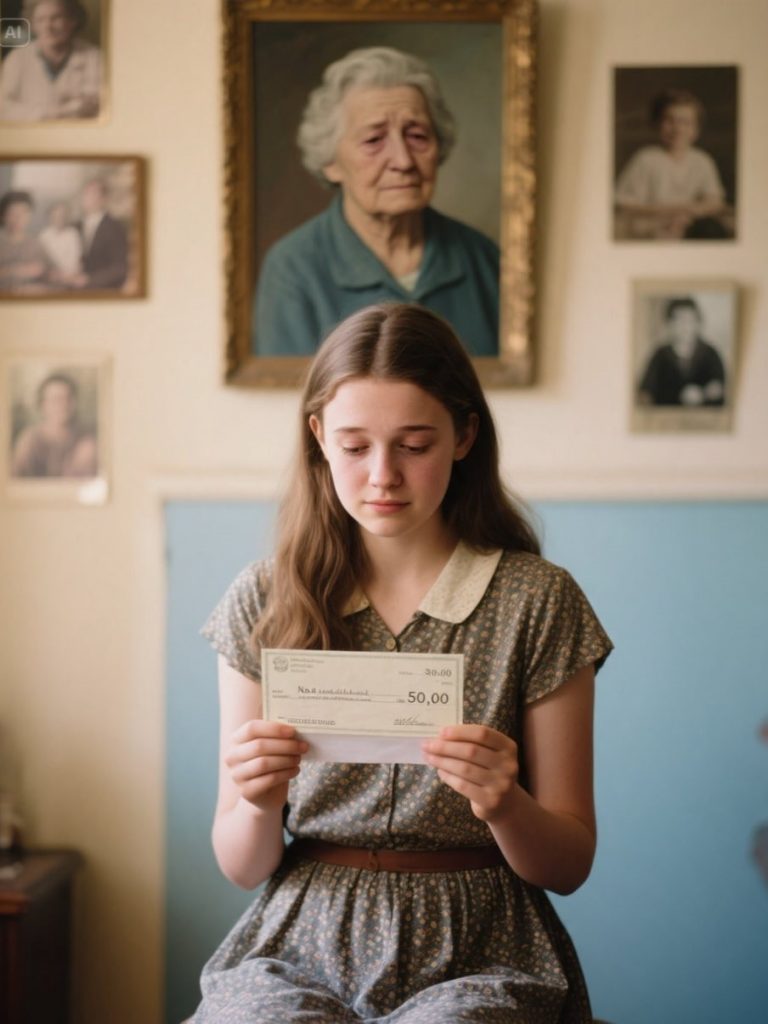
So when I learned she had left me fifty thousand dollars, it didn’t feel like luck or some sudden windfall. It felt like her: intentional, caring, protective, even at the very end. I understood immediately that the money carried meaning beyond its amount.
I sat on my bed holding her letter, running my fingers over her handwriting. I remembered how she used to tuck small bills into my hand or slip notes into my bag that said, “You matter more than you think.” This felt like one final reminder.
In that moment, I made a promise to myself. I would handle the inheritance carefully. No chaos. No careless spending. I wanted to use it for something steady and meaningful, something that would honor the woman who had spent years reminding me that I mattered.
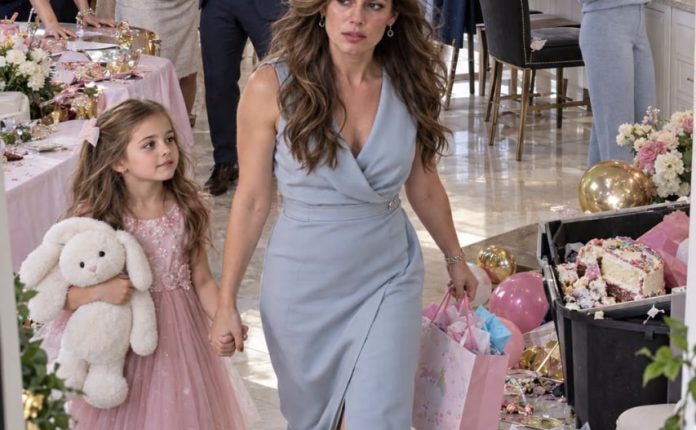
For about a week, I kept that promise without interference. Then my stepmother called me into the kitchen and leaned against the counter with her familiar gentle smile, the kind of expression that could make even an unreasonable request sound thoughtful and perfectly acceptable.
“Sweetheart,” she said softly, “I’ve been thinking. It doesn’t seem right for you to keep all of that to yourself.” I didn’t answer immediately because I already understood where the conversation was going, and I could feel the tension beginning to build.
“My children are your siblings too,” she continued. “Don’t you think your nana would have wanted everyone to benefit?” I kept my voice steady and said, “She made her choice, and I want to honor it.” The room went quiet for several seconds.
Then my stepmother smiled again, a little too quickly. “That’s fine,” she said lightly. “I understand.” But it didn’t feel like understanding. It felt like the subject had simply been placed on a shelf where she intended to pick it up again later.
My father had been sitting at the table the entire time. He didn’t defend me, challenge her, or say that Nana had been entitled to decide where her money went. He simply watched, and his silence stayed with me longer than anything my stepmother had said.
A week later, I understood why. A letter from a lawyer arrived on a Tuesday morning. At first, I assumed it was routine estate paperwork, but by the second page my stomach had dropped and my hands were trembling around the document.
There it was in black and white: a notarized power of attorney bearing my name and my signature. The memory returned immediately. I was eighteen, sitting at the dining table while my father slid a stack of papers toward me like they were nothing important.
“It’s just a precaution,” he had told me. “If anything ever happens, I can help manage things.” I hadn’t questioned him because he was my father. I signed where he pointed, trusted the explanation, and forgot the document existed for years.
When I confronted him, he didn’t deny using the power of attorney, and he didn’t apologize. He simply sighed, as though I had forced everyone into an inconvenient situation. “I’m not trying to hurt you,” he said. “You need to think about what’s fair.”
“Your step-siblings are family too,” he continued. I stared at him, trying to understand how easily he could say that after producing a legal document against me. “And using legal authority against me is fair?” I asked. His expression changed immediately.
The softness disappeared from his voice. “I’m reminding you that I have the authority to step in if necessary,” he said evenly. “That money could be distributed more fairly.” That was the moment the situation became completely clear to me. This was pressure, not advice.
Something inside me shifted quietly. It wasn’t only anger or disappointment. I realized I had been standing on ground I assumed was mine while the people I trusted most were willing to challenge it the moment doing so benefited someone else.
That night, I sat alone in my apartment with the documents spread across the table. I read every line again, this time not as a daughter trying to understand her father, but as someone determined to understand exactly what legal authority had actually been granted.
Then I noticed the details I had missed in my panic: the date, the wording, and the limits of the document. The power of attorney allowed my father to act on my behalf under certain circumstances, but it did not plainly authorize him to override my decisions.
The next morning, I didn’t call him. I called a lawyer and placed the documents on her desk. “Can he actually take the money?” I asked. She read the paperwork carefully before looking up at me with an expression that immediately eased my fear.
“Not if you’re mentally capable and managing your own affairs,” she said. “This document does not allow him to override your decisions. It allows him to act if you’re unable to act for yourself.” I exhaled slowly as the truth finally settled into place.
“So this is just pressure,” I said. The lawyer nodded. “Yes,” she replied, “and not a subtle kind.” For the first time since opening the letter, I felt calm. My father’s threat depended on me believing he had more power than he actually possessed.
That evening, I returned to the house. I didn’t go there to argue, explain myself, or negotiate. I went there to end the matter. My stepmother was in the kitchen again, acting as if nothing serious had happened between us.
“Have you thought about what we discussed?” she asked. “Yes,” I replied. My father looked up from the table. “I spoke to a lawyer,” I continued. “That document does not give you control over Nana’s money. It never gave you that power.”
The silence was immediate. My father recovered first. “You’re misunderstanding,” he said quickly. I shook my head. “No. I finally understand.” Then I placed a folder on the table between us and watched both of their expressions change.
Inside was a formal revocation of the power of attorney. It had already been signed and filed. There was nothing left for my father to threaten me with. “You don’t get to use my trust against me anymore,” I said, keeping my voice steady.
My stepmother’s expression hardened. “So you’re choosing money over family?” she asked. I looked at her for a long moment before answering. “No,” I said quietly. “I’m choosing respect over control.” Neither of them had an immediate response to that.
No one argued after that because there was nothing meaningful left to debate. I walked out of the house carrying something I hadn’t realized I had been missing for years. It wasn’t simply control of the inheritance. It was ownership of my own decisions.
Later that night, I unfolded Nana’s letter again and read it the same way I had the first time, but now every sentence felt different. Her words didn’t merely comfort me anymore. They seemed to give me permission to trust my own judgment.
She hadn’t only left me money. She had left me a choice, and for the first time I understood what that meant. The inheritance was not simply financial security. It was a final reminder that I could decide what happened to something that belonged to me.
For years, I had confused being accommodating with being loving. I had believed that keeping peace required me to bend first, explain more, and make room for other people’s expectations even when those expectations crossed boundaries I should have protected.
My father’s legal threat forced me to see how dangerous that habit had become. He had counted on the same instinct that made eighteen-year-old me sign without asking questions. He expected me to trust the relationship more than I trusted my own right to decide.
But trust is not permission. Family is not ownership. Love does not require surrendering your judgment so someone else can redistribute your choices according to what they consider fair. I had learned those lessons later than I wished, but I had learned them.
The hardest part was accepting that standing up for myself might damage relationships I once believed were permanent. Saying no did not guarantee understanding. Setting a boundary did not guarantee an apology. Sometimes the people who benefited from your silence resent you most when it ends.
That realization hurt, but it also gave me clarity. I could miss people and still keep distance. I could love my father and refuse to let him control my affairs. I could care about my step-siblings without surrendering a gift Nana deliberately left to me.
The fifty thousand dollars remained exactly where I had placed it while I decided what to do next. I didn’t rush to spend it, and I didn’t use it to prove anything. Protecting it had already taught me something more valuable than any purchase could.
Nana had spent years telling me, in quiet ways, that I mattered more than I thought. When my family tried to pressure me into forgetting that, her final gift forced me to remember. The money was hers to give, and the decision was mine to make.
Sometimes the hardest truth is not that people will try to take something from you. It is realizing that when you finally say no, you may lose the version of the relationship that depended on your compliance. And you may still have to choose yourself.
If standing up for yourself meant risking your relationship with family, would you hold your ground, or would you give in just to keep the peace? I know my answer now, because once I understood the difference between love and control, I couldn’t unlearn it.
THE END!
Disclaimer: This fictional story is for entertainment only. It does not represent any person or organization and does not encourage inappropriate behavior.