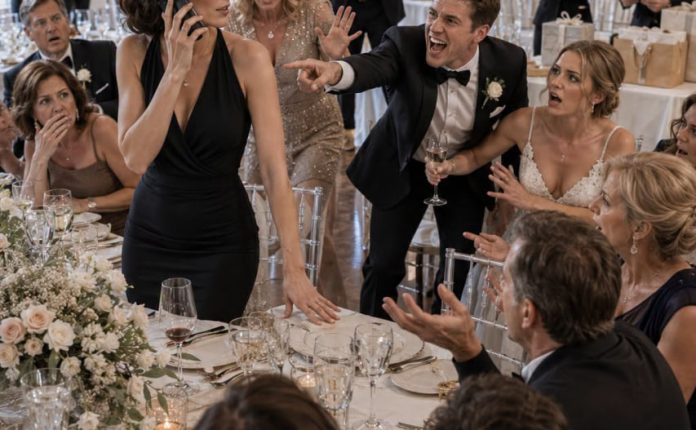
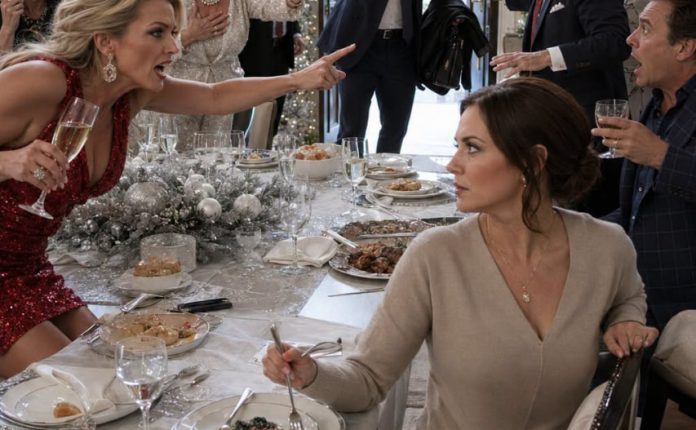
Evelyn projected the payments to Brooke Lane Events onto the conference-room screen. Rows of numbers filled the wall. Brooke stared at them. Hartwell had paid her company $486,000 over eighteen months. Evelyn spoke without accusation.
“Approximately two hundred fourteen thousand dollars is supported by standard contracts, documented deliverables, and ordinary invoice records. The remaining payments require additional documentation or approval records.” Brooke leaned forward. “Are you saying I didn’t do the work?” “No.” “Because I did.”
“I’m saying the records currently available do not establish what services correspond to every payment.” Mom interrupted. “Brooke handled events, rebranding projects, tenant programs, promotional work—” “Some of which is documented,” Evelyn replied. “Some of which isn’t.” Dad folded his arms.
“We are a private family company. We do not need a fifty-page contract every time somebody helps.” Nathan finally spoke. “The operating agreement requires disclosure of related-party transactions above specified thresholds.” Dad looked irritated. “I know what the agreement says.” Grant’s expression hardened.
“Then why wasn’t I told?” Nobody answered. Brooke slowly turned toward Mom. “You told me everyone knew.” Mom blinked. “We discussed the general arrangement.” “With who?” “As a family.” “Not with me,” I said. Grant added, “Not with me.” Brooke looked between us.
“You told me Sloane knew because she gets the shareholder reports.” Dad snapped, “Brooke, stop.” That was the first real fracture. Evelyn moved to executive spending. Over the previous two years, Hartwell had paid more than three hundred thousand dollars in discretionary management expenses requiring further documentation.
Private club dues. Executive vehicle leases. Upgraded travel. High-end entertainment. Mom stiffened. “Those memberships generate business.” “They may,” Evelyn said. “The review will determine whether each expense has an appropriate business purpose and approval.” Dad pushed his chair backward.
“This is ridiculous.” The legs scraped loudly against the floor. “Sloane has taken normal business expenses and turned them into a scandal because she overheard a Christmas joke.” “The joke didn’t create these numbers.” “It’s why you’re doing this.”
“The joke is why I stopped delaying this.” He stared at me. I continued. “When Hartwell needed my guarantee, I signed. When distributions were delayed because you said the company needed liquidity, I accepted it.
When you needed introductions, projections, or contract reviews, I helped. And while I was doing that, you told a lender I was expected to continue guaranteeing company debt without asking me.” “Because we assumed you cared about Hartwell.”
“I do care.” I pointed toward the screen. “That’s why I want to know what Hartwell is paying for.” Grant rubbed both hands over his face. “What do you recommend?” Evelyn closed the expense file.
“An independent review of related-party transactions and management expenses. Temporary suspension of nonessential related-party payments. A professional interim manager who is not an immediate family member. Written member consent before Hartwell represents any owner as providing guarantees or personal collateral.” Dad looked at Grant. “You cannot seriously be considering this.”
Grant stared back. “On Christmas Eve I believed we had a routine refinancing. Two days later I learned the bank had been given assumptions about Sloane’s guarantee, I wasn’t shown transactions I was entitled to know about, and apparently we’ve been paying family businesses without the required approvals.”
Mom’s voice shook. “You’re choosing her over your brother.” “No,” Grant said. “I’m choosing the company over pretending everything is fine.” Nathan distributed four resolutions. The first appointed an experienced outside executive as interim manager for ninety days.
The second suspended new contracts with immediate-family businesses unless independently reviewed. The third authorized Evelyn’s full examination. The fourth required explicit written consent before any Hartwell owner could be identified as a guarantor or source of collateral. My parents controlled forty-five percent together.
Grant and I controlled fifty-five. Dad understood before Nathan finished speaking. “Sloane.” His voice was quiet now. “Don’t do this.” I looked at him. “Why?” “Once you start something like this, you don’t get to take it back.”
“That’s what you counted on, isn’t it?” His eyes narrowed. “That I’d always be too afraid of hurting the family to stop you.” “You’re making yourself the enemy.” “No.” I placed my hand on the resolutions. “I’m making myself a shareholder.”
Grant voted yes. I voted yes. Fifty-five percent. The resolutions passed. No one screamed. Nobody threw anything. Dad simply closed his folder. For most of my life, everyone had waited for him to announce the final decision.
Now a decision had been made without his permission. That silence was more powerful than any shouting could have been. Brooke stared at me. “You took Dad’s company away.” Grant answered before I could. “It was never just his company.”
Mom stood. “I hope this was worth it.” I looked at the numbers still glowing on the wall. “Ask me when we know where the money went.” My parents left. Brooke stayed. She looked smaller without them in the room.
For a minute, she simply stared at the spreadsheet. Then she whispered, “They told me all of this was approved.” I believed her. That didn’t erase Christmas. It didn’t erase years of Brooke happily accepting advantages while mocking me for asking questions.
But for the first time, I wondered whether our parents had been using both of us. Just differently. The following three weeks were worse than the meeting. My parents could no longer control Hartwell, so they focused on controlling the story.
Relatives I barely spoke to began texting. A cousin asked whether I had really removed my father from his own company “over a bad Christmas joke.” A family friend told me I had become “too corporate.”
Someone else said Dad was devastated that I had used legal technicalities to humiliate him. Hannah read one message while sitting on my couch. “You could end this in thirty seconds.” “How?” “Send the spreadsheets.” “No.” “Why not?”
“Because then I turn a company review into exactly the public family war they’re accusing me of starting.” Instead, Nathan prepared a one-page summary for the lender, voting owners, accountants, and relevant professionals. No emotional language. No mention of Christmas.
Hartwell had appointed interim professional management by majority vote. An independent review of expenses and related-party transactions was underway. Financing discussions continued. That was all. Dad hated it. He called twice demanding that I “correct the impression” people were getting.
“What impression?” “That I mismanaged Hartwell.” “Did you?” “You know damn well what I mean.” “No. I know what the review is determining.” “You’re enjoying this.” That accusation irritated me enough that I nearly argued.
Then I remembered Hannah’s question. What do you actually want? “I’m not discussing this with you outside the review.” “You sound like Nathan.” “Good.” I hung up. The interim manager, Marcus Bell, turned out to be exactly what Hartwell needed.
He was sixty-one, boring in the most comforting possible way, and apparently incapable of making a decision without a spreadsheet. Within two weeks he discovered something important. Hartwell was healthier than my parents had implied whenever they wanted my financial support.
But it was less liquid than they claimed whenever defending their spending. The company wasn’t collapsing. It had simply been run as though family trust could substitute for controls. Then Evelyn found the number that changed everything.
Across roughly three years, $1.18 million in payments and benefits required repayment, reclassification, supporting documentation, or formal ratification. Not all of it was misconduct. Some expenses were legitimate but badly categorized. Some vendor work lacked proper paperwork. Some items needed approval after the fact.
But a substantial portion involved personal benefits or family-connected payments that had never been properly disclosed. Brooke’s company was part of it. She had performed genuine work. She had also been paid rates significantly higher than comparable vendors on several projects.
Some advances had been issued before projects were fully defined. When Evelyn explained that at the next meeting, Brooke stared at the comparison report. “I didn’t set those rates.” Mom looked at her. “We wanted to support your business.” Brooke’s head lifted.
“You told me Hartwell needed me.” “It did.” “At almost twice what another vendor would charge?” “Brooke, don’t let Sloane turn you against us.” Brooke’s expression changed. “Stop making everything about Sloane.” Silence. Even I hadn’t expected that. Brooke turned toward me.
“Did you know they told me you wanted nothing to do with Hartwell unless money was involved?” “No.” “They said you thought company work was beneath you.” I almost laughed. “Dad told me you needed constant financial support because you weren’t capable of running a real business.”
Brooke stared at him. Dad looked toward the window. Mom’s lips pressed into a thin line. It was as if somebody had removed a wall between us. For years, our parents had maintained two separate versions of reality. To me, Brooke was careless.
To Brooke, I was arrogant. As long as we resented each other, neither of us compared notes. Brooke rubbed her forehead. Then she looked at me. “At Christmas, when I said nobody wanted you there…” “I remember.” She swallowed.
“Dad had spent the afternoon complaining that you were going to arrive and start asking about the refinancing.” Dad turned sharply. “That is not what happened.” Brooke ignored him. “Mom said we could have one peaceful evening if you were late.”
My stomach tightened. Brooke continued. “So when Dad made that toast, everybody already knew what he meant.” That hurt more than hearing the toast the first time. Because until then, some small part of me had still believed it might have been spontaneous cruelty.
A stupid joke. A moment. It wasn’t. My absence had been discussed before I arrived. I looked at Dad. “If I had been on time, when were you planning to ask me to renew the guarantee?” He said nothing. “After dinner?”
Still nothing. “In front of Grant, so it would be harder for me to say no?” Mom finally spoke. “We thought if everyone was together, you might be less difficult.” I let out one short laugh. “You mean less likely to refuse.”
She looked down. And in that moment, something inside me ended. Not my anger. My hope. I no longer wanted an apology from either of them. An apology meant there was still some version of our relationship I wanted restored. There wasn’t.
From then on, all I wanted were boundaries, consequences, and enough distance that they could never use my loyalty against me again. The final review meeting was scheduled for the following Friday. Before it began, Nathan handed me a sealed summary.
“Once these recommendations are adopted,” he said, “Hartwell will never operate the same way again.” I looked through the conference-room glass at my parents waiting outside. For the first time, I realized neither would I.
The final recommendations did not destroy my parents. That would have made the story simpler. Reality was less theatrical and, in some ways, more satisfying. Unsupported personal benefits attributed to my parents had to be reimbursed or offset against future distributions.
Company-funded discretionary perks ended. Dad’s private-club membership was canceled. Executive vehicles would be returned when their leases expired. Travel and entertainment above established limits required independent approval. My mother stepped down from every committee involving vendor selection or executive compensation.
Dad’s ninety-day removal became permanent. He resigned from management but kept his twenty-five-percent ownership. Brooke’s preferred-vendor arrangement ended. She could still bid on Hartwell work, but she would compete under the same rules as everyone else.
The lender eventually renewed a smaller revolving facility without my personal guarantee. Hartwell provided additional company collateral and accepted stricter reporting requirements. Two planned acquisitions were delayed. No employees lost their jobs. No properties were seized. The company did not collapse.
That mattered to me more than anything. Because Dad’s greatest weapon had always been catastrophe. If I didn’t cooperate, Hartwell might suffer. If I didn’t sign, employees might suffer. If I pushed too hard, Grandma’s legacy might disappear. None of it happened.
The company adjusted. For the first time, I understood that my constant rescue attempts had not been preserving Hartwell. They had been preserving my father’s preferred way of running it. There was a difference. The social consequences moved more slowly.
Uncle Grant stopped automatically defending Dad. Business partners who once treated my parents as the unquestioned center of Hartwell began contacting Marcus directly. Meetings had agendas. Vendor bids were documented. Expenses were reviewed. Nobody whispered the word “family” when they wanted an exception.
My parents hated that more than the financial changes. They hadn’t lost everything. They had lost unquestioned authority. One rainy evening in March, Dad appeared at my apartment. He didn’t call first. When I opened the door, rain glistened on his wool coat.
“You got what you wanted.” I stayed in the doorway. “What do you think I wanted?” “To prove you could take everything away from me.” “You still own your shares.” “That isn’t the point.” “You still receive distributions.” “Sloane.”
“You still have more money than most people will make in several lifetimes. Mom still has her shares. Hartwell still exists. So what exactly did I take?” He stared past me into my apartment. For once, he didn’t have an answer ready.
“Control,” I said. His eyes returned to mine. “That’s what you lost. The ability to make a decision and assume somebody else would absorb the consequences.” “You embarrassed me.” “You toasted my absence in front of your friends.”
“That was different.” I almost laughed. “Of course it was.” He frowned. “Don’t.” “You’ve spent my entire life deciding which hurt counts.” “That isn’t fair.” “Neither was telling a lender I would back your financing without asking.” “We believed you would.”
“I know.” His expression shifted. I think he expected me to soften. Instead, I opened the door wider only so I could point toward the elevator. “That was the problem.” He left without saying goodbye. I closed the door.
And although I cried afterward, I did not call him. That surprised me. For years, whenever one of our fights became too sharp, I had been the first person to repair things. I would send a neutral text. Ask about work.
Offer an olive branch disguised as logistics. That night I did nothing. The silence remained. And the world kept turning. By spring, Hartwell felt almost ordinary. Marcus stayed permanently after the owners approved a long-term management contract. Profitability improved modestly once unnecessary spending declined.
Grant joked during one meeting that Hartwell’s greatest technological breakthrough was the discovery of a budget. I kept my thirty-five-percent ownership. Then the board surprised me by offering me the managing director position. Dad immediately heard about it.
Through Grant, I learned he had told several relatives, “There. That proves what she wanted all along.” So I declined. Not because of Dad. That part mattered. I declined because I had spent months asking myself what I actually wanted, and the answer had never been his chair.
I wanted competent management. I wanted my ownership respected. I wanted the freedom to walk into a room without everyone wondering what I could fix for them. I didn’t want my life consumed by Hartwell.
I had my own career, my own investments, my own friends, my own apartment that smelled like coffee and books instead of other people’s expectations. Taking Dad’s job would have chained me to the thing I had just fought to separate from my identity.
Marcus remained in charge. Dad’s narrative got harder to maintain. Brooke had a rougher year. Without automatic Hartwell projects, she lost almost half the revenue she had expected. She moved out of her polished office suite and into a smaller studio.
She returned the luxury SUV that Hartwell had indirectly subsidized through her contracts. She let two employees go. Months earlier, I might have enjoyed seeing that. Instead, I mostly felt tired. Then something surprising happened. Brooke got better.
Her proposals became sharper. Her pricing became realistic. She started attending industry events where nobody cared who her father was. She won a hotel-opening contract in New Jersey. Then a corporate retreat. Then three weddings through referrals.
One afternoon in May, she asked me to meet for coffee. I almost refused. Then I remembered that boundaries were supposed to protect my life, not imprison it. We met at a small café near Union Square.
Brooke arrived without designer sunglasses or the oversized handbag Mom had bought her the previous Christmas. She looked nervous. After ten minutes of discussing weather, traffic, and coffee, she finally said, “I was awful to you.” I didn’t rescue her.
“Yes.” She gave a tiny laugh. “I guess I deserved that.” “You wanted honesty.” “I did.” She wrapped both hands around her mug. “I thought you looked down on me.” “I thought you expected everyone to carry you.”
“Maybe both were true sometimes.” “Probably.” She stared into her coffee. “Mom always told me you were jealous because I was easier to love.” The sentence hit like cold water. “Dad told me you needed more help because you weren’t as capable.”
Brooke looked up sharply. “He said that?” “More than once.” She leaned back. “That’s messed up.” “Yes.” For the first time, we weren’t defending ourselves. We were comparing damage. She hesitated. “Are you going to forgive them?” “No.”
The answer came easily. Brooke looked surprised. “Never?” “I’m not interested in pretending trust can be restored because enough months pass.” She nodded. “What about me?” I looked at her. “Forgiveness isn’t the first thing I need from you.”
“What is?” “Consistency.” She considered that. “Fair.” And that became the foundation of whatever relationship we were going to have. Not a dramatic sister reunion. Not crying in each other’s arms. Consistency. She stopped insulting me whenever our parents were present.
I stopped interpreting every mistake she made as evidence that she was hopeless. When she said she would call, she called. When she disagreed with me, she said it directly. When Mom tried to carry messages between us, Brooke told her, “Sloane and I can speak for ourselves.”
That sentence alone felt revolutionary. My relationship with my parents did not improve. Mom called frequently at first. Every conversation became a defense. She had only wanted to support Brooke. She had only trusted Dad’s judgment.
She had only laughed at Christmas because everyone else had. Finally I said, “If every conversation is going to be an explanation of why nothing is your fault, we don’t need to keep having conversations.” She stopped calling for several weeks.
Dad communicated through Hartwell matters until Marcus politely told him management questions should go through the company. Dad complained that I was “cutting him out.” The irony almost impressed me. By autumn, my parents sold the Manhattan apartment where that Christmas dinner had happened.
They could have afforded to keep it. But without Hartwell paying for pieces of their lifestyle through executive expenses, they had to make choices. They moved into a smaller apartment nearby. Mom told relatives they were “simplifying.” Nobody contradicted her.
Nobody needed to. They weren’t poor. They weren’t ruined. They had simply reached a stage most adults encounter much earlier. If they wanted something, they had to decide whether it was worth paying for themselves. In early December, Mom sent a message.
Christmas dinner will be at six. We hope you’ll come. I stared at it for several minutes. There was no apology. No acknowledgment. Just an invitation written as though twelve months had erased the doorway, the toast, the bank notice, and everything that followed.
I typed three words. I won’t be there. Her response came almost immediately. Can we please stop punishing each other? I read it twice. Then I deleted the message without answering. Because that was the last story my parents still needed to believe.
That my absence was punishment. It wasn’t. I had simply stopped going where love was measured by usefulness. And one week later, when Christmas arrived again, I discovered what being wanted somewhere actually felt like.