At Dinner, My Parents Said, “Your Sister’s Pregnant, She Gets Your $94K Fund. Work Builds Character.” I Said, “Okay,” And Hugged Mom, Then Went Upstairs, And My Phone Buzzed With A Security Alert. Someone Downstairs Screamed My Name…
My father didn’t ask for my college fund. He gave it away while I was still chewing dinner. “Your sister’s pregnant,” he said, folding his napkin beside his plate as calmly as if he were announcing the weather. “She gets the ninety-four thousand.”
The refrigerator hummed behind me. A fork scraped against ceramic. Across the table, my older sister, Claire, stared at the gravy spreading through her mashed potatoes. One hand rested protectively over the small curve beneath her sweater.
My mother, Diane, reached across the table and squeezed my fingers. “Work builds character, Hannah,” she said with a soft smile. “You’ve always been good at taking care of yourself. You’ll be fine.” There are sentences that hurt because they’re cruel.
And there are sentences that hurt because you’ve heard them your whole life disguised as love. I was twenty-one years old, halfway through college, working three jobs, and sleeping about five hours a night.
That ninety-four thousand dollars was the only thing my grandmother had left specifically for me. And my parents had just decided it belonged to Claire. I should have screamed. Instead, I looked at my father. Then my mother.
Then Claire. “Okay.” Mom’s shoulders relaxed. Dad gave a satisfied nod. Claire finally looked at me, surprised. I stood, walked around the table, and hugged my mother. She held me tightly. “Oh, sweetheart. I knew you’d understand.”
I almost smiled. Of course she did. Understanding was what they had trained me to do. I went upstairs to my childhood bedroom, shut the door, and sat on the edge of the bed.
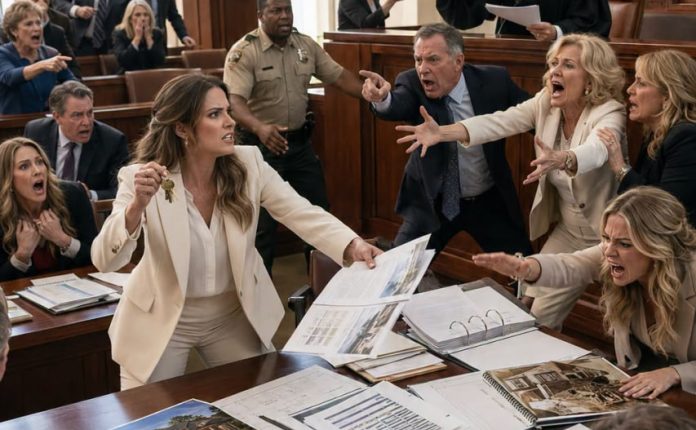
Less than a minute later, my phone buzzed. ACCOUNT SECURITY ALERT. An unauthorized login attempt had been blocked. I stared at the screen. Then another alert appeared. Downstairs, my father shouted my name.
And I knew he had just discovered what I had done five weeks earlier. But to understand why I had been ready for him, you have to understand the family I grew up in. From the outside, we were ordinary.
Dad, Martin Parker, managed a regional building-supply company. Mom worked part-time at a dental office. Our house sat on a quiet street outside Columbus, Ohio, with trimmed hedges, framed school pictures in the hallway, and a kitchen my mother kept smelling faintly of lemons and fresh flowers.
Claire was four years older than me. She wasn’t cruel. She never needed to be. Our entire family bent around her before she had the chance to ask. When Claire forgot her lunch in seventh grade, Mom left work to bring it.
When I forgot mine two years later, Mom said, “Maybe being hungry once will help you remember next time.” When Claire quit volleyball after Dad spent hundreds of dollars on equipment, he told relatives the coach had damaged her confidence.
When I begged to take an art class at eight years old, Mom studied the flyer I had kept under my pillow for two weeks. “Thirty-five dollars a month?” she said. “Hannah, we can’t afford every little thing.”
Three days later, Claire started private piano lessons. I found the receipt on the kitchen counter. One hundred and eighty dollars. I remember staring at it longer than I should have.
Not because I cared about piano. Because that was the first time I understood that “we can’t afford it” sometimes meant “we won’t spend it on you.” My grandmother, Evelyn Parker, noticed. She noticed everything.
Her little brick house smelled like cinnamon, coffee, and furniture polish. She had a chipped green mixing bowl she refused to replace and a kitchen clock that ran six minutes fast because she said being early had never ruined anyone’s life.
At her house, I didn’t have to be the easy child. She asked questions nobody else did. “What do you want?” “What makes you happy?” “What kind of life do you see for yourself?” The questions embarrassed me at first.
Wanting things felt selfish in my family. Grandma Evelyn never treated it that way. When I was sixteen, she found me doing algebra homework at her kitchen table while Claire was home after dropping out of another activity.
“You know what your problem is?” Grandma asked. I looked up cautiously. “You’re so used to being reasonable that everyone thinks they can be unreasonable around you.” I laughed because I thought she was joking. She wasn’t.
Claire graduated high school and enrolled in a private college two states away. She lasted a year. Dad called it “finding herself.” The tuition, apartment deposit, furniture, moving costs, and unpaid balance cost my parents nearly twenty thousand dollars.
Nobody complained. When I graduated three years later and needed a laptop for school, Dad told me to work extra shifts. “Investment means more when you earn it yourself.” So I did. I worked mornings at a coffee shop near campus.
Evenings at a grocery store. Weekends setting up weddings at an event hall where I spent hours carrying chairs while strangers danced under chandeliers. Most nights, I returned to my dorm smelling like espresso, fryer oil, and furniture polish from the banquet tables.
Mom always sounded proud when she called. “You’re so independent.” For years, I mistook that for praise. Eventually, I understood what it really meant. Independent children are convenient. You can give them less and congratulate them for surviving it.
Grandma died during my first year of college. The funeral was in November. Cold rain tapped against black umbrellas while the grass around her grave turned to mud. I barely remember what anyone said. I remember her kitchen afterward.
The green bowl still beside the sink. Her reading glasses on the counter. Six minutes fast on the clock. She had arranged something before she died. A college and future fund for me containing approximately ninety-four thousand dollars.
Not for Claire. Not for my parents. For me. My father explained it as if he were doing me a favor by translating Grandma’s intentions. “She wanted to make sure you finished school.”
For the first time in my life, there was money nobody could justify spending on Claire. Or so I thought. Over the next couple of years, I became strangely interested in paperwork. Maybe that sounds boring. To me, documents felt safer than people.
Numbers didn’t suddenly change their standards because someone started crying. A bank statement couldn’t tell me I was selfish. A receipt didn’t say, “But she needs it more.” At nineteen, I started keeping copies of anything involving family money.
Old account statements. Tuition payments. Notices. Transfer confirmations. At first, I didn’t know why. I just knew that sometimes Dad mentioned numbers that didn’t match numbers I remembered. One summer, I found a withdrawal associated with expenses supposedly connected to me.
Except I had never received the money. Another time, Mom casually mentioned using “a little from Grandma’s fund” for administrative expenses. When I asked what that meant, Dad became irritated. “Don’t start acting suspicious about family.”
That sentence stayed with me. A few weeks before my twenty-first birthday, I pulled Grandma’s documents from a box and read every page. That was when I noticed something I hadn’t understood before. My parents’ authority over the account wasn’t permanent.
At a specified age, control could be transferred directly to me. I called the attorney listed on Grandma’s documents. His name was Nathan Brooks. His office smelled like paper, black coffee, and old carpet. He didn’t tell me my parents were bad people.
He didn’t dramatize anything. He simply reviewed the documents and asked whether I wanted future correspondence sent directly to me. “Yes.” “Do you want your parents to remain authorized?” My stomach tightened. “No.” He looked at me for a moment.
Then he nodded. “Then we’ll update everything properly.” After my birthday, I completed the paperwork. New contact information. New passwords. Additional security verification. Alerts sent directly to my phone. No financial decisions without my authorization. I told nobody.
For five weeks, nothing happened. Then Mom called me on a Thursday evening. “Come home Sunday,” she said. “What’s going on?” A pause. “We need to discuss something as a family.” Her voice was careful. Too careful.
When I pulled into the driveway Sunday afternoon, Claire’s car was already there. Mom hugged me longer than usual. Dad barely looked up. Claire sat on the couch holding a mug with both hands. And then I saw her stomach.
Pregnant. Her boyfriend was gone. She had no job. Her lease was ending. By dinner, I already knew where the conversation was going. I just didn’t know how shamelessly they planned to get there. Dad served roast chicken.
Mom talked about babies. Claire cried. Then Dad put his fork down. “Claire needs stability now.” I waited. “You have options, Hannah. You always have.” There it was. The family rule. Claire’s problems were emergencies. Mine were opportunities to build character.
Then he said the ninety-four thousand was hers. Not “Could you help?” Not “Would you consider it?” She gets it. And after twenty-one years of being told what I could survive, I finally stopped trying to convince them that I could be hurt.
I just said, “Okay.” Because five weeks earlier, I had already removed their ability to make that decision. Now my phone showed another blocked login attempt. Then another. Downstairs, a chair scraped violently across the floor. “HANNAH!”
My father’s voice shook the house. I stood slowly, picked up the folder I had brought from school, and walked toward the bedroom door. My hands were trembling. But for once, they weren’t trembling because I was about to surrender.
They were trembling because my family was finally going to learn the difference between an obedient daughter and a prepared one. By the time I reached the bottom stair, Dad was standing beside his laptop. His face was red.
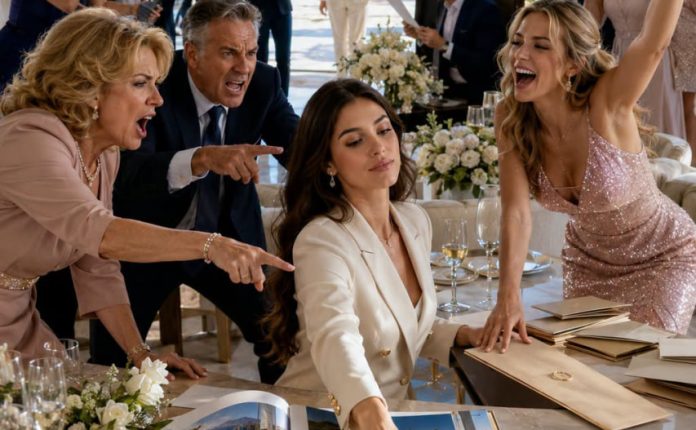
Mom was pale. Claire stood in the kitchen doorway with one hand over her stomach. Dad stabbed a finger toward the computer. “What did you do?” I didn’t answer immediately. The roast chicken was still sitting on the table.
A thin layer of grease had formed over the gravy. Mom’s flowers near the window looked absurdly cheerful. I walked to the table and put my folder beside my plate. “Were you trying to access Grandma’s account?”
Dad’s jaw tightened. “That isn’t the point.” “It’s the only point I’m interested in.” “I was moving things along.” I stared at him. “Moving what?” His voice became louder. “Don’t play games with me.” “You mean moving my money?”
“Our family’s money.” There it was. Grandma’s wishes had lasted exactly as long as they remained convenient. I opened the folder. “The account is legally under my control.” Dad laughed once. It was short and humorless. “You’re twenty-one.” “Yes.”
“You think turning twenty-one suddenly makes you understand finances?” I slid a confirmation document across the table. “No. Reading the account agreement helped.” Mom grabbed the paper before Dad could. Her eyes moved quickly across it. Then she looked at me.
“When did you do this?” “Five weeks ago.” The room changed. Until that moment, they had thought the problem was technical. A password. A bank error. Something Dad could fix with a phone call. Now he understood.
I had anticipated them. That offended him more than the lost money. “You knew,” he said. “I suspected.” “You knew Claire might need help.” “No. I knew someday you might decide you were entitled to something Grandma left me.”
Claire whispered, “Hannah…” Dad slammed his palm against the table. “Enough.” I barely flinched. That surprised both of us. For most of my childhood, one hard word from him could stop me mid-sentence. Not that night.
“You weren’t asking me,” I said. “You told me the money was already hers, then tried to access the account before dinner was even over.” “We were trying to protect Claire.” “From what?” Dad stared at me.
“Her life is falling apart.” “And that makes my future available?” Mom stepped between us verbally the way she always did when Dad’s anger became uncomfortable. “Hannah, nobody is trying to hurt you. You’ve always been capable.”
I looked at her. She gave me that familiar wounded expression, like my refusal to be manipulated was an act of cruelty against her. “You always land on your feet,” she continued. “Claire isn’t like you.”
Something inside me went very still. “When I wanted art classes, you said we couldn’t afford thirty-five dollars.” Mom blinked. “What does that have to do with—” “Three days later, Claire started piano lessons.” “That was years ago.”
“When Claire quit college, you spent almost twenty thousand dollars fixing the mess.” Dad groaned. “Here we go.” “When I needed a laptop, you told me to work more.” “You did work more,” Mom said quickly. “And look how responsible you became.” I laughed.
Nobody else did. “You keep saying that like it makes what you did generous.” Mom’s eyes filled. “Hannah.” “You didn’t make me strong. You discovered I could survive getting less, so you kept giving me less.” Silence. Even Dad didn’t interrupt. Claire’s eyes dropped.
I turned toward her. “I don’t blame you for being pregnant.” She looked up. “I don’t blame you because your relationship ended.” Her face softened slightly. Then I continued. “But I do blame you for sitting there while Dad assigned you my money.”
Her lips parted. “I didn’t know he was going to say it like that.” “But you knew about the money?” She didn’t answer. That answer was enough. “How long?” Mom said, “Hannah, please.” I kept looking at Claire.
“How long did you know?” Her eyes filled. “A couple of weeks.” A cold sensation moved through my chest. Two weeks. So this dinner wasn’t an emotional reaction to sudden news. They had discussed it. Planned it. Claire had known.
Dad had probably known I would say no if they asked. Which was exactly why nobody had asked. Then I remembered the old statements in my folder. “I have another question.” Dad’s expression hardened. I removed several photocopies.
“Over the years, there were withdrawals from accounts connected to Grandma’s estate that were recorded as expenses for me.” Dad didn’t move. Mom did. Just slightly. Her fingers curled around the edge of a chair. That was enough to make me pay attention.
“I never received some of that money.” Dad’s voice dropped. “What are you implying?” “Nothing.” “You’re accusing us of stealing?” “I didn’t say that.” “You’re standing in my house waving papers around—” “I’m asking where approximately fourteen thousand dollars went.”
Mom sat down. Claire looked from her to Dad. “What fourteen thousand?” Dad ignored her. “You have no idea how complicated estate expenses are.” “Then explaining them should be easy.” His face changed. For the first time that night, the anger cracked.
Underneath it was fear. I noticed because numbers had already taught me something valuable. People who are confident in their records usually want you to look at them. People who are afraid of their records want you to feel guilty for asking.
Dad leaned closer. “You need to be very careful about what you accuse your parents of.” “I’m not accusing you. I’m telling you that if you challenge my control of the account, Nathan Brooks will review everything related to Grandma’s funds.”
Mom whispered, “Nathan?” “Yes.” “You contacted her attorney?” “I did.” Dad’s head snapped toward Mom. Whatever passed silently between them made my skin prickle. There was something else here. Something nobody had told me. Dad gathered the papers and pushed them toward me.
“You’re making an enormous mistake.” “Maybe.” “Family doesn’t behave like this.” I stared at him. “Which part? Protecting my own money or not secretly transferring somebody else’s?” Mom started crying. “Are you really choosing money over your family?”
For years, that question would have destroyed me. That night, it sounded almost ridiculous. “No, Mom. You already chose money over family when you decided Claire deserved mine.” I put everything back into the folder. Claire stood frozen by the kitchen.
“What am I supposed to do now?” There was genuine fear in her voice. And despite everything, I felt sorry for her. That was the dangerous part about family. You can understand someone’s pain and still refuse to let it become your responsibility.
“You need a plan,” I said. “A real one. Housing. Work. Childcare. Support from the baby’s father if he’s responsible for it. There are options.” Her face tightened. “You know it’s not that simple.” “No. It isn’t.”
“Then why are you acting like—” “Because my college fund is not a plan.” That stopped her. Dad muttered something under his breath. I picked up my coat. Mom followed me into the hallway. “Hannah, don’t leave like this.”
“How should I leave?” “We’re upset.” “So am I.” “We can talk tomorrow.” I put my hand on the doorknob. “No more conversations about my account without Nathan present.” Her face changed. That boundary frightened her. Not because it was unreasonable.
Because it meant guilt would no longer be enough. I stepped outside. Cold evening air hit my face. My car windows were fogged. As I walked down the driveway, I heard the front door open behind me. “Hannah.” Claire.
I turned. She wrapped her arms around herself. For a moment she looked less like my golden-child sister and more like a terrified twenty-five-year-old woman whose life had broken apart. “Did Grandma ever say why she left it only to you?”
The question caught me off guard. “What?” “The money.” She glanced toward the house. “Did she ever tell you why?” “No.” Claire looked back at the doorway. “Maybe you should ask her lawyer.” Then she went inside.
I stood beside my car, keys cold in my hand. Because suddenly I wasn’t thinking about the ninety-four thousand dollars. I was thinking about Mom’s reaction when I mentioned Nathan. And wondering what my grandmother had known before she died.