The remote clicked three times before my father finally spoke. Outside, rain struck the windows of my parents’ house in Branton, Ohio. Inside, everything smelled the same as always: stale beer, fried onions, carpet, and cigar smoke.
“We are not driving all the way to Maryland for your little job ceremony,” Dad said without looking at me. He sat in his recliner with one socked foot on a milk crate, watching football highlights as if the rest of the room had been muted.
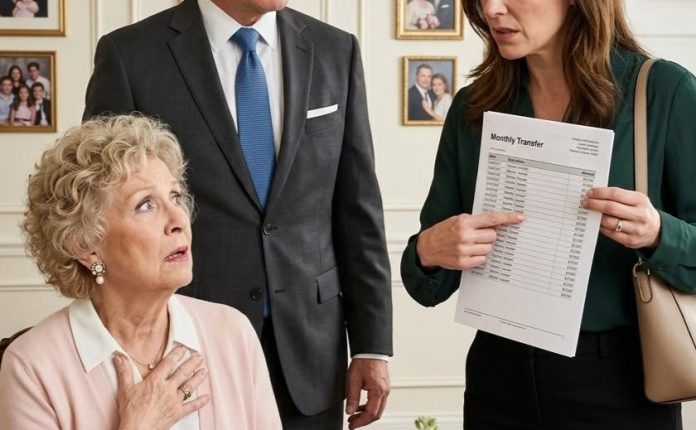
My mother, Vesta, sorted coupons beside a laundry basket. “Your brother needs help this weekend,” she added. “Family comes first, Cerise.” She said it calmly, the way she always did when she meant that Luke came first and I was expected to understand.
“My promotion ceremony is Saturday,” I said. “I already reserved two seats.” My dress coat was damp from the rain, and water slid from the hem onto the warped floorboards. I had driven seven hours because I still believed showing up might teach them how.
My brother, Blaine Luke Vale, had been called Luke since middle school, and in our family his failures were treated like weather. His business collapsed from gambling and drinking. They called it bad luck. He missed payments. They called it stress. He lied. They called him misunderstood.
Meanwhile, I covered my parents’ mortgage twice, replaced their furnace, paid for Mom’s dental work, and sent grocery money whenever Dad’s disability check ran thin. Yet I was the cold one, the difficult one, the daughter who had supposedly chosen a uniform over family.
Something inside me settled. Not shattered. Not exploded. Settled. I put my overnight bag down, picked it up again, and turned toward the door. Nobody stopped me. Nobody asked when I would return. Dad increased the volume before the door closed behind me.
Three days later, I stood in a government auditorium in Maryland while families filled the seats. Children fidgeted, cameras flashed, and the air smelled of wet coats, floor wax, and burnt coffee. Two chairs I had reserved remained empty in the second row.
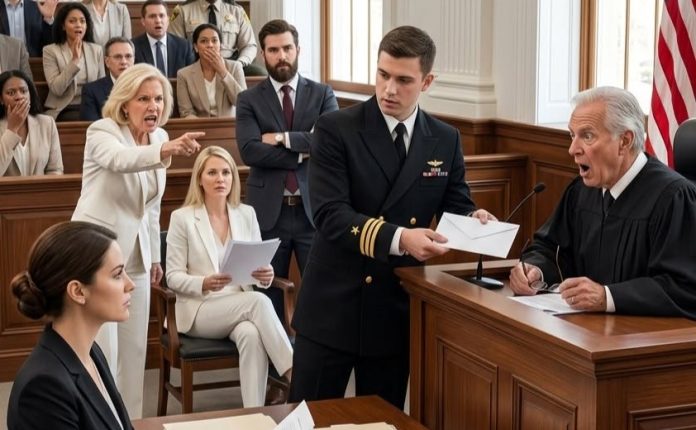
When Colonel Saye called my name, I walked across the stage with steady steps. The insignia at my collar felt cold when it was pinned into place. Applause followed, professional and warm. Then a whistle cut through the room from the side wall.
Merritt Cole, my parents’ seventy-three-year-old neighbor, stood there with a cane in one hand and gas-station coffee in the other. He had driven through bad weather from Ohio because he heard about the ceremony from me months earlier and remembered the date.
On the passenger seat lay a brown envelope holding fifteen thousand dollars. I had saved it for a cruise I planned to give my parents, another grand gesture I secretly hoped would make them proud. Looking at it then, I saw it clearly.
It was not a gift. It was another payment toward love they had never offered freely. I shoved the envelope into the glove compartment, locked it, and watched my phone light up with Mom’s name. For eighteen years, I had always answered.
This time, I let it ring until it stopped. Then I deleted her contact. When her name disappeared, something inside me went quiet in a way that felt permanent. I started the engine and drove away believing the hardest part was finally behind me.
Six weeks later, a single photograph pulled my family back into my life. It arrived inside a routine investigative packet at the Pentagon, clipped behind procurement summaries from a small defense subcontractor called TriArc Components. The photograph showed Luke standing beside a man under federal surveillance.
I was not a federal agent. I was an Army major assigned as a Pentagon liaison supporting investigators from the Defense Criminal Investigative Service and the FBI. My job was to trace internal approvals, identify compromised military channels, and protect the integrity of classified procurement processes.
The second I saw Luke’s face, I removed myself from the conference table. “Potential conflict,” I told Colonel Saye. She followed me into the corridor. I handed her the photograph without explanation. She studied it, then studied me.
“That’s your brother?” she asked. I nodded. “Then you disclose everything, touch nothing involving him without authorization, and follow counsel’s instructions exactly.” Her voice was firm, not suspicious. “You do not protect him. You also do not become careless trying to prove you won’t.”
Two days later, Special Agent Naomi Price asked me into a secure room. She had calm eyes and a habit of placing every document square with the table edge. Beside her sat FBI Special Agent Daniel Rusk and an attorney from the Inspector General’s office.
Price slid a photograph toward me. Luke stood behind a sports bar near Dayton, passing an envelope to a purchasing manager from a military logistics vendor. Another photograph showed my father’s truck in the same parking lot. A third showed Dad carrying a locked cashbox.
“I know the box,” I said. “I don’t know what’s inside.” Price nodded. “We believe it holds cash used for payoffs. Approximately fifteen thousand dollars is currently unaccounted for.” The number hit me with an almost ridiculous sense of irony.
The evidence suggested Luke’s failing construction company had become a pass-through for fraudulent consulting invoices. TriArc paid him. Luke moved portions through accounts controlled by friends. Procurement employees received cash or disguised payments. Dad appeared to be storing and transporting some of it.
For several weeks, I heard nothing directly. Then Luke called from an unknown number. I almost declined, but something about the timing made me answer. His voice arrived too cheerful. “Hey, Major Big Shot. Heard you got promoted. Mom says congratulations.”
“Mom had my number,” I said. “She could have told me herself.” Luke laughed. “You know how she gets.” I waited. He filled the silence with questions about whether I still worked around contract people and whether Pentagon audits were increasing.
The first strike came through Mom. She emailed me with the subject line FAMILY EMERGENCY. The message said Luke faced “a paperwork misunderstanding” and needed me to confirm he had been with me on a weekend when investigators believed he met a TriArc executive.
I read the dates twice. I had been in Virginia that weekend. Luke had not. Mom ended her message with, “You know how much your brother loves you. Please don’t make this bigger than it is.” I forwarded the email to Price without replying.
Dad called the next morning. “Your mother asked you for one simple thing.” I told him I would not lie. His voice sharpened. “Nobody said lie. We said remember correctly.” I asked whether he understood that creating a false alibi in a federal investigation could be a crime.
Two nights later, I found a padded envelope outside my apartment door with no return address. Inside were photocopies of therapy notes from years earlier, written after my second deployment. My stomach went cold before I even read the first page.
I had developed post-traumatic stress symptoms after an attack that killed two people under my command. I sought treatment, completed every evaluation required, and remained fit for duty. The records were private, old, and protected. They were also unmistakably mine.
A yellow sticky note was attached to the top page. “Imagine the hometown reading this.” No signature. None was necessary. Dad had once helped me move and briefly stored a sealed records box in his garage. Apparently, sealed had never meant safe to him.
Price met me in a secure office the next afternoon. “They may contact you again,” she said. “If they do, we can discuss whether controlled cooperation is appropriate. You will not improvise. You will not promise anything. You will not play hero.”
The opportunity came four days later. Mom texted from a new number: Sunday dinner. Everyone needs to talk like adults. Luke is in serious trouble. Dad says this is your last chance to act like family. I showed the message to Price.
By then, investigators had probable cause supporting several warrants, but they wanted one final confirmation about the cashbox and a set of ledgers believed to be kept at my parents’ house. The dinner could provide that confirmation if handled legally and carefully.
The plan was simple on paper. I would attend wearing a concealed recorder authorized under applicable procedures and would not search, seize, threaten, or provoke. Agents would remain nearby. If Dad or Luke moved evidence, admitted key facts, or escalated the blackmail, Price would decide when to act.
My parents’ porch light was on. Through the front window, I could see Mom setting plates, Dad opening beers, and Luke pacing near the dining table. He had gained weight since I last saw him and carried the restless look of someone waiting for a verdict.
I checked my phone once. A secure message from Price displayed a single instruction: We are in position. Follow plan. I locked the screen, adjusted my coat, and walked inside the house where I had spent half my life learning to make myself smaller.
Mom stared at my uniform. “You wore that here?” Her disapproval came instantly. Dad looked me up and down with a smirk. “What, expecting a parade?” Luke did not joke. He looked frightened.
“I came from an official function,” I said. That was true. I removed my cap, placed it beside my chair, and sat. Dinner began with roast chicken, canned green beans, mashed potatoes, and fifteen minutes of performative normality.
Dad cut across her answer. “Enough small talk.” He tapped his beer glass with a fork. The sound rang sharply through the room. Luke stopped moving. Mom set down her napkin. I felt the recorder beneath my uniform and kept my hands visible.
Dad leaned forward. “Your brother needs you to say he was with you the weekend of March fourteenth.” I answered evenly. “He wasn’t.” Dad’s jaw tightened. “You don’t know that. You’re always traveling. Dates get mixed up.”
“I know where I was, and I know Luke wasn’t there.” Luke finally looked at me. “Cerise, it’s one statement. Nobody gets hurt.” I asked him what exactly I was supposed to cover. His eyes flicked toward Dad.
Dad answered for him. “A paperwork felony, if you want the dramatic version. Your brother moved money for people. He didn’t hurt anybody.” I asked how much money. Dad took a drink. “Not relevant.”
Luke whispered, “Dad.” It was a warning. Dad ignored him. “All they have is numbers and some pictures. You give Luke the alibi, this whole thing gets muddy enough that lawyers can fix it.”
I leaned back slightly. “And if I refuse?” Mom’s eyes filled with tears before Dad answered. She already knew what came next. That told me everything I needed to know about how long the blackmail had been discussed.
Dad smiled without warmth. “Then I make sure Branton learns what its decorated little hero is really like.” He reached beside his chair and lifted a manila folder. My therapy notes were visible through the open flap.
“Cover for him,” he said, “or I’ll leak your crazy PTSD files to everyone. Newspaper, church, veterans’ groups, whoever wants them. Let’s see how impressive Major Vale looks when people read about you shaking in bathrooms and waking up screaming.”
Mom whispered, “Harold, don’t say it like that.” My father snapped, “I’ll say it however I need to say it.” Luke rubbed his face. Neither of them objected to the threat itself. Only the wording bothered my mother.
For years, I had imagined what I would feel if my family discovered those notes. Shame. Panic. Exposure. Instead, sitting beneath the yellow dining-room light in my Dress Blues, I felt something cleaner than anger.