Andrew Salgado had spent months believing his seven-year-old daughter was finally adjusting. Valerie brought home perfect grades, never argued about bedtime, never complained about school, and answered every question with the same careful smile. He thought grief was settling into maturity.
The truth reached him on a Thursday afternoon when an investor meeting in Manhattan was canceled without warning. Andrew decided to drive home to the Hamptons instead of returning to the office. He planned to surprise Valerie with ice cream after school.
He entered the house shortly after three and immediately knew something was wrong. The downstairs rooms were quiet, but from the second floor came a child’s muffled sobbing and a woman’s voice sharpened into something Andrew had never heard before.
“If you mention your mother again, you won’t get dinner tonight,” Sophia said. “And this time, I won’t stop at the ruler.” Andrew froze at the bottom of the stairs, his briefcase still hanging from one hand. For several seconds he could not process the sentence.
Then he dropped the case and ran upstairs. Valerie’s bedroom door stood slightly open. Through the gap, he saw his daughter standing rigidly in the middle of the room. She was still wearing her school uniform. Her arms hung straight at her sides, her eyes fixed on the carpet.
Sophia stood in front of her holding a thick wooden ruler. “Hands out,” she ordered with horrifying calm. Valerie obeyed instantly. There was no argument and no hesitation, only a mechanical movement that told Andrew this had happened before. He shoved the door open so hard it struck the wall.
“Don’t touch her!” Sophia spun around. Andrew crossed the room, pulled the ruler from her hand, and placed himself between his wife and daughter. His entire body shook. “What the hell are you doing?” he demanded. “Teaching her discipline,” Sophia answered after only a moment of surprise.
“Someone has to set boundaries. You’re never here, and she does whatever she wants.” Her tone was almost irritated, as though Andrew had interrupted an ordinary parenting decision. But Valerie did not run toward him. That was what terrified him most.
She remained frozen behind his shoulder, staring at the floor and breathing so quietly he could barely hear her. Andrew dropped to his knees. “Sweetheart, look at me.” Valerie’s eyes moved toward him slowly. “Did Sophia hit you with this?” he asked, holding the ruler away from her.
Valerie glanced at Sophia before giving the smallest possible nod. Valerie swallowed hard. “Since the wedding,” she whispered. “She pinches me when I’m slow. She pulls my hair when I forget things. Then she started using the ruler when I got answers wrong or talked about Mommy Elena.”
Sophia laughed sharply. “She’s exaggerating. She’s been manipulative ever since Elena died.” At the mention of her mother, Valerie flinched so visibly that Andrew felt shame spread through his chest.
“What happens when you talk about Mommy?” he asked. Valerie’s fingers twisted together. “Sophia says dead people don’t matter. She says I have to call her Mom. If I say Mommy Elena, it gets worse.” “Show me where she hurt you,” he said quietly.
Valerie hesitated, then lifted the back of her shirt. Andrew saw fading marks across her skin and newer bruises along one arm. He felt rage rise so quickly he became dizzy. Then he noticed a dark brown stain near the cuff of Valerie’s blouse.
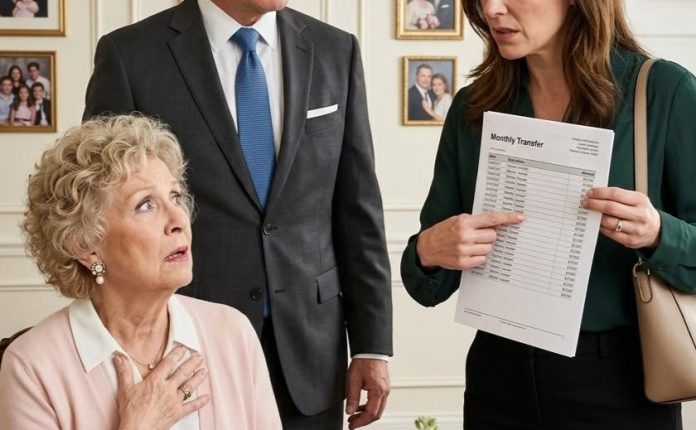
He touched the fabric carefully. “What happened here?” he asked. Sophia stepped forward. “Andrew, stop turning this into a scandal. Think about your company. Think about what reporters will do with this. Valerie bruises easily, and she falls constantly.” Andrew stared at her as though seeing a stranger.
“You’re worried about reporters?” He pulled out his phone. Sophia’s composure finally cracked. “What are you doing?” she demanded. “Calling 911.” Sophia lunged for the phone. Andrew stepped back and blocked her with his shoulder. “Do not come near her,” he said.
His voice had become strangely calm. That was when Valerie grabbed his shirt. Her fingers trembled against the fabric. “Daddy,” she whispered, “don’t let her give me the purple medicine again. She says it’s vitamins, but I can’t wake up after.”
Andrew stopped breathing. He slowly turned toward Sophia. For the first time since he entered the room, she did not look angry. She looked afraid. The emergency dispatcher kept asking Andrew questions while he stared at his wife. Had Valerie been given medication? Was she conscious?
Was there immediate danger? Andrew answered mechanically while holding his daughter close. Two police officers and paramedics entered minutes later. Sophia immediately shifted personalities. Her shoulders dropped, her voice softened, and she began crying as she described herself as an overwhelmed stepmother caring for a traumatized child.
Then one paramedic stepped into the hall holding a small evidence bag. Inside was a purple plastic bottle. “We found this in the child’s bathroom cabinet,” he said. “Mr. Salgado, do you recognize it?” Andrew shook his head. There was no pharmacy label, only a handwritten sticker reading NIGHT VITAMINS.
The paramedic’s expression remained neutral, but Andrew saw concern in his eyes. Valerie was taken to the hospital for examination. Andrew rode with her. Sophia was told not to follow until police determined what had happened.
As the ambulance pulled away, Valerie curled against the stretcher and whispered, “Are you mad at me?” Andrew stared at her. “Why would I be mad?” Valerie looked confused by the question. “Because I told.” He felt something inside him break.
“No, sweetheart. You should always tell me when someone hurts you.” She looked toward the ambulance ceiling. “Sophia said you wouldn’t believe me because you love her now.” Andrew closed his eyes for one second, then promised his daughter something he wished he had said months earlier.
“I will believe you enough to listen, every single time.” Valerie did not smile, but her shoulders lowered slightly. It was the first sign that she had heard something she wanted desperately to trust. At the hospital, doctors documented Valerie’s injuries and ordered bloodwork.
Andrew answered questions about medications, allergies, routines, school, and Sophia’s access to the child. Each answer made him feel more ignorant inside his own home. A social worker named Nina Patel arrived just before sunset. She spoke gently but directly.
“Mr. Salgado, I need you to understand something. Children who are being harmed often become extremely compliant because compliance feels safer than resistance.” The blood test results came back later that evening. The doctor asked Andrew to step into a consultation room.
“We found evidence suggesting Valerie may have been given a sedating substance not prescribed to her.” Andrew sat down because his legs suddenly felt weak. “How much?” The doctor explained that the amount currently in Valerie’s system was not life-threatening, but repeated exposure could be dangerous.
“We need to identify exactly what was in that bottle,” she said. “The police have already requested testing.” Andrew pressed both hands against his face. “She said she couldn’t wake up.” The doctor nodded. “Sedation can make a child unusually difficult to wake, confused, or unsteady.
We’ll monitor her tonight.” Andrew stared at the floor and remembered every morning Sophia had said Valerie was sleeping deeply because school exhausted her. Near midnight, Detective Marcus Hall arrived at the hospital.
He told Andrew that Sophia had agreed to answer preliminary questions with an attorney present, but her story was already changing. First she called the purple liquid a vitamin supplement. Then she said it was an herbal sleep aid.
Later she claimed a friend had given it to her and she never realized it could affect Valerie so strongly. Andrew’s company provided private security monitoring because of his public profile. Exterior cameras covered entrances, the garage, and portions of the property.
Interior cameras existed only in common areas after an earlier burglary. “We’ll preserve it properly,” Hall said. “Right now, do not confront anyone, delete anything, or warn employees. We need to know what happened without giving people time to coordinate.”
Shortly after one in the morning, Nina told Andrew that child protective services would require a safety plan before Valerie could leave the hospital. Sophia could not return to the residence while the investigation continued. Andrew nodded. “Tell me what to do.”
Nina replied, “Start by listening more than explaining. She has spent months learning that adults decide what her reality is. Let her tell you what happened at her pace.” That advice became harder almost immediately.
At three in the morning, Valerie woke crying from a nightmare and asked whether Sophia would be angry that she had talked to police. Andrew sat beside her bed and said Sophia would not be allowed near her. Valerie stared at him. “Even if Grandma says she should?”
Andrew felt a fresh wave of dread. “Which grandma?” he asked, though he already suspected the answer. “Sophia’s mom,” Valerie whispered. “She says Sophia is teaching me to be grateful because rich children become spoiled.” “What did Grandma Celeste see?” Andrew asked.
Valerie looked uncertain. “Sometimes she came when you were working. Sophia showed her my behavior chart. Grandma said I needed harder rules because I was still talking about Mommy.” Andrew felt cold. “Was she ever there when Sophia hurt you?”
Valerie’s eyes filled. She gave a small nod. “Once she said I was being dramatic because the ruler didn’t leave real marks.” By morning, police had obtained warrants covering the home, electronic devices, and preserved security footage.
Andrew’s attorney, Michael Reeves, arrived with coffee and one instruction: cooperate completely, but do not make public statements. Sophia’s attorney released a short statement describing the situation as a painful family misunderstanding involving “discipline methods taken out of context.”
Andrew read the sentence twice before handing the phone back to Michael. Andrew agreed. His company issued a statement that he would take temporary leave for a private family matter and that operations would continue under the executive team. He turned off business email. Just before discharge, Detective Hall returned.
His expression had changed. “Mr. Salgado, we found something in the footage you need to know about, but I don’t want to discuss it in front of Valerie.” Andrew asked Nina to remain with his daughter and followed Hall into the hallway.
The detective opened a tablet and showed him a timestamp from the previous month. The video came from the kitchen camera. Sophia stood at the counter holding the purple bottle. Celeste entered, watched her measure liquid into a cup, and asked, “Is that enough to keep her asleep?”
Andrew stared at the screen. Sophia answered, “Until morning.” Then Celeste said, “Good. You need the nights quiet if you’re going to finish the paperwork before he notices.” Andrew felt every muscle in his body lock. “What paperwork?” he asked. Hall paused the recording. “That,” he said, “is what we’re trying to find out.”