On the night I turned eighteen, my father raised a crystal glass in the ballroom of the Graystone Hotel and told two hundred guests I was “finally ready to become a woman.”
Everyone applauded while photographers captured the moment beneath chandeliers that made every lie in the room look expensive. I smiled because that was what Kingsley daughters did in public. My name is Evelyn Kingsley, though my grandfather Robert Hale had always called me Evie.
Six months earlier, he had died after a short illness and left me three million dollars in my own name, separate from every family account. Grandfather had built his fortune slowly through manufacturing and commercial property. He was not sentimental about money.
“Money doesn’t make you safe, Evie,” he used to tell me. “Control does. The moment someone convinces you those are the same thing, start checking where your signature is.” Two hours before my birthday party, I sat in the downtown Chicago office of Nora Whitman, Grandfather’s longtime attorney.
My black dress was hanging inside a garment bag behind me while Nora slid the final trust papers across the polished conference table and asked one last time whether I understood them. “Once this is executed,” she said, “neither of your parents can access the principal.
Distributions require your authorization and approval from an independent trustee under the terms we drafted. Tuition, housing, medical needs, professional development, and future investments are protected. Family pressure is not a permitted purpose.” “I’m sure,” I told her.
My hands were sweating, but my voice did not shake. I had spent three weeks pretending I was only gathering information while quietly learning how my inheritance was titled, who had access, and what would happen once I became a legal adult.
Nora watched me sign each page. “Your grandfather would have approved of the caution.” That sentence almost broke my concentration. I asked whether he had expected my parents to interfere. She chose her words carefully. “He expected everyone to behave according to character once money became inconvenient.”
By seven that evening, the three million dollars had moved into the Hale Education and Independence Trust. I could not simply empty it on impulse, but neither could my parents force a transfer, pledge it as collateral, or persuade a bank that they controlled it through me.
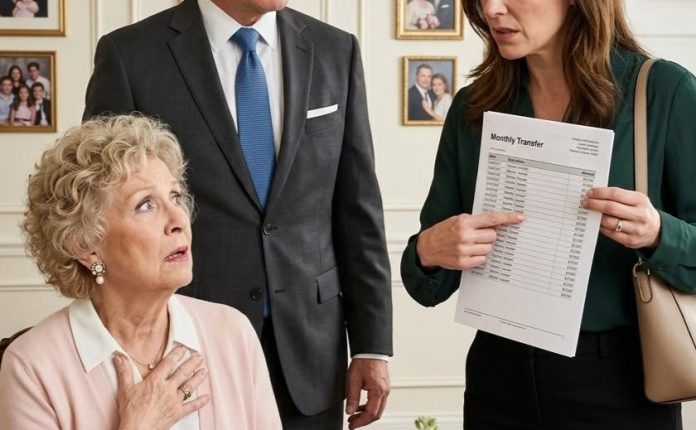
My mother, Cynthia, called the arrangement dramatic. My father, Charles, laughed when I told him just before the photographer arranged our family portrait. “At eighteen?” he said, squeezing my shoulder too tightly. “Sweetheart, you’ve been watching too many legal dramas.
Nora should know better than encouraging paranoia.” Mother tilted her champagne glass. “It makes us look as if you believe your own parents are thieves.” Her smile never changed because three board members were standing nearby.
“After everything we have done for you, it is humiliating.” I answered quietly, “Then it should never affect you.” My older brother, Grant, heard me and did not laugh. He was twenty-five, charming, restless, and permanently between business opportunities.
Across the ballroom, he stared at me like I had locked a door he had been planning to walk through. Beside him, his girlfriend Paige wore Grandmother’s diamond bracelet without permission.
I noticed the bracelet because Grandfather had left it to me with a note saying it belonged to the granddaughter who remembered Grandmother wore jewelry to enjoy it, not display ownership. I had kept it in my bedroom safe.
I had not given Paige the combination. When I asked Grant about it, he grinned. “Relax, Evie. Mom said Paige could borrow it for the party.” Mother appeared beside us immediately. “Don’t start a scene over jewelry tonight.” I said nothing, but something inside me sharpened.
The bracelet was another door they assumed remained theirs. The party continued. Cake was served. My father gave a speech about family loyalty, sacrifice, and how proud Grandfather would have been to see us together. My mother cried beautiful tears for the cameras.
Grant left before midnight after arguing quietly with someone near the service corridor. At 1:10 in the morning, I walked toward the elevators and heard my father’s voice from around the corner. “She moved it,” he hissed into his phone.
“All of it. No, I can’t reverse it. It’s locked.” His tone was not offended. It was panicked. I stopped before he saw me. There was a pause, then he said, “I know what happens Monday. Give me forty-eight hours.”
My heart began hammering. Monday had never meant anything to me. Apparently, it meant something to whoever was on the phone. I stepped around the corner. Father turned and saw me. His face changed instantly, panic smoothing into irritation. “Go to bed, Evelyn.”
I looked at the phone. “Who were you talking to?” He slipped it into his pocket. “Business. Stop listening to conversations that do not concern you.” The next morning, I came downstairs to find my parents waiting in the breakfast room.
No coffee. No newspapers. No housekeeper moving between the kitchen and table. Grant stood at the window with his arms folded. Paige was nowhere in sight. Everyone looked as though the meeting had started before I entered.
Father stood at the head of the table. “Since you clearly don’t trust this family,” he said coldly, “you can pack your things and leave this house by noon.” Mother stared at me without blinking. Grant looked away.
For a second, I thought I had misunderstood. “You’re throwing me out on my birthday weekend?” Mother answered first. “You made an adult financial decision. Adults live with adult consequences.” Her voice was calm enough to make the cruelty feel rehearsed.
I looked at Grant. “Did you know about this?” He rubbed his jaw. “You didn’t have to move the money, Evie. Dad had plans that helped all of us.” There it was. Not concern about my housing. Not outrage.
Plans. “What plans?” I asked. Father slammed his palm onto the table. “Enough. You have until noon. If you want independence so badly, enjoy it.” Then he added, “And leave the car keys. The Mercedes belongs to the family company.”
I went upstairs without crying. My bedroom looked exactly as it had the night before: flowers from the party, unopened gifts, photographs, the white dress box from Grandmother, and an empty space in my safe where the bracelet should have been.
I packed clothes, school records, my laptop, Grandfather’s letters, and everything I could prove belonged to me. I photographed the room before leaving. Nora had told me weeks earlier that people became careless when they believed possession automatically proved ownership.
At eleven twenty, a house employee named Marisol knocked quietly. She had worked for us since I was ten. “Your father told staff not to help you carry anything,” she whispered. Then she pressed a folded sheet of paper into my hand.
“I think your grandfather wanted you to have this.” It was a photocopy of an envelope addressed to Nora. Across the front Grandfather had written: If Evelyn is pressured after eighteen, check Kingsley Capital’s bridge debt before anyone lets her sign a thing.
I stared at Marisol. “Where did you get this?” She glanced toward the hallway. “Your grandfather left copies with two people. He said families sometimes lose papers when papers become inconvenient.”
I called Nora immediately. Her first question was simple. “Are you safe?” “Yes.” “Then leave the house. Do not sign anything. Do not meet your parents alone. Bring the copy to my office.”
At eleven fifty-three, I carried my last suitcase through the front door. Father stood in the foyer with his hands in his pockets. “When you’re done proving your point, call me,” he said. I looked at him. “You already proved mine.”