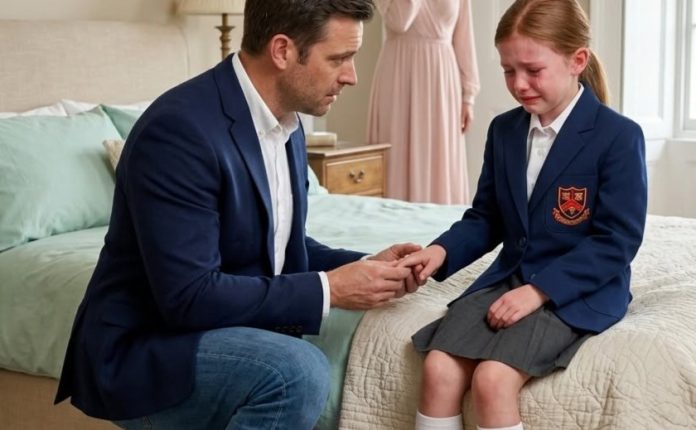
I called my son from our kitchen in Detroit to tell him his mother had died. Diane had been gone less than a day, and I was gripping the counter because my knees kept threatening to fold beneath me.
The phone rang twice before Darnell answered. His voice sounded distant and irritated, as if my call had interrupted something more important. Behind him I heard music, laughter, and glasses clinking, the sounds of people enjoying an evening I could no longer imagine.
“Dad, come on,” he sighed after I told him. “Please don’t make this more dramatic than it has to be.” I stared at the kitchen wall, certain grief had somehow made me misunderstand my own child.
“Darnell,” I said slowly, “your mother died this morning.” Another pause followed. Then he reminded me that he and his wife, Camille, were leaving for Europe in three days and that their tickets could not be refunded.
“Mom would understand,” he said. People always say the dead would understand when what they really mean is that they do not want to be inconvenienced. Before I could answer, Darnell said he would call later and ended the conversation himself.
I remained in the kitchen holding the silent phone while a garbage truck rattled down Fielding Street. Across the road, someone kept mowing a lawn. My whole world had ended, yet the neighborhood continued as if nothing important had happened.
Diane’s coffee mug still sat beside the sink, the one with the faded blue rim and a crack near the handle. Her reading glasses rested by the window, and her chair remained pulled slightly away from the table.
She had been my wife for forty-three years. For most of that time, she had been the person who remembered what everyone else forgot: birthdays, medicine refills, utility deadlines, church collections, grandchildren’s school programs, and whether I had eaten lunch.
That afternoon, I began making the calls she would normally have made for somebody else. I contacted the funeral home, our church, her friend Beverly, and Mrs. Pette next door, who always seemed to know whether a grieving person needed food or silence.
Every conversation felt too ordinary for the words I had to say. By Thursday, Diane was lying inside a polished wooden casket in the small chapel on Harper Avenue where she had spent years organizing holiday food drives.
Only five people came. Mrs. Pette and her husband sat near the front. Beverly wore the same lavender perfume she had worn at our wedding. Deshawn, our mail carrier, arrived in uniform after finishing his route.
The fifth person was Harold Whitfield, our estate attorney. He had been calling Diane’s phone often during the weeks before her death. At the time, I assumed they were discussing routine papers connected to the illness. Darnell was not there.
Camille was not there. I stood before rows of empty pews and delivered a eulogy about Diane’s kindness without mentioning that the only child she had raised had chosen Europe over saying goodbye. I did not say that aloud.
Some truths are too painful to place before strangers. After the burial, Harold waited beside me near the chapel doors until everyone else had gone into the rain. “Raymond,” he said quietly, “Diane asked me to give you something, but not today.”
I looked at him, exhausted. He explained that she had signed documents three days before she died and left precise instructions about when I should receive them. “Ten days after the funeral,” he said. “Not before.”
I almost laughed because the timing sounded like Diane. Even dying, she had apparently scheduled something. Harold squeezed my shoulder and promised he would explain when the time came. Every morning I woke expecting to hear Diane in the kitchen.
Every morning I remembered the house was mine now in the loneliest way possible. I stopped setting two coffee cups on the counter by the fourth day. On the tenth morning, Harold called and asked whether he could come at three.
Before I answered, the front door opened. I had forgotten Camille still possessed the emergency key Diane gave Darnell years earlier. Heels clicked across the hardwood floor. A cheerful voice floated down the hall as though the last two weeks had never happened.
“Hello? Raymond?” Camille stepped into the living room wearing an ivory coat and carrying a black designer handbag. “You’re back,” I said. Camille kissed the air beside my cheek. “We landed last night. Darnell is exhausted, so I told him I’d handle things here.”
The word handle made something cold settle in my chest. “What things?” I asked. She glanced toward the hallway leading to our bedroom. “You know. Mom’s personal items, jewelry, insurance paperwork, anything she wanted Darnell to have.
We thought it would be easier if I organized everything.” Her eyes stayed on it a second too long. “Is that from Mr. Whitfield?” she asked. I had never told her Harold was coming. I felt a small warning bell sound inside me.
“How did you know?” Camille adjusted the handbag against her arm. “Diane mentioned him before we left. She said she was getting things organized.” Her answer arrived quickly, but her gaze remained fixed on the folder.
I sat in Diane’s chair and asked Camille to sit across from me. She hesitated, then lowered herself onto the sofa. For the first time since entering, her smile disappeared. “Did Diane tell you what she was organizing?” I asked.
Camille crossed one leg over the other. “Not specifically. I assumed the estate. Darnell is her only child, Raymond. Naturally, there are things we need to discuss.” Naturally. The word sounded almost rehearsed. Before I could answer, someone knocked at the door.
Harold entered carrying a leather briefcase and looked surprised to see Camille sitting in my living room. “Mrs. Carter,” he said. “I wasn’t expecting you.” Camille smiled again. “Perfect timing. We were just talking about Diane’s estate.”
Harold looked at me before answering, and something in his expression confirmed the conversation was about to change. He placed his briefcase beside the coffee table, opened the sealed folder, and removed a letter addressed to me in Diane’s handwriting.
The sight of her name nearly broke me before I even read the first line. Raymond, if you are reading this, then I ran out of time. I am sorry for leaving you with work I should have finished myself.
I know you hate paperwork, but this is not about paperwork anymore. I swallowed hard and continued. Diane wrote that she had discovered financial activity she could not explain during the final months of her illness. At first she suspected bank errors.
Then she realized somebody had been using her information. She had found a new credit card opened in her name, charges from luxury stores, hotel deposits, airline purchases, and payments toward a business account connected to Camille’s event-planning company.
The balance had climbed beyond thirty-eight thousand dollars. One charge had been made at a designer boutique in Chicago for six thousand four hundred eighty dollars. The purchase date was three weeks before Diane entered hospice.
The product description matched the model number printed on Camille’s handbag receipt. I stared at the bag. Camille stared at Harold. Then she laughed once, too sharply. “That proves nothing. Diane gave me gifts all the time.”
I could not remember Diane ever giving anyone a six-thousand-dollar handbag. The mailing address was Camille and Darnell’s condominium in Chicago. The recovery email belonged to Camille’s business. Diane’s signature on the application had been copied from an old family trust document.
Camille stood abruptly. “This is ridiculous. Darnell needs to be here.” Harold remained seated. “He will need to be here eventually. But Mrs. Carter, there is considerably more than a credit card.”