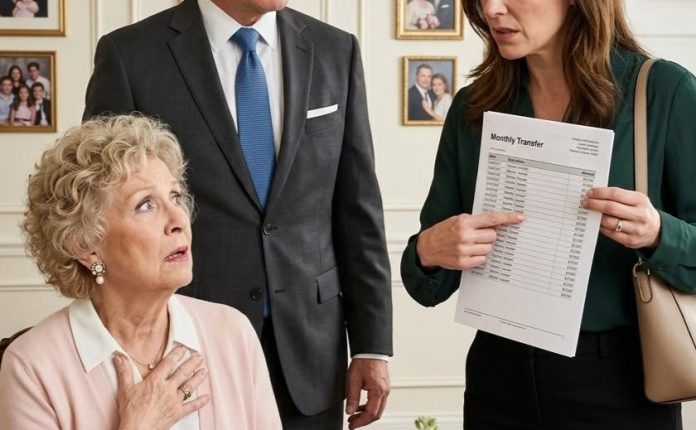
I stared at the page until the numbers blurred. Four days before turning eighteen, I had been in school taking a chemistry exam. I had never seen the document. Even if I had signed it, I had still been a minor.
Nora’s voice became very controlled. “Who submitted this?” Father’s attorney asked for time to review it. Father said nothing. Mother looked at Grant. That was the moment I knew the answer was not simple.
The notary listed on the document was Marianne Doyle, my mother’s longtime friend and a notary public who often handled family paperwork. Samuel had already confirmed she notarized several Kingsley Capital documents. Nora ended the meeting immediately and preserved copies for investigators.
I left without speaking to my parents. That evening, Marianne called Nora voluntarily. Her lawyer was on the line. She admitted Mother had brought the signature page to her house and said I had signed it earlier but was busy studying.
Marianne notarized it without seeing me. She insisted she did not know the document pledged my inheritance. Mother had told her it was a routine education-account acknowledgment. The signature itself still required analysis. A handwriting examiner later concluded it was probably traced from my passport application.
The original passport copy had been stored in Mother’s home office. My father claimed he did not know the signature was false when the document reached the lender. Mother claimed Father instructed her to “get Evelyn’s paperwork ready.”
Grant claimed he had nothing to do with the consent. Their united front broke within a week. Each person began drawing a circle around the part of the scheme they wanted someone else to own.
The lender referred the matter to authorities and amended its default claim. Because the pledge had never become legally effective and my trust controlled the funds, my inheritance remained untouched. Grandfather’s warning had been right down to the timing.
Check the bridge debt before anyone lets her sign a thing. I read that sentence until it no longer felt like a warning from the dead and started feeling like permission to trust myself. The family house became the next battle.
My parents had thrown me out assuming I depended on them for housing. Two weeks later, the mortgage lender filed its own notice because Father had quietly borrowed against the property to support Kingsley Capital. The house was worth nearly four million dollars.
Debt against it exceeded three point six million. Mother had told relatives the house was “basically paid off.” It was another performance. Grant moved out first. Paige ended their relationship after reviewing the extent of his debt.
He called me from a hotel and asked for fifteen thousand dollars to cover a deposit, legal fees, and “breathing room.” I told him no. He became angry. “You have three million sitting there.” “Protected for my future.” “I’m your brother.”
“That sentence is not a withdrawal authorization.” He hung up. I cried afterward anyway. Boundaries did not make love disappear. Sometimes they proved love had been carrying too much weight. Nora helped me rent a modest apartment near Northwestern, where I planned to start college in the fall.
The trust paid the deposit and tuition directly under its terms. I bought secondhand furniture and learned how much groceries cost when nobody else stocked the refrigerator. For the first time, money felt real rather than decorative.
Grandfather’s three million did not make me rich in the way my family behaved. Properly managed, it could fund education, stable housing, and long-term investments. Recklessly pledged, it could disappear into one failed refinancing and still leave millions owed.
That distinction became the foundation of my adulthood. I started meeting Samuel once a month. He taught me to read balance sheets, loan covenants, and trust statements. Nora taught me how powers of attorney worked and why no family member should ever sign blank pages “for convenience.”
I realized how unusual it was that Grandfather had prepared me without frightening me. He had never told me everyone was dangerous. He had told me control mattered. My father’s company entered restructuring three months later. One hotel project was sold at a loss.
The second survived after new investors took control and Charles surrendered most of his equity. Employees were not ruined as Father predicted. Several projects transferred to stronger operators, and most staff kept their jobs. The thing destroyed was not the family business.
It was my father’s control over it. The investigation into the false consent document continued. Mother eventually admitted she had instructed an assistant to copy my passport signature onto a draft because she believed I would sign later anyway.
She described it as “preparing paperwork.” Prosecutors described it differently. She entered a plea to offenses involving falsified financial documents and received probation, community service, restitution obligations, and restrictions involving fiduciary roles.
Father was not charged with forging my signature, but regulators found he had made misleading representations to the lender about family liquidity and consent. He settled civil claims, paid substantial penalties, and was barred temporarily from serving as an officer of certain regulated investment entities.
His reputation suffered more than his freedom. Grant’s problems were largely personal rather than criminal. He had known about the pressure campaign and expected to benefit, but investigators found insufficient evidence that he participated in creating the false consent.
His betting and trading debts remained his responsibility. He entered treatment for gambling addiction after hitting what he later called “the quiet bottom,” when everyone stopped paying his emergencies. For almost a year, I spoke to none of them directly.
Mother sent long letters describing how scared she had been of losing the house. Father sent shorter messages insisting he never intended to hurt me. Grant sent apologies that gradually stopped containing requests.
I read everything with my therapist and answered almost nothing. My recovery was not dramatic. I went to class. I worked part-time at the university library even though the trust could cover my expenses.
I learned to use public transportation without a driver, ruined laundry, overcooked rice, and made friends who had no idea what Graystone Hotel ballroom looked like. For the first time, nobody introduced me as Charles Kingsley’s daughter. At nineteen, I changed the trust slightly with Nora and the independent trustee.
We kept its protections but added a structured charitable allocation for financial-literacy programs serving teenagers leaving foster care and young adults receiving settlements or inheritances. I wanted other young people to know that receiving money and controlling money were different events.
Samuel donated too. On the second anniversary of Grandfather’s death, Nora asked me to visit her office. She handed me a sealed letter she had been instructed to hold until I completed one full year of college. Grandfather’s handwriting covered three pages.
Evie, if Nora gives you this, then you have made it through at least one year of being legally adult and probably discovered adulthood is mostly paperwork interrupted by people demanding urgent answers. I laughed so hard I started crying.
He wrote that he had watched my father become increasingly dependent on leverage and my mother become increasingly willing to protect appearances. He loved them, but he did not trust their fear around money. He had not left me three million dollars because he thought I deserved more than anyone else.
He left it because it came from the sale of a manufacturing company I had spent summers learning about beside him, and because he wanted one branch of the family wealth to leave the cycle of debt. Then came the sentence I needed most.
If they punish you for controlling what belongs to you, the punishment is evidence, not proof that you were wrong. I pressed the paper against my chest and finally cried for the grandfather I had been too busy surviving to fully mourn.
At twenty, Grant asked to meet me. We chose a café near campus. He arrived early, wearing an inexpensive jacket and carrying no sales pitch. He had been in recovery for eleven months and worked for a logistics company where nobody cared about the Kingsley name.
“I was horrible to you,” he said. I waited. “I knew Dad needed your money. I knew Mom planned to scare you with the house. I told myself it was temporary because if the refinance worked, nobody would lose anything.”
“You wrote that I had nowhere else to go.” He nodded. “I wanted that to be true because it made you easier to control.” The honesty hurt, but it was the first apology that did not ask me to reinterpret my own experience.
“Why?” I asked. “Because I owed money, and Dad promised to clear some of it after the refinance. I chose my panic over you.” I believed him. Believing him did not restore trust automatically. We started with coffee once a month.
Mother took longer. Her apology began with explanations until I told her I would leave every conversation containing the words but you have to understand. She became angry twice. The third time, she stopped herself. “I wanted to save the house,” she said.
“And I convinced myself that because you were young, I knew what should happen to your money better than you did.” “That still does not explain forging my signature.” “No.” For once, she did not try.
Father and I remained distant longest. Losing Kingsley Capital changed him visibly. He moved into a smaller condominium after the family house was sold. He consulted for other developers but never regained the authority he once wore like a second suit.
When we finally met, he seemed smaller, though perhaps I had simply stopped being afraid of him. He said, “I thought I was protecting something I built.” “You were protecting it with something Grandfather gave me.” “I believed the company would recover.”
“You believed that gave you the right to promise my consent.” He looked down. “I was wrong.” It was not enough to erase anything. It was enough to end the argument. By twenty-two, I graduated with degrees in economics and public policy.
I did not join any family company. Instead, I accepted a position at a nonprofit focused on consumer financial protection while studying part-time for a graduate degree. The trust remained worth slightly more than Grandfather originally left because its investments had been managed patiently.
I used distributions for tuition and a modest condominium near work. I never bought the luxury car my father once assumed I would want. The first car I purchased myself was used, reliable, and entirely boring.
I loved it. Paige returned Grandmother’s bracelet permanently the week after our meeting years earlier. I kept it in a bank box until graduation, then wore it beneath my gown. Grant noticed. “Looks better on you,” he said.
“It was never about who looked better.” “I know that now.” Our relationship had become cautious but real. When I turned twenty-five, I hosted my own birthday dinner. Twelve people attended. No ballroom. No photographers. No speech about becoming a woman.
We ate pasta at a neighborhood restaurant and argued about dessert. Grant came. Samuel came. Nora came. My parents were invited separately after years of rebuilding boundaries and agreed to behave like guests rather than owners of the occasion.
Mother brought no jewelry borrowed from anyone. Father raised a water glass near the end of dinner. I stiffened instinctively. He noticed. Instead of making a speech, he said, “Happy birthday, Evelyn. Thank you for inviting me.”
Then he sat down. That small act of restraint meant more than his ballroom toast ever had. After dinner, Nora handed me a slim envelope. Inside was the original photocopy Marisol had given me on the morning I was thrown out.
If Evelyn is pressured after eighteen, check Kingsley Capital’s bridge debt before anyone lets her sign a thing. Nora smiled. “I thought you should keep it now.” I ran my thumb over Grandfather’s handwriting. The paper no longer felt like evidence of danger.
It felt like the beginning of a skill I had spent seven years learning: trusting myself before fear turned someone else’s urgency into my obligation. My family did not lose me because I protected my inheritance.
They nearly lost me because they believed love entitled them to control it. The trust saved three million dollars, yes. More importantly, it forced every hidden expectation into daylight before I was old enough to spend years mistaking those expectations for love.
The morning after my eighteenth birthday, my parents thought throwing me out would teach me what independence cost. They were right, just not in the way they intended. Independence cost comfort, certainty, and the fantasy that good families never require boundaries.
It also bought something no inheritance could purchase for me. The knowledge that I could leave a locked door behind, build a life elsewhere, and still decide for myself which people deserved a key.
THE END
Disclaimer: This fictional story is for entertainment purposes. It portrays child abuse as harmful and criminal, and it does not endorse violence, coercion, or unsafe medication practices.