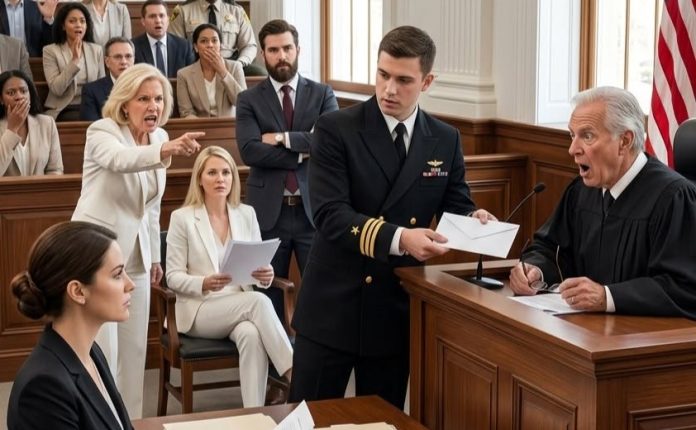
Two weeks later, detectives interviewed Darnell and Camille separately. The bank concluded Diane had not authorized the credit account or brokerage request. Camille’s company records connected several disputed purchases directly to her business expenses. Eventually, there were lawyers, interviews, bank records, court dates, and months of slow consequences.
Camille eventually accepted a plea involving identity theft and financial fraud and agreed to restitution. Darnell was charged separately for his participation in the attempted brokerage authorization and received probation, restitution obligations, financial monitoring, and community service after cooperating fully. Camille and Darnell separated four months after the funeral.
Their condominium was sold, much of the equity disappeared into debt, and Camille closed her event-planning company. The designer handbag was surrendered during restitution negotiations because it had been purchased through the fraudulent account. That detail spread through the family and became gossip, but I found nothing satisfying about it.
A bag was never the real problem. The problem was entitlement disguised as emergency, secrecy disguised as family loyalty, and years of believing Diane and I existed as a financial safety net instead of people. Darnell moved into a modest apartment outside Chicago and began rebuilding.
The first months were ugly. He called often, sometimes apologetic and sometimes angry, especially when he understood the trust truly could not be borrowed against. I learned to end conversations when they became arguments about money.
“Call me when you want to talk about your life,” I told him once. “Do not call me to negotiate your mother’s boundaries after she is gone.” I allowed Darnell back slowly. He came to Detroit alone on Diane’s birthday six months after her death.
We bought yellow roses because she always claimed red ones looked too serious. At the cemetery, he stood beside her grave for almost an hour. He apologized aloud when he thought I had walked far enough away not to hear.
I pretended I had. Afterward, we stopped at the small diner where Diane used to order pancakes for dinner whenever she was tired of behaving like an adult. Darnell laughed remembering it, then cried into his coffee.
The grandchildren remained protected by Diane’s trust. Harold arranged independent administration exactly as she requested. Tuition payments went directly to schools, medical expenses directly to providers, and nobody could withdraw cash simply because they felt entitled to it.
Darnell initially hated that structure. Two years later, he admitted it was probably the kindest thing his mother could have done because it prevented his mistakes from becoming his children’s inheritance. I stayed in the Fielding Street house.
Many people expected me to sell because every room reminded me of Diane. They misunderstood. The memories hurt, but leaving them would not have made the hurt disappear. I learned to cook four meals properly and ruined several others.
Mrs. Pette taught me how to freeze soup without filling the containers too high. Deshawn still received cold water on the porch every July. On the first anniversary of Diane’s death, I invited the five people from the funeral to dinner.
Harold came late from court, Beverly brought pie, and Deshawn arrived carrying flowers from his wife. Darnell came too. Before dinner, he stood in the kitchen and looked around at the people who had shown up when he did not.
I could see shame moving across his face. He walked to each person individually and thanked them for being there for Diane. Nobody lectured him. Mrs. Pette simply hugged him and told him his mother had loved him very much.
That kindness broke him more effectively than anger would have. He went onto the porch and cried. I joined him after a few minutes and handed him one of Diane’s old handkerchiefs. Years passed. Darnell finished restitution ahead of schedule.
He stopped chasing appearances and eventually moved back to Detroit after accepting a management position with a manufacturing company. He rented a small house ten minutes from me rather than asking to move into mine.
That detail might sound minor, but to me it represented an entire transformation. He rebuilt relationships with his children, who had spent difficult years watching their parents separate and finances collapse. He never blamed Camille in front of them, even after their divorce became final.
Camille eventually moved to another state. We rarely communicated. She sent one written apology through Harold after completing restitution, acknowledging that Diane had never authorized the account. I read the letter once and placed it inside the estate file.
Forgiving somebody did not require giving them a role in my life. Diane had understood that before I did. The trust properties appreciated over time, but that was never the victory people imagined when they heard the story.
The victory was that Diane’s grandchildren reached adulthood without anyone draining what she had preserved. Her granddaughter Maya used part of the education trust to become a physical therapist. Her grandson Jordan studied engineering.
Both knew exactly why their grandmother had structured the money carefully. When Maya graduated, she wore Diane’s small pearl earrings beneath her cap. I sat beside Darnell in the audience and watched him stare at them for several seconds.
“She would have loved this,” he whispered. “She planned for it,” I answered. That was Diane. Even when people disappointed her, she kept planning for the version of them that might someday do better. Harold retired when he was seventy-four.
At his final lunch with me, he admitted Diane had frightened him during those last weeks because she was so determined to finish everything despite being exhausted. If Diane had simply left the brokerage account directly to our son, the money might have disappeared into Camille’s business debts within months.
Instead, her refusal forced Darnell to face a life he had been avoiding. That did not make the betrayal useful or necessary. I would never romanticize what happened. Some pain teaches lessons only because we have no choice but to learn after being hurt.
I still wished my son had answered differently that first day. Sometimes I imagined the call the way it should have happened. I would tell him his mother died, and he would say, “Dad, I’m coming home.” He would cancel Europe.
He would sit beside me in the chapel. He would carry his mother’s casket and stand at the grave while rain darkened his coat. Every Thanksgiving, he arrived early and made Diane’s pie recipe badly until Maya finally took over.
He volunteered at the Harper Avenue food drive where his mother had spent so many holidays. On the fifth anniversary of her death, the church renamed its small emergency pantry the Diane Carter Community Cupboard after Darnell quietly funded renovations with money he had saved himself.
He did not put his name on the plaque. When I asked why, he said, “Mom never needed applause.” I smiled because those were almost the exact words I had spoken at her funeral.
That evening, we returned to the house on Fielding Street. Darnell made coffee and automatically reached for Diane’s cracked blue-rimmed mug before stopping. “Can I use this?” he asked. For years, I had kept it untouched beside the kitchen window.
I looked at the cup, then at my son. “Yes,” I said. “Things are meant to be used while people are here.” He poured coffee into it carefully and sat in his mother’s chair. There was no dramatic forgiveness speech.
No music. No audience. Just my son holding the mug of the woman whose funeral he once chose to miss. I realized then that Diane’s final inheritance had never really been the houses, investments, or trust documents.
Those things protected us, but they were not what changed Darnell. What changed him was being forced to live without the person who had always forgiven him first, while carrying the knowledge that his last choice could never be undone.
Diane left him consequences because she loved him enough not to let money protect him from becoming better. She left me boundaries because she knew I would otherwise spend my grief rescuing everyone except myself. And she left our grandchildren security that depended on nobody’s promises, moods, marriages, or emergencies.
Even from a hospital bed, she had managed to keep caring for people after she was gone. Sometimes, late in the afternoon, sunlight still falls across the kitchen table exactly the way it did when Diane sat there reading the newspaper.
For a second, I can almost hear her turning the page. The house is quieter now, but it is no longer empty in the way it was during those first ten days. There are grandchildren, neighbors, dinners, and Darnell knocking before he enters.
He always knocks now, even though I eventually gave him a new emergency key. The first time I asked why, he smiled sadly and said, “Because having a key doesn’t mean I get to walk in whenever I want.”
Diane would have liked that answer. I know because I can almost hear the small satisfied sound she used to make whenever somebody finally understood something she had been saying for years.
The day she died, I thought I had lost the person who held our family together. In many ways, I had. But I eventually realized holding people together is not the same as preventing them from facing truth.
Diane’s last act was not revenge. It was clarity. She protected what needed protecting, exposed what needed exposing, and trusted the rest of us to decide what kind of people we would become afterward.
Darnell missed his mother’s funeral because he believed there would always be another chance to make things right. There wasn’t. That became the lesson he carried longer than any sentence a judge could impose. As for me, I stopped confusing love with rescue.
I learned that helping someone escape every consequence can become another way of helping them stay exactly the same. I still miss Diane every morning. I still sometimes reach for a second coffee cup before remembering. Grief never really leaves; it simply learns the shape of your routines.
But when Darnell sits across from me now, drinking coffee from his mother’s cracked blue mug and talking about his children, I no longer see only the son who chose Europe. I also see the man who finally came home. And somewhere inside that difference is everything Diane left behind.
THE END
Disclaimer: This fictional story is for entertainment purposes. It portrays child abuse as harmful and criminal, and it does not endorse violence, coercion, or unsafe medication practices.