The hospital discharged Valerie that afternoon under strict instructions. Andrew took her not to the Hamptons house but to a smaller property owned through a family trust near Southampton, where Sophia had never lived. Valerie chose the smallest bedroom. It had pale green walls and a window overlooking scrub pines.
Andrew offered to buy anything she wanted. She asked only whether the door could remain open at night. He learned quickly that saying “You’re safe” once did not make a frightened child feel safe.
He had to prove it through repetition, patience, predictable routines, and never becoming irritated when the same fear returned. Meanwhile, detectives searched the primary residence. In Sophia’s locked desk they found copies of Andrew’s financial statements, trust documents, insurance records, Valerie’s school information, and drafts related to guardianship.
Detective Hall eventually found the paperwork referenced in the kitchen recording. It was hidden on an encrypted laptop recovered from Celeste’s apartment after police obtained a second warrant. The files contained draft petitions, financial projections, private emails, and notes about Andrew’s company shares.
Some documents explored what would happen if Andrew became medically incapacitated or lost custody of Valerie. Michael explained the implications carefully. “None of these drafts automatically create a crime. But when combined with the medication, the injuries, and the recorded conversations, investigators are looking at motive and planning.”
Andrew stared through the window of Michael’s office. “Motive for what?” His attorney answered reluctantly. “Control. Money. Guardianship. Possibly positioning Sophia to control Valerie’s interests if something happened to you.” The idea made Andrew physically sick. Elena had left Valerie a substantial trust.
Andrew served as trustee until Valerie reached adulthood, with independent oversight built into the structure. The purple liquid became central to the case. Laboratory testing identified a sedating medication that had not been prescribed to Valerie. Police traced the original source through pharmacy records connected to Celeste.
The house cameras provided more evidence. On several evenings, Sophia prepared the liquid after Valerie had gone upstairs. Sometimes she carried it directly to the child’s room. One recording captured Valerie stumbling down the hallway late at night while Sophia guided her back upstairs.
Another showed Sophia telling a housekeeper that Valerie was “sleepwalking” and should not be disturbed. “I thought she was sneaking snacks,” Marisol told Andrew later through tears. “I didn’t know she was saving food because she thought someone might take dinner away.”
“You need to distinguish responsibility from usefulness,” she said during one family session. “Guilt is useful only if it changes what you do next. If it becomes the center of every conversation, Valerie will start comforting you.” He began learning Valerie’s school schedule instead of delegating it.
He attended parent meetings, packed lunches badly, learned which socks she hated, and discovered she preferred strawberry yogurt but only if the fruit pieces were small. Sophia had exploited that absence, but Andrew refused to use her cruelty as an excuse for his neglect.
“I should have been there more,” he told his therapist. “That’s true even if she is responsible for what she did.” The therapist agreed. “Accountability works best when it is specific.”
“You were absent too often. Sophia chose abuse. Those are not equal actions, and you do not need to merge them to take responsibility for yours.” Valerie erased homework until holes appeared in the paper.
She cried once after receiving ninety-eight percent on a spelling test and begged Mrs. Chen not to tell Sophia she had missed a word. There was no private therapist. Sophia had lied.
She later emailed the school requesting that concerns about Valerie’s emotional state be directed only to her because Andrew was “unable to cope with parenting conversations.” She made herself the gatekeeper between Valerie and every adult who might notice something was wrong.
She controlled what teachers knew, what Andrew heard, what relatives saw, and what explanation followed each warning sign. The tiny blood stain on Valerie’s uniform eventually led investigators to one specific incident.
Valerie had fallen against a bathroom cabinet after being struck and became dizzy. She cut her arm on a broken ceramic container. Sophia cleaned the wound herself rather than seeking medical care, then threatened Valerie with punishment if she told anyone at school.
That lie devastated Andrew because his daughter had learned exactly how to protect the adult hurting her. But Nina explained that survival behavior in children often looks irrational only from the outside. “Valerie wasn’t choosing Sophia over you,” she said.
“She was choosing the answer that seemed least likely to make the danger worse when she got home.” The criminal charges came six weeks after the investigation began. Sophia was charged with multiple offenses related to child abuse, endangerment, unlawful administration of medication, and evidence tied to the broader financial planning.
Valerie began working with a child trauma specialist named Dr. Reyes. At first, she barely spoke during sessions. She arranged toy animals in perfectly straight rows and became distressed if anyone moved them. Dr. Reyes explained that rigid organization gave Valerie a feeling of control.
Nobody demanded that she stop. Over time, the rows became looser. One day Valerie deliberately placed a toy horse sideways and giggled. The first major breakthrough came three months later when Valerie asked if she could keep a photograph of Elena beside her bed.
Andrew had left family photographs packed away because he feared they might trigger grief. Valerie chose a photograph of herself at age four sitting on Elena’s shoulders at the beach. She placed it beside her lamp and waited as though expecting Andrew to object.
“It belongs there,” he said. Valerie touched the frame and whispered, “Sophia said you wanted me to stop talking about Mommy because it made you sad.” Andrew felt anger return, but he kept his voice steady. “Talking about Mommy can make me sad because I miss her.
Sad doesn’t mean stop.” Valerie looked at him carefully. “I can say her name?” Andrew nodded. “As many times as you want.” Valerie whispered, “Mommy Elena,” then again louder, “Mommy Elena.” As the case moved forward, prosecutors offered Sophia a plea agreement.
She refused. Her attorney appeared confident that a jury would interpret the discipline as misguided parenting rather than criminal abuse. Then investigators recovered deleted messages from Sophia’s phone backup. Several were exchanges with Celeste discussing Valerie’s behavior charts, Andrew’s travel schedule, and the sedating medication.
One message from Sophia said, “She’s easier when she sleeps through the night. No crying for Elena and no chance she calls Andrew.” Celeste replied, “Keep him focused on work. The more successful he is, the less he notices at home.”
The messages also included discussions about Andrew’s company. Sophia complained that their prenuptial agreement limited her rights and that Elena’s trust made Valerie “financially untouchable.” Celeste responded that circumstances could change if Sophia established herself as the child’s primary psychological parent.
The phrase appeared repeatedly in their research notes. The financial plan remained incomplete, but prosecutors argued it helped explain why Sophia isolated Valerie from Andrew, controlled school communication, and created documentation portraying him as emotionally absent. The trial began eleven months after Andrew came home early.
Valerie did not testify in open court. Her recorded forensic interview was admitted under procedures designed to protect her. The prosecutor asked why Andrew had not noticed earlier. He could have protected his image.
Instead, he answered honestly. “Because I wasn’t home enough, and when I was told everything was fine, I accepted it too easily.” Sophia’s attorney used the admission aggressively. “So you were an absent father?” Andrew looked toward the jury. “Too often, yes.”
The attorney seemed surprised. “Yet you want this jury to believe Mrs. Salgado acted alone?” Andrew shook his head. “I want the jury to look at the evidence. My failures do not make her choices mine.” Mrs. Chen testified about Valerie’s perfectionism.
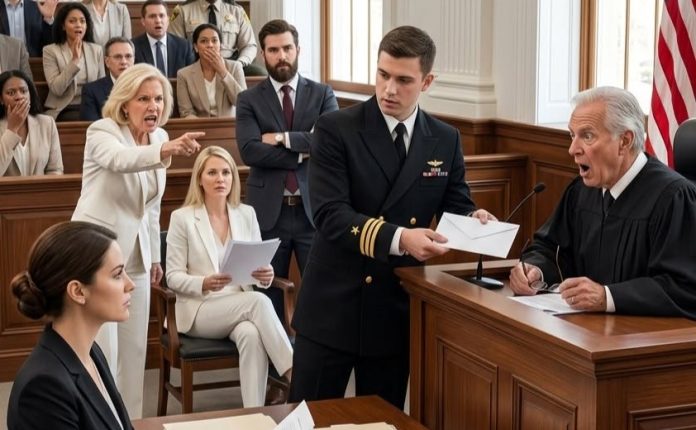
Marisol testified about hidden food and Sophia’s explanations. Doctors explained the injuries and sedative exposure without sensationalism. Detective Hall presented the preserved footage. The courtroom watched Sophia measure liquid into a cup while Celeste asked whether it would keep Valerie asleep until morning.
Then prosecutors played the recovered messages. “Keep him focused on work,” Celeste had written. “The more successful he is, the less he notices at home.” He had allowed work to consume his attention. Sophia and Celeste had not created that weakness.
They had identified it and used it. Sophia eventually testified against her attorney’s initial advice. She denied intending serious harm and described the purple medication as a desperate attempt to help Valerie sleep.
The prosecutor asked why she concealed it from Andrew, doctors, school staff, and the household nurse who visited during one illness. Sophia claimed Andrew questioned every parenting choice she made.
Then the prosecutor displayed a message Sophia sent Celeste after Valerie had once threatened to tell her father about the ruler. “She needs to learn that complaining changes nothing,” Sophia had written. The prosecutor asked, “Was that about helping her sleep?”
Sophia did not answer for several seconds. The jury deliberated for two days. Andrew spent both days with Valerie at home. They baked cookies badly, watched an animated movie, and avoided television news. When Michael finally called, Andrew stepped onto the porch before answering.
The jury had convicted Sophia on the major child abuse, endangerment, and unlawful medication counts, along with related conspiracy offenses. Andrew expected relief to feel dramatic. Instead, he sat on the porch steps and stared at the grass until Valerie opened the door behind him.
“Is it over?” she asked. Andrew stood and walked toward her. “The trial is over.” He refused to promise that everything else was finished because he had learned not to make promises reality could break. Valerie nodded. “Do I have to see her?”
Andrew answered, “No.” Valerie looked down at the floor. “Ever?” Andrew knelt. “Not unless someday you want to and the right people say it is safe.” She thought about that. “I don’t want to.” Andrew replied, “Then you don’t.” Her shoulders relaxed.