At 74, I spent all of Christmas Eve cooking for a family that never came.
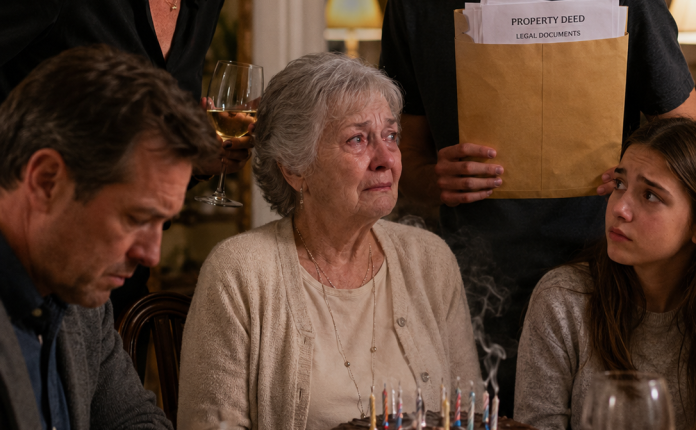
The turkey was ready. The potatoes were warm. The dining table was set for eleven people with the red napkins my late husband bought me thirty years ago. I even placed candy canes beside the children’s plates because my youngest grandson, Noah, still believed Christmas tasted better with peppermint.
At 6:15, my son Mark called.
Not to say they were late.
To say they were not coming.
“Mom, don’t be upset,” he said, which is what people say when they know they have already hurt you. “Jessica thought it would be easier if everyone gathered at her sister’s house this year. The kids want to be with their cousins.”
I stood in my kitchen, wearing the green dress I had ironed that morning, staring at the oven door.
“But dinner is ready,” I said.
There was a pause.
“I know. We should have told you sooner.”
Should have.
Two small words people use when they want forgiveness without consequences.
Then my daughter Linda got on the phone and said, “Mom, please don’t make this dramatic. It’s just one Christmas.”
Just one Christmas.
It was my first Christmas without my husband, Harold.
The first Christmas without his deep laugh from the recliner. Without him sneaking pieces of turkey skin from the carving board. Without his hand resting on my shoulder while I stirred gravy.
I had begged myself all week not to cry.
I told myself the house would not feel empty if I filled it with food.
But by 8:00, the candles had burned low.
By 9:30, the gravy had formed a skin.
By 10:45, I sat alone at the table while snow tapped softly against the windows.
Then my phone buzzed.
It was a message from Noah.
Grandma, are you alone?
I stared at the words.
Before I could answer, another message came.
Please don’t go to sleep. I’m coming.
At midnight, headlights flashed across my curtains.
Then one police car pulled into my driveway.
Then another.
Then a third.
And when I opened the door, my grandson was standing between two officers, crying.
Part 2
“Noah?” I whispered.
He ran into my arms so hard I nearly stumbled backward.
“I’m sorry, Grandma,” he sobbed. “I tried to tell them. I told them they couldn’t leave you alone tonight.”
Behind him stood three police officers, their faces serious but kind. Snow gathered on their shoulders. Red and blue lights flashed against my white porch railing.
My heart pounded.
“What happened?” I asked.
One officer stepped forward.
“Mrs. Whitmore? I’m Officer Daniels. Your grandson called 911 from a gas station about fifteen minutes ago.”
My knees weakened.
“911?”
Noah pulled back, his face wet with tears.
“They lied to you,” he said. “They didn’t go to Aunt Jessica’s sister’s house. They left town.”
I stared at him.
“What do you mean?”
He wiped his nose with his sleeve like he was six again instead of fifteen.
“They went to a ski lodge. Mom and Dad, Aunt Linda, everyone. They told me not to text you. They said you’d make them feel guilty.”
The hallway seemed to tilt.
Officer Daniels reached into his coat pocket and held out something wrapped in a plastic evidence bag.
It was my spare house key.
The one I had given Mark for emergencies.
“We found this in your son’s vehicle,” he said gently. “Along with several of your bank envelopes.”
And suddenly, Christmas Eve became something much colder than loneliness.
Part 3
For a moment, I could not understand what the officer had said.
Bank envelopes.
My spare key.
My son’s vehicle.
The words floated around me like snowflakes refusing to land.
Noah still clung to my arm. His fingers were freezing. I pulled him inside, away from the cold, and one of the officers closed the door behind us.
The house smelled of turkey, cinnamon, and grief.
Officer Daniels looked toward the dining room table. Eleven places. Eleven untouched plates. Eleven candy canes waiting beside folded napkins.
His expression softened.
“I’m sorry to disturb you on Christmas Eve, ma’am.”
I almost laughed.
Disturb me?
The disturbance had begun hours earlier, when my family abandoned me with a cooked turkey and a lie.
“Please,” I said, though my voice sounded far away. “Come in.”
The officers stepped into the hallway carefully, as if they were entering a church after something sacred had been damaged.
Noah would not let go of my sleeve.
He had Harold’s eyes. That was what always undid me. Same gray-blue color. Same serious way of looking at the world, as though he could see through excuses.
“Grandma,” he said, “I didn’t know until we were already driving.”
“Driving where?”
“The lodge,” he whispered. “Up near Pine Ridge.”
Pine Ridge was nearly two hours away.
I looked at the clock on the wall.
12:07.
Christmas morning.
My family had not merely changed dinner plans.
They had left town.
Officer Daniels removed his hat.
“Mrs. Whitmore, your grandson called us because he believed you might be in danger.”
I looked down at Noah.
“Danger?”
His lip trembled.
“I heard Dad and Aunt Linda talking.”
My daughter.
My son.
The two children I had once held against my chest while they slept.
“What did you hear?”
Noah glanced at the officers, then back at me.
“They said tonight would be the best time because you’d be distracted. Dad said you always fall asleep early after cooking. Aunt Linda said no one would notice until after Christmas.”
A cold line moved down my spine.
“No one would notice what?”
Officer Daniels answered quietly.
“An attempted unauthorized access to your home safe and financial documents.”
My hand went to the small gold cross at my neck.
I had a safe in the upstairs closet.
Harold bought it years ago for important papers: the deed to the house, insurance documents, savings bonds, his military papers, my will, and a small amount of emergency cash.
Only Mark knew where it was.
Because once, after Harold’s stroke, I told him in case something happened.
I had trusted him with the location of my life’s papers.
Noah began crying again.
“I didn’t want to believe it,” he said. “But then Dad stopped at a gas station, and I saw the envelopes in the back seat. They had your name on them.”
Officer Daniels nodded.
“Your grandson took the spare key from the console and called us from inside the gas station. When officers arrived, your son became agitated. A search of the visible items in the vehicle showed documents belonging to you. Your son claimed he had permission to retrieve them.”
“I gave him no permission,” I said.
The words came out stronger than I expected.
Officer Daniels looked at me carefully.
“Do you know why your children may have wanted access to your documents?”
I did.
Not fully.
But enough.
Three weeks earlier, Mark had come by with Linda. They sat at my kitchen table and told me they were worried.
That was the word they used.
Worried.
They were worried about me living alone. Worried about the stairs. Worried about the house being too big. Worried about bills. Worried about taxes. Worried about loneliness.
So much worry, and yet neither of them had offered to spend a night with me after Harold died.
Instead, they brought brochures.
Retirement communities.
Assisted living centers.
One place with a cheerful name and hallways that smelled like bleach and boiled vegetables.
“I’m not ready,” I told them.
Mark sighed.
“Mom, it’s not about ready. It’s about being practical.”
Linda touched my hand.
“It would be better for everyone.”
Everyone.
I noticed she did not say better for me.
Then Mark mentioned selling the house.
“This place is worth more than you think,” he said. “You could be comfortable.”
“I am comfortable here.”
“Emotionally, maybe,” Linda said. “But financially?”
Harold and I had been careful. Not rich, but careful. The house was paid off. I had savings, his pension, and a small life insurance payout I had barely touched.
I told them that.
They exchanged a look.
The kind of look adult children give each other when they think their mother has become an obstacle instead of a person.
That night, after they left, I checked the safe.
Everything was still there.
But the next week, Mark asked again where I kept “the updated papers.”
I told him not to worry.
His face changed then.
Only for a second.
But now, standing in my hallway with three police officers and my crying grandson, I understood.
They had not canceled Christmas because it was easier.
They had canceled Christmas because they needed me alone.
I sat down on the bottom stair.
My legs could no longer hold me.
Noah sat beside me immediately.
“I’m sorry,” he whispered.
I turned to him.
“You saved me.”
His face crumpled.
“I didn’t save Christmas.”
I looked toward the dining room.
The turkey.
The candles.
The candy canes.
The empty chairs.
“No,” I said softly. “You saved something more important.”
Officer Daniels asked if we could speak in the kitchen. I nodded.
The officers took statements. Mine was shaky. Noah’s was clearer. Painfully clear.
He explained how his parents had told him not to contact me because I was “too emotional.” How Aunt Linda had joked that I would probably sit by the window crying, which made everyone in the car laugh except him. How he had pretended to feel sick so they would stop at the gas station. How he had taken my key because he was afraid they would come back without him and enter my house.
He was fifteen.
A child should not have to become the only honest adult in a family car.
While Officer Daniels spoke with dispatch, another officer, a young woman named Officer Reyes, asked if I wanted them to check upstairs.
I did.
We climbed slowly to my bedroom.
The safe sat behind a row of shoeboxes in the closet. Officer Reyes stayed near the door while I moved the boxes aside.
My hands trembled as I entered the combination.
Inside, everything looked untouched.
The deed.
The will.
Harold’s military papers.
The small velvet box with his wedding ring.
A stack of savings bonds meant for the grandchildren.
I picked up the velvet box and held it to my chest.
For the first time that night, I cried.
Not because of the betrayal.
Because Harold had trusted me to keep our life safe.
And I had nearly handed the key to the people willing to sell it.
Officer Reyes said nothing. She simply stood there, giving me the dignity of silence.
When I came back downstairs, Noah was standing by the dining table.
He touched one of the candy canes.
“You remembered,” he said.
“Of course I did.”
His voice cracked.
“They said you were trying to make everyone feel guilty by cooking.”
I looked at my grandson.
“I cooked because I love you.”
“I know.”
He looked toward the plates.
“Can we eat?”
That question broke my heart and healed it at the same time.
“Yes,” I said. “We can eat.”
So at 12:40 on Christmas morning, I served turkey dinner to my grandson and three police officers.
Officer Daniels tried to refuse at first.
“Ma’am, we can’t impose.”
“You are not imposing,” I said. “There are eleven plates and only five people with manners.”
Officer Reyes coughed to hide a laugh.
We sat at the dining table under the low yellow light of the chandelier. Noah ate like he had not eaten all day. Officer Daniels complimented the gravy. Officer Reyes said the sweet potatoes reminded her of her grandmother’s. The third officer, a quiet man named Miller, took a second helping of stuffing after asking twice if I was sure.
For a little while, the house did not feel empty.
It felt protected.
At 1:15, my phone rang.
Mark.
I stared at his name until the screen went dark.
It rang again.
Then Linda.
Then Mark again.
Officer Daniels watched me.
“You don’t have to answer.”
“I know.”
Those three words felt strange and powerful.
I know.
For so many years, I had answered every call.
Middle of the night. During church. While sick. While grieving. While exhausted. While eating dinner that went cold. If my children called, I answered.
Because mothers answer.
That is what I believed.
But that night, I let the phone ring.
Noah looked at me with pride and sadness.
At 1:32, a text came from Mark.
Mom, call me now. Noah is confused and making this worse.
Then Linda.
This is a misunderstanding. Don’t embarrass the family.
I read the words once.
Then I placed the phone facedown beside my plate.
Officer Daniels said they would file a report. He recommended I contact an attorney after the holiday and consider changing the locks immediately.
“I can call a locksmith,” Officer Reyes offered. “There’s one on emergency service tonight.”
“On Christmas?”
She smiled gently.
“Some people still show up.”
That sentence stayed with me.
Some people still show up.
By 2:30, the locksmith had come and gone. Every lock on my house was changed. The spare key Mark had taken was now useless.
Officer Daniels gave me his card.
“Call if anyone comes by and you feel unsafe.”
I looked at the card in my hand.
Unsafe.
In my own home.
Because of my own children.
After the officers left, Noah helped me clear the table. He wrapped leftovers in foil, washed plates, and placed the candy canes in a jar.
“You should sleep,” I told him.
“So should you.”
Neither of us did.
We sat in the living room, wrapped in blankets, watching the Christmas tree lights blink softly in the dark.
Harold had always insisted on colored lights. I preferred white. Every December, we argued for ten minutes, then used colored lights because he looked so pleased when they came on.
Noah stared at the tree.
“Grandpa would be mad.”
“Yes,” I said.
“At Dad?”
“Yes.”
“At Aunt Linda?”
“Yes.”
“At me?”
I turned sharply.
“At you? Noah, why would Harold be mad at you?”
His eyes filled.
“Because I called the police on my own family.”
I reached for his hand.
“No, sweetheart. You called for help when adults were doing wrong. That is not betrayal. That is courage.”
He leaned against my shoulder then. At fifteen, he was almost taller than Mark, but in that moment he was my little boy again, asking for one more cookie, one more story, one more minute before bedtime.
Around dawn, he finally slept on the sofa.
I sat awake in Harold’s recliner, watching the pale gray light gather at the windows.
Christmas morning.
The day that was supposed to smell like coffee, cinnamon rolls, wrapping paper, and laughter.
Instead, I had a police report on the coffee table.
At 8:05, Mark arrived.
He did not knock gently.
He pounded on the door.
“Mom!”
Noah woke with a start.
I stood, heart racing.
Then I remembered Officer Daniels’s card.
And the new locks.
I walked to the door but did not open it.
“What do you want, Mark?”
His face appeared through the frosted glass panel, distorted but recognizable.
“Open the door.”
“No.”
There was silence.
Then, softer, “Mom, this has gotten out of hand.”
I almost smiled.
People who plan harm always think truth is the thing that got out of hand.
“Go home, Mark.”
“Is Noah in there?”
“Yes.”
“He’s my son.”
“And he is safe.”
“He had no right to call the police.”
I looked back at Noah. He was standing now, pale but steady.
“He had every right,” I said.
Mark lowered his voice.
“Mom, please. Linda is crying. Jessica is furious. The kids are scared. We need to talk as a family.”
A family.
The word felt bruised.
“You should have thought of that before you lied to me and took my documents.”
“I didn’t take anything. I had envelopes in the car because I was going to help you organize things.”
“On Christmas Eve? From a ski lodge?”
No answer.
Then he said the sentence that ended something in me.
“You’re confused.”
Noah stepped forward.
“She is not confused.”
Mark shouted through the door, “Noah, get out here now.”
My grandson flinched.
I unlocked nothing.
“Leave,” I said.
“Mom—”
“If you do not leave, I will call Officer Daniels.”
That name changed the air.
Mark stepped back.
For the first time in my life, my son looked at me through a locked door and understood I was not afraid of disappointing him.
He was the one afraid now.
“This isn’t over,” he said.
“No,” I replied. “It isn’t.”
He left.
Not long after, Linda called.
I answered because some part of me wanted to hear her voice. My daughter. My little girl with the yellow rain boots who once cried because a worm dried on the sidewalk.
“Mom,” she sobbed, “how could you let Noah call the police?”
I closed my eyes.
“How could you leave me alone on Christmas Eve so you could search my house?”
She gasped.
“That is not what happened.”
“Then explain it.”
“We were worried about your paperwork.”
“No. You were worried I would not sign it.”
Silence.
There it was.
Three weeks earlier, they had brought papers too.
Power of attorney.
A medical authorization.
A document Mark said would “make things easier.”
I told them I wanted my attorney to look first.
They did not like that.
Linda’s voice changed.
“Mom, you are making us sound like criminals.”
“I am describing what happened.”
“We are your children.”
“Yes,” I said. “That is why it hurts.”
She began crying harder.
Once, I would have comforted her immediately.
But I had finally learned that some tears are not grief.
Some are pressure.
“I love you, Linda,” I said. “But you may not come to my house today.”
“On Christmas?”
“Especially on Christmas.”
Then I hung up.
That afternoon, Officer Daniels called to check on me. He said Mark and Jessica had picked up their younger children from the lodge and returned home. Linda had gone back to her house. There would be follow-up questions after the holiday.
Noah remained with me.
His parents called him dozens of times. He answered once, on speaker, with me beside him.
Jessica cried first.
Then Mark apologized to him, but not to me.
That told me enough.
“Noah, you scared us,” Mark said.
Noah’s face hardened.
“You scared me first.”
Mark sighed.
“You don’t understand adult things.”
“No,” Noah said. “I understand Grandma cooked dinner for everyone and you left her alone so you could sneak into her house.”
Jessica snapped, “That is not fair.”
Noah looked at me, then back at the phone.
“It’s true.”
He ended the call.
I had never been prouder of him.
Over the next week, I did what I should have done years earlier.
I called my attorney, Mr. Kaplan.
Harold and I had used him for our wills. He was in his seventies himself, slow-moving but sharp as a winter morning.
He came to my house on December 28.
I gave him the police report, the copies of the documents Mark and Linda had wanted me to sign, and every text message from Christmas Eve.
He read quietly.
Then he removed his glasses and looked at me.
“Rose,” he said, “you need to change your estate plan.”
My name in his mouth sounded like a bell.
Rose.
Not Mom.
Not Grandma.
Not a responsibility.
A woman with rights.
“I think so too,” I said.
We spent two hours discussing everything.
The house.
The savings.
Harold’s life insurance.
The bonds for the grandchildren.
My medical wishes.
Who could make decisions if I truly became unable to.
By the end of that meeting, Mark and Linda were removed from every position of authority.
My neighbor Nancy became my emergency contact. Mr. Kaplan’s office became the holder of my legal documents. The grandchildren’s savings were placed in protected accounts that their parents could not touch.
Noah’s share would be managed until he turned twenty-five, not by Mark, but by a trustee.
“Are you sure?” Mr. Kaplan asked.
I looked toward the Christmas tree, still standing in the corner.
“Yes.”
Then I asked him to add one more thing.
A letter.
To be read only after my death.
Not cruel.
Not dramatic.
Just true.
A week later, Mark and Linda came together.
This time, they knocked.
I let them in because Mr. Kaplan was present, along with Nancy from next door. Nancy was eighty, tiny, and had the moral patience of a hornet. She sat beside me with her purse on her lap like it contained a brick.
Mark looked offended.
“Why is she here?”
“Because I asked her to be,” I said.
Linda’s eyes were swollen from crying.
“Mom, this is humiliating.”
Nancy muttered, “Funny how that works.”
Mr. Kaplan placed a folder on the table.
“Rose has asked me to explain some changes.”
Mark frowned.
“What changes?”
“Her locks have been changed. Her legal documents are secured. Her estate plan has been updated. Neither of you has authority over her finances, medical care, property, or legal affairs.”
Linda covered her mouth.
Mark stared at me.
“Mom, you can’t be serious.”
“I am.”
“We made one mistake.”
“No,” I said. “You made a plan.”
He flushed.
“That’s not fair.”
“Neither was letting me cook Christmas dinner for eleven people while you drove to a ski lodge and planned to enter my house with my own key.”
Linda began to cry.
“I didn’t want it to happen like that.”
I turned to her.
“But you wanted it to happen.”
She looked down.
That silence answered for her.
Mark leaned forward.
“We were trying to protect you.”
“From what?”
“From being alone. From making bad decisions. From getting taken advantage of.”
I almost laughed.
“By whom, Mark?”
His face darkened.
“That’s not what I meant.”
“It is exactly what you meant. You thought because I am old and grieving, I would be easier to control.”
Linda whispered, “Mom, we were scared.”
“I was scared too,” I said. “I was scared every night after your father died. I was scared eating dinner alone. I was scared sleeping in a bed that felt too big. I was scared hearing the furnace click on because Harold always handled strange noises.”
My voice trembled.
“But I did not use my fear as an excuse to steal from you.”
Neither of them spoke.
Mr. Kaplan explained that any further attempts to pressure me into signing documents would be documented. Any unauthorized entry would be reported. Any financial interference would be treated seriously.
Mark stood abruptly.
“So this is it? You’re choosing lawyers and neighbors over your own children?”
I looked at him.
“No. I am choosing safety over people who forgot I deserved it.”
He left first.
Linda stayed behind, crying quietly.
When the door closed behind Mark, she whispered, “I miss Dad.”
That was the first honest thing she had said.
My heart softened despite everything.
“So do I.”
“He always knew what to do.”
“No,” I said. “He only made you believe that because he loved you.”
She looked at me.
“I don’t know how to be without him.”
There it was.
The grief beneath the greed.
It did not excuse her.
But it explained the shape of the wound.
“You learn,” I said. “And while you learn, you do not hurt the person who is grieving too.”
She began sobbing.
This time, I reached for her hand.
Not to erase what she had done.
To remind myself she was still my daughter.
“I am angry with you,” I said. “I do not trust you right now. But I love you.”
She nodded, crying harder.
Love and trust are not the same.
It took me seventy-four years to learn that.
Months passed.
Mark did not speak to me for a while.
Jessica sent one apology text that sounded like it had been written by someone trying to avoid legal trouble. I did not answer.
Linda came by every Sunday afternoon. At first, Nancy stayed with us. Linda hated that, but accepted it. We talked about simple things. Weather. Groceries. Her children. Harold.
Then, slowly, we talked about Christmas Eve.
She admitted Mark had suggested using the key.
She admitted they wanted to photograph my documents.
She admitted they had hoped to convince me later that I had already agreed to “review options.”
When I asked if she would have stopped him from opening the safe, she cried.
But she did not say yes.
That mattered.
Noah came often.
His relationship with Mark was strained, but he stood firm. He told his father he would not apologize for protecting me. Mark grounded him for disrespect. Noah accepted it and walked to my house anyway after the grounding ended.
One afternoon in March, he helped me take down the last of the Christmas lights from the porch.
Yes, March.
Harold would have laughed himself silly.
As Noah untangled a string of colored bulbs, he said, “Grandma, do you regret calling the lawyer?”
“I didn’t call the lawyer because I stopped loving them,” I said. “I called because I finally started loving myself responsibly.”
He thought about that.
“Can you love someone and not let them in your house?”
“Yes.”
“That’s sad.”
“It is.”
“But true?”
“Very.”
By summer, Mark asked to meet.
Not at my house.
At Mr. Kaplan’s office.
That was my condition.
He arrived alone.
He looked thinner. Older. Less certain.
For the first twenty minutes, he explained. Money stress. Fear about my future. Worry over the house. His own grief after Harold died. The pressure Jessica put on him. The pressure Linda put on him. The pressure life put on everyone.
I listened.
Then I said, “Mark, those are reasons you were vulnerable to doing wrong. They are not reasons it became right.”
He closed his mouth.
Something in his face changed then.
Not dramatically.
Just enough.
“I know,” he said.
I waited.
“I wanted control,” he admitted. “Dad died, and everything felt unstable. You were alone in the house. Linda was panicking. Jessica kept saying the house was too much money sitting there doing nothing. I told myself if we got control of the papers, we could make decisions before things got worse.”
“For whom?”
He looked at me.
I asked again.
“Worse for whom?”
His eyes filled.
“For us,” he whispered.
There it was.
The truth.
Not pretty.
Not complete.
But real.
“I am sorry, Mom.”
I had waited months for those words.
When they came, they did not fix everything.
But they opened a door.
Not my front door.
A smaller one.
“I hear you,” I said.
His face crumpled slightly.
“Do you forgive me?”
I looked at my son.
He wanted yes because yes would make the room easier.
I loved him too much to lie.
“Not yet.”
He nodded, tears spilling over.
“But I want to,” I said. “And that is where we begin.”
The next Christmas Eve, I did not cook for eleven.
I cooked for five.
Me.
Noah.
Nancy.
Officer Daniels and Officer Reyes.
Yes, the officers came.
I had sent them invitations in November, handwritten on cards with tiny holly leaves. I told them they had once eaten leftovers at my table under terrible circumstances, and I would like to serve them a proper meal without police lights in the driveway.
Officer Daniels brought flowers.
Officer Reyes brought sweet potato pie.
Nancy brought her famous cranberry relish and announced that anyone who disliked it lacked character.
Noah arrived wearing a red sweater and carrying a bag of candy canes.
At 6:30, the doorbell rang.
I opened it.
Mark stood on the porch.
Alone.
He held a small wrapped box and looked nervous.
“I know I’m not invited,” he said.
I said nothing.
“I’m not asking to come in. I just wanted to bring this.”
He handed me the box.
Inside was a new set of house keys.
Not to my house.
To his.
“There’s a tag,” he said.
I lifted it.
Mom, you are welcome. Not needed. Not used. Welcome.
My throat tightened.
Mark’s eyes were wet.
“I’m working on it,” he said.
“I know.”
“I still miss Dad.”
“So do I.”
“I wish he were here to tell me what kind of man I’m supposed to be.”
I looked at my son standing in the snow.
“He already did. You just have to remember.”
Mark nodded.
“Merry Christmas, Mom.”
“Merry Christmas, Mark.”
I did not invite him in that night.
And he did not ask again.
That was how I knew something had changed.
Later, after dinner, Noah and I stood by the Christmas tree.
The colored lights blinked softly.
He hung a candy cane near the top, where his grandfather always used to place the star too crooked and then insist it was perfect.
“Grandpa would like this Christmas,” Noah said.
I looked around the room.
Nancy arguing with Officer Daniels about cranberry relish.
Officer Reyes laughing in the kitchen.
Snow falling beyond the windows.
A table full of people who had shown up because they wanted to, not because they needed something.
“Yes,” I said. “I think he would.”
At midnight, I stepped onto the porch alone.
One year earlier, three police cars had filled my driveway with flashing lights, and I thought my family had broken Christmas forever.
But Christmas was never the perfect dinner.
It was never the number of people at the table.
It was never pretending love exists where respect has disappeared.
Christmas, I learned, can be one brave grandson at a gas station.
A police officer accepting turkey at midnight.
A neighbor sitting beside you with a purse full of fury.
A changed lock.
A protected document.
A mother finally understanding that being old does not mean being available for use.
The snow fell quietly over the porch railing.
I touched the new keys Mark had given me, then placed them in the drawer.
Maybe someday I would use them.
Maybe not.
But my own keys hung beside the door.
My house was warm.
My table was full.
My grandson was safe.
And for the first time since Harold died, I did not feel abandoned.
I felt protected.
I felt remembered.
I felt home.