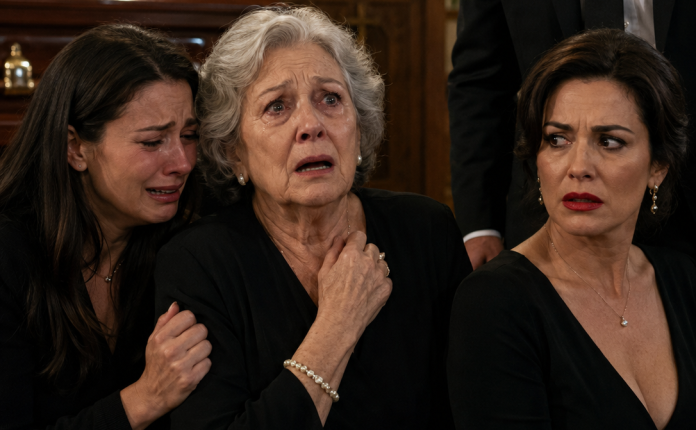
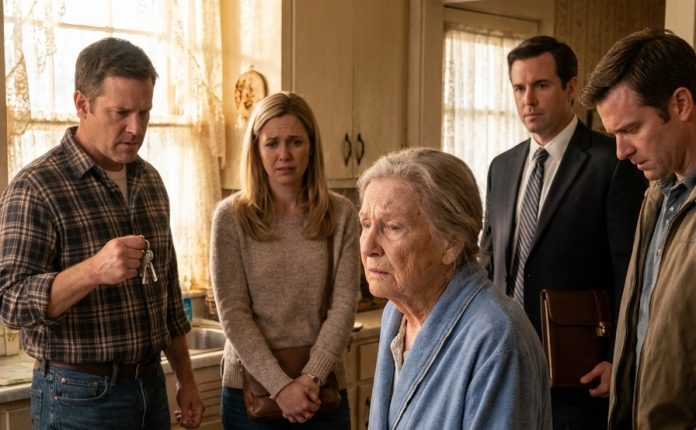
Part 1 I pressed my best navy dress the night before my granddaughter’s graduation.
At seventy-one years old, I moved slower than I used to, but my hands were steady when it came to things that mattered. And this mattered. My granddaughter, Lily, was graduating from high school. The same little girl I had rocked to sleep when her parents worked double shifts. The same girl who used to leave glitter stickers on my refrigerator and call me her “second heart.”
I bought a small silver bracelet for her. Nothing expensive, just a delicate chain with a tiny star charm, because when Lily was eight, she told me she wanted to be “the kind of woman who shines even when nobody claps.”
I planned to give it to her after the ceremony.
But that morning, as I reached for my purse, my daughter-in-law, Monica, called.
Her voice was bright, polished, and cold.
“Eleanor, there’s been a seating issue.”
I froze.
“What kind of issue?”
“Well,” she sighed, “each graduate only gets a few tickets. Lily has friends coming, and of course her parents need to be there. We just don’t have room.”
For a moment, I couldn’t speak.
No room.
I had made room for Lily her entire life.
In my home. In my bed during thunderstorms. In my grocery budget when her father lost his job. In my arms when her mother said she was “too busy” to attend school events.
But now, on the biggest day of her young life, there was no room for me.
I sat down slowly on the edge of my bed.
“Does Lily know?” I asked.
Monica paused.
“She understands.”
That was when I knew she was lying.
Three hours later, I was sitting alone in my living room, still wearing my navy dress, watching the ceremony on a shaky livestream.
Then Lily walked onto the stage.
The principal handed her a microphone.
She looked out at the crowd.
And in front of hundreds of people, my granddaughter began to cry.
Then my phone rang.
It was Lily.
Part 2 My hands shook so badly I almost dropped the phone.
“Grandma?” Lily sobbed.
I could barely hear her over the murmur of the crowd in the background.
“Lily? Sweetheart, what’s wrong?”
“They told me you didn’t want to come,” she cried. “Mom said you were tired. Dad said you didn’t feel well. But I looked for you everywhere.”
My heart cracked so cleanly it felt almost quiet.
I looked down at the bracelet box in my lap.
“I wanted to be there,” I whispered. “More than anything.”
There was silence on the line, except for Lily’s breathing.
Then her voice changed.
Not softer.
Stronger.
“Then I’m not giving my speech until you’re here.”
“Lily, no. Don’t do that. This is your day.”
“You are part of this day,” she said. “You helped raise me.”
I stood up too fast and had to grip the arm of the chair.
On the livestream, the camera wobbled, then zoomed toward the stage. Lily stood in her cap and gown, one hand holding the microphone, the other pressed to her ear.
The principal leaned toward her, whispering something.
Lily shook her head.
Then, with tears running down her face, she spoke into the microphone.
“My grandmother isn’t here because my family lied to both of us. I’m waiting for her.”
And just like that, the entire auditorium went silent.
Part 3 For ten seconds, I could not move.
The livestream showed Lily standing under the bright stage lights, her green graduation gown hanging slightly crooked from one shoulder, her dark hair tucked beneath her cap. She looked so young and so brave that I forgot how to breathe.
“Grandma?” she said through the phone. “Are you coming?”
I looked at my navy dress, my low-heeled shoes, the bracelet box in my lap.
Then I looked at the clock.
The school was twenty minutes away if traffic was kind. Thirty if it was not.
“I’m coming,” I said.
I grabbed my purse, the bracelet, and the small white cardigan Lily had once told me made me look like “a movie grandma.” My knees ached as I hurried to the door, but I did not care. I locked the house with trembling fingers and stepped into the sunlight.
My neighbor, Mr. Alvarez, was watering his roses across the street.
“Mrs. Carter?” he called. “Everything all right?”
“No,” I said, walking down the steps. “But it’s about to be.”
He must have heard something in my voice, because he dropped the hose.
“You need a ride?”
I still drove, but not at night and not when my hands were shaking like this. Pride nearly made me say no. Love made me say yes.
Within a minute, I was in his passenger seat, clutching the bracelet box so tightly that the corners dug into my palm.
“What happened?” he asked as he pulled away from the curb.
“My granddaughter refused to give her graduation speech until I got there.”
Mr. Alvarez glanced at me, then pressed harder on the gas.
“That girl has character.”
“She always did,” I whispered.
As we drove, my phone buzzed again and again. My son, David. My daughter-in-law, Monica. David again. Monica again. Then a text.
Mom, where are you?
I stared at it.
Where was I?
I was on my way to the graduation I had been excluded from. I was on my way to the child who had loved me loudly enough to embarrass the people who had lied. I was on my way to reclaim a seat I had earned through years of scraped knees, bedtime stories, school pickups, and quiet sacrifices nobody had bothered to count.
I did not answer.
Another text arrived from Monica.
Please don’t make this worse.
I almost laughed.
People who start fires are always shocked when someone opens the curtains and lets the smoke be seen.
At the auditorium, cars filled every space. Mr. Alvarez pulled to the curb near the front entrance.
“Go,” he said. “I’ll wait.”
I turned to thank him, but he shook his head.
“Later.”
I hurried inside.
The hallway smelled of polished floors, perfume, and flowers. A teenage volunteer in a red vest stood near a table, looking nervous.
“Ma’am, do you have a ticket?”
“No,” I said. “But my granddaughter is on that stage waiting for me.”
Her eyes widened. “Are you Lily Carter’s grandmother?”
“Yes.”
She stepped aside immediately.
“They told us to watch for you.”
I did not know who “they” were, and I did not care.
As I approached the auditorium doors, I heard muffled voices, then applause. Not the wild kind. The uncertain kind people give when they have just witnessed something uncomfortable and do not know who deserves their support.
A staff member opened the door for me.
The room was enormous.
Rows and rows of people turned to look.
I had never liked being stared at. At my age, you become used to being unseen. People look past you in grocery aisles. They speak louder than necessary. They assume your silence means confusion instead of patience.
But that day, every eye was on me.
And at the center of it all, on the stage, stood Lily.
When she saw me, her face broke open.
“Grandma,” she cried into the microphone.
The sound of her voice filled the auditorium.
I walked down the aisle slowly, not because I wanted to be dramatic, but because my legs were not as steady as my heart. Every step felt like walking through years.
I saw David first.
My son sat in the second row with his face pale and stunned. He half stood, as if he might come toward me, then sat back down when he saw my expression.
Beside him, Monica looked furious.
Not ashamed.
Furious.
That told me almost everything I needed to know.
There was an empty seat on the aisle in the front row. Someone had placed a folded program on it. I looked at it and saw my name written in blue ink.
Reserved for Grandma Eleanor.
My breath caught.
I sat down.
Lily wiped her face with the sleeve of her gown. The principal, Dr. Whitman, stood beside her with a careful expression. He was a tall man with kind eyes, and though he looked worried, he did not take the microphone from her.
Lily looked at him.
“Can I start now?”
He nodded.
The auditorium settled into silence.
Lily unfolded a paper with shaking hands.
“My name is Lily Carter,” she began. “I was chosen to give this speech because I’m graduating at the top of my class. But I need to say something before I talk about grades, college, or the future.”
She looked at me.
“The person who taught me the most about the future almost wasn’t allowed to be here today.”
A ripple moved through the audience.
I felt David shift in his seat.
Lily continued.
“When I was little, my grandma picked me up from school every day. She kept crackers in her purse because I always said I was starving. She helped me memorize spelling words. She sat through my winter concerts even when I played the recorder badly. She taught me how to sew a button, how to write a thank-you note, and how to apologize without adding excuses.”
A soft laugh moved through the room.
Tears blurred my vision.
“She also taught me that love is not only what people say when everyone is watching. Love is who shows up when nobody claps.”
My fingers closed around the bracelet box.
“When I was thirteen, I wanted to quit science club because some girls laughed at me. Grandma told me, ‘Lily, never shrink yourself to fit inside someone else’s small opinion.’ I wrote that on a sticky note and kept it above my desk for four years.”
Lily paused.
Her eyes moved briefly toward her parents.
“This morning, I was told my grandmother wasn’t coming because she was too tired. Then I found out she was never given a ticket.”
Someone gasped.
Monica’s head snapped toward David.
David covered his mouth.
“I don’t want to use this stage to punish anyone,” Lily said, though her voice trembled. “But I do want to use it to tell the truth. Because my grandmother always told me that a lie may keep the peace for a moment, but truth is what gives peace somewhere to live.”
I bowed my head.
That sounded like something I had said while washing dishes, never knowing she had stored it away.
“So before I thank my teachers, my friends, and my parents, I want to thank the woman who made room for me when life was crowded.”
Lily looked straight at me.
“Grandma Eleanor, this speech is for you.”
Then the auditorium rose.
It started in the back. One person stood, then another, then whole rows. Soon the sound of applause filled the room so completely that I felt it in my chest.
I did not stand.
I could not.
I sat there with one hand over my mouth and the other holding the bracelet box, while my granddaughter stood on that stage with tears on her cheeks and courage in her spine.
When the applause finally faded, Lily gave her speech.
She spoke about kindness, about persistence, about how success meant nothing if you had to become cruel to reach it. She spoke about teachers who stayed late, janitors who opened doors, cafeteria workers who learned students’ names. She spoke about the invisible people who make big days possible.
Every word felt larger because of what had happened before it.
When the ceremony ended, graduates tossed caps into the air. Families surged forward with flowers, balloons, cameras, and tears.
I stayed seated for a moment, overwhelmed by the noise.
Then Lily ran down from the stage.
She nearly knocked me backward with her hug.
“I’m sorry,” she sobbed into my shoulder. “I didn’t know. I swear I didn’t know.”
I held her as tightly as I could.
“Of course you didn’t, my darling.”
“They told me you were tired. Mom said you didn’t like crowds anymore.”
“I don’t like crowds,” I said, brushing her hair back. “But I love you more than I dislike anything.”
She laughed through her tears.
Then I opened the little box.
Inside lay the silver bracelet with the tiny star.
Lily stared at it.
“I bought it because you once said you wanted to shine even when nobody claps.”
Her lips trembled.
“You remembered?”
“I remember almost everything about you.”
I fastened it around her wrist. Her fingers touched the charm gently, as though it were made of something more precious than silver.
Then David approached.
“Mom,” he said.
His voice sounded small.
I looked at my son. He was forty-eight years old, with gray at his temples and guilt on his face. But I could still see the boy who once ran into my kitchen with muddy shoes and a bloody knee, calling for me before anyone else.
“Not here,” I said.
He stopped.
“Please.”
“Not here,” I repeated. “This is Lily’s day.”
Monica came up beside him, her mouth tight.
“Eleanor, this got completely out of hand.”
Lily stiffened in my arms.
I turned slowly.
“Did it?”
Monica lowered her voice. “You know how many tickets we were given. We had to make choices.”
“You told me there was no room,” I said. “But there was a reserved seat with my name on it.”
Her face flushed.
“That was Lily’s idea. We didn’t think—”
“No,” Lily interrupted. “You told me Grandma had her ticket.”
Monica looked at her daughter.
For the first time that day, I saw a crack in her confidence.
David closed his eyes.
“Monica,” he whispered.
She snapped, “Don’t put this all on me.”
“I’m not,” he said. “I’m putting my part on me.”
That surprised me.
Lily stepped back from my arms, still holding my hand.
“What happened?” she asked.
No one answered.
So I did.
“Your mother called me this morning and told me there was no ticket for me. She said you understood.”
Lily stared at Monica.
“You said Grandma didn’t want to come.”
Monica looked around. People nearby were pretending not to listen while listening with their whole bodies.
“I didn’t want drama today,” Monica said.
Lily’s voice shook. “Grandma is not drama.”
“No,” I said quietly. “But leaving out the truth often creates it.”
David rubbed his forehead.
“Lily,” he said, “I’m sorry. Your mom told me she handled the ticket situation. I didn’t ask enough questions. That’s on me.”
Lily looked wounded in a way I knew would not heal quickly.
“You didn’t notice Grandma wasn’t here?”
David had no answer.
That silence was an answer.
Monica crossed her arms. “Fine. I made a mistake. Can we not ruin the entire day?”
A mistake.
Such a small word for a deliberate thing.
Lily let go of my hand.
“You didn’t make a mistake,” she said. “You made a decision.”
People say children are too young to understand adult matters. I have found they often understand them more clearly because they have not yet learned to dress selfishness in polite language.
Monica’s eyes filled, but whether from shame or anger, I could not tell.
“We’ll talk at home,” she said.
“No,” Lily said.
Everyone froze.
“I’m going to dinner with Grandma.”
David looked at me.
I looked at Lily.
“Sweetheart, are you sure?”
“Yes.”
Monica let out a sharp breath. “Absolutely not. We have reservations.”
Lily lifted her wrist, the little star charm catching the light.
“You can go.”
“Lily,” David said gently.
“No, Dad. I want one meal today with the person who actually showed up when I asked.”
The words landed hard.
David flinched.
I did not celebrate that. A mother never enjoys seeing her child hurt, even when he has earned it. But I also did not rescue him from the discomfort. That was new for me.
For much of my life, I had softened consequences for the people I loved. I had explained away sharp comments, excused forgotten birthdays, accepted last-minute cancellations, and told myself that being needed was close enough to being valued.
But standing there beside my granddaughter, I understood something.
Lily had not only called me to the graduation.
She had called me back to myself.
We went to a small diner two miles from the school. Just the two of us at first. Mr. Alvarez insisted on driving us and said he would pick me up later, but Lily invited him in for coffee and pie because “heroes deserve dessert.”
He blushed like a schoolboy.
For an hour, Lily told me about the ceremony, her friends, the teacher who cried during rehearsal, the way her cap kept sliding off. She told me she had been accepted into a nursing program and wanted to work with older patients because “people treat them like they are already gone, and I hate that.”
I reached across the table and squeezed her hand.
“You will be wonderful.”
She looked down at the bracelet.
“I almost didn’t speak up.”
“But you did.”
“I was scared.”
“Being brave doesn’t mean you aren’t scared,” I said. “It means you know fear is not the boss of you.”
She smiled. “That sounds like another sticky note.”
“Then write it down.”
Later that evening, David came to my house alone.
I had expected Monica with him, armed with explanations. But he stood on my porch holding his suit jacket over one arm, looking tired and ashamed.
“May I come in?” he asked.
I considered saying no.
Then I stepped aside.
We sat in the living room, where photos of him at every age watched from the walls. First steps. Missing teeth. Baseball uniform. College graduation. Wedding day. Holding newborn Lily.
He looked at the pictures for a long time.
“I failed you today,” he said.
“Yes.”
He nodded, swallowing hard.
“I also failed Lily.”
“Yes.”
He pressed his palms together.
“I knew Monica and you had tension. I told myself it was easier not to get in the middle.”
I gave a sad little laugh.
“David, when someone you love is being pushed out, not getting in the middle means choosing the side of the person doing the pushing.”
His eyes reddened.
“I know that now.”
“Do you?”
He looked at me.
I waited.
“I think,” he said slowly, “I have let Monica decide what our family looks like because I didn’t want conflict. She likes things controlled. Perfect. Impressive. She thought having too many relatives around made things messy. You were always honest. You said what you thought. She felt judged.”
“Did I judge her?”
“Sometimes,” he admitted.
I accepted that. Age does not make a person innocent.
“I probably did,” I said. “But I never tried to remove her from Lily’s life.”
David looked down.
“No.”
“Why did she want me gone today?”
He sighed.
“Because Lily wrote about you in her speech. Monica read an early draft and got upset. She said it made us look like we hadn’t been there for our own daughter.”
I closed my eyes.
There it was.
Not tickets. Not seating. Not confusion.
Pride.
“So instead of asking why Lily felt that way,” I said, “she tried to erase the evidence.”
David’s silence confirmed it.
“And you let her.”
“Yes.”
The word seemed to cost him something.
“I’m sorry, Mom.”
I had heard apologies before. Some were bandages placed over wounds that had not been cleaned. This one felt different, not because it healed everything, but because it did not ask me to pretend.
“I love you,” I said.
He began to cry.
“I love you too.”
“But love is not permission to treat me as optional.”
“I know.”
“I am Lily’s grandmother. I will not fight for a place in her life like a stranger at the door.”
“You shouldn’t have to.”
“No,” I said. “I shouldn’t.”
He wiped his face.
“What do I do?”
“You start by telling Lily the whole truth. Not the comfortable version. Not the version that makes you look helpless. The truth.”
He nodded.
“Then you decide whether peace in your house means silence or honesty.”
That sentence hung between us.
He left after an hour, quieter than when he came.
The next few weeks were difficult.
Monica did not apologize immediately. In fact, she sent me a long message two days after graduation explaining how stressful the event had been, how she felt attacked, how she had only wanted Lily’s day to be perfect.
I read it twice.
Then I replied with one sentence.
A perfect day built on a lie is not perfect.
She did not respond.
Lily spent more time with me that summer than she had in years. We cooked together, sorted old photographs, and prepared for her move to college. She asked questions about my youth, my marriage, my mistakes.
One afternoon, while we packed towels into a plastic bin, she asked, “Grandma, did you ever let people treat you badly because you loved them?”
I folded a washcloth slowly.
“Yes.”
“Why?”
“Because I confused keeping people close with keeping peace.”
She sat on the floor, thinking.
“Are you still doing that?”
I smiled sadly.
“Less than before.”
Two weeks before Lily left for college, Monica came to my door.
She looked different without her usual polished armor. No perfect makeup. No sharp blazer. Just jeans, a plain blouse, and tired eyes.
“I came to apologize,” she said.
I did not invite her in right away.
“For what?”
She blinked.
It is amazing how often people expect forgiveness before naming the harm.
“For lying,” she said finally. “For telling you there was no ticket. For telling Lily you didn’t want to come. For making her speech about my feelings instead of her truth.”
I studied her face.
“And?”
Her jaw tightened, then loosened.
“For trying to make you smaller because I felt small.”
That was the first honest thing I had heard from her in years.
I stepped aside.
We sat at the kitchen table.
She looked around the room. The cookie jar shaped like a rooster. The wall calendar. The curtains with faded yellow flowers. A home built from ordinary things.
“I used to resent you,” she said.
“I know.”
That surprised her.
“You did?”
“I am old, Monica, not blind.”
She almost smiled, then looked down.
“Lily adored you. David listened to you. Even when you said nothing, I felt compared to you.”
“I never wanted to compete with you.”
“But I did,” she said. “In my head. And I was losing. So I tried to control the room.”
I poured tea because sometimes people tell the truth more easily when their hands have something warm to hold.
“I could have been kinder to you,” I admitted.
She looked up.
“I could have made space instead of waiting for you to make it first. I know I can be blunt. And I know I sometimes made you feel like you were doing everything wrong.”
Her eyes filled.
“You did.”
“I’m sorry.”
She stared into her tea.
“I’m sorry too.”
It was not a movie moment. There was no hug, no sudden transformation, no swelling music. Just two women at a kitchen table, both old enough in different ways to know that pride can starve a family.
“Lily needs both of us,” I said.
Monica nodded.
“But not if we are pulling her in half.”
“I know.”
Over time, we found our way into a new kind of relationship. Not close, exactly. Not easy. But more honest.
David changed too. He started calling every Sunday evening. At first, our conversations were stiff. Then they became ordinary. Groceries. Weather. Lily’s classes. His work. Small things, but small things build bridges when people keep showing up.
Lily thrived at college.
She called me after her first anatomy exam, after her first homesick night, after her first hospital volunteer shift. She sent me a photo of the silver bracelet on her wrist while she studied in the library.
Still shining, she wrote.
I printed the photo and put it on my refrigerator.
The following spring, Lily’s college held a family weekend. This time, an invitation arrived in the mail addressed to me in Lily’s handwriting.
Grandma Eleanor Carter
VIP Guest
Inside was a note.
No one gets to decide whether there is room for you. I already saved your seat.
I cried so hard I had to sit down.
At family weekend, Monica walked beside me without rushing. David carried my bag without making me feel helpless. Lily introduced me to her friends as “the woman who taught me how to be brave.”
One of the girls said, “Oh, you’re the graduation grandma?”
I laughed. “Apparently.”
Lily groaned. “It’s kind of a legend now.”
“What is?”
She showed me a video on her phone.
Someone had posted the moment from graduation when she said, “My grandmother isn’t here because my family lied to both of us. I’m waiting for her.”
The video had been shared thousands of times.
I watched myself walk down the aisle in my navy dress, small but steady, while strangers stood and clapped.
I did not know what to feel.
Embarrassed, yes.
Proud, yes.
Sad, yes.
But mostly, I felt grateful that the world had seen what my family had forgotten.
A grandmother is not a decoration for holidays. She is not a free babysitter, not an emergency contact, not a wrinkled face to crop out when the picture looks too crowded.
She is history with a heartbeat.
She is the keeper of first steps and last words, of recipes and family stories, of small sacrifices nobody photographed.
She is not optional.
On the last night of family weekend, Lily and I sat on a bench under a maple tree outside her dorm. The campus glowed with soft yellow lights. Students walked past laughing, carrying laundry baskets and coffee cups.
“Do you regret it?” she asked.
“What?”
“Coming that day. Everything that happened after.”
I looked at her.
“No.”
“Even though it hurt?”
“Especially because it hurt,” I said. “Pain tells us where the wound is. Truth lets us clean it.”
She leaned her head on my shoulder, just as she had when she was little.
“I was afraid you’d be mad at me.”
“For calling me?”
“For making it public.”
I took her hand, the bracelet still shining on her wrist.
“You did not make the lie public. The lie did that when it tried to sit in my reserved seat.”
She laughed softly.
Then she grew quiet.
“I don’t want to become the kind of person who leaves people out because their love is inconvenient.”
I kissed the top of her head.
“Then don’t. Remember how it felt. Let it make you kinder, not harder.”
Years from now, people may forget the speeches given that day. They may forget the principal’s name, the songs played, the flowers carried through the parking lot.
But I will never forget my phone ringing while my granddaughter stood on a stage in tears.
I will never forget walking into that auditorium and seeing my name on an empty chair.
I will never forget the moment I realized that being excluded by some people does not mean you are unwanted by everyone.
Sometimes, the person who loves you most will stop the whole ceremony until you arrive.
And sometimes, after years of making room for others, life gives you one beautiful moment where someone finally makes room for you.