The driver twisted in his seat.
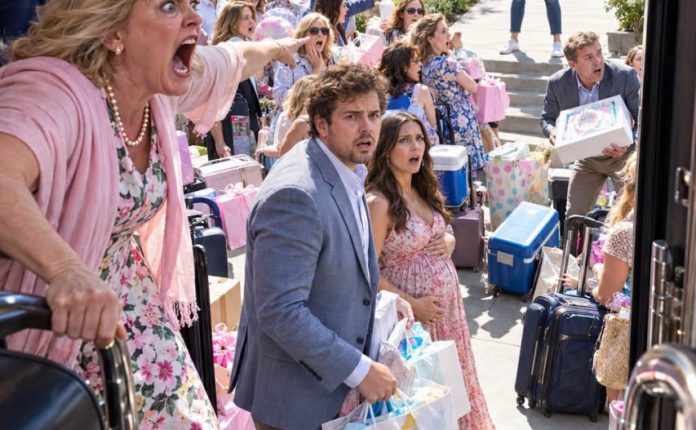
Behind my mother, conversations broke apart and stopped. Faces moved toward the windows. My father stared at the house as though somebody had put it on the wrong street.
Mom remained on the bottom step.
“Mara.”
I stood on the porch with my hands empty at my sides.
“Hello.”
Her eyes traveled across the front of the house again.
“What have you done?”
The question landed more heavily than I expected.
She wasn’t asking whether I was happy. She wasn’t asking how I had managed to buy it.
She sounded as if I had taken something from her.
“I bought the house,” I said. “That’s what the picture of the keys was about.”
Dad stepped around her and looked toward the mailbox.
The roses had been trimmed but not replaced. The porch rail still had the same shape. Walter had maintained the house for fifteen years without making it unrecognizable.
My parents had needed an address to arrive there.
Recognition required only a glance.
Inside the bus, an older woman leaned forward.
“Is that Evelyn’s house?”
Someone farther back answered her.
The sound moved through the bus in pieces: a name, a question, a memory.
Most of the guests were from the Baptist congregation where Grandma had taught Sunday school for years. Some had sat in her living room. Some remembered the Easter dinner.
Mom heard them.
I watched her take a breath.
By the time she stepped onto the sidewalk, she was smiling.
“Well, this is a lovely surprise,” she announced. “Mara’s brought Evelyn’s place back into the family.”
My fingers curled once against my palms.
There it was, already happening.
She had turned my purchase into a family resource before anyone else could understand what she was looking at.
Dad opened the luggage compartment.
He pulled out a folded table and leaned it against the curb.
Then came a cooler, boxes of food, bags of gifts, and a second table.
He worked quickly, keeping his back to me.
It was the same way he had packed my grandmother’s kitchen: keep moving, and eventually the decision became something everyone else had to accommodate.
I came down the porch steps.
The gate stood between us.
Dad dragged out three suitcases.
Behind them was a boxed portable crib.
Noah appeared behind the screen door.
“Mom.”
“I can see.”
A shower might need a cake.
It might need paper plates, chairs, a bag of games, and more ice than anybody remembered to buy.
It didn’t need suitcases.
The crib confirmed what Dad had said on the phone. They hadn’t merely planned an afternoon gathering.
They had brought the next stage of my life with them and packed it beneath a bus.
Mom turned toward the guests as they began stepping down.
“Imagine Evelyn seeing another baby grow up here,” she said. “She’d be so pleased.”
Nobody reached for the gate.
Mrs. Parker, whom I had known since I was a girl, stood beside the bus holding a wrapped present.
“Diane, did Mara invite us?”
Mom gave a small laugh.
“Oh, we’re family. We don’t send formal invitations for everything.”
“I asked whether she invited us.”
Mom looked toward Dad.
He pretended to be occupied with the cooler.
I put my hand on the inside of the gate latch.
“No one has permission to come into the yard.”
The guests stopped moving.
My mother’s smile stayed in place a moment longer than the expression beneath it.
“Mara, don’t start this here.”
“Here is my home.”
“People have come all this way.”
“I didn’t ask them to.”
“There’s food in the bus.”
“I didn’t order it.”
Her voice lowered.
“Tessa is eight months pregnant. This is not how you behave.”
I could feel people listening.
Years earlier, that would have been enough to make me step aside. Mom understood exactly how uncomfortable I found becoming the center of a scene.
She had brought thirty-seven people to a house I had not offered.
Now she expected their discomfort to become my responsibility.
“We’re not having the shower here,” I said.
Dad dropped the cooler more loudly than necessary.
“For heaven’s sake, Mara. Stop making a spectacle.”
“I’m standing at my gate.”
“You think a mortgage means you don’t answer to anybody?”
“It means you can’t decide who lives here.”
Someone behind Mrs. Parker drew in a breath.
Dad glanced at the guests and immediately looked angrier.
My brother appeared at the top of the bus steps.
Ethan was broad-shouldered, tired-looking, and carrying the expression of someone who had expected a party and found a problem instead.
Tessa stood behind him with one hand pressed against her lower back.
“What’s going on?” he asked.
Mom answered before I could.
“Your sister’s stressed. She’s just moved.”
I looked at the suitcases.
“Ethan, are those yours?”
He followed my glance.
“Yes.”
“Why are they here?”
He looked puzzled.
“Because we’re staying.”
“With me?”
His expression began changing.
“Mom said you offered.”
I watched him carefully.
It wasn’t a good performance. It wasn’t a performance at all.
He genuinely believed somebody had discussed this with me.
“What exactly did she tell you?” I asked.
“That you had extra rooms and wanted to help until we found our own place.”
Mom stepped toward him.
“We don’t need to sort out every detail on the pavement.”
Ethan didn’t look at her yet.
“You didn’t offer?”
“No.”
He glanced at the house.
“The shower?”
“No.”
“But Mom said—”
“I know what she said to you. I know what she said to me too.”
Now he turned.
“Did you ask Mara?”
Mom’s mouth tightened.
“We talked about what made sense.”
“With her?”
“Ethan.”
“With Mara?”
Dad closed the luggage compartment halfway, then opened it again.
“This isn’t the time, son.”
Ethan kept looking at Mom.
“When did she say yes?”
My mother had answers for almost everything when she could choose the question.
This one left her with only tone.
“Don’t speak to me like that.”
I let the silence remain.
For once, I wasn’t going to rescue anybody from the missing answer.
Tessa closed her eyes.
Then she came down the steps slowly, feeling for the rail.
“I’m so sorry,” she said to me.
Her face had gone pale beneath the heat.
“I thought you knew. I thought you’d said it was okay.”
“I believe you.”
Mom looked at me sharply.
She had expected anger to spread where she could use it. If Tessa cried because I shouted at her, Mom could talk about the pregnant woman I had humiliated.
I wasn’t going to give her that story.
Tessa reached the fence and stopped.
“I wouldn’t have come with all this if I’d known.”
“I understand.”
It was close to ninety degrees. Sweat darkened the hair at her temples. She kept shifting her weight as though nothing she did relieved the pressure in her back.
“Come sit on the porch,” I said.
Mom turned toward me.
“So she can come in?”
“I’m inviting her.”
I opened the gate only as far as Tessa needed.
She moved past my mother, keeping her eyes on the ground, and went up the steps.
I had bought a wicker chair because it reminded me of Grandma’s old one. Tessa lowered herself into it with an exhausted breath.
Lily hovered behind the screen.
I nodded toward the kitchen.
“Would you bring her something cold?”
Lily disappeared.
Tessa took out her phone and began typing.
Her fingers moved quickly.
At the time, I didn’t ask whom she was contacting.
My attention was back at the gate, where Dad was watching me as though my invitation had proved I was being unreasonable.
“If you can let her in, you can let the rest of us in.”
“No.”
“This is your family.”
“I know who you are.”
That answer seemed to irritate him more than shouting would have.
He pointed toward the porch.
“After everything we’ve done for you.”
I looked at him.
“What are you counting?”
Mom made a warning sound.
Dad ignored it.
“We made sure you had a roof when you needed it. We arranged for you to stay with your grandmother. We didn’t turn our backs when you got pregnant.”
I heard a chair scrape behind me as Tessa shifted.
Dad continued.
“And when your grandmother’s care had to be paid for, we did what was necessary.”
There it was.
The explanation they had circulated for years.
A regrettable sale.
Overwhelming medical expenses.
A daughter who had been helped as much as circumstances allowed.
I had heard pieces of it at family gatherings. Relatives would tilt their heads and tell me my parents had been under strain. Someone would say that losing the house had been difficult for all of us.
All of us.
The people who sold it and the people who lost somewhere to sleep were somehow supposed to have experienced the same event.
I took my phone from my pocket.
Mom saw it and stepped closer.
“Mara, put that away.”
I opened the saved voicemail.
Then I turned the speaker up.
Her voice came out small at first, flattened by the phone, but the street had become quiet enough to hear every word.
“It’s only a night or two at a motel. You’ve managed that before. There’s no reason the children can’t manage it now.”
Mrs. Parker looked down at the present in her hands.
One of the women beside her stopped fanning herself with a card.
Mom’s face tightened.
“That message was for you.”
“Yes.”
“Don’t do this.”
I played another.
“You ought to be glad there’ll be an Ellison baby in Evelyn’s house. Ethan and Tessa need proper space. You’ve always managed with less.”
When it ended, I lowered the phone.
For a moment, I could hear the bus engine idling.
Mom looked toward the guests.
“You’re making private family matters public.”
I glanced at the row of women standing behind her.
“You brought everyone here.”
She had no answer for that either.
Alma Jennings moved forward, both hands resting on her cane.
She had been in Grandma’s Sunday school class. I remembered her bringing a dish to the house after the funeral, setting it on the counter, and touching my shoulder without trying to make me talk.
“Russell,” she said, “Mara and Noah were living in a motel?”
Dad answered too quickly.
“There were expenses.”
“What expenses?”
“Mother’s care.”
I held the phone against my leg.
“She didn’t go into long-term care.”
Dad turned toward me.
“Enough.”
“She died in this house.”
Mrs. Jennings’s eyes stayed on him.
“I was with her,” I said. “The serious decline happened over her last six days. I sat beside the bed. I know where she was.”
Several women nodded.
They remembered visits. They remembered bringing food. They remembered the funeral.
Dad’s explanation had survived partly because people had stopped comparing it with what they knew.
He shifted his weight.
“There were other costs.”
“Then say what they were.”
His eyes narrowed.
For most of my life, I had been allowed to ask questions only until he became uncomfortable. After that, the question itself became disrespectful.
This time, there were witnesses who had already heard him claim an answer.
Ethan moved closer to the gate.
“Dad, where did the sale money go?”
Dad looked almost relieved to turn away from me.
“It supported the family.”
“What did it pay for?”
“The family, Ethan.”
“That isn’t a thing you pay.”
Mom touched his arm.
“Not today.”
He pulled away, not roughly, but enough that her hand dropped.
“When, then?”
I took the Christmas card out of my pocket.
The red cardinal faced outward. The paper had bent slightly where I had held it all afternoon.
I offered it across the gate.
Mom moved.
“Don’t.”
Ethan stopped for a second.
I kept my hand extended.
“Grandma sent this before she died.”
He looked at Mom, then took it.
Dad made a dismissive noise.
“A card.”
“Yes,” I said.
Ethan opened it carefully.
His eyes moved across the writing.
Then they moved across it again.
The party had become something entirely different from what he had expected. I could see him trying to understand where he stood in it.
“What’s in there?” Dad asked.
Ethan looked up.
“You know.”
“If you’ve got something to say, say it.”
So my brother read the message aloud.
“‘Mara, the house is supposed to be a home for you and Noah. Your father knows what I want. Don’t let anybody convince you otherwise. Love, Grandma.’”
No one spoke immediately.
I watched the card rather than my parents.
For fifteen years, I had kept it because I needed proof that Grandma had wanted us.
Now somebody else was holding it and saying the words where people could hear.
Mom recovered first.
“That isn’t a legal will.”
“No,” I said. “It isn’t.”
“She wasn’t well.”
“She wrote it before the last illness.”
“Older people say things they don’t think through.”
Mrs. Jennings lifted her head.
“She said the same thing in our class.”
Another woman nodded.
“I heard her too.”
Then Mrs. Parker said she remembered Easter.
Dad looked from one woman to the next.
His usual authority depended on people letting his version stand because challenging him felt unpleasant.
That afternoon, unpleasantness had already arrived in a bus.
“She left the house to me,” he said.
“She did.”
“I was entitled to sell it.”
“Yes.”
He paused.
I could see him waiting for the argument he knew how to have.
I didn’t give it to him.
“I spoke to a lawyer back then,” I said. “I know what the will said.”
Mom stared at me.
“You went to a lawyer?”
“With the card. He explained why it didn’t change the deed.”
She looked offended by something I had done fifteen years earlier while trying to keep her grandson housed.
Dad folded his arms.
“Then you know this is pointless.”
“I know you had the legal right to sell. I also know you heard what Grandma wanted and promised you understood.”
“That’s your interpretation.”
“The people who heard her are standing right here.”
Ethan looked at the card again.
Then he faced Dad.
“Where did the money go?”
“I’ve told you.”
“No. You haven’t.”
Dad’s jaw worked.
“It paid for your baseball academy, for a start.”
Mom closed her eyes.
The admission was so abrupt that nobody reacted at first.
Ethan stared at him.
“My academy?”
“There were fees.”
“You told me there was a sponsor.”
“There was help. It wasn’t free.”
“What else?”
Dad’s face reddened.
“Tournaments. Coaches. Travel. You had opportunities, Ethan. We did what we had to.”
“And the house paid for them?”
“It was an asset I owned.”
“What else?”
“The truck business was struggling. There were debts. What do you want, a list?”
Ethan looked at me.
I didn’t nod.
I didn’t look triumphant.
The truth wasn’t new to my body, even if the details were new to my ears. I had spent years living its shape.
For Ethan, the shape was changing in front of him.
“You told me Grandma’s medical bills took it,” he said.
Dad threw up a hand.
“You were thirteen. Was I supposed to sit you down and explain that we couldn’t afford what you needed?”
Ethan stepped backward.
“What I needed?”
“You know what I mean.”
“My nephew needed somewhere to live.”
Dad looked toward the bus.
“We didn’t leave them homeless.”
Mom spoke quickly.
“We found a place.”
“A motel,” Ethan said.
“A temporary arrangement.”
I watched him struggle with that word.
Temporary could be used to make anything sound smaller if you weren’t the person living through it.
Dad pointed at him.
“I was protecting you.”
Ethan’s voice changed.
“From knowing what you did.”
The words weren’t loud.
They still made Mom flinch.
She turned toward the guests again.
“This is getting us nowhere. We have a baby coming. Surely that matters more than digging through old grievances.”
On the porch, Tessa sat very still.
One hand rested over her belly. The other held her phone.
I wondered how many decisions had been presented to her as settled before she had a chance to speak.
Then the screen door opened.
Walter came out slowly, using the rail.
Lily followed him with a pitcher of iced tea held in both hands.
For a second, the sight almost made me laugh.
My daughter had decided that whatever else was happening, guests still needed drinks.
Walter looked toward the sidewalk.
“Afternoon.”
Dad’s expression changed again.
Not anger this time.
Recognition.
Mom glanced at him, then at Walter.
“Who is that?”
Walter rested his hand on the rail.
“I bought this house from your husband.”
The guests moved slightly closer together.
Dad said nothing.
“Fifteen years ago,” Walter added.
Lily set the pitcher down.
Tessa thanked her softly.
Walter looked toward Noah behind the screen.
“Your daughter came back that winter. She had the little boy in a stroller.”
I remembered the cold air.
The awkwardness of knocking on a door that had once opened before I touched it.
Walter continued.
“She didn’t ask me to undo the sale.”
Dad looked away.
“She didn’t ask for money either. She asked whether she could take a couple of cuttings from the roses.”
Mrs. Jennings put a hand over her mouth.
Walter pointed toward the mailbox.
“From those bushes.”
Mom turned her head.
I couldn’t tell whether she was remembering the roses or recognizing how the story sounded when it came from somebody she couldn’t accuse of being difficult.
“I let her,” Walter said. “Then she asked me to call if I ever sold.”
Tessa looked up.
“And you remembered?”
“I did.”
He glanced at me.
“Took a while.”
I tried to answer.
My throat wouldn’t cooperate.
Lily came to the rail.
“He looked after the roses too.”
Walter smiled at her.
“They were worth looking after.”
“Did Grandma ask you?”
“I never met her.”
Lily considered that.
“Then why?”
He looked toward the bushes.
“My wife liked roses.”
He paused.
“And your mother had lost a great deal. I couldn’t put it back the way it should have been. Keeping those alive was something I could do.”
I turned toward the mailbox.
The leaves moved faintly in the heat.
I had imagined many versions of confronting my parents. In none of them had an old man explained, with no demand for gratitude, that he had preserved something because he had noticed a stranger’s grief.
That nearly broke me.
Not Dad’s admission.
Not Mom’s recordings.
Walter’s small, steady kindness.
I pressed my tongue against the back of my teeth and waited for the feeling to pass enough that I could speak.
“Thank you,” I said.
He inclined his head as if I had thanked him for tea.
Ethan folded the card.
He did it carefully, matching the old crease.
Then he slipped it into his shirt pocket.
Mom noticed.
“That belongs to your sister.”
“He can keep it,” I said.
Ethan looked surprised.
“You’re sure?”
“Yes.”
“Why?”
“I’ve spent a long time knowing what it says. You’ve only just heard it.”
His eyes reddened.
He looked down before turning toward our parents.
“We aren’t moving in.”
Mom reached for him.
“Don’t make a decision while you’re upset.”
“It should have been our decision before we packed.”
“You need somewhere.”
“We’ll find somewhere.”
“You don’t have enough money.”
“I know.”
“The baby will be here in weeks.”
“I know that too.”
She gestured toward my house.
“Your sister has three bedrooms.”
“One is hers,” Ethan said. “The other two belong to her children.”
For a moment, I didn’t know what to do with hearing him say it.
Mom looked past him.
“Tessa, tell him.”
Tessa put her phone on her lap.
“My mother’s coming.”
Ethan turned.
“To get you?”
“Yes.”
Mom’s voice sharpened.
“Why would you call her?”
Tessa looked exhausted.
“Because I arrived here with my belongings and found out the person who lives here hadn’t agreed to any of it.”
“We were taking care of you.”
“You were making decisions about where my baby would live.”
Mom opened her mouth.
Tessa continued before she could speak.
“You didn’t ask Mara. You didn’t tell me the truth. I’m not going to sit here while you turn my pregnancy into a reason she has to leave her home.”
The silence afterward felt different.
It wasn’t merely people waiting for the next argument.
Some of them were realizing they had been used.
A shower invitation had made them part of something they never would have agreed to if it had been described honestly.
Ethan came toward the porch.
“Mara, I need to—”
“Not now.”
He stopped.
“I just want to say—”
“Go take care of Tessa.”
His mouth closed.
I nodded toward her.
“She needs you more than I need an explanation this minute.”
He stood for a moment, then turned.
He didn’t argue that I had misunderstood him.
He didn’t insist that an apology should earn him immediate access.
It was a small thing.
That day, it mattered.
Mom saw it happen.
She looked toward Noah, then at me.
“So you’ll put your brother’s baby out on the street?”
I felt the old instinct rise.
Explain that I wasn’t cruel.
Prove I cared about the baby.
Offer enough help to make the accusation stop.
Then I looked at my son.
He stood behind the screen, one hand resting on the doorframe. He wasn’t a toddler anymore. He could hear exactly what his grandmother thought should happen to him.
“Noah lived in a motel while the money from this house paid for Ethan’s baseball,” I said.
Mom’s lips parted.
“Lily has spent her life in places where I needed permission to change a wall.”
Dad shook his head.
“They weren’t neglected.”
“I didn’t say they were.”
I faced my mother again.
“They will sleep in their own rooms tonight.”
“Mara.”
“That is the arrangement here.”
She stared at me.
I wasn’t asking her to understand anymore.
I was informing her of something she could not change.
Dad stepped around her.
“This has gone far enough.”
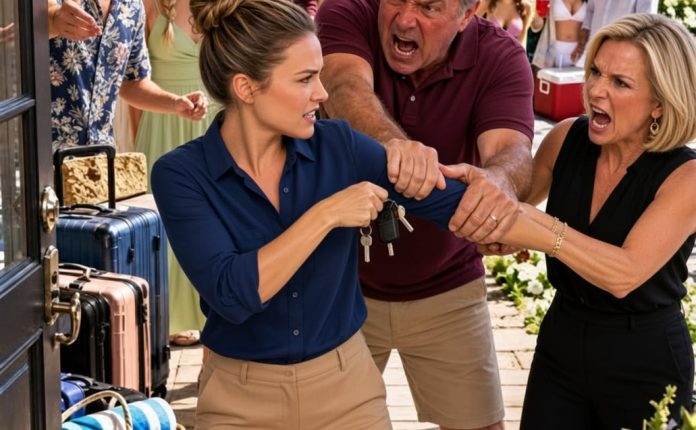
He picked up one of the folding tables.
The gate was still partly open from admitting Tessa.
He pushed through before I could close it.
For a second, I saw the whole movement with terrible clarity: his shoulder against the gate, the table edge passing me, the familiar refusal to hear an answer he didn’t like.
He set the table on my lawn.
“We’re having the shower.”
My chest tightened.
I had hoped he would stop when the truth became impossible to ignore.
He hadn’t.
The public embarrassment hadn’t stopped him either.
He bent to release one of the table’s legs.
“Pick it up,” I said.
“It’s a yard. We’ll be finished this afternoon.”
“Take the table off my property.”
He opened the second leg.
Mom stood outside the gate.
“Russell.”
He ignored her.
I looked toward the street.
A police cruiser was turning the corner.
Dad hadn’t seen it.
Mom had.
“Russell, stop.”
He straightened and looked at her irritably.
“What now?”
She nodded toward the cruiser.
He turned.
The officer parked behind the bus and got out.
I felt my heartbeat in my throat, but I didn’t move from the path.
Mom went toward him immediately.
“Thank goodness. Perhaps you can help us clear up a misunderstanding.”
The officer looked at her, then at the table inside my gate.
“This is a family shower,” she explained. “My daughter’s been overwhelmed with moving, and things have become emotional.”
I listened without interrupting.
It was astonishing how quickly she could reduce an entire afternoon to my mood.
The officer waited until she finished.
“Who owns the house?”
“I do,” I said.
He came toward the gate.
“You called yesterday?”
“Yes.”
Mom looked back at me.
The officer asked whether I wanted anyone removed from the property.
“Yes. My father.”
Dad put both hands on his hips.
“I’m her father.”
The officer turned toward him.
“Do you live here?”
“No.”
“Are you an owner?”
“No, but that isn’t—”
“I need to speak with the homeowner.”
Dad stopped.
I had heard people challenge him before. Usually they softened the challenge immediately afterward.
The officer didn’t.
“Is everyone here unwelcome?” he asked me.
“The guests are on the public sidewalk. I’m not asking you to remove them from there. Tessa and Walter are invited.”
I looked at my parents.
“My parents don’t have permission to enter.”
Mom’s voice dropped.
“You involved the police?”
“I called for advice yesterday.”
The officer nodded toward Dad.
“Please fold the table and take it back outside the gate.”
Dad looked toward the women from church.
Nobody came to his defense.
“This is absurd.”
“Take the table, sir.”
Dad remained still.
The officer faced me again.
“Do you want formal trespass warnings?”
Mom took a step toward the gate.
“Mara, think about what you’re doing.”
I was thinking.
I thought about the kitchen where Dad had taped boxes shut.
I thought about Noah asleep beside me under brown flowers.
I thought about Lily asking whether somebody could make her remove the stars from her ceiling.
I thought about how many times I had been told to keep family matters private while everyone around me accepted a version of my life I had never agreed to.
“Yes,” I said.
The officer took out his notebook.
Dad made a short, disbelieving sound.
Mom shook her head.
“No. We are not doing that.”
But we were.
The officer asked for their names and explained the warning.
It meant they could not enter the property without my permission. It didn’t depend on them agreeing that I had a good reason. Refusing to sign would not make it disappear.
Dad took the pen.
He pressed hard enough that I heard it scrape.
Then he folded the table, carried it through the gate, and shoved it back into the luggage compartment.
Mom refused the pen.
“I’m not signing something that bans me from my daughter’s home.”
The officer noted the refusal.
“I’m her mother.”
He closed the folder.
“And she gets to decide who comes into her house.”
Mom looked at me.
For the first time that afternoon, there was no sentence ready.
The table was off the lawn.
My father was outside the gate.
The officer had written down the same truth my parents had spent the week pretending was negotiable.
Nobody was moving into my house.
END PART 2