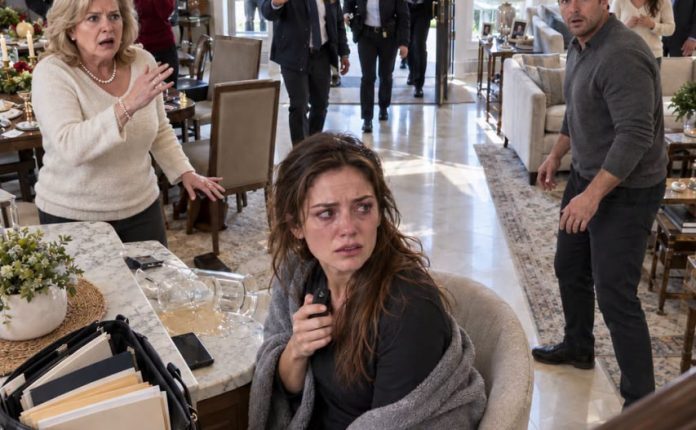
There was a small scrape near one corner of the frame, but the canvas looked unharmed. Madison lingered near the door. “Are you really going to keep talking to the sheriff?” “I haven’t decided.” “If everything is back—” “Everything isn’t back.” She frowned. “Trust isn’t sitting in your trunk.” Her face hardened again, anger returning now that fear had eased. “.
You’ve always looked down on us.” “No, Madison. I expected you to stay out of a house that doesn’t belong to you. That is a remarkably low standard.” She left without another word. At four, the house smelled like lemon cleaner instead of beer. Sunlight stretched across the floor, and Mom’s painting was back on the wall.
Everything looked almost normal. Then my security app sent an automatic account alert. Daniel had attempted to log in remotely. Twice. I changed every password, revoked every secondary device, and disabled his access before he could try again. That evening, I drove back to Austin carrying the physical spare keys in my purse.
I had spent the morning protecting my house from his family. Now I needed to find out whether I had to protect it from my husband too. Daniel was waiting in our kitchen when I got home. His tie was gone, his sleeves were rolled up, and a glass of water sat untouched beside him.
The kitchen smelled faintly of the chicken he had ordered for dinner, which irritated me because some absurd part of him had apparently believed we might eat together after this conversation. I placed the printed access history on the counter. “Start talking.” He looked at the pages. “I gave Mom the code.” “I know.” “.
She wanted to use the house occasionally.” “And you gave her permission to use property you do not own.” “I didn’t think you’d mind if you weren’t there.” “That is not an explanation. That is a confession with softer grammar.” He rubbed his forehead. “Lauren, she’s my mother.” “And I was your wife.”
His head snapped up. I hadn’t intended to use the past tense. Once it left my mouth, neither of us could ignore it. Daniel stood. “Don’t do that.” “Do what?” “Turn one mistake into our entire marriage.” “One?” I slid the access log toward him. His eyes moved down the page. Three unauthorized visits.
Then four. Then five. His face told me he recognized the dates. “How long?” He said nothing. “How long has your mother been using my house?” “Maybe since spring.” It was September. I stared at him. “And you knew.” “She kept asking.” “That isn’t what I said.” “Yes,” he snapped, finally losing patience. “.
I knew. I gave her the code because every single time I tell her no, she starts a war, and I was tired of being stuck between you two.” The room went very still. “There was no between.” He looked confused. “You created that position. She asked for something that belonged to me.
The answer was mine to give. Instead, you decided my no created an inconvenience for you, so you secretly changed it to yes.” Daniel leaned both palms against the island. “I thought she’d go up there with Dad once or twice.” “She brought six people this weekend.” “I didn’t know that.” “.
She took my mother’s painting.” “I definitely didn’t know that.” “But when she entered the house at midnight four weeks ago, did you know?” He looked down. I felt something inside me settle. “Did she call you?” “She texted.” “What did she say?” Daniel closed his eyes. “That she needed the vacuum.”
I laughed once, because the alternative was crying. “At midnight?” “She was already nearby.” “And that made sense to you?” He didn’t answer. “Did you know Madison was with her?” “I think she mentioned it.” “Did you ask what else they took?” “I didn’t know they took anything else.” Because he had never bothered to find out.
That was the part that broke something in me. Daniel hadn’t orchestrated a theft. He hadn’t told his sister to carry my mother’s painting away. He had simply decided that respecting me required more effort than disappointing his mother. Then he protected himself from the discomfort by not asking questions. “I want you to leave tonight.”
His face changed completely. “Lauren.” “I need space.” “This is my home too.” “The apartment is ours. I’m not claiming otherwise. But I’m asking you to stay somewhere else while I decide whether I still want this marriage.” He walked around the island. “I apologized.” “You apologized because everyone got caught.” “That’s not fair.” “.
No. Fair would have been my husband telling his mother, ‘That house belongs to Lauren. Ask Lauren.’ That sentence would have prevented all of this.” Daniel’s eyes were wet now. He opened his briefcase and pulled out a small key ring. The lake house keys. He placed them on the counter. “I’m sorry.”
I believed him. That was the terrible thing. I believed he was sorry. But remorse after consequences is not the same thing as loyalty before them. He packed a bag and left for a hotel. At 10:16 that night, Patricia called. I declined it. She called again. Then a message appeared.
You are destroying my son over a misunderstanding. I blocked her number. Madison sent one twenty minutes later. Hope the lake house was worth losing your husband over. I blocked her too. I sat alone at the kitchen table, reading that sentence again in my mind. They still believed the house was the issue.
It wasn’t. The house had simply turned on the lights. And now I could see my marriage clearly enough to understand what had been hiding inside it. For the next three weeks, Daniel and I lived separately. He texted every morning and called every few days. I answered when the conversation concerned bills, our lease.
Or practical matters, but I stopped participating in the emotional negotiations where he explained how difficult his mother could be, how he had been raised to avoid conflict, and how he had never meant to betray me. Intent mattered less to me than it once had. A drunk driver rarely intends to hit another car.
A person who leaves a gate open doesn’t intend for the dog to disappear. Damage does not wait for bad intentions. Patricia tried reaching me through other relatives. Arthur called once, not to pressure me, but to apologize. “I didn’t know they were using the property,” he said. “I believe you.” “I told Patricia what she did was wrong.” “.
Thank you.” After a pause, he added, “Daniel has spent his whole life trying to keep her calm.” “I know.” “He learned it from me.” That surprised me. Arthur exhaled slowly. “That doesn’t excuse him. I’m just telling you where it came from.” For the first time, I understood Daniel’s behavior without feeling compelled to forgive it.
Those were different things. The cleaning and repair total came to a little over four thousand dollars. The hardwood scratch required refinishing part of the living room, one patio cushion had to be replaced, and the rug was unsalvageable. Roger paid the amount I assigned to his household within two days.
Then sent me a separate message apologizing for entering without confirming permission directly with me. I accepted the apology. I did not invite him back. Patricia refused her portion until Arthur apparently forced the issue. Madison paid hers with the memo line: HOPE YOU’RE HAPPY. I deposited it without replying. The sheriff’s report remained on file.
Along with the security footage. Because my property had been returned and because I had recovered everything I could identify, I chose not to push for the harshest possible outcome. That decision was not forgiveness. It was simply the point where I decided my time was more valuable than their punishment. I changed the lake house locks.
Removed every old access credential, added individual temporary guest codes, and instructed the security company that no account changes could be authorized by anyone but me. I also moved Mom’s painting behind protective glass and had the damaged frame restored. One Saturday afternoon, while the frame shop owner wrapped it carefully, she asked whether it had sentimental value. “.
It’s the last thing my mother painted before she bought her first home.” The woman smiled. “Then I’m glad you got it back.” So was I. Daniel asked to meet the following Sunday. We chose a quiet coffee shop instead of the apartment. He looked thinner. “I started therapy,” he told me. “I’m glad.” “.
I should have done it years ago.” “Probably.” He smiled painfully. “You’re not making this easy.” “I spent years making things easy for you.” He stopped smiling. Daniel told me he had finally confronted Patricia. He had blocked her for two weeks after she blamed me for the situation, and he had told Madison to stop contacting me permanently.
Six months earlier, that would have meant everything. Now it felt like watching someone install a smoke alarm after the house had already burned. “I want another chance,” he said. I looked through the café window at a woman helping her little boy zip his jacket near the sidewalk. “Why?” “Because I love you.” “I believe you.”
Hope appeared on his face. I hated what I had to say next. “But I don’t trust the version of you who loved me.” His eyes filled. “I can change.” “I hope you do.” “For us.” “For yourself.” He leaned back. That was when he understood. I had spent three weeks wondering whether leaving would be an overreaction.
Then I realized I was measuring the marriage by the worst thing Daniel had done instead of by the pattern underneath it. Whenever protecting me cost him peace with his mother, I paid the price. The lake house was only the first time the receipt had been large enough for me to read.
I asked for a separation. Daniel did not argue. Two months later, we filed. Patricia sent a handwritten letter after she heard. I returned it unopened. Some apologies deserve consideration. Others arrive only because the person who hurt you finally dislikes the consequences. I no longer had enough curiosity to discover which kind hers was.
The divorce became final the following spring. There was no screaming courtroom battle, no dramatic last-minute reconciliation, and no movie-style scene where Daniel appeared at my door in the rain promising he had finally become a different man. We divided what belonged to both of us, signed what needed signing.
And walked out of the courthouse separately beneath a bright Texas sky. The lake house was never part of the division. It had been my mother’s inheritance. It remained mine. Daniel hugged me once in the courthouse hallway before we left. “I am sorry,” he said. “I know.” “I wish I’d understood sooner.” “.
So do I.” He waited, perhaps expecting more. I had nothing cruel to give him. But I had nothing romantic left either. “I hope your life gets better, Daniel.” His mouth trembled slightly. “Without me?” “That part is up to you.” I walked away before sadness could masquerade as second thoughts.
Patricia and Madison disappeared from my life completely. Arthur sent me a Christmas card that year, simple and respectful, and I sent one back. Roger and Denise never asked to use the lake house again, although Roger once forwarded a photograph of a beautiful sunset over Travis with the message, Hope you’re enjoying some peace out there.
I was. The first summer after the divorce, I spent almost every weekend at the house. I replaced the ruined outdoor rug with a plain woven one Mom would have liked. I planted rosemary near the patio because she used to crush it between her fingers whenever she walked past a herb garden.
And the smell instantly reminded me of childhood dinners. I refinished the scratched section of hardwood. The contractor told me he could make it invisible. I asked him not to. “Leave a little of it.” He looked puzzled. “Not enough to look damaged,” I explained. “Just enough that I know where it was.” He did.
There is a narrow line near the patio doors that catches the light if you know where to look. I like it. Not because I enjoy remembering what happened, but because healing doesn’t require pretending the damage never existed. One July morning, almost a year after that disastrous weekend, I woke before sunrise and carried coffee onto the dock.
Mist hovered above the lake in thin silver layers, and the boards beneath my bare feet were cool from the night air. My mother’s painting hung safely inside. The doors were locked. My phone was silent. Nobody expected me to clean their breakfast dishes. I laughed aloud at that thought.
For months after the divorce, friends asked whether I regretted ending my marriage “over the lake house.” I always corrected them. I did not leave Daniel because his mother spent a weekend at my property. I left because he repeatedly gave away something that was not his, concealed it from me.
And allowed his relatives to believe my boundaries were obstacles he could quietly remove. The house merely provided evidence. Patricia’s arrogance provided the confrontation. Madison’s order to wash dishes provided the moment when I finally understood how completely they had rewritten my role in their family. I was not supposed to own anything independently.
Anything I possessed was expected to become communal when they wanted it. Anything I refused was considered selfish. And whenever their entitlement collided with my boundaries, I was expected to become the maid, the difficult wife, or the ungrateful daughter-in-law until I surrendered. I never surrendered again. I also learned something less dramatic but more useful.
You do not have to hate people to remove them from your life. Hatred requires attention. By the time Patricia mailed her third apology letter, I felt almost nothing when I saw her handwriting. I returned that one too. Not because I wanted her to suffer. Because I did not need anything from her anymore.
Daniel eventually stopped sending messages except for one on the anniversary of our divorce. I hope you’re doing well. I stared at the screen for several seconds. Then I answered. I am. I hope you are too. That was all. No anger. No invitation. No reopening of doors that had finally closed.
Later that afternoon, I drove to Lake Travis with groceries in the back seat and my mother’s old playlist coming softly through the speakers. The gravel cracked beneath my tires, cedar trees shifted in the wind, and sunlight flashed between their branches as the house appeared at the end of the driveway.
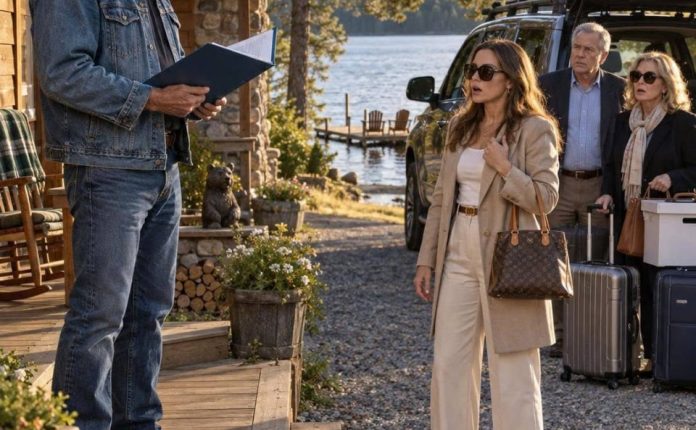
For one strange second, I remembered the morning I had returned from Denver. Patricia on my sofa. Madison pointing toward my sink. “Why didn’t you tell us you were coming?” “Perfect timing. Wash those dishes.” At the time, their confidence had stunned me. Now it almost seemed funny. I parked, carried my bags inside, and opened the windows.
Clean lake air moved through the living room. Nothing smelled like burned bacon or spilled beer. Nothing was missing from the walls. I ran my fingers along the restored frame of my mother’s painting and looked at the blue water she had painted decades earlier. She had once told me that owning a home wasn’t really about property. “.
It’s about having one place where nobody else gets to decide whether you belong.” I hadn’t fully understood her then. I did now. That weekend, I invited three friends over. I gave each of them a temporary access code that expired Sunday evening. They asked before moving furniture. They cleaned their own dishes.
One friend spilled wine on the patio and immediately grabbed a towel without being told. We laughed until midnight. That was when I finally understood the difference between sharing something and having it taken from you. Generosity requires choice. Love requires respect. And family, whether by blood or marriage, does not earn ownership over you simply by calling itself family.
On Sunday night, after everyone left, I locked the door and walked down to the dock alone. The sky had turned pale pink over the water. Behind me stood the house my mother fought to own. Ahead of me stretched a life nobody else was authorized to enter without permission.
For the first time in years, neither possibility frightened me. I had lost a marriage. I had lost a family I once tried very hard to please. But standing there in the quiet, listening to water touch the shore, I knew exactly what I had gained. My home. My boundaries. My peace. And this time, nobody had the code.
THE END!
Disclaimer: Our stories are inspired by real-life events but are carefully rewritten for entertainment. Any resemblance to actual people or situations is purely coincidental.