At 2 AM, My Brother-In-Law Attacked Me In My Parents’ Kitchen. As I Collapsed, My Mom Snapped, “Stop Making A Scene.” I Could Barely Stand, But I Had One Last Option—I Triggered My FBI Duress Alert. What The Federal Judge Ruled Later Left My Entire Family Shattered. At 1:41 in the morning, my brother-in-law drove a.
Kitchen knife into my side while my own mother stood three feet away and asked, “Mara, what did you do to make him this angry?” As I lay on the cold tile, I realized nobody in that house intended to call for help. So I reached into my pocket and triggered the FBI duress alert they didn’t know existed.
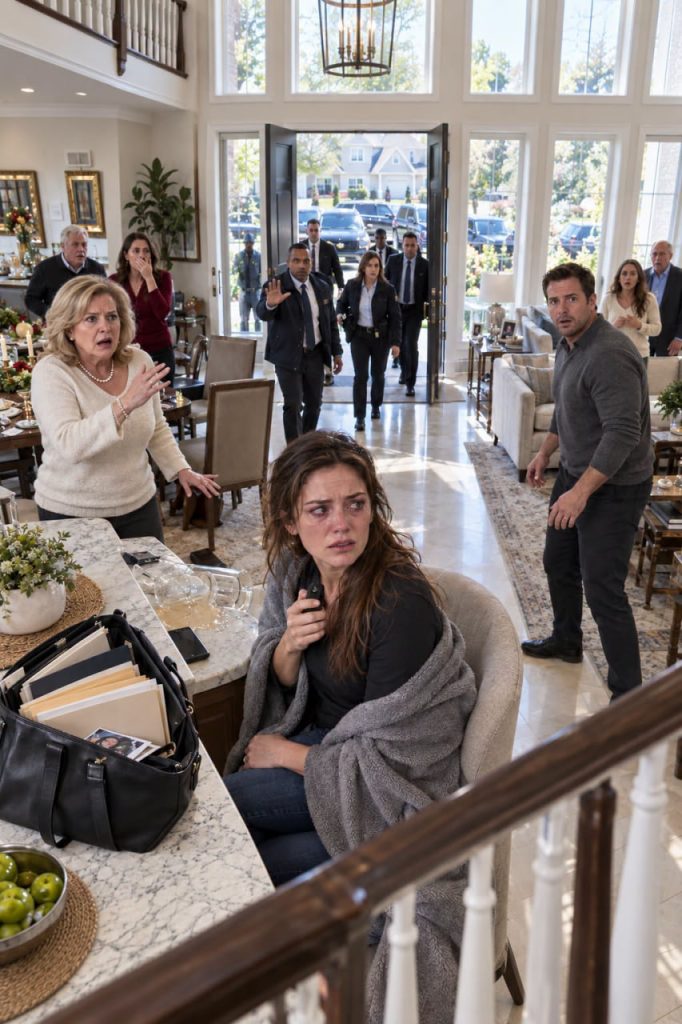
I thought I was summoning an ambulance. Instead, I opened a federal case that exposed why he had been watching me for weeks. The first thing I remember clearly about that night is the kitchen tile against my cheek. It was cold enough to feel almost pleasant for half a second.
Which was strange considering the burning pressure under my left ribs and the warm dampness spreading across my shirt. Somewhere above me, my mother said, “Keep your voice down, Mara. The neighbors do not need to hear this,” and that sentence told me more about my family than thirty-one years of birthdays, holidays, and carefully staged Christmas photographs ever had.
But to understand why my mother could look at her bleeding daughter and worry about the neighbors, you have to understand the house I grew up in. My older sister, Allison, was the accomplished one before either of us was old enough to accomplish anything; she had our grandmother’s name, our mother’s smile.
And the ability to make every adult in a room decide she needed protecting. My younger brother, Jonah, arrived nine years after me and became the miracle baby, which left me occupying that peculiar middle space where nobody hated me enough to be cruel openly, but nobody worried enough to notice when I stopped asking for things.
Dad, Thomas Quinn, sold commercial insurance around Cleveland and had perfected the art of disappearing while sitting three feet from you. Mom, Linda, taught elementary school for thirty-one years and spoke constantly about patience, empathy, and listening, though almost none of those professional skills survived the drive home. Our house had beige carpeting, heavy brown furniture, lemon-scented cleaner.
And framed family photographs arranged so carefully that you could track my declining importance by how far toward the edge I stood. I escaped by becoming useful to people who actually valued usefulness. I studied computer science at Case Western Reserve, spent two years at a private security company in Pittsburgh, then applied to the FBI because I.
Wanted my work to matter beyond a quarterly earnings call. By thirty-one, I had been a special agent assigned to cyber investigations for nearly six years, working cases involving stolen identities, compromised hospital systems, fraudulent wire transfers, and people who believed a computer screen made them invisible. My family reduced all of that to “Mara works with computers.”
Dad called it “the cyber thing,” Allison once introduced me at a party as “basically government IT,” and her husband, Grant Vale, liked telling people I probably spent my days resetting passwords for federal employees. I stopped correcting them because eventually you realize ignorance can be accidental, but repeated dismissal is a decision.
Grant had married Allison when she was twenty-five and immediately became the son my parents seemed relieved to have acquired. He came from money, wore expensive watches without appearing to notice them, and spoke with the lazy confidence of a man who had spent his life assuming somebody would clear away whatever he knocked over.
For years, Mom defended every unpleasant thing he said with some version of, “That’s just Grant,” as if cruelty were a regional accent. Late that September, an electrical fire broke out two floors below my apartment. Nobody was hurt, but smoke and water damage displaced half the building, and my landlord estimated six to eight weeks before I could return.
Mom heard before I had even booked a hotel and called sounding warmer than she had in months. “Come home, honey. You have a bedroom here. Save your money.” I should have declined. Instead, some stupid, nine-year-old part of me heard the word home and imagined adulthood might have repaired things childhood had broken.
I moved two suitcases, my personal laptop, a locked Bureau-issued case, and enough work clothes into my old bedroom on a Sunday afternoon. By Tuesday morning, I discovered Allison and Grant had also been living there since August. Their house in Bay Village had been sold after what Mom called “a temporary liquidity problem.”
While Grant described it as restructuring his investments. Nobody gave me numbers, though I noticed Allison no longer carried the designer bag she had brought everywhere for three years and Grant had begun checking his phone whenever anyone mentioned money. “Grant is under a lot of pressure,” Mom told me while pouring coffee. “.
Try not to interrogate him.” “I asked why they sold their house.” “Exactly.” That should have been my first warning that something was wrong beyond family dysfunction. The second came two nights later when Grant cornered me beside the refrigerator and casually asked whether the FBI could trace money moved through cryptocurrency exchanges overseas.
He laughed immediately afterward and said, “Relax, Agent Quinn. I’m kidding,” so I filed the moment under Grant Being Grant and walked away. Over the next three weeks, his drinking increased and so did his interest in my job. He mocked me at dinner, called me “the hacker,” asked whether federal agents could read deleted messages.
And once wanted to know how long banks kept wire-transfer records. The questions always arrived wrapped in jokes, and because he usually had a glass in his hand, everyone else treated them like the ramblings of a bored man trying to irritate his sister-in-law. My partner, Rafael Ortega, did not find them funny.
Rafael had eighteen years in the Bureau, a face that rarely changed expression, and the annoying habit of being correct before everyone else caught up. When I mentioned that Grant had been drinking heavily and Allison sometimes flinched when he moved too quickly, Rafael stopped typing and said, “Move out tonight.” “My apartment should be ready in three weeks.” “.
Mara.” “It’s complicated.” “No,” he said. “You’re emotionally invested, so you’re calling a simple problem complicated.” I promised I would book a hotel after the weekend. What I did not tell Rafael was that two mornings earlier I had found the zipper on my locked work case sitting an inch away from where I always left it.
Nothing appeared missing, the lock showed no damage, and even Grant was not foolish enough to believe he could casually open a Bureau case without consequences. At least, that was what I told myself. The last Saturday in October, Mom organized what she called a proper family dinner. Jonah drove from Columbus with his fiancée.
My aunt Claire came from Akron, and Mom cooked pot roast, cornbread, roasted carrots, and the apple crumble she made every fall. For the first hour, the house smelled like butter, cinnamon, and every Sunday afternoon when I had still believed growing up would eventually make us kinder to each other.
Aunt Claire asked about my work and actually listened to my answer. When I finished, she touched my wrist and said, “I don’t understand half of that, but I’m proud of you,” and I had to look down at my plate because four ordinary words nearly made me cry. Across the table, Grant watched me.
Then he smiled. I knew that smile by then, and before he even reached for his drink, I understood the peaceful part of the evening was over. Grant began with jokes gentle enough that anyone objecting would look humorless. He told Jonah to watch what he said because “the FBI might have the dining room wired.”
Asked whether I had arrested any grandmothers for forgetting passwords that week, then wondered aloud how somebody could make a career from “sitting behind a screen feeling important.” Dad chuckled because Dad always laughed when silence might require courage, while Mom kept serving carrots as if vegetables needed her complete concentration. I tried changing the subject.