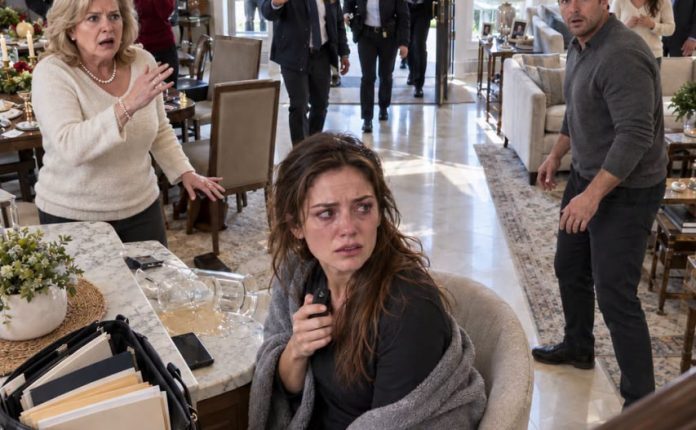
How long ago?” Nobody answered. I asked again. “How long ago?” Gordon looked at his daughter. “Three weeks.” My stomach tightened. Three weeks. I had owned the cabin for nineteen days. Sienna had used the address before I even moved in. Elliot looked stunned. “Three weeks?” Gordon frowned. “You didn’t know?” “No.” Sienna shook her head. “.
This is ridiculous.” “It was just mail.” I stared at her. “You planned this before closing?” “I knew you were buying it.” “That wasn’t my question.” She looked away. I felt something cold settle behind my ribs. Not rage. Something cleaner. The understanding that this had never been spontaneous. This was not a Thursday-night bad idea.
She had built assumptions early. She had distributed my address. She had made promises. Then she had expected my compliance to complete them. I turned toward Gordon. “What else was arranged?” Sienna spoke immediately. “Nothing.” I kept looking at him. He rubbed his neck. “There’s a storage delivery Monday.” Elliot whispered, “What?”
Beverly closed her eyes. “And patio furniture,” she said. Sienna turned on her. “Mom, please stop.” Beverly’s eyes reopened. “No.” Now her voice shook. “You have lied enough.” Sienna looked cornered. The difference was startling. She had arrived smiling. Now every person present was asking for facts. Entitlement hates witnesses. It especially hates organized ones.
I picked up the folder. “Any deliveries get canceled.” Gordon nodded. “Of course.” “Any mail gets redirected.” “Today.” “Nothing stays on my property.” “Understood.” Sienna threw up her hands. “Congratulations, Frank.” “You won.” I looked at her. “I wasn’t competing.” “That’s what you think.” “No.” “That’s what I know.” I closed the folder again. “.
I wanted one thing.” “My house left alone.” “You turned that into battle.” Her face tightened. She looked toward Elliot. “You’re coming home with me.” He didn’t move. That frightened her. I saw it immediately. “So now what?” She asked. “You stay here?” “With him?” Elliot looked toward the lake. Then at the porch.
Then at me. “No.” Her shoulders loosened slightly. He continued. “I’m going to a hotel.” The relief vanished. “What?” “We need space.” “You are not serious.” “I am.” Her voice became smaller. “Because of this?” Elliot looked at her for a long time. “No.” That one word carried seven years. Sienna heard it too.
Her face changed. He swallowed. “This is because of everything.” She looked around, as though somebody might translate for her. Nobody did. Elliot continued. “The comments about Dad.” “The way you talk about his work.” “The way you decide what belongs to people.” “The way I keep smoothing things.” “The way I stay quiet.”
He looked at me. That last part was meant for both of us. “I kept thinking peace meant nobody raised voices.” His throat moved. “It doesn’t.” I felt something crack inside my chest. Not break. Open. Sienna stared at him. “You’re blaming me because you’re weak?” Elliot flinched. There are sentences that cannot be recalled.
You can apologize later. You can explain stress. You can claim you misspoke. But everyone remembers the sound of truth when contempt escapes. Elliot’s face became calm. Strangely calm. “Maybe I have been.” He nodded once. “But I’m done helping you use that weakness.” Sienna said nothing. Beverly looked downward. Gordon closed the trunk.
The suitcases remained inside. Sienna turned toward them. “You’re seriously leaving?” Beverly answered first. “Yes.” “Where?” “The Lakeside Inn.” “That place is overpriced.” I almost smiled. Even now. Even standing inside the wreckage she created, Sienna wanted budget authority. Gordon gave a tired laugh. “We’ll manage.” She looked at me. “You’re enjoying this.” “No.”
I meant it. There was no pleasure here. Only relief mixed with grief. “I wanted retirement.” “That’s all.” “You could have just said no.” I stared at her. “I did.” “You didn’t.” “I didn’t shout.” “That isn’t the same.” “It should be.” The words came quietly. “That may be your problem.” Everyone became still.
I continued. “You only hear boundaries when they arrive loudly.” “You mistake kindness for weakness.” “You mistake silence for consent.” “And you mistake access for ownership.” Her eyes shone. I almost stopped. Then remembered my dock. My rooms. Her message. Retirement living suits you better. I finished. “I’m not shouting now.” “But the answer remains no.”
She wiped one eye angrily. “I hope those empty rooms keep you company.” Elliot looked pained. I didn’t. “Maybe they will.” I looked toward the cabin. “Maybe friends will.” “Maybe nobody will.” “That choice is mine.” Sienna climbed into the SUV. She slammed the door. Beverly hesitated beside me. “I’m sorry, Frank.” I nodded. “.
Thank you.” Gordon held out his hand. I shook it. His grip was firm. “I’ll cancel everything.” “Send me confirmation.” “I will.” He looked genuinely embarrassed. Then almost smiled. “And for what it’s worth,” he said, “I never wanted your bedroom.” That surprised a laugh out of me. Beverly laughed too. Even Elliot smiled faintly.
The tension loosened. Only slightly. Enough to breathe. Then Gordon became serious. “I thought we were invited.” “I know.” He nodded toward the folder. “You handled this better than I would have.” “I worked forty-one years around molten metal.” “That teaches temperature control.” His mouth twitched. “I suppose it does.” They got into the SUV.
Sienna never looked at me. The vehicle backed away. Gravel cracked beneath the tires. Then they disappeared through the trees. The driveway became empty again. Almost. Elliot remained. He stood beside his sedan. Hands in his pockets. I had imagined this moment all night. In every version, I had speeches. Sharp ones. Earned ones.
But looking at him now, I saw thirteen again. A skinny boy pretending not to cry after his mother left. I had taught him endurance. Maybe too well. I had taught him how to survive silence. I had never taught him when silence becomes surrender. He walked toward the porch. “Dad.” I waited. “I’m sorry.”
His voice cracked. The words were simple. They deserved a simple answer. “I know.” He shook his head. “No.” “You don’t.” He came up one step. “I knew she dismissed you.” “I knew the jokes bothered you.” “I knew she talked like your things were temporary.” “And I kept telling myself you could handle it.”
I looked down. The folder suddenly felt heavy. He continued. “I used your strength as an excuse.” That sentence hurt. Because it was accurate. “You never asked me to protect you.” He swallowed. “But you shouldn’t have needed to.” I leaned against the rail. The sun had lowered. Gold light touched the water. “When did you realize?”
He rubbed his face. “Last night.” “When you called.” I waited. He looked embarrassed. “You asked whether I would have stopped her.” “Yes.” “I couldn’t answer.” “You answered.” He nodded painfully. “I know.” A loon called again. Closer this time. Elliot stared toward the reeds. “I spent years believing not choosing sides was maturity.”
I said nothing. “It wasn’t.” He looked at me. “It was choosing comfort.” I felt the old instinct to rescue him. To tell him he was being too hard on himself. I didn’t. A grown man needs room to own mistakes. Even when he is your son. Especially then. “What happens now?” I asked.
He looked toward the road. “I don’t know.” “That’s honest.” “I’m staying at a hotel.” “I heard.” “Sienna thinks I’ll come home tonight.” “Will you?” “No.” The answer arrived immediately. That mattered. He climbed another step. “I need to figure out why I kept allowing this.” “You loved her.” “I still do.” His eyes reddened. “.
That’s the worst part.” I understood. Love does not always vanish when respect becomes damaged. Sometimes love remains like electricity in condemned walls. Still live. Still dangerous. Still real. “You don’t need decisions tonight.” He nodded. Then glanced at the folder. “What’s the rental agreement?” I smiled despite myself. “Market rate.” “For her parents?” “.
For anybody who arrives believing bedrooms are transferable.” He laughed. A real laugh. Then covered his face. “Dad.” “What?” “That is incredibly petty.” “It was educational.” He laughed harder. So did I. The sound traveled across the quiet yard. It surprised both of us. We had not laughed together like that in months. Maybe years.
Eventually he wiped his eyes. “I brought something.” He returned to his car. He opened the back door. Then lifted out a cardboard moving box. My body tightened automatically. He saw it. “No.” “Not staying.” “Good.” “It’s yours.” He carried it up. The box was old. One corner had softened. Across the side was my handwriting.
GARAGE SHELF — FRANK. I stared. “Where did you find that?” “Our basement.” He set it down. “When we moved houses, some of your old things ended up with us.” “I thought those were gone.” “So did I.” He pulled the flaps open. Inside sat a red metal thermos. My old lunch pail. Three photographs.
A cracked baseball glove. And a small wooden box. My throat tightened. The lunch pail still had a burn mark near the handle. Elliot touched it. “You carried this forever.” “Twenty-two years.” “I remember.” He lifted one photograph. I knew it immediately. Elliot was nine. Missing one front tooth. Sitting on my shoulders at a county fair.
His mother had taken it. Before everything changed. He set it down carefully. “I found this Wednesday.” “Before all this?” “Yes.” He looked ashamed. “I planned to bring it Sunday.” “For retirement.” I touched the photograph. “You remembered.” “Of course I remembered.” Something in me softened. Not everything. Enough. I opened the wooden box.
Inside lay a watch. Cheap. Scratched. Stopped forever at 3:16. Elliot smiled faintly. “You gave me that when I turned sixteen.” I stared at him. “That was yours.” “I know.” “Why is it here?” He looked toward the lake. “Because I gave it back once.” Memory moved slowly. Then struck. The night he was seventeen.
We had fought about his first serious girlfriend. He had wanted to drive three states away. I had said no. He called me controlling. I called him irresponsible. He threw the watch onto the kitchen table. His mother had mailed it after leaving. He said he wanted nothing that reminded him of either parent.
I thought I had lost it. “I kept it,” I said. “You did.” He touched the wooden box. “Apparently.” Neither of us spoke. Then Elliot said, “I used to think that fight was about control.” “It partly was.” He smiled. “Fair.” I lifted the watch. The leather band had cracked. He continued. “But mostly you were scared.” “.
You were seventeen.” “I was stupid.” “Those overlap often.” He smiled again. Then became serious. “I’m scared now.” I looked at him. “Of what?” “That my marriage is over.” I nodded slowly. “That’s possible.” His eyes dropped. “That I waited too long.” “Also possible.” He looked hurt. I kept going gently. “But possible isn’t certain.”
He breathed out. “What should I do?” There it was. The father question. The dangerous one. Tell me what to do. I had spent decades answering that question. How much oil? Which wrench? Which college? Should I propose? Should I take the job? Now I understood some decisions become weakened when fathers make them. “.
You should decide what you can live with.” He frowned slightly. “That’s not much help.” “It’s all I’ve got.” I returned the watch. “You need a marriage where no means no.” “You need accountability.” “So does she.” “So do you.” He nodded. “And if she won’t?” “Then you have your answer.” The evening cooled around us.
Mosquitoes appeared near the railing. A fish broke the surface. Elliot looked toward the cabin. “Can I see it?” I studied him. Then smiled. “With an invitation?” He laughed softly. “Yes.” I picked up the folder. “You’re invited.” We went inside. For the first time, the cabin felt occupied without feeling invaded. That difference mattered.
I showed him the stone fireplace. The crooked cabinet hinge. The boathouse key. The upstairs room with afternoon lake light. Then the main bedroom. The one Beverly supposedly needed. Elliot stood in the doorway. “This is nice.” “It’s mine.” He looked at me. The humor was intentional. He nodded solemnly. “I have been informed.”
We made sandwiches. Nothing impressive. Ham. Mustard. Pickles. Two beers. We ate on the porch. As darkness settled, Elliot told me things. Small things first. Then larger ones. He told me Sienna had begun managing nearly every family decision after their second year married. Vacations. Holidays. Spending. Which friends remained convenient. Which relatives were “too much.”
He had mistaken efficiency for partnership. Then disagreement became exhausting. So he stopped disagreeing. Not all at once. Nobody loses their voice in one dramatic moment. Usually it disappears one swallowed sentence at a time. I understood that too well. At 9:13, his phone lit up. Sienna. He stared at it. Then answered. “Hello.”
I started to stand. He motioned me down. Her voice was inaudible. His face tightened. “No.” A pause. “No, I’m not coming tonight.” Another pause. “I’m safe.” He closed his eyes. “I didn’t abandon you.” He listened. Then opened them. “You brought your parents to Dad’s house without permission.” Another pause. “That happened.” He breathed slowly. “.
No.” “I’m not discussing whether he overreacted.” Longer silence. Then his expression changed. “What?” He stood. I watched him. “No, Sienna.” Another pause. “You cannot do that.” He turned toward me. Something cold entered his eyes. “What happened?” I asked. He held up one finger. “Sienna.” His voice became firm. “Do not contact the property manager.”
I stood. “What property manager?” He stared at me. Then said into the phone, “I’m hanging up.” He ended the call. The porch became very quiet. “What property manager?” I repeated. Elliot looked sick. “She listed the cabin.” For several seconds, I heard only insects. “What do you mean?” “Short-term rental.” I stared at him. “.
She what?” He unlocked his phone. “She says it was temporary.” “Temporary what?” “She created a listing.” My hands went cold. “When?” “She says last week.” I laughed once. There was no humor. “I wasn’t moved in yet.” “I know.” He scrolled rapidly. “She says she planned to rent two rooms.” I looked toward the cabin.
My cabin. My first quiet place. My stomach turned. “Using whose permission?” “None.” He kept reading. Then whispered, “Oh, God.” “What?” “There are bookings.” The anger arrived then. Not furnace anger. Not shouting. A clean, steady heat. “How many?” “Three.” “When?” He looked up. “Next month.” I sat down slowly. That explained something.
Her insistence on empty rooms. Her comment about usefulness. Her confidence about arrangements. This was bigger than her parents. The cabin had become inventory. I reached for my phone. “What platform?” Elliot told me. I searched. There it was. My porch. My dock. My kitchen window. Photos from the real-estate listing. Copied without permission.
The description called it “A private family lake retreat.” Family. That word again. A crowbar disguised as something warm. The listing advertised three bedrooms. Private dock access. Owner nearby. I read that twice. Owner nearby. Apparently I had been demoted inside my own property description. Elliot sat beside me. “I didn’t know.” “I believe you.” “.
I swear.” “I said I believe you.” He looked devastated. The listing carried Sienna’s first name. Not mine. Not Elliot’s. Hers. I opened the booking dates. Three reservations. Two deposits. One seven-night stay. My jaw tightened. “This gets canceled tonight.” “I’ll help.” “No.” He looked at me. “Dad.” “I need you here.” “But I handle this.”
I pointed toward the screen. “My property.” “My report.” “My documentation.” He nodded slowly. “Okay.” I took screenshots. Every page. Every photograph. Every reservation date. Every message visible. Then I called the platform’s support line. It took twenty-three minutes. I sat on the porch through all of them. When someone finally answered, I explained calmly.
I owned the property. I had never authorized listing. I could provide identification. Recorded deed. Closing documents. Utility information. They escalated the case. The listing disappeared temporarily before midnight. The reservations were frozen. I requested written confirmation. Then I called a local attorney whose number I received from my closing agent. I left a message.
Afterward, I looked at Elliot. He had barely moved. “Did she say anything else?” He swallowed. “She says she needed money.” “For what?” “I don’t know.” “That’s your marriage.” “But this is my house.” “I know.” He stared toward darkness. “She said we were behind.” “Behind on what?” He shook his head. “I don’t know.”
That frightened him more. He handled their finances jointly, supposedly. He knew their mortgage. Utilities. Retirement contributions. Car payments. Or thought he did. Sienna handled their household account. Elliot handled savings. At least that was the arrangement. He opened his banking app. Then stopped. His face drained. “What?” He didn’t answer. “Elliot.” He showed me. Three transfers.
Each moving money from joint savings. Nine thousand. Six thousand. Four thousand. Nineteen thousand total. “To where?” I asked. He shook his head. “Her personal account.” “When?” “Past two months.” “Did you approve them?” “No.” “Can she legally transfer it?” “It’s joint.” He looked exhausted. “So probably.” I handed back his phone. “Then learn the facts.” “.
Don’t guess tonight.” He nodded. But I knew sleep would not find him. It barely found me. He took the upstairs room. Not because he claimed it. Because I offered. At 2:08 a.m., I heard floorboards upstairs. At 2:41, water ran briefly. At 3:17, I woke imagining moving trucks outside.
At 3:53, I stopped pretending sleep would return. I made coffee. Then went to the dock. Darkness sat heavily over the lake. No engines. No voices. Only water. I had wanted quiet. Now I understood quiet alone was not peace. Peace requires boundaries strong enough to protect it. Behind me, the dock boards creaked.
Elliot approached. He carried his own mug. “Couldn’t sleep?” “No.” “Me neither.” He sat beside me. For a while, we watched darkness soften. Then he spoke. “I checked everything.” I looked over. “What did you find?” “Credit cards.” His mouth tightened. “Three I didn’t know about.” “How much?” “Twenty-seven thousand.” I stayed quiet. “.
Some is ordinary spending.” “Some isn’t.” “What is it?” “Hotels.” “Restaurants.” “Furniture.” “Storage.” He rubbed both hands over his face. “And payments to her mother.” I looked toward him. “Beverly?” “Maybe.” “Could be reimbursements.” “Could be anything.” He nodded. “I’m not assuming.” Good. That was already growth. “What will you do?” “I’m meeting a lawyer.” “.
About divorce?” “About understanding my position.” He stared at the horizon. “I’m not making decisions blind.” The first gray light spread over the lake. I smiled slightly. “That sounds sensible.” He glanced at me. “You sound surprised.” “I raised you.” “So I know your weaknesses.” He laughed softly. Then his eyes watered. “I should’ve come here Thursday.” “.
Yes.” “I should’ve told her no.” “Yes.” “I should’ve defended you.” “Yes.” He breathed in. Then nodded. “Thank you.” “For what?” “Not pretending otherwise.” I looked at him. “Forgiveness isn’t pretending.” His chin trembled. “No.” “It isn’t.” The sun touched the far tree line. For forty-one years, my mornings began under fluorescent lights.
This one began gold. We sat until our coffee cooled. At 8:06, my attorney returned my call. Her name was Dana Mercer. She spoke quickly. Asked precise questions. Requested documents. I emailed everything. The deed. The messages. The rental listing screenshots. The support case number. The mail-forwarding information. She advised me to document all contact.
Cancel unauthorized deliveries. Change exterior lock codes. Notify my insurer. And send formal written notice to Sienna. Not because Sienna lived there. She never had. But because clarity prevents later invention. Dana drafted a notice. No occupancy permission existed. No rental authorization existed. No agency authority existed. No consent existed for mail or deliveries.
No person could represent the property as available. I read the final line twice. Any future access required my express written permission. I signed electronically. Dana sent it. At 9:31, Sienna replied. Four words. You’ve lost your mind. Dana answered with one. Received. I liked Dana immediately. By ten, Gordon called.
He had canceled the furniture delivery. The storage company needed my confirmation to remove my address. I gave it. Then he hesitated. “There’s something else.” I closed my eyes briefly. “Go ahead.” “Sienna asked us for money.” Elliot was across the kitchen. He looked up. “How much?” I asked. “Fifteen thousand.” Elliot went still. “When?” “.
About six weeks ago.” “What reason?” Gordon sounded ashamed. “She said you two were helping buy this cabin.” I looked at Elliot. He whispered, “What?” Gordon continued. “She said Frank needed help with the down payment.” I gripped the counter. I had paid cash. Not because I was wealthy. Because I had saved for decades. Overtime.
Pension rollover. Selling the city apartment. Every piece accounted for. “She said I needed money?” “Yes.” “Did you give it?” “No.” He paused. “Beverly wanted to.” “But I asked for closing paperwork.” “Sienna got angry.” I looked at Elliot. His eyes were closed. “She never mentioned this.” Gordon exhaled. “I figured not.” “Do you have messages?” “.
Yes.” “Keep them.” “I already printed everything.” I almost smiled. “Good man.” He gave a humorless laugh. “Learning from you.” After we hung up, Elliot sat at the table. He stared downward. “This isn’t about your cabin.” “No.” “It never was.” “No.” He looked at me. “What is happening?” I wished I knew.
By noon, he had his own attorney. Not a divorce filing. Not yet. A financial consultation. He spent ninety minutes in my upstairs room on a video call. When he came downstairs, his face looked hollow. “I need account statements.” “Get them.” “I need credit reports.” “Get them.” “I need to freeze new joint credit.” “.
Then do that.” He nodded. “You’re not going to say anything else?” I poured coffee. “You know what to do.” Something almost peaceful crossed his face. Maybe trust feels different when it stops being rescue. That afternoon, Beverly called me. She asked permission first. “May I come by?” The question mattered. “Yes.”
She arrived alone. No suitcase. No banker’s box. Just a cloth tote. She stood at the porch until I invited her inside. Then she placed the tote on my table. “I brought your keys.” I frowned. “My keys?” She removed two copies. Brand new. I stared at them. “Where did those come from?” “.
Sienna gave them to us.” My skin went cold. “When?” “Wednesday.” Before her Thursday call. Before she announced anything. Before I prepared the folder. “How did she get these?” “I thought you gave them.” “I didn’t.” Beverly sank into a chair. “Oh, Frank.” I picked up one key. It fit my new lock style.
Someone had copied it. I remembered giving Elliot an emergency spare after closing. My son. One key. I called his name. He entered from the porch. I held up the copies. His face changed instantly. “No.” “You gave Sienna my spare?” He looked horrified. “I left it in our kitchen drawer.” My disappointment hit hard.
Not because he betrayed me. Because he had been careless with something entrusted. “I’m sorry.” He looked sick. “I didn’t know she took it.” Beverly covered her mouth. “Sienna told us you had copies made.” I stood. “Locks change today.” Elliot nodded immediately. “I’ll pay.” “No.” “Dad.” “You can help install them.” “But I pay.”
He understood the difference. “Okay.” Beverly reached into her tote. “There’s more.” Of course there was. She removed an envelope. Inside were printouts. Messages. Long threads. Sienna to Beverly. Sienna to Gordon. I did not read immediately. Beverly’s hand trembled. “I need to apologize before you see those.” “You didn’t write them.” “I believed them.”
She looked toward Elliot. “And I repeated some things.” “What things?” Her eyes filled. “That you were confused.” My chest tightened. Elliot went still. Beverly continued. “That retirement was affecting you.” “That you’d become forgetful.” “That buying the cabin was impulsive.” I stared at her. The room seemed smaller. “Who did you tell?” “.
My sister.” “Gordon.” “Two family friends.” “And our daughter.” Her voice broke. “I thought we were concerned.” Elliot looked furious. Not at Beverly. At what he understood. “Did Sienna say Dad couldn’t manage the property?” Beverly nodded. “She said you were worried.” His face went pale. “I never said that.” “I know now.”