My Daughter-in-Law Demanded $80,000 at Her Wedding. Fifteen Minutes Later. The Ballroom Learned What She Had Been Trying to Hide. The first time my new daughter-in-law publicly humiliated me. She did it under crystal chandeliers with a microphone in her hand and 150 witnesses watching. I had been standing near the head table.
Trying to finish a toast to my only son. Michael looked handsome in his black tuxedo. Nervous. But happy. Beside him. Susan looked every inch the bride she had spent eighteen months planning to become—white lace. Diamond earrings. Perfect makeup. Not a hair out of place. I raised my champagne glass.
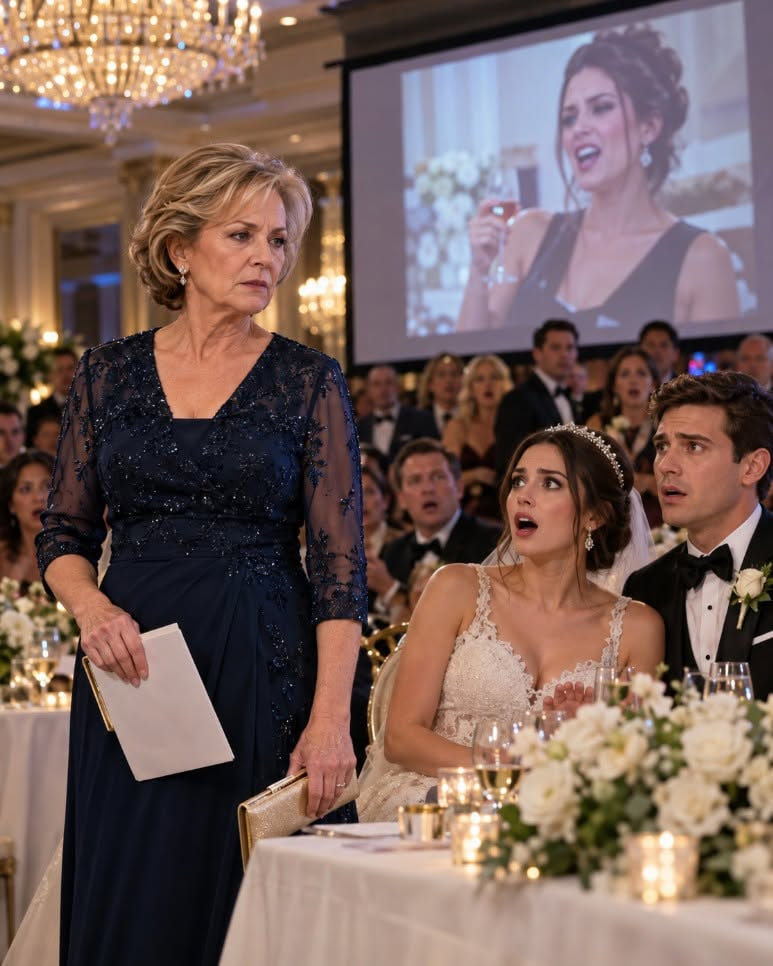
“To Michael and Susan,” I said. “May you always remember that a good marriage isn’t built on what you have. It’s built on how you treat each other when—” Susan suddenly stood. “Oh. Janice.” She laughed and reached for the microphone. Before I understood what she was doing. She had taken it from my hand.
“Before we finish all these touching speeches,” she said. Flashing the room a bright smile. “maybe we should talk about Michael’s mother.” Something in her voice made my stomach tighten. Michael shifted in his chair. “Susan.” “What?” she said. “I’m joking.” A few guests laughed. She turned toward them. “She hasn’t paid for anything.” More laughter. “Not the reception.
Not the bar. Not even a proper engagement gift.” I stood perfectly still. Three months earlier. I had given Michael and Susan a framed photograph of Michael with his father. David. Taken shortly before David died. Michael had cried when he opened it. Susan had smiled and said it was “sweet.” Apparently sweet wasn’t the same thing as proper.
Susan raised the microphone again. “The least she could do is leave us a check.” Someone near the bar called. “How much?” Susan looked directly at me. Her smile widened. “Maybe **$80,000**.” The room erupted. Not everybody laughed. But enough did. Enough for the sound to roll through the ballroom like a wave.
Enough for me to see Susan’s bridesmaids bending toward one another. Giggling. Enough for me to see strangers looking at my navy dress. My modest jewelry. And probably imagining the old Honda Civic parked outside. I waited for my son to stand. He didn’t. “Susan. That’s enough,” Michael finally said. But his voice wasn’t angry. He sounded embarrassed.
And somehow that hurt more. I had raised Michael after his father died. I had sat beside hospital beds with him. Helped him through college applications. Loaned him my car when his broke down. Stayed awake until two in the morning when his first serious girlfriend left him. I had never asked him to choose me over anyone.
That night. I only wanted him to make it clear that humiliating his mother for entertainment was unacceptable. Instead. He looked down. I put my napkin on the table. “Excuse me.” Susan lowered the microphone. “Oh. Janice. Come on. It was a joke.” I looked at her. “No,” I said. “It wasn’t.” Then I walked out.
The laughter followed me across the marble lobby. Outside. The September air hit my face. My hands began shaking. I dropped my keys beside my Honda and had to crouch beneath the driver’s door to find them. Once inside. I didn’t start the engine. I just sat there. Through the windshield. I could see the ballroom glowing beyond the hedges.
Music started again. People were celebrating. My son had just gotten married. And I was alone in a parking lot. Wondering when exactly being careful with money had become something shameful. Susan believed she knew me. She believed I was a sixty-two-year-old widow who had spent thirty-eight years teaching school and had little to show for it.
She knew about my two-bedroom apartment. My secondhand dining table. My nine-year-old Honda. My habit of using coupons even when I didn’t have to. She knew I worked part-time after retirement because I missed the classroom. What she didn’t know was that for the previous six months. **I could have written her $80,000 check without changing my life at all.
** Six months earlier. My Aunt Eleanor had died at ninety-one. Eleanor had always been different. She became a traveling nurse when respectable women from her hometown were expected to marry young and stay put. She never married. Instead. She saved. Invested. Bought duplexes nobody wanted. Bought vacant lots beside roads people said would never become important.
Bought an old warehouse outside Columbus for less than the price of a new car. Everyone joked about Eleanor’s worthless properties. Thirty years later. Developers wanted them. When she died. Robert Hayes. Her attorney. Asked me to come to his office. He closed the door behind me. “Your aunt left the bulk of her estate to you.
Janice.” I remember staring at him. “How much are we talking about?” “Current valuation is approximately **$2. 7 million**.” I laughed. Not because it was funny. Because numbers that large belonged to game shows and lottery announcements. Not to me. “There is a condition,” Robert said. Of course there was.
Eleanor loved conditions. She once gave me a bicycle for my twelfth birthday on the condition that I learn to repair a flat tire before riding it. Robert slid a document toward me. “For six months. You may not disclose the inheritance to immediate family except under extraordinary legal necessity.
Your lifestyle must remain substantially unchanged. No large gifts. No conspicuous purchases.” I frowned. “Why?” Robert hesitated. Then he handed me a letter written in Eleanor’s unmistakable slanted handwriting. It contained one sentence I would remember every day afterward. **Money does not create character. Janice. It reveals the character that was already there. ** I thought Eleanor was being theatrical.
Then Susan began teaching me why Eleanor had written it. At first. The comments were small. When she visited my apartment. She looked around and said. “You know. You could make this place look so much better with decent furniture.” Another time. She stood beside my car and asked. “Does Michael seriously let you drive this?”
Let me. As if I required my adult son’s permission. At dinner. She once reached across the table and touched the sleeve of my cardigan. “You’ve had this forever. Haven’t you?” “Probably.” “You’re so funny.” There was nothing funny in her voice. Michael heard some of it. Too often. He pretended not to. I told myself he was avoiding conflict.
That excuse became harder to believe three weeks before the wedding. They came to my apartment on a Sunday afternoon. Susan sat on my couch. Michael remained standing. “We’ve been discussing something,” she said. I poured tea. “That sounds ominous.” “It isn’t.” She smiled. “We think you should consider assisted living after the honeymoon.”