At exactly 10:00 on Friday morning, my father stood on the front steps of my $3.5 million estate, raised a forged deed in my face, and announced that I had four minutes to start packing. Behind him sat a white moving truck. The house had always felt like home to me, which made the forged deed feel less like paperwork and more like an attempt to rewrite where I belonged. Every room carried memories that existed long before the forged transfer, and no recorded document could make those years disappear. Nothing improved when I translated manipulation into misunderstanding.
Three movers waited beside the ramp. My mother stood near the driveway in dark sunglasses and a cream-colored coat, looking past me into the house as though she were deciding which pieces of my furniture would look best in her living room. Dad shook the document. The more I looked back, the more I realized our family had survived for years by letting one person’s version of events become everyone else’s reality. I had spent too much time assuming family loyalty required silence, even when silence protected the wrong person. Every new fact made the earlier explanations harder to believe.
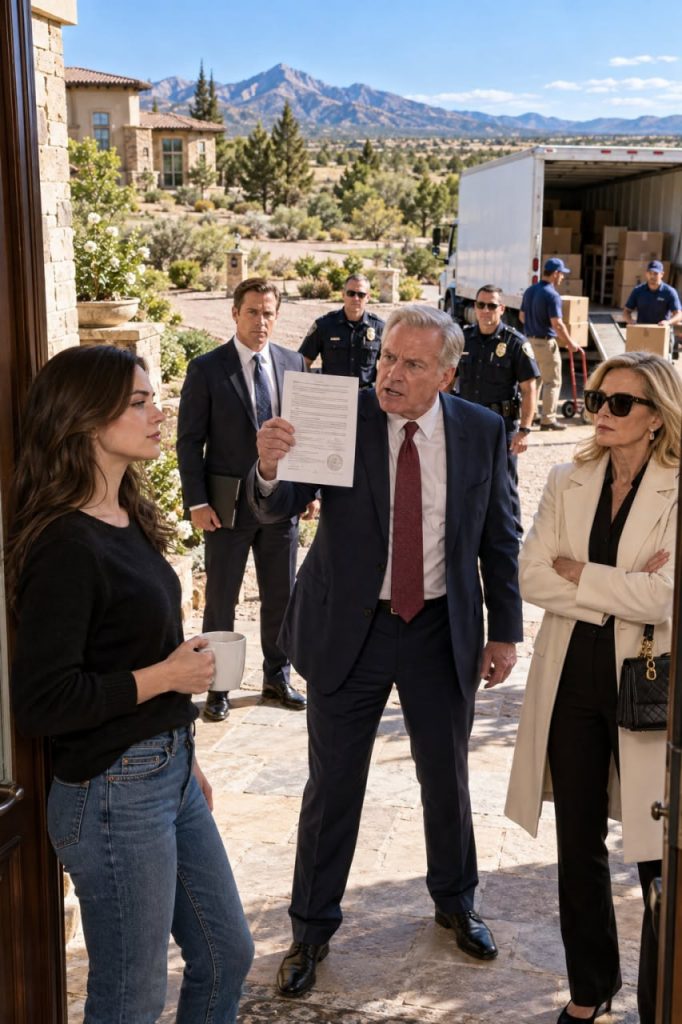
“This house is mine now.” I took a slow sip of coffee. Then I looked past him at the truck, the movers, and the SUV blocking half my driveway. “Right on time.” His expression changed. Only for a second. But I saw it. Owning the property had never made me feel powerful; it made me responsible for protecting what my grandparents trusted me to keep. The estate became the center of the scheme because everyone involved understood its value, but they underestimated what the records around it could prove. I did not need revenge; I needed the pattern to stop.
The little twitch at the corner of his mouth. The confusion. Because that was not how this morning was supposed to go. I was supposed to be crying. Begging. Maybe throwing clothes into suitcases while Mom stood over me explaining that I had brought all this humiliation on myself by being difficult. Mom’s shock mattered because it showed she had participated without understanding every layer of what Dad intended. Her anger shifted as the truth widened, first toward me, then toward the husband whose explanations had shaped her decisions for years. The truth needed no dramatic speech to remain true.
Instead, I opened the door wider. Dad smiled again. He mistook the gesture for surrender. “Finally,” Mom said. She took one step toward the entrance. I raised my hand. “Not you.” Her heel stopped inches from the threshold. I was beginning to see that his greatest advantage had never been intelligence alone, but certainty delivered before anyone else could question him. The scheme felt larger every time another old decision revealed how carefully he had managed the story around him. For the first time, Dad could not force reality to become more convenient simply by speaking louder than everyone else.
“What?” A voice came from behind me. “She said not you.” My attorney, Caleb Brooks, stepped into view. My father’s face went still. And then two uniformed police officers appeared behind Caleb. Mom slowly removed her sunglasses. Once attorneys, investigators, and official records entered the situation, emotional pressure stopped being enough to control the outcome. The documents mattered because they could be tested independently instead of relying on whichever family member sounded most certain. Every preserved email, signature, recording, and timestamp narrowed the space where anyone could still call the scheme a misunderstanding. Nothing about family made entitlement more reasonable.
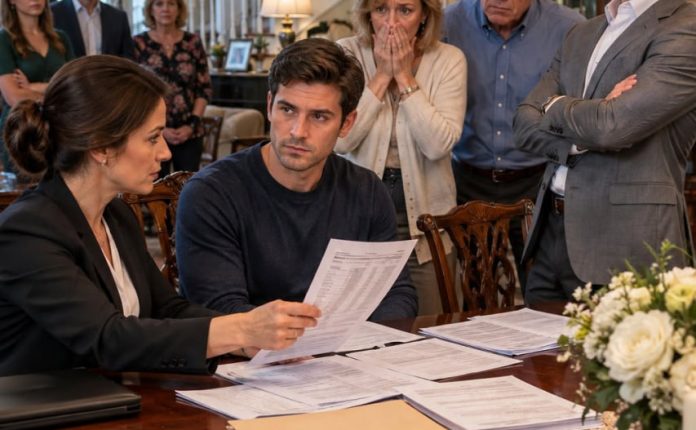
But the person who frightened them most was sitting at my dining table. A woman in a charcoal blazer closed a thick manila file, stood, and walked toward us. She was in her forties, calm in the way people become calm when they already know the answer to every question they intend to ask. Every revelation made old memories feel unstable, as though entire conversations had been built on facts I never possessed. What hurt most was understanding how easily love had been turned into a reason not to ask difficult questions. Nothing improved when I translated manipulation into misunderstanding.
“Mr. Grant?” My father stared at her. “Yes?” “My name is Rebecca Hayes. I’m an investigator working with the fraud division of Southwest Regional Lending.” Dad’s fingers tightened around the deed. Rebecca glanced at it. Legal process moved slower than anger wanted, but its patience made the eventual conclusions harder to dismiss. I was grateful we had saved evidence before confronting anyone, because memory alone would never have carried the same weight. Once attorneys, investigators, and official records entered the situation, emotional pressure stopped being enough to control the outcome. That distinction became more important with every decision that followed.
“I’d like to ask you about the $1.8 million financing application you submitted using this property as collateral.” The color left his face. Mom turned toward him so sharply I heard the small click of her earrings. “One point eight?” she whispered. That was when I realized something. She was not innocent of everything, but neither was she carrying the same knowledge Dad had hidden from her. Watching Mom’s certainty collapse made me realize how long fear and loyalty had kept her from asking the right questions. I did not need another promise before deciding what I would protect.
For the first time since my parents had begun this nightmare, my mother looked genuinely surprised. And suddenly I wasn’t sure I understood the scheme at all. Four days earlier, they had arrived without warning. I was working at my kitchen island when I heard the front door open. I had spent too much time assuming family loyalty required silence, even when silence protected the wrong person. The family had not been broken by one morning; that morning simply exposed fractures that had existed for years. The more calmly I looked at the facts, the less complicated the situation became.
My parents still had an old emergency key from when my grandparents were alive. I had been meaning to change the locks. I walked into the foyer and found Dad holding a leather portfolio. Mom carried a folder with a printed label. Grandpa and Grandma had always believed preparation mattered more than dramatic promises, which explained why their protections survived long after they were gone. Their decisions looked complicated only because they had spent years imagining the ways family pressure might eventually distort ordinary choices. The truth did not become cruel simply because someone disliked hearing it spoken without excuses.
VACATE. No hello. No explanation. Dad opened his portfolio, removed several pages, and placed them on the entry table. “This will be easier if you don’t make a scene.” I laughed because I genuinely thought it was some bizarre joke. Dad’s confidence had always depended on other people accepting his version quickly enough that nobody examined the details. He had spent years treating resistance as disrespect, which made his plans harder to challenge until the documents finally spoke for themselves. For the first time, Dad could not force reality to become more convenient simply by speaking louder than everyone else.
Then I saw the heading. WARRANTY DEED. My home address. My legal name. A company called Mesa Verde Residential Holdings LLC. And beneath the transfer language was a signature that looked disturbingly like mine. I stared at the page. “What is this?” Dad’s expression didn’t change. Every room carried memories that existed long before the forged transfer, and no recorded document could make those years disappear. The property mattered because it represented continuity, not status, and that was something Dad never seemed to understand. Once I saw the pattern clearly, I could no longer pretend the latest incident stood alone.
“The estate was transferred.” “To whom?” He tapped the company name. “An entity I manage.” I looked at him. Then Mom. Then the document again. “You’re saying I gave you my house?” “You transferred the property to the LLC,” Dad said. “No, I didn’t.” The house had always felt like home to me, which made the forged deed feel less like paperwork and more like an attempt to rewrite where I belonged. The property mattered because it represented continuity, not status, and that was something Dad never seemed to understand. This time I let the consequences remain where they belonged.
Mom sighed dramatically. “You always do this.” “Do what?” “Turn paperwork into a crisis because you don’t understand it.” That sentence carried me backward twenty years. My mother had spent most of my childhood explaining reality to me after changing it. The more I looked back, the more I realized our family had survived for years by letting one person’s version of events become everyone else’s reality. Every revelation made old memories feel unstable, as though entire conversations had been built on facts I never possessed. Clarity felt harsh only because denial had protected the wrong people for too long.
She would promise something, deny promising it, then accuse me of being dramatic for remembering. Dad was different. He did not rewrite reality. He simply pushed until reality became inconvenient to resist. My grandparents had understood both of them. I had inherited the estate from my mother’s parents, Evelyn and Thomas Grant. Their final safeguards were not sentimental, but they carried a kind of care I understood only after everything began unraveling. They had known that money could magnify old resentments, so they left records strong enough to outlast anyone’s memory. The truth needed no dramatic speech to remain true.
Grandpa built a construction company from nothing and sold it before I was born. Grandma managed the family investments with a terrifying ability to remember every number she had ever seen. Grandpa and Grandma had always believed preparation mattered more than dramatic promises, which explained why their protections survived long after they were gone. The more I learned, the more their estate plan felt less like control and more like a structure built to preserve consent. Some consequences feel cruel only to people who expected someone else to prevent them. I had spent enough time negotiating against my own judgment.
Their home sat on seven acres outside Santa Fe, surrounded by desert grass, piñon trees, stone walls, and a view of distant mountains that turned purple at sunset. I spent summers there. I learned to swim in their pool. I learned to drive Grandpa’s old truck on the private road. Their decisions looked complicated only because they had spent years imagining the ways family pressure might eventually distort ordinary choices. Their final safeguards were not sentimental, but they carried a kind of care I understood only after everything began unraveling. I could feel the difference between compassion and surrender now.
I learned that adults could disagree without screaming because Grandpa and Grandma somehow did it every day. When Grandma died, Grandpa stayed in the house for another five years. Then he left it to me. Not Mom. Not Dad. Me. They never forgave him. The more I learned, the more their estate plan felt less like control and more like a structure built to preserve consent. Every boundary felt more natural once I stopped treating someone else’s disappointment as an emergency. They had known that money could magnify old resentments, so they left records strong enough to outlast anyone’s memory.
Three years later, my father was standing in that same foyer claiming I had voluntarily signed the estate over to him. Mom handed me the VACATE folder. “You’re out by Friday.” I looked at her. “Friday?” “Ten in the morning. Movers are already arranged.” I had spent too much time assuming family loyalty required silence, even when silence protected the wrong person. What hurt most was understanding how easily love had been turned into a reason not to ask difficult questions. The family had not been broken by one morning; that morning simply exposed fractures that had existed for years.
“You arranged movers for my house before telling me I supposedly sold it?” Her mouth tightened. “We are trying to keep this dignified.” I picked up the deed. According to the notary block, I had personally appeared before a notary eleven days earlier. I stared at the date. The house had always felt like home to me, which made the forged deed feel less like paperwork and more like an attempt to rewrite where I belonged. The estate became the center of the scheme because everyone involved understood its value, but they underestimated what the records around it could prove.
And almost smiled. Eleven days earlier, I had been in Chicago. I didn’t tell them that. Instead, I photographed every page. Dad reached for the document. “What are you doing?” “Keeping a copy.” “You don’t need one.” “I think I do.” Mom crossed her arms. Dad’s confidence had always depended on other people accepting his version quickly enough that nobody examined the details. I was beginning to see that his greatest advantage had never been intelligence alone, but certainty delivered before anyone else could question him. The silence after a firm answer often revealed more than another hour of arguing.
“Don’t start calling people and creating unnecessary drama.” That was almost funny. “Like attorneys?” She said nothing. I looked at Dad. “If this property truly belongs to you, why give me until Friday? Why not change the locks right now?” He had spent years treating resistance as disrespect, which made his plans harder to challenge until the documents finally spoke for themselves. The scheme felt larger every time another old decision revealed how carefully he had managed the story around him. I had spent too many years softening facts so other people would not have to feel responsible for them.
For half a second, neither of them answered. That silence was the first crack. Then Dad collected the pages. “Friday. Ten.” I nodded. “Ten works.” They left believing they had frightened me into obedience. The moment their SUV disappeared beyond the gate, I called Caleb Brooks. I was beginning to see that his greatest advantage had never been intelligence alone, but certainty delivered before anyone else could question him. That detail stayed with me because it connected too many earlier moments I had once explained away. The hardest part was accepting that one clear fact could expose years of assumptions.
He had handled Grandpa’s estate. Caleb was fifty-two, precise, dryly funny, and almost impossible to rattle. I texted him the photographs. Nine minutes later, he called. “Where did you get this?” “My father.” Silence. Then: “Do not contact him again.” “Is it fake?” “I don’t know yet.” The more I looked back, the more I realized our family had survived for years by letting one person’s version of events become everyone else’s reality. I no longer believed that keeping the family comfortable was a job assigned only to me. I was finally learning that patience has limits when respect disappears.
“You sound like you do.” “I know your grandfather’s deed. I know your title history. And I know you never called me about a transfer.” Forty minutes later, Caleb called again. His tone was different. The deed had been recorded with the county. Owning the property had never made me feel powerful; it made me responsible for protecting what my grandparents trusted me to keep. The estate became the center of the scheme because everyone involved understood its value, but they underestimated what the records around it could prove. Nothing about the situation improved when everyone avoided the obvious question.
Not merely printed. Not merely forged. Recorded. According to the official record, I had transferred ownership of my estate to Mesa Verde Residential Holdings LLC. The document said I had appeared before a commissioned notary and signed voluntarily. I emailed Caleb my Chicago records. Legal process moved slower than anger wanted, but its patience made the eventual conclusions harder to dismiss. I was grateful we had saved evidence before confronting anyone, because memory alone would never have carried the same weight. The documents mattered because they could be tested independently instead of relying on whichever family member sounded most certain.
Airline confirmation. Hotel bill. Crew schedule. Photos from the installation site. Even an electronic key log showing me entering the hotel at 11:48 p.m. that night. Caleb reviewed everything. Then he said, “Someone didn’t just forge your signature. Someone built an entire paper trail.” Once attorneys, investigators, and official records entered the situation, emotional pressure stopped being enough to control the outcome. Every preserved email, signature, recording, and timestamp narrowed the space where anyone could still call the scheme a misunderstanding. I stopped asking what explanation would keep the peace and started asking what the evidence actually showed.
My stomach tightened. “What do they want?” “That’s the important question.” “Isn’t the house enough?” “No.” He paused. Then said something I would remember for the rest of my life. **“People don’t manufacture ownership documents just to admire them. The house had always felt like home to me, which made the forged deed feel less like paperwork and more like an attempt to rewrite where I belonged. Every room carried memories that existed long before the forged transfer, and no recorded document could make those years disappear. I could care about everyone involved without volunteering to absorb the consequences again.
They use them.”** By Tuesday afternoon, we knew what they had tried to use mine for. A lender. Southwest Regional Lending. Buried in my spam folder was an automated message thanking Mesa Verde Residential Holdings for beginning a commercial financing inquiry. My property address was listed under collateral. The house had always felt like home to me, which made the forged deed feel less like paperwork and more like an attempt to rewrite where I belonged. The estate became the center of the scheme because everyone involved understood its value, but they underestimated what the records around it could prove.
I sent it to Caleb. He called the lender’s fraud department. That was how Rebecca entered the story. At first, the lender refused to discuss anything with me because I wasn’t the listed borrower. Then Caleb sent the legitimate deed, the questionable deed, and my Chicago records. That moment became another line between the life I had inherited and the one I was choosing. Legal process moved slower than anger wanted, but its patience made the eventual conclusions harder to dismiss. The documents mattered because they could be tested independently instead of relying on whichever family member sounded most certain.
Within two hours, Rebecca called. “What do you know about Mesa Verde Residential Holdings?” “Almost nothing.” “It was created six weeks ago.” “By my father?” “He’s listed as manager.” “Who owns it?” She hesitated. “That information is less clear.” The next question chilled me. I had spent too much time assuming family loyalty required silence, even when silence protected the wrong person. Every revelation made old memories feel unstable, as though entire conversations had been built on facts I never possessed. What hurt most was understanding how easily love had been turned into a reason not to ask difficult questions.
“Has anyone pressured you to vacate the property?” “Yes.” “When?” “This Friday.” Another pause. Then Rebecca said, “Do not leave.” That same evening, an unknown number texted me. You should take the Friday deadline seriously. I stared at the screen. A second message arrived. Owning the property had never made me feel powerful; it made me responsible for protecting what my grandparents trusted me to keep. Once I saw the pattern clearly, I could no longer pretend the latest incident stood alone. The property mattered because it represented continuity, not status, and that was something Dad never seemed to understand.
Your grandparents should have handled this differently. That sentence frightened me more than the deed. The sender knew where the property came from. I screenshotted everything. On Wednesday, my parents started calling. Mom left a message. “We can still help you if you cooperate.” Grandpa and Grandma had always believed preparation mattered more than dramatic promises, which explained why their protections survived long after they were gone. Their decisions looked complicated only because they had spent years imagining the ways family pressure might eventually distort ordinary choices. I wanted honesty more than appearances because appearances had hidden too much already.
Dad called twenty minutes later. “The movers are booked. Friday at ten.” Then the moving company contacted me. The dispatcher sounded embarrassed. “We were told this was a voluntary move.” “It isn’t.” There was a long pause. Dad’s confidence had always depended on other people accepting his version quickly enough that nobody examined the details. He had spent years treating resistance as disrespect, which made his plans harder to challenge until the documents finally spoke for themselves. I was beginning to see that his greatest advantage had never been intelligence alone, but certainty delivered before anyone else could question him.
“Ma’am, the customer told us the property had changed ownership through a family transfer.” “Did they give you paperwork?” “Yes.” “Please save everything.” By Thursday evening, Caleb’s dining table looked like a detective board without the red string. Legitimate deed. Recorded fraudulent deed. My Chicago evidence. LLC formation documents. Owning the property had never made me feel powerful; it made me responsible for protecting what my grandparents trusted me to keep. I no longer believed that keeping the family comfortable was a job assigned only to me. I had learned how expensive it could be to ignore my own uneasiness.
Lender correspondence. Moving contract. Anonymous texts. Then Rebecca emailed us a portion of the financing application. I saw my address. Property value: $3.5 million. Requested financing: $1.8 million. Occupancy status after closing: VACANT. I sat back. “They need me out before the lender inspects.” I was grateful we had saved evidence before confronting anyone, because memory alone would never have carried the same weight. The truth did not become cruel simply because someone disliked hearing it spoken without excuses. Every preserved email, signature, recording, and timestamp narrowed the space where anyone could still call the scheme a misunderstanding.
Caleb nodded. “That appears to be the plan.” Rebecca added, “Or before anyone realizes the borrower doesn’t control the property.” That was when we decided to let my parents come. We informed local law enforcement. Caleb arranged to be present. Rebecca drove in Thursday night. I had spent too many years softening facts so other people would not have to feel responsible for them. The documents mattered because they could be tested independently instead of relying on whichever family member sounded most certain. That detail stayed with me because it connected too many earlier moments I had once explained away.
And Friday morning, I made coffee. Nothing was packed. At 9:56, the moving truck appeared on my security camera. At 10:00, Dad rang the bell. Now, four minutes later, he was staring at Rebecca. “One point eight million?” Mom repeated. He had spent years treating resistance as disrespect, which made his plans harder to challenge until the documents finally spoke for themselves. The scheme felt larger every time another old decision revealed how carefully he had managed the story around him. I stopped asking what explanation would keep the peace and started asking what the evidence actually showed.
Dad snapped, “Be quiet.” Her head jerked toward him. “You said six hundred thousand.” Nobody moved. Rebecca’s eyebrows lifted. Caleb slowly turned toward my mother. I felt something cold settle inside me. “Six hundred thousand for what?” Mom looked from me to Dad. For the first time, Dad could not force reality to become more convenient simply by speaking louder than everyone else. The records kept pulling us back to reality whenever emotions threatened to blur it. I was beginning to see that his greatest advantage had never been intelligence alone, but certainty delivered before anyone else could question him.