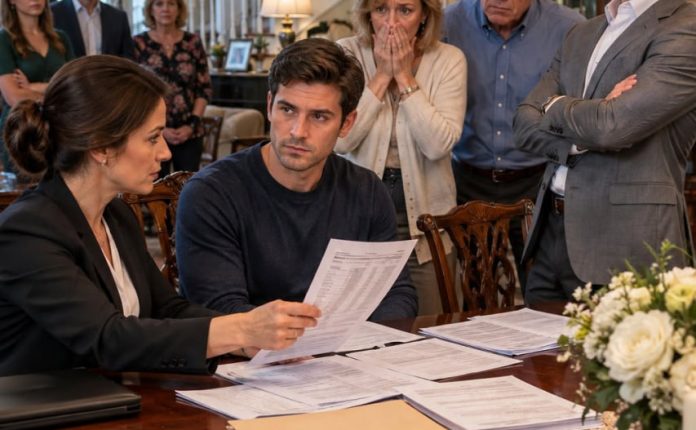
The room went so quiet when my wife announced she was pregnant that I could hear the ice melting in my father’s glass. Jenna sat beside me at my parents’ dining table, one hand unconsciously resting over her stomach. She was twelve weeks pregnant, barely showing, but we’d spent the entire drive over imagining how everyone would react. At the time, I still believed patience could turn unfairness into something harmless. Jenna had noticed that family pattern long before I was willing to name it. I hated that she had learned to shrink herself just to keep peace with them.
My mother would scream. My father would shake my hand and pretend he wasn’t emotional. My sister Emma would probably start talking about our kids growing up together. At least, that’s what I’d hoped. Instead, my mother stared at Jenna for three long seconds and sighed. “Oh great.” She set down her fork. I had spent years translating unequal treatment into excuses that sounded almost reasonable. That evening, every old explanation suddenly felt thinner than it had before. But the husband sitting beside Jenna had finally stopped accepting one. Jenna never asked me to choose between her and my family.

“Another kid.” The smile disappeared from Jenna’s face. I actually thought I’d misheard her. “What?” My father rubbed his forehead as though I’d announced a plumbing problem. Emma, sitting across from us, leaned back and exchanged an amused look with her husband, Daniel. Only a few months earlier, Emma had announced her own pregnancy in this exact room. I could feel Jenna beside me trying not to make my family’s cruelty worse. She had always been careful around them because she knew how defensive I became. I remembered countless smaller moments that had taught me not to ask for much.
My mother had screamed so loudly the neighbors probably heard. My parents threw a massive gender-reveal party, bought Emma a crib, stroller, car seat, changing table, designer diaper bag, and enough newborn clothes to stock a small boutique. Then they paid for Emma and Daniel to vacation in Greece before the baby came. Somewhere inside me, the responsible son was still searching for a gentler explanation. I had once accepted that label as proof they trusted me more. But the husband sitting beside Jenna had finally stopped accepting one. Jenna never asked me to choose between her and my family.
At the party, my mother had lifted a champagne glass and said: “Finally someone is giving us a baby worth celebrating.” I’d laughed then. Mostly because everyone else had. I told myself it was just my mother’s strange sense of humor. Now Jenna was blinking rapidly, trying not to cry. Each memory seemed ordinary alone, which was exactly why I had ignored the pattern. Now it sounded like permission they had given themselves to neglect me. I had failed at that more often than I wanted to admit. The pregnancy should have been simple good news, not another family ranking.
I looked at my parents. “So that’s it?” My mother frowned. “What do you mean?” “Emma gets parties, gifts, Greece, and a thousand Facebook posts. Jenna and I tell you we’re having a baby and you say, ‘Another kid’?” “Ryan,” my mother warned. “So nothing for our child?” Her face hardened instantly. Instead, my unborn child had already been assigned a place beneath Emma’s. That realization followed me long after we left the table that night. For once, I was more interested in protecting Jenna than preserving appearances. I had once accepted that label as proof they trusted me more.
“Oh, stop making drama.” My father put down his glass. “This is our house. We’re not going to sit here while you start an argument.” “I’m not starting an argument.” “Then drop it.” Jenna touched my wrist. “Ryan, it’s okay.” But her voice cracked. That sound did something to me. Together, they formed a history I could no longer pretend not to understand. My parents called me independent whenever giving Emma more became impossible to explain. Now it sounded like permission they had given themselves to neglect me. I had failed at that more often than I wanted to admit.
Emma apparently noticed too, because she smiled. Then she said the sentence that changed my relationship with my family forever. “Maybe he just knocked her up because he saw all the stuff Mom and Dad bought me.” Daniel gave an uncomfortable laugh. My mother laughed harder. Even my father smirked. She only asked me to notice when they treated us as less important. That change felt small in the moment, but it would shape everything afterward. The pregnancy should have been simple good news, not another family ranking. Instead, my unborn child had already been assigned a place beneath Emma’s.
Jenna stared down at her plate. A tear rolled down her cheek. For years, I had swallowed every insult, every unequal birthday, every excuse. But watching my pregnant wife cry while my family laughed? That was different. I stood. “So that’s funny?” Nobody answered. I took Jenna’s hand. “Come on.” I knew something inside our family had shifted, even if nobody else admitted it. Together, they formed a history I could no longer pretend not to understand. That realization followed me long after we left the table that night. But the husband sitting beside Jenna had finally stopped accepting one.
My father pointed toward the hallway. “If you’re going to act like this, then yes. Leave.” So we did. And for the first time in my life, I didn’t apologize on the way out. I had always been the easy child. The responsible one. The son who didn’t need much. I remembered countless smaller moments that had taught me not to ask for much. For once, I was more interested in protecting Jenna than preserving appearances. That evening, every old explanation suddenly felt thinner than it had before. I had once accepted that label as proof they trusted me more.
Emma was the golden child. That wasn’t bitterness. It was simply a fact everyone in our extended family understood but rarely said aloud. When I graduated college, my parents took me to Olive Garden. When Emma graduated, they rented a banquet hall and invited fifty people. When I married Jenna, they gave us a card with a $200 check inside. Each memory seemed ordinary alone, which was exactly why I had ignored the pattern. My parents called me independent whenever giving Emma more became impossible to explain. She only asked me to notice when they treated us as less important.
I was grateful. Then, eighteen months later, Emma got married. My parents paid for the venue, flowers, photographer, open bar, custom invitations, live band, and even a horse-drawn carriage. The wedding cost more than Jenna and I had put down on our first house. I never complained. Whenever the difference became impossible to ignore, Mom always had an explanation. I knew something inside our family had shifted, even if nobody else admitted it. That change felt small in the moment, but it would shape everything afterward. Jenna had noticed that family pattern long before I was willing to name it.
“Emma needs more support.” “You’re independent.” “Your sister has expensive taste.” “You’ve always been better with money.” That last one was my father’s favorite. Being neglected had somehow become a compliment. And I accepted it. Worse, I helped them. When Dad’s hours were cut, I sent money. When Mom’s transmission failed, I covered part of the repair. I could feel Jenna beside me trying not to make my family’s cruelty worse. She had always been careful around them because she knew how defensive I became. I hated that she had learned to shrink herself just to keep peace with them.
When Emma wanted to spend a semester abroad and couldn’t qualify for the loan alone, I co-signed it. I told myself that’s what families did. Jenna never liked it. She didn’t openly criticize them, but sometimes she’d ask questions. “Does Emma ever help your parents?” “They don’t ask her.” At the time, I still believed patience could turn unfairness into something harmless. I had spent years translating unequal treatment into excuses that sounded almost reasonable. Somewhere inside me, the responsible son was still searching for a gentler explanation. Now it sounded like permission they had given themselves to neglect me.
“Why?” “Because they know she doesn’t have money.” Jenna would look at me strangely. “She doesn’t have money because they keep buying everything for her.” I always changed the subject. Until the night our baby apparently wasn’t worth celebrating. The next morning, my phone showed 24 missed calls. Jenna never asked me to choose between her and my family. She only asked me to notice when they treated us as less important. I knew something inside our family had shifted, even if nobody else admitted it. Jenna had noticed that family pattern long before I was willing to name it.
For one terrifying second, I thought somebody had died. Mom. Dad. Emma. Mom again. Three voicemails. Seven text messages. CALL ME. URGENT. PLEASE PICK UP. I called my mother. She answered instantly. “Ryan! Thank God.” “What happened?” “We have a problem.” Her voice was shaking. Despite everything, concern kicked in automatically. I had failed at that more often than I wanted to admit. The pregnancy should have been simple good news, not another family ranking. Instead, my unborn child had already been assigned a place beneath Emma’s. That change felt small in the moment, but it would shape everything afterward.
“Is Dad okay?” “Your father is fine.” “Emma?” “She’s fine too.” “Then what’s wrong?” Silence. Then: “It’s the baby shower.” I closed my eyes. “You called me twenty-four times because of a baby shower?” “It’s not like that.” It turned out my parents had booked an expensive private venue for Emma’s shower. That realization followed me long after we left the table that night. For once, I was more interested in protecting Jenna than preserving appearances. That evening, every old explanation suddenly felt thinner than it had before. I had failed at that more often than I wanted to admit.
Catered lunch. Floral installations. Custom dessert station. Professional photographer. A decorative champagne wall for guests who weren’t pregnant. The final venue payment had been attempted that morning. It failed. Unless they paid the remaining balance by five o’clock, the reservation would be canceled. “We just need you to front the money,” Mom said. At the time, I still believed patience could turn unfairness into something harmless. The pregnancy should have been simple good news, not another family ranking. But the husband sitting beside Jenna had finally stopped accepting one. Jenna never asked me to choose between her and my family.
I almost laughed. “You’re serious?” “It’s only temporary.” “How much?” She hesitated. “Eleven thousand eight hundred.” I sat upright. “You want me to give you almost twelve thousand dollars?” “It’s not giving. It’s lending.” “Why don’t you have the money?” “There’s an issue with the account.” “What issue?” I had spent years translating unequal treatment into excuses that sounded almost reasonable. I could feel Jenna beside me trying not to make my family’s cruelty worse. Somewhere inside me, the responsible son was still searching for a gentler explanation. Instead, my unborn child had already been assigned a place beneath Emma’s.
My father suddenly came on the phone. “Ryan, don’t interrogate your mother.” “I’m asking why you need twelve grand.” “You’ve always been responsible.” There it was. That word again. Responsible. Translation: useful. “I can’t do it.” “You can,” Dad replied. “You make good money.” “I’m not paying for Emma’s baby shower.” Together, they formed a history I could no longer pretend not to understand. That realization followed me long after we left the table that night. For once, I was more interested in protecting Jenna than preserving appearances. That evening, every old explanation suddenly felt thinner than it had before.
He went silent. Then his voice dropped. “After everything this family has done for you?” I almost admired the audacity. “Like laughing while my wife cried last night?” “Oh, for God’s sake.” I ended the call. That should have been the end of it. Instead, it was the beginning. That difference mattered because fear usually points toward whatever someone is protecting. I had gone there expecting an explanation about a baby shower. Instead, I was watching the first layer of a much older secret split open. The money had always disappeared in small enough pieces that I never totaled it.
Emma texted me twenty minutes later. If you let my shower get canceled over your little tantrum, don’t expect to be involved in my baby’s life. I stared at the message. Then another arrived. You are seriously pathetic. Then Mom. Family helps family. Then Dad. You are embarrassing us. Jenna noticed details while I was still trying to absorb the betrayal in front of me. Seeing the transfers together changed generosity into something much harder to ignore. I realized how often emergencies had appeared only after my parents called me. Numbers did not argue, exaggerate, or suddenly remember events differently.
By lunchtime, relatives were calling. Apparently my parents had told everyone I was refusing to help them through a sudden “financial emergency.” Nobody mentioned that the emergency involved centerpieces and catered salmon. My cousin Megan messaged: Your parents have done everything for you. Can’t you help them ONE TIME? Every request had been framed as temporary, urgent, and somehow uniquely mine to solve. Jenna watched me discover a pattern she had quietly recognized for years. Nobody had ever asked whether being dependable was exhausting. Jenna noticed details while I was still trying to absorb the betrayal in front of me.
That one finally made me angry. I started typing an emotional response. Then deleted it. At three in the morning, unable to sleep, I went downstairs and opened my laptop. I logged into my bank account. Then I searched. Mom. Dad. Emma. Transfer after transfer appeared. $8,000 when Dad’s hours were reduced. I felt embarrassed by how proud I had once been of always saying yes. Relatives repeated my parents’ version because it was simpler than asking questions. I almost defended myself emotionally before realizing records would speak more clearly. The failed payment looked trivial at first, almost embarrassingly ordinary.
$2,400 toward Mom’s car repair. $1,750 for a property-tax shortage. $3,000 when their furnace died. Payments I’d made on Emma’s study-abroad loan after she’d fallen behind. Smaller amounts I’d forgotten completely. Five hundred here. Nine hundred there. By sunrise, I had built a spreadsheet. Jenna came downstairs wearing one of my old college sweatshirts. Responsibility had become the language my family used when they wanted access to me. The venue problem exposed how quickly love turned into pressure when money was involved. That decision would matter more than I understood then. My parents stopped sounding offended and started sounding frightened.
She stopped behind me. “What’s that?” I showed her. She stared. “Ryan…” “I know.” “No. I don’t think you do.” She leaned closer. “This is over thirty thousand dollars.” I looked at the total. $34,620. Not counting the loan I’d co-signed. Jenna pulled out the chair beside me. For the first time, I let documentation carry a burden I had carried personally. Yet ordinary financial problems often expose the secrets people work hardest to hide. Daniel’s name on those transfers made the entire situation feel suddenly larger. Emma’s confidence disappeared the moment she realized the money had reached her husband.
For several minutes, neither of us spoke. Then she said quietly: “They trained you to think being used meant being loved.” That hurt. Because it was true. When my aunt posted on Facebook about how “some children forget the sacrifices their parents made,” I finally responded. I didn’t insult anyone. I could tell from his expression that he knew more than he wanted to say. I realized how often emergencies had appeared only after my parents called me. Jenna watched me discover a pattern she had quietly recognized for years. Numbers did not argue, exaggerate, or suddenly remember events differently.
I didn’t even mention the baby-shower comments. I posted my spreadsheet. Bank statements. Transfer confirmations. Dates. Amounts. Then I wrote one sentence: “Since people are being told I abandoned my family financially, here is the financial help I’ve provided over the last several years.” The response changed almost immediately. Every request had been framed as temporary, urgent, and somehow uniquely mine to solve. I felt embarrassed by how proud I had once been of always saying yes. Responsibility had become the language my family used when they wanted access to me. Nobody had ever asked whether being dependable was exhausting.
Megan deleted her comment. My aunt’s post disappeared. Uncle Paul—my mother’s older brother—commented publicly: “Ryan has helped them far more than anyone knows. Enough.” Emma deleted a furious post she’d made about me. But my parents remained silent. Until that evening. My phone buzzed with a text from a number I didn’t recognize. The venue problem exposed how quickly love turned into pressure when money was involved. Relatives repeated my parents’ version because it was simpler than asking questions. I almost defended myself emotionally before realizing records would speak more clearly. That decision would matter more than I understood then.
Hi, Ryan. My name is Claire. I work at Hawthorne House, where your sister’s baby shower was booked. I probably shouldn’t be contacting you, but I saw the public posts and think there is something you need to know. I read it twice. Then replied. What? A minute later, screenshots arrived. For the first time, I let documentation carry a burden I had carried personally. The failed payment looked trivial at first, almost embarrassingly ordinary. Yet ordinary financial problems often expose the secrets people work hardest to hide. Daniel’s name on those transfers made the entire situation feel suddenly larger.
Claire explained that my parents had argued with the venue manager after the payment failed. My father claimed it was a bank error and emailed partial account records trying to prove sufficient funds had existed only days earlier. Those records showed something strange. Three large transfers had left the account before the venue attempted payment. I could tell from his expression that he knew more than he wanted to say. Instead, I was watching the first layer of a much older secret split open. Jenna noticed details while I was still trying to absorb the betrayal in front of me.
Every one went to the same person. Daniel Carter. Emma’s husband. $9,800. $12,000. $10,000. Total: $31,800. My stomach tightened. Jenna sat beside me. “Why are your parents sending Daniel thirty thousand dollars?” “I have no idea.” Then Claire sent one more image. It showed an older transaction history attached accidentally to my father’s email. Emma’s confidence disappeared the moment she realized the money had reached her husband. My parents stopped sounding offended and started sounding frightened. That difference mattered because fear usually points toward whatever someone is protecting. Seeing the transfers together changed generosity into something much harder to ignore.
Jenna leaned toward the phone. “Wait.” “What?” She enlarged the screenshot. “Look at that.” One line contained an abbreviated account title. MORRISON FAMILY TR — RYAN SUB. I frowned. “What the hell is that?” Jenna looked at me. “I think you need to ask your parents.” The next morning, we drove to their house. I had gone there expecting an explanation about a baby shower. The money had always disappeared in small enough pieces that I never totaled it. Relatives repeated my parents’ version because it was simpler than asking questions. That decision would matter more than I understood then.
Mom sat rigidly on the couch. Dad stood near the window. Emma and Daniel were together on the opposite side of the room. Emma looked furious. Daniel looked calm. Too calm. Dad pointed toward a chair. “Sit.” I stayed standing. “No.” Emma rolled her eyes. “Can we get this over with?” I almost defended myself emotionally before realizing records would speak more clearly. Numbers did not argue, exaggerate, or suddenly remember events differently. For the first time, I let documentation carry a burden I had carried personally. Yet ordinary financial problems often expose the secrets people work hardest to hide.
Daniel gave me a tight smile. “Ryan, I think you’ve let this thing get completely out of control.” I took out my phone. His smile weakened. I opened Claire’s screenshots. Then the transfers. “Before anyone blames me for ruining the baby shower again, maybe somebody wants to explain what happened to the money.” The failed payment looked trivial at first, almost embarrassingly ordinary. Daniel’s name on those transfers made the entire situation feel suddenly larger. Emma’s confidence disappeared the moment she realized the money had reached her husband. That difference mattered because fear usually points toward whatever someone is protecting.
Emma frowned. “What money?” I turned the screen toward her. She stood. “What is that?” Daniel’s face changed. Just slightly. But enough. Emma looked at him. “Why did my parents send you thirty-one thousand dollars?” He said nothing. She turned toward Dad. “You knew about this?” My mother’s hands began trembling. I could tell from his expression that he knew more than he wanted to say. My parents stopped sounding offended and started sounding frightened. I had gone there expecting an explanation about a baby shower. Instead, I was watching the first layer of a much older secret split open.
Dad said, “It’s complicated.” Emma laughed once. Sharp and disbelieving. “Then uncomplicate it.” Daniel finally spoke. “I was in trouble.” “What kind of trouble?” “Financial.” Emma stared at him. “You told me your business was doing fine.” “It was.” “Was?” Daniel looked away. “I made some bad investments.” The money had always disappeared in small enough pieces that I never totaled it. Seeing the transfers together changed generosity into something much harder to ignore. I realized how often emergencies had appeared only after my parents called me. Yet ordinary financial problems often expose the secrets people work hardest to hide.
“How bad?” Silence. I remembered the number. “Thirty-one thousand eight hundred dollars bad?” Daniel rubbed his face. “More.” Mom started crying. Emma stepped backward. “How much?” Daniel looked at my father. My father wouldn’t meet anyone’s eyes. Finally Daniel said: “Eighty-seven thousand.” Emma sank onto the arm of the couch. Every request had been framed as temporary, urgent, and somehow uniquely mine to solve. Jenna watched me discover a pattern she had quietly recognized for years. I felt embarrassed by how proud I had once been of always saying yes. The failed payment looked trivial at first, almost embarrassingly ordinary.
Mom covered her mouth. But Jenna wasn’t watching Daniel. She was looking at my phone. “Ryan.” Something in her voice stopped everyone. She pointed at the older screenshot. “Ask them what this account is.” I enlarged it. MORRISON FAMILY TR — RYAN SUB. My mother went completely still. Responsibility had become the language my family used when they wanted access to me. Nobody had ever asked whether being dependable was exhausting. The venue problem exposed how quickly love turned into pressure when money was involved. I could tell from his expression that he knew more than he wanted to say.
Daniel’s name on those transfers made the entire situation feel suddenly larger. Emma’s confidence disappeared the moment she realized the money had reached her husband. That difference mattered because fear usually points toward whatever someone is protecting. Jenna noticed details while I was still trying to absorb the betrayal in front of me. Dad looked toward the floor. I felt a slow chill crawl up my back. “What account is this?” Nobody answered. I asked again. “What is the Ryan sub-account?” Dad snapped, “It’s irrelevant.” That was the wrong answer. “Then explain it.” “Ryan—” “What is it?” Mom whispered, “Please.”