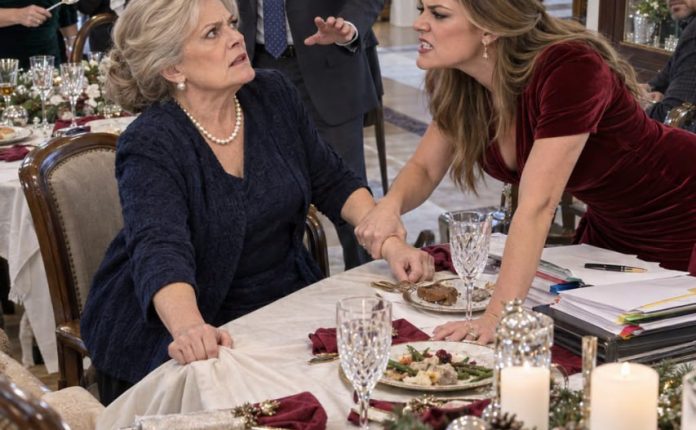
At the governance meeting of that year, Angela presented one last document requiring my signature. I read every page. Luke waited without teasing me about how long I took. When I reached the final line, I laughed because the contrast felt theatrical. Months earlier, Mason and Tessa had counted on signatures moving faster than questions. Now nobody hurried me. I signed after Angela answered everything. Luke closed the folder. “Dad would be proud.” I looked at him. “Your father would ask why this took us so long.” Luke smiled. “That too.” Outside, snow had begun falling across the parking lot.
As we walked toward our cars, Luke mentioned that Tessa had moved to North Carolina for a job. Mason had relocated as well, though not with her. Their relationship had ended sometime during the legal disputes. I felt no satisfaction. Whatever fantasy they had built together could not survive the conditions that exposed it. That seemed fitting without needing to become revenge. Luke asked whether hearing about them bothered me. “Not anymore,” I said. “They are responsible for the lives they build next.” Then I asked him whether he had thrown away the coffee mug. He admitted he had not.
I laughed. “Keep it until you don’t need it.” He groaned. “You already said that.” “Good advice improves with repetition.” We hugged in the cold parking lot. A year earlier, I might have worried that losing Tessa and Mason would permanently harden him. Instead, he seemed more careful without becoming suspicious of everyone. That balance mattered. Betrayal can teach discernment, or it can teach fear. Luke was learning the first. So was I. Neither of us had to become cynical simply because people we trusted had misused access. We only had to stop confusing trust with the absence of boundaries.
The following spring, I replaced my bedroom pillows. It sounds ridiculous to mention, but grief had made ordinary household changes feel disloyal for years. I bought new curtains too. Robert’s shirt remained. I no longer kept it under my pillow every night; sometimes it stayed folded in the cedar chest for weeks. I noticed the change without forcing it. Healing had happened while I was busy with lawyers, company meetings, and my son’s heartbreak. Tessa had mocked the ritual as proof that I was stuck. She was wrong. Holding something from the past had never prevented me from moving forward.
On my sixty-fifth birthday, Luke hosted dinner at his house. There were only six people: Luke, his sister Nora, two old friends, my neighbor Janet, and me. No speeches at my expense. No private stories released without permission. After cake, Luke handed me a small framed photograph of Robert leaning against the original Caldwell workshop sign. On the back he had written, He built the first version. We kept building. I cried, naturally. Nobody laughed. Janet handed me a tissue. Nora rubbed my shoulder. The moment passed without anyone needing to rescue themselves from my emotion with a joke. Still.
Later that night, Luke walked me to my car. “Mom,” he said, “do you wish you hadn’t said anything at Tessa’s party?” I thought about the question. If I had stayed quiet, the Northline authorization might have been signed. The affair might have continued. The investment pressure might have grown. But I also knew I had spoken from hurt, not foresight. “I wish she hadn’t humiliated me,” I said. “I wish there had been nothing on her phone worth mentioning. But once both things were true, silence would not have made the evening kinder. It only would have delayed reality.”
Luke nodded. “I used to think avoiding a scene meant protecting a relationship.” “Sometimes it does,” I said. “Not every irritation deserves a confrontation.” He smiled. “There’s a but coming.” “But when peace requires one person to keep swallowing disrespect, you are not preserving peace. You are assigning the cost.” Luke looked toward his house, where warm light spilled through the windows. “I assigned it to you sometimes.” “Yes.” He winced. I touched his arm. “And now you know better.” Accountability did not require me to make him bleed forever. It required both of us to remember what changed. Exactly.
When I got home, I made tea and sat in Robert’s old chair beside the window. My phone lit with a social-media memory from years earlier: Luke and Tessa’s wedding. I looked at their smiling faces for a long moment, then closed the notification. I did not rewrite the entire marriage as fake. There had been love in it, at least from Luke, and probably from Tessa too before resentment, ambition, and secrecy warped what they built. Human beings are rarely simple enough to fit the stories we tell after they hurt us. Complexity, however, does not cancel responsibility. Enough.
I thought again about the first sentence Tessa used that night: “What’s the big deal?” People say that when they want the person they hurt to reduce the size of the wound for their convenience. The private detail about Robert had mattered because it belonged to me. The message on her phone mattered because it revealed decisions affecting Luke, the company, and eventually me. Privacy is not a shield for wrongdoing, and disclosure is not automatically cruelty. The difference lies in purpose, consent, and consequence. It took an ugly birthday party for our family to finally learn that distinction. Always.
I never became close to Tessa again. Years later, we exchanged polite greetings at the funeral of a mutual family friend. She looked older, calmer, and nervous when she saw me. “Miriam,” she said. “Tessa.” That was all. I did not need another apology. She did not need my public forgiveness. We had both lived with what happened. Sometimes closure is not a final conversation where everyone explains themselves perfectly. Sometimes it is discovering that the person who once controlled your emotions can stand five feet away and no longer rearrange the room inside your head. The silence answered enough.
Luke eventually remarried, though not. Her name was Rachel, a landscape architect who met him through a commercial project two years after the divorce. The first time he brought her to dinner, she asked before telling a funny story about him. “Can I share the ladder incident?” Luke groaned and said yes. I noticed the question more than the story. Permission can be such a small thing, invisible when people practice it naturally. I liked Rachel, not because she was perfect, but because she treated boundaries as rather than hostile. Luke noticed too. He had learned what safety felt like.
Caldwell Architectural Millwork grew steadily after the crisis. Luke never became rich enough to make magazine covers, which suited him. The company paid good wages, trained apprentices, and kept Robert’s original workshop sign in the lobby. My shares remained in trust. I attended quarterly governance meetings, asked irritating questions, and went home afterward without telling anyone how to run the shop floor. Luke called that healthy interference. I called it remembering the brake pedal. Robert’s twenty percent had done exactly what he intended: it slowed people down long enough for truth to catch up with urgency. That stayed with me.
Every year on Robert’s birthday, I still wear his green flannel shirt while making breakfast. Sometimes Luke joins me. Sometimes I am alone. It no longer feels like a secret, but it remains private in the important sense: I choose what it means, who sees it, and whether it becomes a story. Tessa once took that choice away for thirty seconds at a birthday party. I thought humiliation would stain the ritual forever. It did not. The people who misuse something tender do not automatically become its permanent owners. We can take meaning back simply by continuing to live honestly.
When I think about that night now, I barely remember the cake or the decorations. I remember Tessa’s face turning pale when Luke asked what I had seen. I remember Mason lowering his glass. I remember my own heartbeat, loud enough to make the room feel smaller. Most of all, I remember how quickly a joke about private grief opened a door nobody could close again. The truth behind that door was painful, expensive, and humiliating for nearly everyone involved. Yet it was also clarifying. For years, we had confused keeping secrets with protecting relationships. We finally learned the difference.
The lesson I carried forward was not that everyone should expose everyone else’s private messages. It was almost the opposite. Trust deserves restraint. Private pain deserves care. Personal information should not become entertainment, leverage, or camouflage. Tessa violated all three principles in different ways. So did Mason. Luke and I had our own smaller failures when we chose convenience over uncomfortable questions. What saved us was not suspicion. It was verification once the warning appeared. We looked at records, asked direct questions, separated evidence from anger, and allowed consequences to follow what the facts actually supported. The silence answered enough.
Robert used to say a good cabinet door should close cleanly without needing to be slammed. I think about that whenever people talk about boundaries as though they must be dramatic. Most of mine are quiet now. I do not explain my grief to people who treat vulnerability as gossip. I do not sign documents I have not read. I do not accept “just a joke” as a magic phrase that erases cruelty. I do not confuse forgiveness with renewed access. None of those choices require shouting. They simply require me to believe that my discomfort deserves consideration too. Later.
Years after the party, Luke asked whether Robert would have liked Rachel. We were standing in the company lobby beneath the old workshop sign. “He would have asked her twelve questions about drainage and pretended it was casual conversation,” I said. Luke laughed. Then he grew serious. “I wish he had seen how everything turned out.” I looked at Robert’s photograph on the wall. “He saw enough of us to know we would make mistakes.” Luke nodded. “And fix them?” “Sometimes.” I smiled. “Your father was optimistic, not delusional.” We both laughed, and the sound felt uncomplicated. That changed things.
That evening I went home, folded Robert’s green shirt, and placed it inside the cedar chest instead of beneath my pillow. I did not make a ceremony of it. I did not tell Luke. The choice belonged only to me, which was why it felt meaningful. I slept well. In the morning, sunlight reached across the bedroom floor and landed on the closed chest. Nothing had been erased. Robert was still gone. Tessa had still hurt me. Luke had still been betrayed. The company had still been manipulated. But the past no longer required me to sleep beside its evidence.
Sometimes a private thing remains precious precisely because it does not need an audience. That was what Tessa failed to understand when she turned my grief into a joke. It was also what she forgot when she treated hidden messages and secret financial arrangements as protection from consequences. Privacy and secrecy can look similar from the outside, but they serve different purposes. One protects dignity. The other can protect deception. I learned to defend the first without helping anyone hide behind the second. That distinction became one of the most useful things an ugly birthday ever gave me. I remembered.
If I could return to the moment before I answered Tessa, I would still tell her she had gone too far. I might choose calmer words about the phone. I might ask Luke to speak privately instead of letting the room hear. Age has taught me that truth does not become stronger simply because more people witness it. But I would not erase the warning. I would not help Tessa preserve an illusion at my son’s expense. Silence is not always kindness. Sometimes it is simply the space deception needs to become more expensive. That quiet detail mattered much later.
I am sixty-eight now. Robert has been gone long enough that people who met me recently never knew me as anyone’s wife. I have learned to like that version of myself without feeling disloyal to the woman I was beside him. Luke is happy. The company is steady. Rachel brings herbs from her garden and asks before rearranging anything in my kitchen. My life is quieter than it was before that birthday party, but quiet no longer means swallowing what hurts. It means there is less chaos demanding that I prove my right to be treated gently. We understood later.
The green flannel shirt still exists. It rests in the cedar chest beside Robert’s letters, old photographs, and the watch he wore every day of our marriage. Once or twice a year, I take it out. I hold it. Sometimes I cry. Sometimes I smile. Nobody gets a vote on whether that is healthy enough, dignified enough, or funny enough. Grief is not a performance, and love does not become ridiculous because it outlives the person who inspired it. I wish I had known that before Tessa made me ashamed for those few terrible minutes. I remembered that moment afterward.
I also keep one other item in the cedar chest now: the program from the company dinner where Luke thanked me for asking an uncomfortable question. I do not keep it because I think I saved him. I did not. Luke saved himself by facing evidence he wanted to reject. Employees saved the company by continuing to work. Lawyers and accountants created records. Robert’s planning created leverage. I refused to stay silent once silence stopped being harmless. Families assign one person the role of rescuer because it makes everyone else’s responsibilities easier to ignore. I reject that role too. Enough.
On the anniversary of that birthday, Luke texted me a photograph of an ordinary sheet cake from the office break room. Under it he wrote, No speeches, no secrets, no shareholder crises. I laughed for a full minute. Then I replied, Sounds boring. Perfect. That exchange told me more about our recovery than any therapy phrase could. We could remember what happened without living inside it. The event had become history instead of atmosphere. Pain changes when it no longer controls the temperature of every room you enter. You can touch the memory without being burned by it. I remembered.
I never learned whether Tessa regretted the birthday joke before she regretted being caught in everything else. For a while, that question bothered me. Eventually, I understood remorse is not something another person can verify from the outside. Her apology named the harm. Her later life was hers. Mine was mine. I did not need to monitor her growth to justify my boundary. Forgiveness, when I felt it at all, looked less like reconciliation and more like refusing to spend another afternoon arguing with her inside my imagination. That was freedom enough. Luke would remember that detail after everything changed.
The last time Luke and I talked about Mason, he said something that stayed with me. “I miss who I thought he was.” I understood immediately. Betrayal creates a strange grief because the person still exists while the relationship you trusted does not. “You are allowed to miss that,” I told him. “Missing something does not mean you should rebuild it.” Luke nodded. Then he asked whether the same rule applied to coffee mugs. I told him it definitely did. He finally threw Tessa’s mug away the following week and sent me a picture of the empty cabinet space. Later.
I replied with a photograph of Robert’s shirt still safely folded in its chest. Luke sent back a heart. That was the entire conversation. No explanation was required. He understood that letting go has no universal schedule. Some objects are anchors until they become weights. Others remain keepsakes without holding us back. The difference belongs to the person carrying them. Tessa’s mistake was believing she could define my grief for the room. My mistake had been believing the room’s laughter could define it for me. Neither was true once I stopped surrendering ownership of my own story. That changed things.
The older I get, the less interested I am in winning arguments after the lesson is clear. Tessa said it was just a joke. I no longer need to prove why it hurt. Mason said the company issue was misunderstood. The records answered him. People said I had interfered in Luke’s marriage. Time answered that too. Some truths become stronger when we stop decorating them with speeches. A person who loves you may still fail you. A person who hurts you may still have understandable motives. Boundaries can acknowledge complexity without pretending consequences are cruel. Luke understood the difference later.
If Robert could see me now, I think he would tease me for finally reading shareholder reports voluntarily. He would probably complain that I ask Angela too many questions and secretly enjoy that she answers every one. He would be proud of Luke, not because Luke avoided betrayal, but because he rebuilt without becoming bitter. He would like Rachel. He would hate my new curtains. I can imagine all of that without needing to pretend he is still here. That is how grief changed: from something I clung to in darkness into something I could carry comfortably in daylight. Always.
And if someone ever asks about the green shirt, I tell them only what I want them to know. Sometimes I say it belonged to Robert. Sometimes I say nothing. The choice itself matters more than the answer. I spent too many years believing being easygoing was the same as being kind. It is not kind to yourself to make your most tender places available to people who treat them carelessly. It is not kind to others to help them avoid every consequence. Respect requires limits in both directions, even inside a family. That detail stayed with me much longer.
That birthday party began with Tessa believing the safest person in the room to embarrass was me. I was the widow who hated scenes, the mother who protected Luke’s peace, the passive shareholder who rarely attended meetings, the woman everyone expected to laugh politely and change the subject. She was right about who I had been for a long time. She simply chose the wrong night to assume I would remain that person forever. One sentence about a phone screen did not transform me. It revealed that I was already tired of paying for everyone else’s comfort. We understood later.
The biggest change afterward was surprisingly small. When something bothers me now, I say so earlier. Not louder. Earlier. I tell Luke when a joke is not funny. I tell friends when I need space. I ask questions in meetings before documents arrive for signature. I decline invitations without manufacturing excuses. The world has not collapsed. People who care about me adjust. People who resent boundaries reveal useful information. I wish I had learned that at forty instead of sixty-four, but late lessons still count. We do not lose their value simply because we should have known sooner. Luke noticed.
My life did not end when Robert died, and it did not begin again when Tessa’s secrets were exposed. Those events mattered deeply, but neither gets to define every chapter afterward. I garden badly. I volunteer twice a week. I travel with Janet each spring. I still attend company dinners when Luke promises nobody will surprise me with a microphone. I laugh more easily now because laughter no longer feels like something I owe a room after someone crosses a line. Joy is different when it is not performing peace for anyone. I did not understand its importance until later.
Every so often, I remember Tessa’s exact words: “What’s the big deal, Mom?” The answer is simple now. The big deal was not that she knew I kept Robert’s shirt. The big deal was that she believed knowing something private gave her permission to use it. The message on her phone mattered for the opposite reason: it contained information about decisions affecting people who had been deliberately kept uninformed. One disclosure violated dignity. The other exposed deception. They were never morally equivalent, even though my angry sentence at the party placed them side by side. The meaning became clearer afterward.
I am glad we learned to tell the difference. Luke’s second marriage rests on clearer conversations. The company rests on clearer records. My friendships rest on clearer boundaries. None of us became perfect. We simply stopped treating discomfort as evidence that something should remain unspoken. Some conversations still hurt. Some memories still sting. Some trust never returned. But we no longer confuse silence with loyalty. That change was worth more than preserving the illusion of harmony Tessa had relied on when she lifted her glass and made my grief the entertainment. That silence became clearer in my memory much later.
So when I think of that birthday now, I do not picture Tessa going pale. I picture the moment just before it, when I told her she had gone too far. That was the real beginning. Before the phone message, before Northline, before lawyers and audits, I had finally said that my private pain was not hers to spend. Everything afterward was larger and more dramatic, but that first boundary mattered most to me. It was the moment I stopped waiting for someone else to decide whether my hurt was serious enough to deserve respect. That detail mattered much later.
Robert’s shirt is folded away tonight. Luke is coming for breakfast tomorrow, and Rachel promised to bring rosemary bread from a bakery near their house. There are no hidden vendors, no secret messages, no guests waiting for me to laugh at my own humiliation. Just a quiet kitchen, a family that learned some lessons the expensive way, and a life that feels fully mine again. I used to think peace meant preventing scenes. Now I know peace is being able to tell the truth before a scene becomes necessary, and knowing the people who matter will listen. That changed things.
The next morning, Luke and Rachel arrived with rosemary bread and too much coffee. Rachel asked before moving Robert’s chair away from the window so she could open the curtains wider. I laughed and told her she did not need written authorization to touch furniture. She grinned. Luke caught my eye, and we both understood why the question mattered anyway. consideration had become visible to us after years of overlooking its absence. We ate, argued about whether the bread needed butter, and talked about nothing important. I realized how luxurious ordinary respect can feel after a long season of deception.
Later, after they left, I opened the cedar chest and looked at Robert’s shirt without taking it out. I thought about privacy, secrecy, and the difference between them one last time. Privacy protects something because it is personal. Secrecy protects something because discovery would create consequences. Tessa had confused those ideas whenever it benefited her. I had confused silence with dignity whenever conflict frightened me. Luke had confused trust with not asking questions. None of us could change what happened, but we could change the habits that made it easier. That mattered more than pretending we had learned everything perfectly.
I closed the chest and carried my coffee to the window. Outside, the neighborhood was waking slowly, delivery trucks moving along the street while sunlight brightened the roofs. Nothing about the morning looked dramatic enough to match the year we had survived. That felt right. I no longer needed Tessa’s downfall, Mason’s regret, or anyone else’s apology to prove I had been hurt. The records existed. The boundaries existed. My son knew the truth. I knew my own worth. And if anyone tried to turn something tender about me into entertainment again, I knew exactly how early I would speak.
THE END!
Disclaimer: Our stories are inspired by real-life events but are carefully rewritten for entertainment. Any resemblance to actual people or situations is purely coincidental.