My name is Eleanor Hayes, and I was sixty-nine the Christmas my son called me unreasonable. I had spent most of my life believing family conflict could be softened with enough patience, enough food, and enough silence. After my husband Thomas died, that habit became less comforting and more dangerous. At the time, I still hoped a clear answer would be enough. I had not yet learned how fear can disguise itself as family duty. Every small request made more sense once I looked at the months together. I kept reminding myself that caution was not the same as accusation.
Daniel was my only child, forty-two, married to Brooke, and owner of a construction company that had once looked successful. I still saw the boy who built cardboard cities across my kitchen floor. Loving the child inside an adult can make it difficult to recognize when the adult is asking for too much. I wanted to stay fair without staying unprotected. The distinction between help and control became harder to ignore. I was learning that love does not require automatic access. The paperwork felt excessive until the requests became increasingly specific. I stopped answering immediately just to keep everyone comfortable.
Brooke was efficient, organized, and accustomed to solving problems quickly. At first I liked those qualities. Over time, her help began arriving with assumptions. She stopped asking what I wanted before explaining what would be easier, safer, or more practical for me. Nothing had been stolen, but pressure was already changing the relationship. Thomas had taught me to plan for storms before the roof leaked. That memory steadied me when guilt tried to undo practical decisions. I noticed how often urgency appeared whenever I asked for time. Each delay gave me space to hear what I actually wanted. That mattered.
Seven months before Christmas, a title company called to ask whether I had authorized a home-equity inquiry on my paid-off house. I had not. Thomas and I had spent decades making sure that mortgage disappeared. The representative said someone had requested preliminary information tied to a possible credit line. That change irritated people who were used to quick agreement. I held the boundary. I did not apologize for asking. I chose not to soften it. I let the moment stand. I did not look away. I refused the old role. I let the truth remain. I kept my answer simple.
I called Daniel immediately. He laughed too quickly and said property information was public. Then he asked whether I had considered adding him to the deed so future estate administration would be simpler. The question landed differently after the title company call. I stayed calm. I kept listening. I did not retreat. I let that settle. I stayed with reality. The pattern was clear. I refused to assume. I let evidence lead. The silence answered enough. I could breathe again. I trusted the record. I kept my distance. I accepted the discomfort. I knew what mattered. The distinction became important.
The next morning I pulled old files from Thomas’s final illness. Five years earlier, Daniel had been named alternate agent on a broad financial power of attorney. I had forgotten how much authority the language appeared to grant if someone relied on an old copy. I had not yet learned how fear can disguise itself as family duty. I noticed. I chose clarity. I trusted myself. I wanted proof. That changed everything. I knew better. I kept going. I watched carefully. I stopped guessing. The facts remained. I understood the difference. I moved forward anyway. I kept the choice mine.
I made an appointment with Maya Chen, an elder-law attorney recommended by my neighbor. I expected reassurance. Instead, Maya read every page and asked whether I currently wanted Daniel to have any financial authority. I answered no before she finished asking. At the time, I still hoped a clear answer would be enough. Every small request made more sense once I looked at the months together. The distinction between help and control became harder to ignore. I kept reminding myself that caution was not the same as accusation. Thomas had taught me to plan for storms before the roof leaked.
Maya prepared a formal revocation, helped notify institutions that mattered, and explained that protection works best when paperwork reaches anyone who might rely on outdated paperwork. We updated my estate plan and moved the house into a revocable trust that remained controlled by me. Nothing had been stolen, but pressure was already changing the relationship. That memory steadied me when guilt tried to undo practical decisions. I was learning that love does not require automatic access. I noticed how often urgency appeared whenever I asked for time. Each delay gave me space to hear what I actually wanted. I remembered.
Nothing dramatic happened that week. That was exactly the purpose. I had spent years assuming legal precautions were necessary only after betrayal. Maya taught me they are most useful before desperation turns affection, access, or old documents into something nobody intended. I had not yet learned how fear can disguise itself as family duty. Every small request made more sense once I looked at the months together. I wanted to stay fair without staying unprotected. The paperwork felt excessive until the requests became increasingly specific. That change irritated people who were used to quick agreement. I understood. I stayed grounded.
At Maya’s suggestion, I met Nora Patel at my bank. We added verbal passwords, unusual-transfer alerts, and notes requiring extra verification for profile changes. I froze my credit, enabled title monitoring, and changed passwords Brooke had once helped me create. At the time, I still hoped a clear answer would be enough. Nothing had been stolen, but pressure was already changing the relationship. I kept reminding myself that caution was not the same as accusation. Thomas had taught me to plan for storms before the roof leaked. I stopped answering immediately just to keep everyone comfortable. I held the boundary.
I felt disloyal doing it. The safeguards looked like fences around people I still loved. Nora said, “Security is not an accusation. It is a set of instructions.” That sentence became easier to believe as the months passed. The distinction between help and control became harder to ignore. That memory steadied me when guilt tried to undo practical decisions. I was learning that love does not require automatic access. I noticed how often urgency appeared whenever I asked for time. Each delay gave me space to hear what I actually wanted. I stopped answering immediately just to keep everyone comfortable.
I told Daniel only that I had updated my estate documents and wanted financial decisions to remain mine. He asked whether I thought he would steal from me. I said no. I thought safeguards were useful even when everyone behaved well. I had not yet learned how fear can disguise itself as family duty. The paperwork felt excessive until the requests became increasingly specific. That change irritated people who were used to quick agreement. I did not retreat. I did not apologize for asking. I chose not to soften it. I let the moment stand. I did not look away.
In July, Daniel asked me to co-sign a line of credit for his company. A commercial customer had delayed payment and payroll was tight. I declined but offered to pay for an independent business consultant. Daniel said he needed liquidity, not advice. At the time, I still hoped a clear answer would be enough. Every small request made more sense once I looked at the months together. I kept reminding myself that caution was not the same as accusation. Thomas had taught me to plan for storms before the roof leaked. I let that settle. I refused the old role.
Brooke called afterward and said I was sitting on dead equity while my son struggled. To me, the house was thirty-four years of payments, Thomas’s garden, and rooms full of family history. To Brooke, it had become unused leverage. I wanted to stay fair without staying unprotected. Nothing had been stolen, but pressure was already changing the relationship. That memory steadied me when guilt tried to undo practical decisions. I noticed how often urgency appeared whenever I asked for time. Each delay gave me space to hear what I actually wanted. I stayed with reality. I let the truth remain.
I began saving messages instead of deleting them. Memory becomes surprisingly flexible once money enters a family disagreement. I was not collecting weapons. I was making sure future arguments could not erase what had actually been asked, offered, or refused. The distinction between help and control became harder to ignore. I was learning that love does not require automatic access. The paperwork felt excessive until the requests became increasingly specific. The pattern was clear. I refused to assume. I let evidence lead. The silence answered enough. I could breathe again. I kept my answer simple. I kept the choice mine.
In August, a lender mailed a confirmation letter addressed to Daniel at my house. The company said he had explored a business loan that might require additional collateral. My property was not pledged, but my address had appeared in preliminary paperwork. I had not yet learned how fear can disguise itself as family duty. Every small request made more sense once I looked at the months together. That change irritated people who were used to quick agreement. I stayed calm. I trusted the record. I kept my distance. I accepted the discomfort. I knew what mattered. The distinction became important.
Daniel blamed an office-manager mistake. I wanted to believe him. I documented the call anyway and sent the lender written notice that my home was not available as business collateral. Maya kept a copy in my file. At the time, I still hoped a clear answer would be enough. Nothing had been stolen, but pressure was already changing the relationship. I kept reminding myself that caution was not the same as accusation. Thomas had taught me to plan for storms before the roof leaked. I stopped answering immediately just to keep everyone comfortable. I kept listening. I understood the difference.
That was the first time I understood preparation could be compassionate. I did not need to accuse Daniel of planning something terrible. I only needed to make my answer clear before anyone could reinterpret silence as future permission. I had not yet learned how fear can disguise itself as family duty. That memory steadied me when guilt tried to undo practical decisions. I noticed how often urgency appeared whenever I asked for time. Each delay gave me space to hear what I actually wanted. I did not apologize for asking. I chose not to soften it. I moved forward anyway.
By September, Daniel’s company had lost another contract. He stopped talking about expansion and started calling everything temporary. Brooke became increasingly interested in my accounts, asking about investment income, certificates of deposit, and brokerage balances. Every small request made more sense once I looked at the months together. I wanted to stay fair without staying unprotected. The distinction between help and control became harder to ignore. I was learning that love does not require automatic access. I chose clarity. I trusted myself. I wanted proof. That changed everything. I knew better. I kept going. I watched carefully. I stopped guessing.
I began answering personal financial questions with another question: “Why do you need to know?” Brooke hated that. She believed information was neutral until someone refused to provide it. Then privacy became suspicious. At the time, I still hoped a clear answer would be enough. I kept reminding myself that caution was not the same as accusation. Thomas had taught me to plan for storms before the roof leaked. The paperwork felt excessive until the requests became increasingly specific. That change irritated people who were used to quick agreement. The facts remained. I let the moment stand. I stayed grounded.
At a family lunch she joked that widows sometimes become secretive because independence feels fragile. I smiled and changed the subject. Inside, I remembered Maya saying competence does not have to be proven by surrendering privacy. Nothing had been stolen, but pressure was already changing the relationship. That memory steadied me when guilt tried to undo practical decisions. I noticed how often urgency appeared whenever I asked for time. Each delay gave me space to hear what I actually wanted. I did not look away. I refused the old role. I let the truth remain. I kept my answer simple.
In October, Daniel brought a form he said would let him speak to my bank during emergencies. The language was broader than his description and could have authorized substantial access. I told him Maya would review it before I signed anything. At the time, I still hoped a clear answer would be enough. I had not yet learned how fear can disguise itself as family duty. Every small request made more sense once I looked at the months together. I kept reminding myself that caution was not the same as accusation. I stopped answering immediately just to keep everyone comfortable.
He became angry and said lawyers make ordinary family arrangements hostile. I answered that ordinary arrangements survive review. He took the form home and never sent it to Maya. I wanted to stay fair without staying unprotected. The distinction between help and control became harder to ignore. Thomas had taught me to plan for storms before the roof leaked. I was learning that love does not require automatic access. The paperwork felt excessive until the requests became increasingly specific. That change irritated people who were used to quick agreement. I did not apologize for asking. I kept the choice mine.
By then, the pattern was clearer: emergency language, access requests, questions about my property, and irritation whenever I asked for outside review. None proved theft. Together, they justified caution. I had not yet learned how fear can disguise itself as family duty. Every small request made more sense once I looked at the months together. Nothing had been stolen, but pressure was already changing the relationship. That memory steadied me when guilt tried to undo practical decisions. I noticed how often urgency appeared whenever I asked for time. I held the boundary. I did not retreat. I let that settle.
By November, I had seven months of messages, letters, title alerts, and notes. I still loved Daniel and still believed financial fear can push decent people toward rationalizations they would reject during calmer years. Each delay gave me space to hear what I actually wanted. I stopped answering immediately just to keep everyone comfortable. I stayed with reality. The pattern was clear. I refused to assume. I let evidence lead. The silence answered enough. I could breathe again. I trusted the record. I kept my distance. I chose not to soften it. I accepted the discomfort. I knew what mattered.
Preparation was not revenge. It was a way to keep Daniel’s desperation from becoming my emergency. Maya encouraged me to separate my affection for my son from decisions about legal authority. At the time, I still hoped a clear answer would be enough. I had not yet learned how fear can disguise itself as family duty. I kept reminding myself that caution was not the same as accusation. Thomas had taught me to plan for storms before the roof leaked. That mattered. I noticed. I remembered. I understood. The distinction became important. I understood the difference. I moved forward anyway.
I invited Daniel and Brooke for Christmas because family traditions do not disappear merely because trust has become complicated. I roasted turkey, made Thomas’s stuffing, and placed his silver angel at the top of the tree. Every small request made more sense once I looked at the months together. The distinction between help and control became harder to ignore. Nothing had been stolen, but pressure was already changing the relationship. I was learning that love does not require automatic access. The paperwork felt excessive until the requests became increasingly specific. That change irritated people who were used to quick agreement.
Daniel arrived carrying wine. Brooke carried a leather portfolio. I noticed the portfolio before I noticed the gift bag. Dinner stayed peaceful through turkey, potatoes, and pie. For nearly forty minutes nobody mentioned business. I wanted to stay fair without staying unprotected. That memory steadied me when guilt tried to undo practical decisions. I noticed how often urgency appeared whenever I asked for time. Each delay gave me space to hear what I actually wanted. I let the moment stand. I did not look away. I refused the old role. I let the truth remain. I kept my answer simple.
I started wondering whether I had spent seven months preparing for a conflict that might never happen. Then Brooke cleared the dessert plates, returned to the table, and opened the portfolio. At the time, I still hoped a clear answer would be enough. I had not yet learned how fear can disguise itself as family duty. I kept reminding myself that caution was not the same as accusation. Thomas had taught me to plan for storms before the roof leaked. I stopped answering immediately just to keep everyone comfortable. I did not apologize for asking. I kept the choice mine.
She called it a simple family management plan. The first pages named Daniel as my financial agent. Later sections allowed broad communication with banks and management of property if I became unable or unwilling to handle major decisions. Every small request made more sense once I looked at the months together. The distinction between help and control became harder to ignore. I was learning that love does not require automatic access. The paperwork felt excessive until the requests became increasingly specific. That change irritated people who were used to quick agreement. I stayed calm. I chose not to soften it.
I read the word unwilling twice. Unwilling and unable are not synonyms. I closed the folder and slid it back across the table. “I’m not signing this tonight,” I said. The morning became calmer once professionals replaced family assumptions with records. I did not need anger when the documents already spoke clearly. The safeguards worked because they had been arranged before the crisis. Each verified record separated what happened from what anyone wished had happened. I stayed focused on consent rather than trying to prove anyone was evil. The house and accounts were not symbols; they were my actual security.
Daniel sighed as though I had refused medicine. He said they were trying to plan before there was a crisis. I told him there was no crisis in my finances. Brooke answered that crises happen suddenly. Facts gave everyone less room to rename pressure as misunderstanding. Each verified record separated what happened from what anyone wished had happened. I could love Daniel without accepting his explanation as authority. The more specific the conversation became, the weaker the guilt felt. That kept the conflict grounded in choices instead of labels. Maya’s presence made it easier to stop filling every uncomfortable silence.
I said we could address a real crisis if one arrived. Daniel’s voice sharpened. “You’re being unreasonable, Mom.” Then he listed my age, the size of my house, and one afternoon when I misplaced my phone. The morning became calmer once professionals replaced family assumptions with records. I stayed focused on consent rather than trying to prove anyone was evil. The house and accounts were not symbols; they were my actual security. No family emergency changed who owned those decisions. Nora treated my instructions as ordinary, which made me feel steadier. The notary’s withdrawal removed another layer of manufactured urgency.
I asked whether his concern was truly my capacity or whether his company needed access to collateral. Brooke pushed her chair back and called the question disgusting. I told her I had asked for an answer, not accused anyone of a crime. Facts gave everyone less room to rename pressure as misunderstanding. I did not need anger when the documents already spoke clearly. I could love Daniel without accepting his explanation as authority. No family emergency changed who owned those decisions. The notary’s withdrawal removed another layer of manufactured urgency. I realized preparation had created time, and time restored judgment.
Daniel began explaining that his company was restructuring and a new financing arrangement might stabilize everything if lenders saw stronger family backing. I asked whether my house had been discussed. He looked at Brooke before answering. The safeguards worked because they had been arranged before the crisis. The more specific the conversation became, the weaker the guilt felt. That kept the conflict grounded in choices instead of labels. Maya’s presence made it easier to stop filling every uncomfortable silence. Nora treated my instructions as ordinary, which made me feel steadier. I realized preparation had created time, and time restored judgment.
That glance told me more than the words that followed. He said nobody intended to take my home. I said intent did not give anyone permission to place my property inside financing conversations before I agreed. The morning became calmer once professionals replaced family assumptions with records. Facts gave everyone less room to rename pressure as misunderstanding. I did not need anger when the documents already spoke clearly. The safeguards worked because they had been arranged before the crisis. I could love Daniel without accepting his explanation as authority. The more specific the conversation became, the weaker the guilt felt.
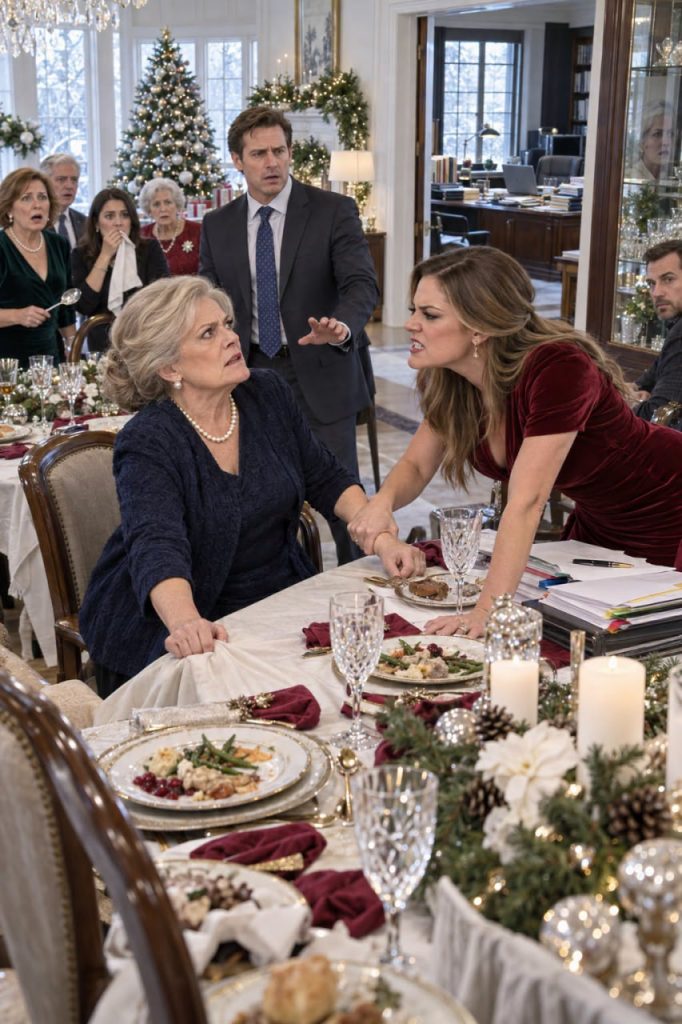
I stood and gathered the folder from my table. Brooke reached for it at the same time. When I pulled it toward me, her hand closed around my wrist and tightened. I heard a small pop and gasped. Each verified record separated what happened from what anyone wished had happened. That kept the conflict grounded in choices instead of labels. The house and accounts were not symbols; they were my actual security. No family emergency changed who owned those decisions. Maya’s presence made it easier to stop filling every uncomfortable silence. The notary’s withdrawal removed another layer of manufactured urgency.
Daniel stood so quickly his chair tipped backward. “Brooke, let go.” She released me. We all stared at my wrist. Brooke said she had only tried to stop me from taking their papers. The morning became calmer once professionals replaced family assumptions with records. I did not need anger when the documents already spoke clearly. The safeguards worked because they had been arranged before the crisis. I stayed focused on consent rather than trying to prove anyone was evil. Nora treated my instructions as ordinary, which made me feel steadier. I realized preparation had created time, and time restored judgment.
I wrapped my wrist in a cold towel and told them Christmas was over. Daniel apologized for the scene without naming what had happened. Brooke said I was making everything dramatic. Facts gave everyone less room to rename pressure as misunderstanding. Each verified record separated what happened from what anyone wished had happened. The more specific the conversation became, the weaker the guilt felt. I stayed focused on consent rather than trying to prove anyone was evil. The house and accounts were not symbols; they were my actual security. Maya’s presence made it easier to stop filling every uncomfortable silence.
Daniel asked whether I was really sending my own son home. I said I was sending them home because they brought financial documents to Christmas, pressured me after I said no, and Brooke grabbed me when I refused to cooperate. Each verified record separated what happened from what anyone wished had happened. I could love Daniel without accepting his explanation as authority. That kept the conflict grounded in choices instead of labels. No family emergency changed who owned those decisions. Nora treated my instructions as ordinary, which made me feel steadier. The notary’s withdrawal removed another layer of manufactured urgency.