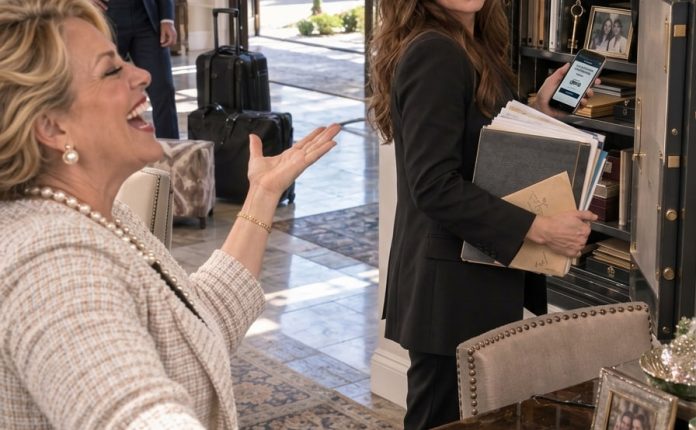
My father carried my suitcase through the front door at eight twelve on Christmas morning and set it on the porch beside a plastic wreath my mother had bought from a discount store. I stood in the hallway holding Grandpa’s walnut box while my sister Harper raised her phone and began recording before anyone said another word. Family had always been the word people used when they wanted obligation to sound like affection. Every conversation became clearer once I stopped treating another person’s disappointment as an emergency. For years, I had mistaken being dependable for being protected inside the family.
“Have fun starting over, loser,” Harper said, angling the camera toward my face. Mom folded her arms beneath a red cardigan and told me not to make the morning uglier than it already was. Dad said the decision had been made: Harper needed stability, and I could afford to rent somewhere else. I was beginning to understand how easily old roles survive after the people inside them become adults. The hardest part was separating love from the expectation that I would keep absorbing everyone else’s consequences. The difference between closeness and access had never seemed important until someone abused both.
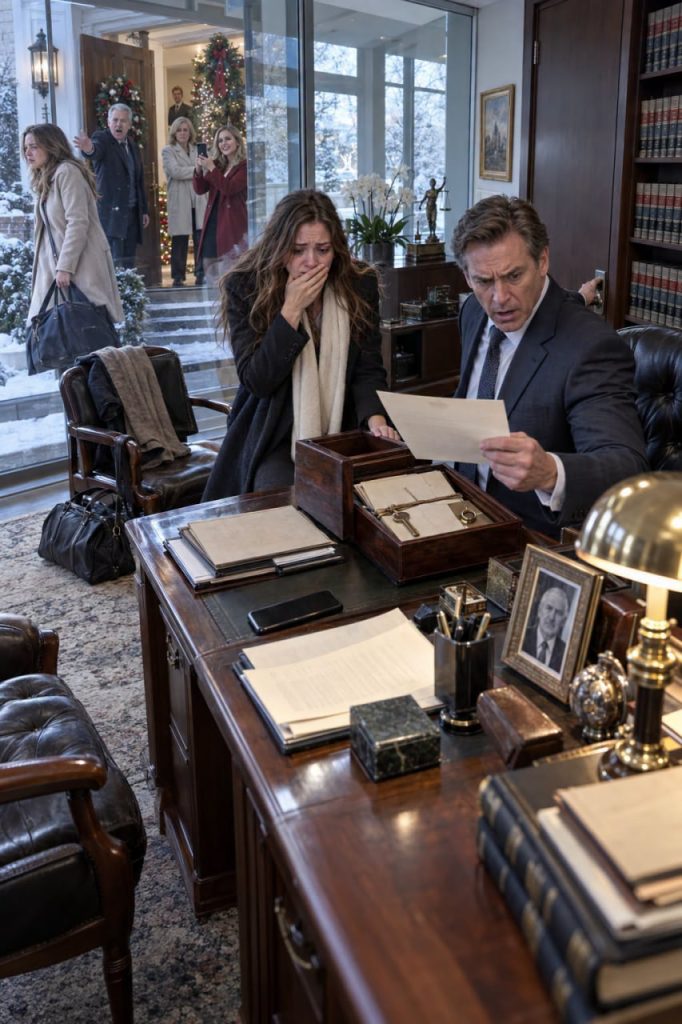
The absurdity was almost calming. They were throwing me out of a house I owned, on Christmas, while standing beneath the ceiling I had paid to repair. I did not shout. I did not grab anyone’s phone. I picked up my suitcase, carried Grandpa’s box to my car, and left while Harper kept filming. I no longer wanted peace that required me to pretend the facts were less serious than they were. I could care about them without agreeing that their comfort mattered more than my consent. For years, I had mistaken being dependable for being protected inside the family.
Three years earlier, Grandpa Arthur Bennett had called me after midnight because the county had posted another tax notice on the property. My parents had fallen behind again, and a second lien threatened the house where our family had spent every Christmas since I was nine. Grandpa was eighty-six and tired of fixing the same problem with promises. The house mattered because responsibility had already cost me time, money, and years of decisions nobody else wanted to make. The paperwork simply documented responsibility I had already been carrying for years. Every new fact made the earlier explanations harder to believe.
I was thirty-one then, working as a project manager for a commercial construction firm in Denver and living in a small apartment. I had savings but no property of my own. Over six months, I paid the delinquent taxes, replaced the failing roof, repaired the furnace, and cleared a contractor lien Dad had ignored for nearly two years. Every repair I had paid for made the word mine feel less emotional and more factual. The building itself was ordinary compared with the meaning everyone kept trying to attach to it. That distinction became more important with every decision that followed.
Grandpa refused to let me treat the money as a gift. He hired Samuel Kessler, his longtime attorney, and transferred the house to me through a recorded warranty deed. My parents signed an occupancy agreement allowing them to remain without rent as long as they paid utilities, maintained the property, and never tried to sell, pledge, or transfer it. The house mattered because responsibility had already cost me time, money, and years of decisions nobody else wanted to make. Ownership was not a feeling; it was taxes, repairs, records, liability, and the obligation to protect an asset from preventable harm.
Grandpa asked me to keep the transfer quiet outside the immediate paperwork. He said Dad would turn ownership into humiliation and Mom would turn it into a family referendum. I agreed because I wanted the house protected, not another war. My parents knew I had saved the property, but they avoided discussing what the signatures actually meant. Every conversation became clearer once I stopped treating another person’s disappointment as an emergency. I could care about them without agreeing that their comfort mattered more than my consent. The difference between closeness and access had never seemed important until someone abused both.
Harper knew even less. She was four years younger, charming when she wanted something, and permanently convinced that family resources should flow toward whoever was in the greatest emotional crisis. For most of our childhood, that person had been her. Mom called her sensitive. Dad called her unlucky. I was simply expected to manage myself. Family had always been the word people used when they wanted obligation to sound like affection. I was beginning to understand how easily old roles survive after the people inside them become adults. I did not need another promise before deciding what I would protect.
When Harper’s engagement ended eighteen months before Grandpa died, she moved back into the house with six suitcases, a broken espresso machine, and a story about needing three months to recover. Three months became a year. She redecorated the upstairs bedroom, filled the garage with boxes, and started referring to the place online as “our family home.” I no longer wanted peace that required me to pretend the facts were less serious than they were. Nothing improved when I translated entitlement into misunderstanding. The hardest part was separating love from the expectation that I would keep absorbing everyone else’s consequences.
Grandpa died in May after a short illness. At the funeral, Dad cried harder than I had ever seen him cry, and for a few weeks our family behaved almost gently. I did not mention the deed. The occupancy agreement remained valid, and I had no desire to use grief as an excuse to reorganize anyone’s life. Grandpa rarely gave direct instructions when a harder lesson could force me to think for myself. I could hear his voice in the careful wording even after grief made reading difficult. He loved our family enough to know exactly where its weaknesses were.
Before leaving the hospital for hospice, Grandpa had given me the walnut box. It was small enough to carry with one hand, smooth from decades of use, and fitted with a brass latch. He told me not to open it unless the family forced me to defend something I already knew was mine. His habit of documenting everything used to seem excessive until the day memory became another battleground. Nothing in the box replaced him, but every page reminded me how deliberately he had planned. He had trusted me with responsibility long before anyone else understood what that trust meant.
I assumed the box held sentimental papers, maybe old photographs or notes from when he ran the hardware store. I placed it on a shelf in my bedroom and tried not to treat his warning like prophecy. That mistake lasted seven months, until Christmas morning, when Dad told me Grandpa had changed everything before he died. The more I read, the more obvious it became that Grandpa had prepared for resistance rather than hoped it away. He loved our family enough to know exactly where its weaknesses were. The facts were easier to trust than the shifting explanations around them.
The confrontation began before breakfast. Mom asked me to sit at the dining table, where three mugs of coffee were already waiting. Harper leaned against the counter with her phone face down beside her. Dad placed a folder between us and said the family had made a practical decision about the house. That detail stayed with me because it connected too many earlier moments I had once explained away. That moment became another line between the life I had tolerated and the one I was building. The truth did not become cruel simply because someone disliked hearing it without excuses.
He told me Grandpa had intended the property to stay with his children, not a granddaughter. According to Dad, there had been “updated paperwork” after Grandpa’s death that corrected the situation. Harper was planning to start a home-staging business and needed the property as a base. I could stay through New Year’s if I behaved reasonably. Once I saw the pattern clearly, I could no longer pretend the latest incident stood alone. The more calmly I looked at the facts, the less complicated the situation became. The silence after a firm answer often revealed more than another hour of arguing.
I asked to see the updated paperwork. Dad slid the folder back toward himself and said his attorney had advised him not to let me remove anything. That was the first moment I knew this was more than entitlement. People who are merely confused usually want to show you proof. People protecting a plan tend to guard it. I stopped asking what would keep everyone comfortable and started asking what the evidence actually showed. I wanted honesty more than appearances because appearances had hidden too much already. I had learned how expensive it could be to ignore my own uneasiness.
I said the house was titled to me and suggested we call Mr. Kessler together. Mom’s face changed first. She said I was trying to humiliate my father on Christmas. Harper laughed and asked whether I had printed myself a fake deed to feel important. Dad stood, walked upstairs, and returned with my packed suitcase. Family had always been the word people used when they wanted obligation to sound like affection. I no longer wanted peace that required me to pretend the facts were less serious than they were. I did not need revenge; I needed the pattern to stop.
He had gone into my room before sunrise. My clothing had been folded badly, toiletries shoved into a grocery bag, and my laptop charger tangled around a pair of boots. The walnut box sat untouched on the dresser because none of them knew what it was. I carried it downstairs while Dad changed the keypad code on his phone. I was beginning to understand how easily old roles survive after the people inside them become adults. The hardest part was accepting that one clear fact could expose years of assumptions. This time I let the consequences remain where they belonged.
Harper opened the front door and started filming. She wanted a scene, preferably one where I cried and begged to remain. Instead, I asked whether she was sure she wanted the video saved. She grinned and said, “Absolutely.” I told her good, because someday she might be grateful she had documented the exact morning. The hardest part was separating love from the expectation that I would keep absorbing everyone else’s consequences. I could care about them without agreeing that their comfort mattered more than my consent. Every conversation became clearer once I stopped treating another person’s disappointment as an emergency.
Samuel Kessler’s office occupied the second floor above a pharmacy downtown. He was seventy, narrow-shouldered, and had represented Grandpa since before I was born. The receptionist looked startled when I arrived with snow on my coat and a suitcase in the car, but Samuel took one look at the walnut box and cleared his schedule. I learned quickly that preserving evidence mattered more than winning an argument in the moment. Nothing about the situation improved when everyone avoided the obvious question. I did not enjoy involving lawyers, but avoiding them would only have rewarded the people who created the problem.
He opened the brass latch with the key taped beneath the lid. The first document was not Grandpa’s letter. It was a certified title-company notice dated December thirteenth, warning that an application had been submitted using a deed that conflicted with the recorded chain of ownership. Samuel read the page twice and stopped breathing normally. Documentation changed the conversation because paper did not care who sounded more emotional or more entitled. Once the records were preserved, nobody could simply replace the facts with a more convenient family story. I did not need another promise before deciding what I would protect.
He stood, locked his office door, lowered the blinds, and said, “Miss Nora, you need to sit down.” I asked whether the house was still mine. He said yes. Then he added, “But somebody has already filed a document claiming it is not, and there is a loan scheduled to close against your property in two days.” The legal process moved slowly, but slowness was preferable to a rushed decision built on pressure. The case became easier to understand when we separated ownership, intent, and emotion into different questions. I did not need revenge; I needed the pattern to stop.
The walnut box held more than twenty documents arranged by date. There was my original deed, the occupancy agreement, receipts for every tax and repair payment I had made, Grandpa’s competency evaluation, two notarized declarations, and a sealed envelope addressed to me. Beneath those sat a flash drive and a second title-company notice. Facts became leverage only because someone had taken the time to preserve them before conflict arrived. Documentation changed the conversation because paper did not care who sounded more emotional or more entitled. Every certified copy narrowed the space where anyone could still call the situation a misunderstanding.
Samuel connected the flash drive to an offline laptop. It contained scanned correspondence between Grandpa and the title company, photographs of the property, and a video recorded three months before his death. Grandpa had apparently expected someone to challenge the transfer eventually and had documented his decisions with the thoroughness of a man who distrusted selective memory. The legal process moved slowly, but slowness was preferable to a rushed decision built on pressure. The case became easier to understand when we separated ownership, intent, and emotion into different questions. Nothing about the situation improved when everyone avoided the obvious question.
The second notice concerned an attempted cash-out refinance for three hundred eighty thousand dollars. The borrower was listed as my father, Robert Bennett. The application claimed he owned the house free of competing interests. The stated purpose was “family property redevelopment.” The primary contact email belonged to Harper. My sister was not merely benefiting from the plan. She was inside it. Facts became leverage only because someone had taken the time to preserve them before conflict arrived. I learned quickly that preserving evidence mattered more than winning an argument in the moment. Nothing improved when I translated entitlement into misunderstanding.
Samuel pulled the county recorder database and found a quitclaim deed filed seventeen days after Grandpa’s funeral. It appeared to transfer my house from me to Dad. My signature sat at the bottom beside a notary seal. I stared at it long enough to notice the loop in the N was wrong. Documentation changed the conversation because paper did not care who sounded more emotional or more entitled. Once the records were preserved, nobody could simply replace the facts with a more convenient family story. Every certified copy narrowed the space where anyone could still call the situation a misunderstanding.
The notary was listed as Calvin Reed. Samuel searched the state registry, then leaned back slowly. Calvin Reed’s commission had expired the previous year. More troubling, an obituary showed he had died four months before the date on the deed. Samuel printed the record and placed it beside the false signature. I learned quickly that preserving evidence mattered more than winning an argument in the moment. Every certified copy narrowed the space where anyone could still call the situation a misunderstanding. I did not enjoy involving lawyers, but avoiding them would only have rewarded the people who created the problem.
“This is not a family misunderstanding,” he said. “This is a recorded instrument that appears fraudulent.” I felt my stomach drop. Getting kicked out had been humiliating. Seeing my name used to strip ownership from me was different. The insult was no longer emotional. Someone had tried to turn paper into a weapon. The legal process moved slowly, but slowness was preferable to a rushed decision built on pressure. Once the records were preserved, nobody could simply replace the facts with a more convenient family story. The truth did not become cruel simply because someone disliked hearing it without excuses.
The loan file showed a closing date of December twenty-seventh. If the lender accepted the forged deed, Dad expected to receive three hundred eighty thousand dollars secured by my property. Samuel said the title issue should stop closing once reported, but we needed to act immediately and preserve everything before anyone altered the story. The case became easier to understand when we separated ownership, intent, and emotion into different questions. Facts became leverage only because someone had taken the time to preserve them before conflict arrived. The more calmly I looked at the facts, the less complicated the situation became.
He called the title insurer, the lender’s fraud department, and a litigation attorney in his firm. I sat silently while people used words like hold, chain of title, suspected forgery, and preservation request. Christmas music played faintly from the pharmacy below, absurdly cheerful beneath the conversation happening upstairs. Once I saw the pattern clearly, I could no longer pretend the latest incident stood alone. I did not enjoy involving lawyers, but avoiding them would only have rewarded the people who created the problem. That detail stayed with me because it connected too many earlier moments I had once explained away.
Samuel told me not to contact my family. He wanted screenshots, emails, the original Christmas video, and any messages about the house. I showed him Harper’s public post, still online, captioned: “Christmas miracle: the mooch finally moved out.” Samuel stared at the timestamp and said, “Save everything before she gets nervous.” I stopped asking what would keep everyone comfortable and started asking what the evidence actually showed. Documentation changed the conversation because paper did not care who sounded more emotional or more entitled. That moment became another line between the life I had tolerated and the one I was building.
I spent Christmas night in a hotel near the interstate because Samuel advised me not to return until we understood the legal situation. The room smelled like industrial detergent and heating vents. I ate a turkey sandwich from a gas station and watched families carry wrapped gifts through the lobby. The quiet afterward did not feel empty; it felt like room I had not realized I was missing. I stopped measuring progress by apologies and started measuring it by how safe my daily life felt. The life after conflict was smaller in some ways and much more honest in others.
Mom called twelve times. Dad called four. Harper sent one message: Stop being dramatic and sign the acknowledgement Dad emailed you. I did not open the attachment. Instead, I forwarded the message to Samuel and turned off notifications. The silence afterward felt unfamiliar and almost peaceful. Healing arrived through ordinary routines rather than a dramatic moment where everyone finally agreed with me. I could remember the betrayal without allowing it to decide every relationship that followed. Distance became easier once I understood it was not punishment but structure. I had no interest in becoming harder; I wanted to become clearer.
At midnight, I opened Grandpa’s sealed letter. His first sentence said, If they have made you open this box, I am sorry I was right. I laughed once, then cried hard enough that I had to put the paper down. Even dead, Grandpa had predicted the exact kind of pressure I had tried to avoid. I stopped measuring progress by apologies and started measuring it by how safe my daily life felt. Peace did not require forgetting what happened or reopening access before trust returned. The life after conflict was smaller in some ways and much more honest in others.
Grandpa wrote that the house had nearly been lost twice because Dad treated equity like a savings account and Mom treated every rescue as proof that someone else would always appear. He said I was the only person who had ever paid to save the property without asking what I would receive in return. Grandpa rarely gave direct instructions when a harder lesson could force me to think for myself. His final lesson was less about property than about refusing to let guilt rewrite reality. I could hear his voice in the careful wording even after grief made reading difficult.
He explained why he transferred ownership to me. It was not punishment for Dad or favoritism toward me. It was because I had already carried the responsibility. The deed, he wrote, merely placed the legal reality where the practical reality had been for years. Then he warned me about Harper. He had trusted me with responsibility long before anyone else understood what that trust meant. His final lesson was less about property than about refusing to let guilt rewrite reality. The more I read, the more obvious it became that Grandpa had prepared for resistance rather than hoped it away.
Grandpa had seen Harper pressuring Dad to borrow against the property for a business idea. He had overheard conversations about a staging company, short-term rentals, and using the house as collateral. He wrote, Your father wants to rescue her the way your mother always has. Do not let their love for Harper become a mortgage on your future. His habit of documenting everything used to seem excessive until the day memory became another battleground. Nothing in the box replaced him, but every page reminded me how deliberately he had planned. Every new fact made the earlier explanations harder to believe.
I remembered the years differently after reading that. At twenty-three, I had paid Dad’s delinquent property taxes because he promised it was temporary. At twenty-six, I replaced the water heater after Mom said Christmas would be ruined without hot water. At twenty-nine, I paid for foundation repairs because everyone else was “between things.” Family had always been the word people used when they wanted obligation to sound like affection. I was beginning to understand how easily old roles survive after the people inside them become adults. The difference between closeness and access had never seemed important until someone abused both.
Harper had never been asked to contribute. She was in graduate school, then changing careers, then recovering from a breakup, then building a brand. Mom always had a reason. Dad always said I was more stable. Stability became the tax our family charged the person least likely to complain. Once I saw the pattern clearly, I could no longer pretend the latest incident stood alone. I no longer wanted peace that required me to pretend the facts were less serious than they were. The hardest part was separating love from the expectation that I would keep absorbing everyone else’s consequences.
I used to believe being dependable made me important. Grandpa’s letter forced me to confront a harder truth: sometimes being dependable simply makes other people comfortable assigning you more weight. The house had become another version of that pattern, except this time they wanted the asset after I had carried the cost. That detail stayed with me because it connected too many earlier moments I had once explained away. For years, I had mistaken being dependable for being protected inside the family. I no longer wanted peace that required me to pretend the facts were less serious than they were.
The next morning, my cousin Tessa called. She had been at Christmas breakfast before the confrontation and left early with her children. Harper had sent the eviction video to a family group chat, where relatives reacted with laughing emojis before the post disappeared around midnight. I did not enjoy involving lawyers, but avoiding them would only have rewarded the people who created the problem. I wanted honesty more than appearances because appearances had hidden too much already. That distinction became more important with every decision that followed. I had learned how expensive it could be to ignore my own uneasiness.