My Husband and I Were Flying to Vienna. At the Airport, an Employee Handed Me a Note: “Don’t Carry His Suitcase.” Before Boarding, My Husband Said He Felt Sick and Asked Me to Take His Bag Through the Scanner. Ten Minutes Later, His Face Went Pale
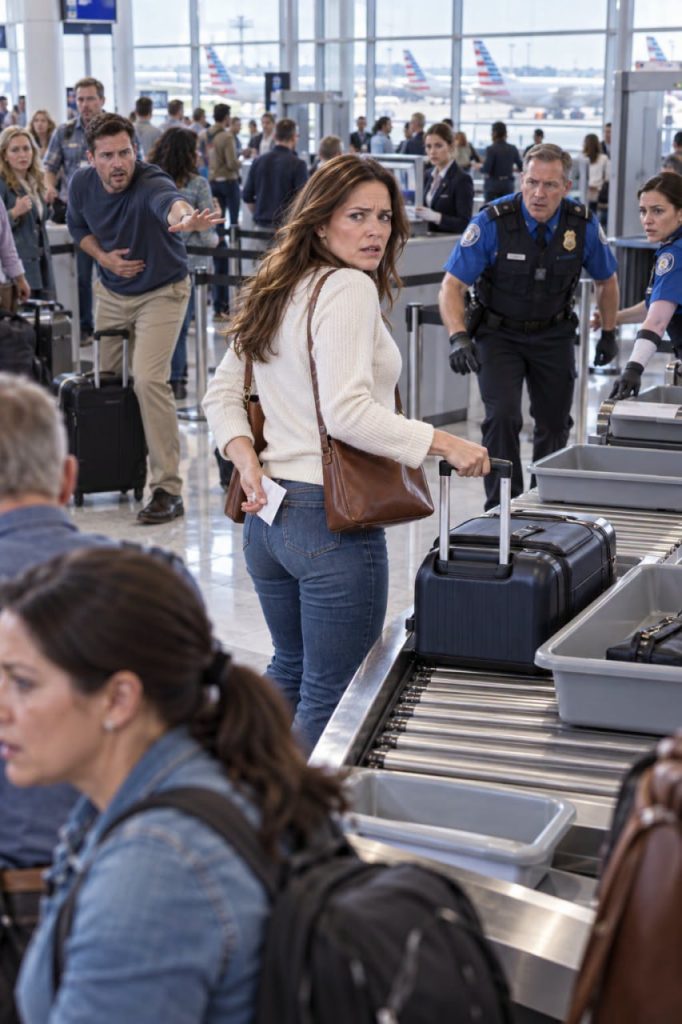
I thought my husband was taking me to Vienna to save our ten-year marriage. Then, minutes before airport security, a stranger deliberately bumped into me and slipped four terrifying words beneath my toiletry bag: “Don’t carry his bag.” I had spent years trusting my husband with my home, my business, and pieces of my identity I barely noticed surrendering. The note turned every familiar gesture from Adrian into a question. I had spent years treating his confidence as evidence of competence. His sudden stomach problem felt too convenient to be accidental. The emeralds transformed suspicion into something concrete and federal.
At LAX, he smiled, handed me a locked green suitcase, and suddenly developed stomach trouble. I left the bag exactly where he put it—and watched our marriage begin to unravel. I was walking back from the restroom near Gate 42 at LAX when a skycap pushing an overloaded luggage cart cut straight across my path. The locked suitcase became impossible to dismiss once he handed it over. I realized how often trust had trained me to stop asking questions. I could no longer separate the marriage from the paperwork in front of me. Now practicality looked dangerously close to dependence.
The metal corner clipped my tote, my toiletry pouch fell onto the polished floor, and his hand closed around my forearm as if he were steadying me. The grip lasted half a second too long. His eyes flicked over my shoulder toward the terminal before he bent down. “Sorry, ma’am,” he murmured. The security line gave me minutes to decide whether instinct deserved attention. I chose caution because the warning had arrived before I understood why. Adrian’s fear at the checkpoint told me more than any explanation could. Seeing my forged signatures made the betrayal feel larger than the suitcase.
He handed me the pouch, but something thin and folded was trapped beneath it. Before I could ask what he was doing, he pushed his cart away and disappeared behind a family wrestling with strollers. I opened the paper inside my palm. Four words had been written in blue ink so hard the pen had nearly torn through the page. At the airport, that confidence suddenly looked rehearsed rather than reassuring. Her possession of my original records made coincidence impossible to believe. The airport stopped feeling like an isolated trap. Vienna stopped looking romantic the moment the Austrian account appeared.
“Don’t carry his bag.” My first instinct was to look for the stranger. My second was to look at my husband. Thirty yards away, Adrian Cross leaned against a stone column near the international check-in counters, one hand resting on my silver carry-on and the other on a dark green hard-shell suitcase. My own name had been turned into part of someone else’s defense. The questions about Bennett Strategic opened a second door I had ignored. I remembered how quietly I had stepped away from my own company. Adrian had always called that sacrifice practical, temporary, and good for us.
He wore the charcoal blazer I had laid across our bed that morning. When he saw me, he smiled and lifted two fingers in that casual little wave he had used for years. Ten years of marriage teaches you a person’s smiles. Adrian had the investor smile, polished and warm. He had the apologetic smile, softer around the eyes. Every old document suddenly seemed capable of carrying a second purpose. Rachel’s warning forced me to assume the problem was wider than I knew. The first financial records proved that instinct had not exaggerated anything. I chose not to soften it.
And he had the smile he used when he needed me to cooperate before I had enough information to say no. The one he gave me now was somewhere between the second and third. I closed my fist around the note and started walking. The green suitcase had appeared in our Bel Air house three weeks earlier. Evelyn’s reaction showed me how deeply loyalty had been weaponized around Adrian. I held the boundary. I did not retreat. I let that settle. I stayed with reality. I let the moment stand. I no longer doubted myself. I did not look away.
Adrian had carried it directly to his office and put a combination lock on it, something I had never once seen him do with luggage. When I asked, he said it contained confidential documents connected to an acquisition his private equity firm was closing in Europe. “Client-sensitive material,” he had said. “Nothing interesting unless you enjoy seventy pages of tax structures.” I did not apologize. The pattern was clear. I refused to guess. I let evidence lead. The silence answered enough. I could breathe again. I refused the old role. I let the truth remain. I kept my answer simple.
I had laughed and forgotten about it. Or thought I had. “Claire,” Adrian called as I approached. “Come on. We’re boarding in less than an hour.” He kissed my cheek, took my toiletry pouch, and tucked it into my tote as if nothing in the world was wrong. “You okay? You look pale.” I told him I was tired. That much was true. I stayed quiet. I kept listening. I chose clarity. I trusted the record. I kept my distance. I accepted the discomfort. I knew what mattered. The distinction became important. I understood the difference. I moved forward anyway.
We were supposed to be flying to Vienna for our tenth anniversary, a trip he had planned completely by himself. That alone had surprised me. Normally I chose the hotels, compared flights, booked dinners, and built itineraries. But six weeks earlier Adrian had come home with wine, set a printed folder on our kitchen table, and said, “I know the last two years haven’t exactly been romantic. I could no longer separate the marriage from the paperwork in front of me. Rachel’s warning forced me to assume the problem was wider than I knew. I trusted myself. I wanted proof.
Let me fix that.” His firm, Halcyon Equity Group, had been in a brutal fundraising cycle. He was gone before breakfast, home after midnight, always on calls. I had told myself distance was the price of ambition. Vienna had felt like proof he still noticed what it was costing us. The locked suitcase became impossible to dismiss once he handed it over. I realized how often trust had trained me to stop asking questions. The security line gave me minutes to decide whether instinct deserved attention. That mattered. That changed everything. I knew better. I kept going. I watched carefully.
Looking at the green bag now, I wondered whether I had mistaken preparation for affection. The security line at Terminal B moved in miserable little bursts. Ahead of us, three kids argued over a stuffed shark while their father tried to collapse a stroller. Behind us, someone’s carry-on wheel squeaked every few seconds. Adrian barely spoke. I chose caution because the warning had arrived before I understood why. Adrian’s fear at the checkpoint told me more than any explanation could. Seeing my forged signatures made the betrayal feel larger than the suitcase. I noticed. I stopped explaining. The facts remained.
More importantly, he never stopped touching the green suitcase. He shifted it from right hand to left, set it between his shoes, rested his foot against it, then picked it up again whenever the line advanced. The note burned in my jacket pocket. “Don’t carry his bag.” I considered asking him directly, but the question felt dangerous without knowing why. My own name had been turned into part of someone else’s defense. The questions about Bennett Strategic opened a second door I had ignored. I remembered how quietly I had stepped away from my own company. I remembered. I understood.
Instead, I watched. When we were two passengers away from the document check, Adrian suddenly inhaled sharply and pressed a hand to his stomach. “God,” he muttered. “Something from the lounge is not agreeing with me.” He bent slightly, grimaced, and looked toward the restroom sign. Then he held the green suitcase toward me. “Can you take both through? The note turned every familiar gesture from Adrian into a question. I had spent years treating his confidence as evidence of competence. His sudden stomach problem felt too convenient to be accidental. The emeralds transformed suspicion into something concrete and federal.
I’ll meet you right after the scanners.” There are moments when your entire life rearranges itself around one ordinary gesture. My husband extending a suitcase toward me should not have frightened me. I had carried his coat through airports. His laptop. His passport when he misplaced it. But the timing was too clean. The mysterious stomach pain, exactly before screening. The locked bag. At the airport, that confidence suddenly looked rehearsed rather than reassuring. Adrian had always called that sacrifice practical, temporary, and good for us. Her possession of my original records made coincidence impossible to believe. I stayed grounded.
The warning. I smiled because I suddenly understood that whatever Adrian expected from me depended on me behaving predictably. “Sure,” I said. Relief flashed across his face so quickly I almost missed it. He placed the suitcase beside me and walked toward the restroom. His pace was brisk, but not the pace of a man afraid he might be sick. Now practicality looked dangerously close to dependence. Evelyn’s reaction showed me how deeply loyalty had been weaponized around Adrian. Every old document suddenly seemed capable of carrying a second purpose. Vienna stopped looking romantic the moment the Austrian account appeared.
When the line moved forward, I picked up only my own luggage. I stepped to the side and quietly told the TSA supervisor, “The green suitcase belongs to my husband. He just left for the restroom. I want that noted before anyone moves it.” She looked from me to the bag. “You’re traveling together?” I could no longer separate the marriage from the paperwork in front of me. The airport stopped feeling like an isolated trap. Rachel’s warning forced me to assume the problem was wider than I knew. The first financial records proved that instinct had not exaggerated anything.
“Yes, but I did not pack it, I don’t know the combination, and I have never handled its contents.” Something in my voice made her stop treating it like a routine abandoned-bag problem. She called another officer. I repeated everything. They moved the suitcase away from the main lane while I completed screening with my own carry-on. The note turned every familiar gesture from Adrian into a question. I had spent years treating his confidence as evidence of competence. At the airport, that confidence suddenly looked rehearsed rather than reassuring. His sudden stomach problem felt too convenient to be accidental.
I sat on a bench beyond the checkpoint with my palms pressed together and waited. Adrian returned less than eight minutes later looking remarkably healthy. He turned the corner, saw three officers around the green suitcase, and stopped so abruptly a man behind him almost walked into his back. For three full seconds, he did not move. The locked suitcase became impossible to dismiss once he handed it over. I realized how often trust had trained me to stop asking questions. The security line gave me minutes to decide whether instinct deserved attention. Now practicality looked dangerously close to dependence.
I watched his face, and something inside me went cold. It was not confusion I saw there. It was fear. One officer approached him. “Sir, is that your luggage?” Adrian’s eyes shot toward me. “It’s our luggage,” he said immediately. “My wife and I packed it together.” I lifted my hand from the bench. “No,” I said loudly enough to carry. I chose caution because the warning had arrived before I understood why. Adrian’s fear at the checkpoint told me more than any explanation could. Seeing my forged signatures made the betrayal feel larger than the suitcase. I stayed quiet.
“We did not.” His jaw hardened. “Claire, come here. You’re confusing the situation.” I stayed seated. “I’m not confused.” The officers exchanged looks. Then a detection dog was brought over. The animal circled the suitcase once, sniffed the lower edge, then immediately became alert near the bottom seam. Adrian stared at me again, and this time there was no husband in his expression. My own name had been turned into part of someone else’s defense. I could no longer separate the marriage from the paperwork in front of me. Her possession of my original records made coincidence impossible to believe.
There was only a man watching a plan fail. The officers opened the suitcase after Adrian supplied the combination. Shirts and travel documents came out first. Then an agent pressed along the interior lining and found a release beneath the base. The bottom lifted. Underneath it sat a foam tray filled with small black velvet pouches. The questions about Bennett Strategic opened a second door I had ignored. I remembered how quietly I had stepped away from my own company. Adrian had always called that sacrifice practical, temporary, and good for us. The airport stopped feeling like an isolated trap.
One by one, they were opened beneath the white fluorescent lights. Inside were rough green stones, dozens of them, bright and irregular and far too vivid to be glass. A senior officer crouched beside the tray. “Sir, these appear to be undeclared uncut emeralds. You’re going to need to come with us.” Adrian leaned toward me before they moved him away. “Claire, listen. Evelyn’s reaction showed me how deeply loyalty had been weaponized around Adrian. Every old document suddenly seemed capable of carrying a second purpose. The first financial records proved that instinct had not exaggerated anything. I kept listening.
Tell them we bought them at an estate sale. Santa Barbara. You remember. Just confirm that and I can explain everything.” I looked at the man I had slept beside for a decade and realized he was asking me to lie to federal officers without even bothering to make the lie believable. “I’m not going to say that,” I told him. Rachel’s warning forced me to assume the problem was wider than I knew. Vienna stopped looking romantic the moment the Austrian account appeared. I chose not to soften it. I let the moment stand. I no longer doubted myself.
“Because it never happened.” They separated us immediately. I spent the next hour in a windowless interview room that smelled like stale coffee and industrial cleaner. An investigator named Agent Mercer sat across from me and slid four documents onto the table inside plastic sleeves. My name appeared on every one. Claire Cross. Gemstone provenance certificates. Import declarations. Each transfer from Bennett Strategic represented work I had never performed. The insurance policy changed my fear from financial to physical. I refused to invent conclusions before the evidence could support them. Serena’s calmness helped me separate documented fact from terrifying possibility.
A representation letter connected to a mineral broker in Colombia. At the bottom were signatures that looked almost exactly like mine. Almost. I leaned closer. My stomach tightened. “Those aren’t my signatures.” Agent Mercer didn’t react. “How can you tell?” “The capital C. Mine curls inward before the second stroke. Whoever did these pushes it forward. The money trail made the marriage feel like a structure built around concealment. Missing originals explained how forged signatures could look almost convincing. Natalie’s handwriting connected the financial scheme to documents bearing my name. Adrian’s phone call revealed contempt where reassurance used to be.
And I’ve never seen any of these documents before today.” She studied me for several seconds, then said, “Your husband says the emeralds belong to a private collection you built together.” “Then my husband is lying.” I told her about the suitcase arriving three weeks earlier, about the combination lock, about Adrian packing it in his home office. Stonebridge gave Adrian and Natalie a vehicle for moving money beyond my view. Twelve million dollars assigned a number to a life I had never agreed to insure. I understood that trust had been one of the tools he expected to use.
I told her our security cameras would show him carrying it in and out. Then, halfway through my explanation, another thought hit me so hard I stopped speaking. Eight years earlier I had stepped away from the consulting company I founded, Bennett Strategic Advisory, to help Adrian while Halcyon expanded. I had never closed the entity. The bank accounts still existed. The corporate registration remained active. The international travel rider made the anniversary trip feel even less innocent. He still expected me to doubt myself before I doubted him. Mentioning Natalie’s cooperation changed his voice more than any accusation had.
“Agent Mercer,” I said carefully, “I think you should examine my company’s financial records.” Her pen stopped. “Why?” “Because Adrian never creates one path out of a problem. He creates three.” And for the first time since that stranger bumped into me, I wondered whether the suitcase was only the part of the trap I had been lucky enough to see. The Austrian account made the Vienna itinerary feel planned for reasons beyond travel. The Austrian vehicle lease showed that infrastructure existed before the trip invitation. The marriage had protected him from scrutiny because I had mistaken privacy for respect.
They kept me for almost four hours. By the time I was released, evening light had turned the terminal windows gray-blue, and the passengers around Gate 42 had changed twice. Adrian sat beneath a departure screen with his blazer folded across his knees. He stood the second he saw me. “Claire, listen to me before you do anything else.” The house search showed how carefully Adrian had organized pieces of my identity. His reaction to the mountain-road question stayed with me afterward. Now every fact needed to stand independently of his explanations. That shift made the evidence easier to face.
His voice was quiet, measured, the same voice he used when negotiating with angry investors. “This looks worse than it is.” I stopped six feet away. “That should be comforting, because it looks like you tried to make me carry undeclared gemstones through federal security under documents forged in my name.” He rubbed the bridge of his nose. “The stones are connected to an acquisition. The insurance policy changed my fear from financial to physical. I stopped asking whether he loved me and started asking what he had done. I began rebuilding control by knowing exactly what carried my name.
A supplier in Bogotá handled the documentation badly. Natalie was supervising the import side, and things got crossed.” Natalie Voss was Halcyon’s head of acquisitions, a woman I had met twice at company dinners. She was sharp, controlled, and always dressed in black. Adrian mentioned her often enough that I had once joked she spent more time with him than I did. The money trail made the marriage feel like a structure built around concealment. Stonebridge gave Adrian and Natalie a vehicle for moving money beyond my view. Fear became manageable once it was attached to documents, dates, and accounts.
He had not laughed. “Natalie made mistakes?” I asked. “Yes.” “She forged my signature too?” His mouth tightened. “I don’t know what she did.” I almost admired the speed of the pivot. Five minutes into our first conversation after federal questioning, Adrian had already found a woman to place between himself and the consequences. Then he reached for my hand. The Austrian account made the Vienna itinerary feel planned for reasons beyond travel. Twelve million dollars assigned a number to a life I had never agreed to insure. The international travel rider made the anniversary trip feel even less innocent.
I stepped back. “Claire, Halcyon is in the middle of closing a major fund. If investigators start tearing through the company, investors panic. Two hundred employees could lose their jobs. All I need from you is one statement saying you knew about the stones. My attorneys can sort out the documentation afterward.” I stared at him. Each transfer from Bennett Strategic represented work I had never performed. Serena’s calmness helped me separate documented fact from terrifying possibility. The house search showed how carefully Adrian had organized pieces of my identity. Missing originals explained how forged signatures could look almost convincing.
“You want me to validate forged federal paperwork so your investors don’t ask questions.” “I’m asking you to protect what we built.” “You built Halcyon. I built a consulting firm you convinced me to stop running.” His expression shifted. “That’s not fair.” The phrase almost made me laugh. Fairness had apparently survived in his vocabulary even if honesty had not. The Austrian vehicle lease showed that infrastructure existed before the trip invitation. I understood that trust had been one of the tools he expected to use. The marriage had protected him from scrutiny because I had mistaken privacy for respect.
“No,” I said. “I want my attorney. And I want you away from me.” He stepped back, but the resentment in his face remained fixed on mine. Ninety minutes later his mother arrived. Evelyn Cross came through the terminal doors so quickly her oversized leather tote swung against her hip. Her silver-blond hair, normally perfect, had loosened around her temples. Twelve million dollars assigned a number to a life I had never agreed to insure. I refused to invent conclusions before the evidence could support them. I stopped asking whether he loved me and started asking what he had done.
She saw Adrian first, gripped his arms, then turned on me. “What did you do?” Not hello. Not are you all right. “What did you do?” I folded my hands over my bag. “I refused to claim luggage I didn’t pack.” “Roman—” She caught herself, flustered, then corrected, “Adrian’s property is being held because you refused to cooperate.” Natalie’s handwriting connected the financial scheme to documents bearing my name. Adrian’s phone call revealed contempt where reassurance used to be. He still expected me to doubt myself before I doubted him. His reaction to the mountain-road question stayed with me afterward.
I almost missed the strange slip because she was already talking again. “This family requires discretion. Loyalty. You don’t hand your husband to federal agents because paperwork is messy.” I had spent ten years hearing smaller versions of that speech. Evelyn believed marriage meant disappearing gracefully into a man’s architecture. She complimented my old career only in the past tense. Mentioning Natalie’s cooperation changed his voice more than any accusation had. Now every fact needed to stand independently of his explanations. That shift made the evidence easier to face. I began rebuilding control by knowing exactly what carried my name.
“You were so ambitious.” “You used to have such interesting clients.” Once, after I mentioned reopening Bennett Strategic, she had said, “Wouldn’t that be embarrassing for Adrian? People might think he can’t provide for you.” I had laughed then because I believed I was secure enough not to be insulted by her. Now I understood those comments differently. I understood that trust had been one of the tools he expected to use. The marriage had protected him from scrutiny because I had mistaken privacy for respect. I stopped asking whether he loved me and started asking what he had done.
They had been maintenance. Little reminders to keep me dependent. Evelyn lowered herself beside Adrian. Her tote landed against the chair, heavy enough to thump. A folder edge protruded from the zipper. “Why is your bag so full?” I asked. Her hand moved over the opening instantly. “I carry things.” “You drove here from Hancock Park on forty minutes’ notice.” The money trail made the marriage feel like a structure built around concealment. Twelve million dollars assigned a number to a life I had never agreed to insure. Fear became manageable once it was attached to documents, dates, and accounts.