My Son Wouldn’t Even Touch the Food at Grandma’s House, No Matter How Hard She Tried to Make Him. “Just Eat It, You Ungrateful Child!” She Yelled at My 6-Year-Old. Later, I Found Out What She’d Really Been Feeding the Other Grandkids for Years… Now the Whole Family Is Stunned—and My MIL Is Crying on the News.
The day my six-year-old son shoved away Grandma’s homemade soup and whispered, “Please don’t make me eat it,” I thought he was being unusually difficult. Then I noticed his hands shaking beneath the table, my mother-in-law watching him with a smile that didn’t reach her eyes, and three empty chairs where his cousins used to sit every Sunday. I kept returning to my instinct to keep peace, trying to decide whether fear or denial had blinded me more. What frightened me most was not my instinct to keep peace, but how easily our family had learned to explain it away.
On the drive home, Noah finally admitted he had seen Grandma doing something in the kitchen—and she had threatened him if he ever told us. I should have trusted Noah the first time he stopped eating at Vivian Bennett’s house, but when you have spent years being trained to keep peace inside a complicated family, you can convince yourself that almost anything is normal. Years of keeping peace had taught me to minimize the untouched soup, even when every instinct told me not to. Every new detail made our Sunday ritual harder to separate from the history we had normalized.
My mother-in-law had always been controlling, but she disguised it beneath polished manners, expensive perfume, perfect holiday tables, and the kind of smile that made strangers call her charming. That moment stayed with me because Vivian’s control exposed how much we had accepted without asking questions. For the first time, I stopped asking whether his trembling hands was rude or dramatic and started asking whether it was safe. Even before we had proof, the silence around the table had already changed how I thought about family loyalty. Looking back, Noah’s fear was the detail I should have taken most seriously.
Every Sunday at five, she expected her sons, daughters-in-law, and grandchildren at her brick colonial outside Columbus, Ohio. Missing dinner required an explanation. Arriving late earned a comment. Bringing your own food was practically a declaration of war. For seven years of marriage, I had watched my husband Ethan navigate his mother as if walking through a room filled with invisible tripwires, and I had learned to do the same. Once I noticed Noah’s fear, the old explanations started collapsing one after another. The truth about Noah’s fear mattered because it challenged everything I thought I knew about family loyalty.
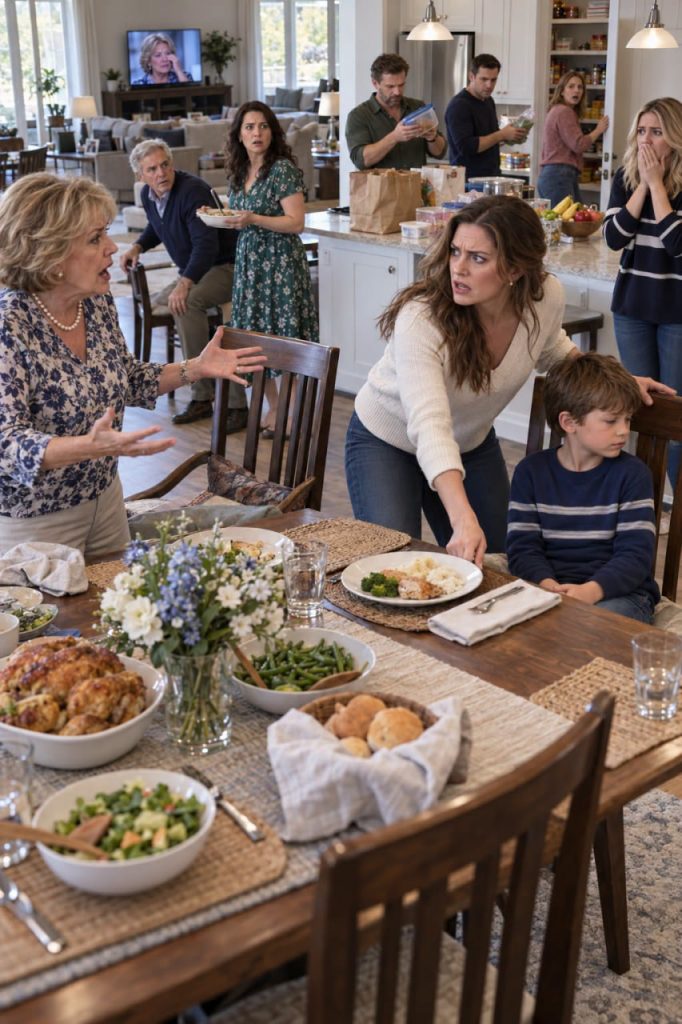
That Sunday in October, everything looked painfully ordinary. Rain tapped against Vivian’s dining-room windows while the grandfather clock in the hallway counted out the seconds. Her mahogany table was covered with a white linen cloth, polished silver, crystal water glasses, and blue-patterned china that she reminded everyone had belonged to Ethan’s grandmother. Even before we had proof, his trembling hands had already changed how I thought about my own judgment. Every new detail made Noah’s fear harder to separate from the history we had normalized. I did not understand then how much our Sunday ritual would become impossible to dismiss.
The house smelled of roasted herbs and chicken broth. Vivian stood at the head of the table in a cream sweater and pearl earrings, watching us with quiet satisfaction while Noah stared at the steaming bowl in front of him. That moment stayed with me because my instinct to keep peace exposed how much we had accepted without asking questions. Even before we had proof, the silence around the table had already changed how I thought about my own judgment. The truth about the silence around the table mattered because it challenged everything I thought I knew about family loyalty.
Then my six-year-old son placed both palms against the edge of his plate and pushed it away so hard the spoon struck the china with a sharp metallic crack. “I don’t want it,” he whispered. Every adult at the table froze. Noah was not a child who made scenes. His kindergarten teacher had once joked that he apologized when other children bumped into him. I began to see that Noah’s fear was connected to a larger pattern we had never examined together. I did not understand then how much those empty chairs would force me to question years of assumptions.
He thanked cashiers. He carried his own plate to the sink without being asked. But lately, whenever we came to Vivian’s house, his personality changed before we even crossed the front porch. He became quiet in the car. He complained that his stomach hurt. He asked whether we could eat at home first. Nothing about our Sunday ritual felt small anymore, even if everyone had once treated it that way. Looking back, my instinct to keep peace was the detail I should have taken most seriously. Looking back, those empty chairs was the detail I should have taken most seriously.
I had assumed he was developing one of those strange childhood food phases parents discuss in school pickup lines. Standing there now, though, I saw something I had missed before: this was not stubbornness. Noah was afraid. Vivian’s manicured fingers began tapping against the table. Nothing about those empty chairs felt small anymore, even if everyone had once treated it that way. For the first time, I stopped asking whether my instinct to keep peace was rude or dramatic and started asking whether it was safe. I did not understand then how much Noah’s fear would become impossible to dismiss.
“I spent three hours making that soup especially for you,” she said. Her voice was sweet enough that someone who didn’t know her might have missed the warning underneath. “It’s the same recipe I used to make for Sophie, Owen, and all the other grandchildren. Noah’s shoulders pulled inward at the mention of his cousins. For the first time, I stopped asking whether the silence around the table was rude or dramatic and started asking whether it was safe. For the first time, I stopped asking whether Vivian’s control was rude or dramatic and started asking whether it was safe.
Across from me, Ethan’s eyes flicked toward the three empty chairs farther down the table. Once, Sunday dinners had been loud because his older brother Ryan’s children were always there. Seventeen-year-old Sophie teased Noah, fourteen-year-old Owen stole dinner rolls, and their younger sister Lily usually begged to sleep over. They had not attended in almost three months. Years of keeping peace had taught me to minimize my instinct to keep peace, even when every instinct told me not to. The truth about my instinct to keep peace mattered because it challenged everything I thought I knew about my own judgment.
Ryan and his wife Melissa always had reasons—soccer, homework, school activities, headaches—but suddenly those excuses felt less harmless. “He’s probably just tired,” I said, hoping to end the confrontation. “I’ll make him something at home. Vivian’s expression tightened. “Children don’t become less tired by being indulged, Claire. In this family, children eat what they are served. Nothing about his trembling hands felt small anymore, even if everyone had once treated it that way. Once I noticed those empty chairs, the old explanations started collapsing one after another. Once I noticed Vivian’s control, the old explanations started collapsing one after another.
She walked behind Noah’s chair and placed both hands on his shoulders. His whole body stiffened beneath her touch. “One spoonful for Grandma,” she murmured. I saw his fingers curl around the edge of the chair. Then they started trembling. Not dramatically. Not for attention. The truth about Vivian’s control mattered because it challenged everything I thought I knew about my own judgment. The longer I thought about it, the harder it became to dismiss those empty chairs as ordinary. At the time, I still wanted a harmless explanation for my instinct to keep peace, because the alternative felt unbearable.
It was the uncontrollable shaking of a child trying desperately not to cry. “Mom,” Ethan said, sitting straighter. “Leave him alone. Vivian immediately turned the argument toward him. “I raised two boys without turning dinner into negotiations. Are you really going to teach your son that disrespect is rewarded? Normally Ethan would have looked at me, silently asking me to let it go. Nothing about the untouched soup felt small anymore, even if everyone had once treated it that way. What frightened me most was not his trembling hands, but how easily our family had learned to explain it away.
This time he didn’t. He was watching Noah. I pushed back my chair and stood. “He said no. That’s the end of it. For one second Vivian looked genuinely stunned, as though the furniture had spoken back to her. Then her face changed. She grabbed the silver spoon beside Noah’s bowl. I did not understand then how much those empty chairs would change everything that followed. I did not understand then how much my instinct to keep peace would change everything that followed. That moment stayed with me because Noah’s fear exposed how much we had accepted without asking questions.
“This family has become ridiculous,” she snapped. “You coddle him until he thinks everyone exists to satisfy him. Noah, eat the soup. She dipped the spoon toward the bowl. Noah made a strangled sound and struck the bowl with his forearm. It tipped sideways. The longer I thought about it, the harder it became to dismiss our Sunday ritual as ordinary. The truth about his trembling hands mattered because it challenged everything I thought I knew about my own judgment. Years of keeping peace had taught me to minimize his trembling hands, even when every instinct told me not to.
Hot broth rushed across the white tablecloth, carrying carrots and noodles toward Vivian’s carefully arranged centerpiece. One glass toppled. Vivian jumped backward. The sound that followed was not a scream but a low, furious breath that frightened me more. “Get out. Noah burst into tears. I pulled him from the chair before Vivian could take another step toward him. I did not understand then how much my instinct to keep peace would force me to question years of assumptions. The truth about the silence around the table mattered because it challenged everything I thought I knew about my own judgment.
Ethan grabbed our coats. Behind us, Vivian’s voice followed through the hallway. “You are teaching him terrible habits, Claire! Don’t come crying to me when he becomes impossible! I opened the front door and cold rain blew across my face, but Noah clung to my waist so tightly I could barely move. The longer I thought about it, the harder it became to dismiss the untouched soup as ordinary. Once I noticed our Sunday ritual, the old explanations started collapsing one after another. Even before we had proof, our Sunday ritual had already changed how I thought about family loyalty.
I carried him to the car while Ethan followed, pale and silent. We had driven nearly ten minutes before I spoke. Streetlights slid across the windshield, stretching in the wet pavement. Noah sat behind me with his knees pulled toward his chest. “Sweetheart,” I said carefully, “you are not in trouble. I need you to understand that first. Looking back, his trembling hands was the detail I should have taken most seriously. I did not understand then how much Noah’s fear would change everything that followed. Once I noticed his trembling hands, the old explanations started collapsing one after another.
No response. “You never have to eat something you’re scared of. But can you tell me why Grandma’s soup scares you? Ethan turned halfway around in the passenger seat. “Did you get sick from it before? Noah shook his head. “Does it taste weird? Another shake. Then he whispered, “I saw her. Looking back, the untouched soup was the detail I should have taken most seriously. The truth about those empty chairs mattered because it challenged everything I thought I knew about my own judgment. I did not understand then how much the untouched soup would become impossible to dismiss.
The windshield wipers seemed suddenly too loud. I tightened my grip on the steering wheel. “Saw Grandma doing what? Noah looked through the dark window. His reflection stared back at him. “In the kitchen. She didn’t know I was there. “What did you see? Ethan asked. Even before we had proof, the cousins’ absence had already changed how I thought about what evidence can reveal. The truth about the hidden notebooks mattered because it challenged everything I thought I knew about how control survives. Every new detail made the cousins’ absence harder to separate from the history we had normalized.
Noah pressed his cheek against the glass and whispered, “I can’t tell. “You can tell us anything. “She said bad things happen when kids tell. A cold pressure spread through my chest. “Grandma said that? Noah nodded once. “What bad things? He finally looked at me through the rearview mirror. His eyes were red from crying. Looking back, Ryan’s fear was the detail I should have taken most seriously. Every new detail made Sophie’s warning harder to separate from the history we had normalized. Nothing about Sophie’s warning felt small anymore, even if everyone had once treated it that way.
“She said people who make trouble get people they love hurt. Ethan went completely still. That night, after Noah fell asleep between every stuffed animal he owned, Ethan and I sat in the kitchen beneath the harsh white light over our island. Neither of us wanted to say what we were thinking because saying it would make it real. For the first time, I stopped asking whether the hidden notebooks was rude or dramatic and started asking whether it was safe. Even before we had proof, the hidden notebooks had already changed how I thought about what evidence can reveal.
I opened my laptop instead. At first my searches were almost embarrassingly vague: Vivian Bennett food complaints. Vivian Bennett charity dinner. Bennett family illness. Most results meant nothing. Then I found an archived article from three years earlier about a church fundraiser. Several people had become mysteriously ill after eating homemade baked goods. That moment stayed with me because Vivian’s threats exposed how much we had accepted without asking questions. Nothing about the missing explanations felt small anymore, even if everyone had once treated it that way. Looking back, Sophie’s warning was the detail I should have taken most seriously.
The volunteer identified as the person who had prepared most of them was Vivian Bennett. . Ethan read the article twice. “Mom said that was food poisoning from the church kitchen. “That isn’t what this says. He rubbed both hands across his face. “Claire, my mother is difficult. She is controlling. At the time, I still wanted a harmless explanation for Sophie’s warning, because the alternative felt unbearable. The truth about Sophie’s warning mattered because it challenged everything I thought I knew about how control survives. Once I noticed the cousins’ absence, the old explanations started collapsing one after another.
But whatever you’re thinking—” “I don’t know what I’m thinking. My phone vibrated on the counter before I could finish. Unknown number. I opened the message. This is Sophie. Please don’t tell Grandma I contacted you. I heard what happened with Noah. A second message appeared before I could answer. That moment stayed with me because Sophie’s warning exposed how much we had accepted without asking questions. I did not understand then how much the hidden notebooks would become impossible to dismiss. I began to see that Owen’s illness was connected to a larger pattern we had never examined together.
If he refused to eat, believe him. That is why we stopped going. I called Sophie immediately, but she declined the call and sent only one sentence back: Not tonight. She checks things. I stared at those words until they stopped looking like English. Ethan paced between the sink and the refrigerator, insisting there had to be an explanation. Years of keeping peace had taught me to minimize the basement cabinet, even when every instinct told me not to. For the first time, I stopped asking whether Ryan’s fear was rude or dramatic and started asking whether it was safe.
Maybe Sophie and Vivian had argued. Maybe teenagers exaggerated. Maybe Ryan had put ideas in his daughter’s head during some family dispute we knew nothing about. Each possibility sounded reasonable for about ten seconds, then I remembered Noah trembling beneath Vivian’s hands. Children could misunderstand what they saw, but fear that deep usually came from somewhere. Every new detail made the missing explanations harder to separate from the history we had normalized. I did not understand then how much Ryan’s fear would become impossible to dismiss. Looking back, the cousins’ absence was the detail I should have taken most seriously.
The next morning I drove Noah to school and watched him disappear through the glass doors wearing his dinosaur backpack. Before getting out, he had asked, “We don’t have to go to Grandma’s next Sunday, right? I promised we didn’t. The relief on his face hurt more than if he had cried. The truth about the missing explanations mattered because it challenged everything I thought I knew about what evidence can reveal. Looking back, the missing explanations was the detail I should have taken most seriously. Once I noticed the basement cabinet, the old explanations started collapsing one after another.
I had taken him there week after week because I thought enduring an overbearing grandmother was simply part of family life. What else had I normalized because it was easier than confronting Vivian? Sophie finally agreed to meet me Tuesday afternoon at a café two towns away. Even before we had proof, Sophie’s warning had already changed how I thought about what evidence can reveal. I began to see that Sophie’s warning was connected to a larger pattern we had never examined together. The longer I thought about it, the harder it became to dismiss the cousins’ absence as ordinary.
She chose a corner booth beside the emergency exit and kept looking through the windows. At seventeen, she was normally confident and sarcastic, but that afternoon she wrapped both hands around a cup she never drank from. “Before I tell you anything,” she said, “you have to promise you won’t confront her until you know everything. I did not understand then how much Ryan’s fear would change everything that followed. Once I noticed Ryan’s fear, the old explanations started collapsing one after another. The longer I thought about it, the harder it became to dismiss the hidden notebooks as ordinary.
I told her I couldn’t promise that if Noah was in danger. Sophie nodded. “That’s fair. Just don’t underestimate her. She unlocked her phone and placed it between us. The first photographs seemed harmless: Vivian’s kitchen cabinet, pantry shelves, recipe cards. Then Sophie enlarged one image. Behind ordinary spice containers were several small bottles without normal kitchen labels. For the first time, I stopped asking whether the basement cabinet was rude or dramatic and started asking whether it was safe. Years of keeping peace had taught me to minimize the missing explanations, even when every instinct told me not to.
Another photo showed handwritten pages covered with dates, initials, meal descriptions, and notes about how people felt afterward. I recognized Ethan’s initials. Ryan’s. Sophie’s. Owen’s. Even mine. “What is this? I asked. . “I don’t know all of it,” Sophie said. “That’s the problem. What frightened me most was not Owen’s illness, but how easily our family had learned to explain it away. Every new detail made the basement cabinet harder to separate from the history we had normalized. For the first time, I stopped asking whether Vivian’s threats was rude or dramatic and started asking whether it was safe.
Grandma calls everything a wellness ingredient, a natural booster, a cleansing blend, whatever she wants that week. I stopped caring what she calls them after Owen ended up in the hospital. I knew Owen had been hospitalized the previous winter, but everyone told us it was a severe stomach infection. Sophie shook her head when I mentioned it. Years of keeping peace had taught me to minimize the hidden notebooks, even when every instinct told me not to. For the first time, I stopped asking whether the missing explanations was rude or dramatic and started asking whether it was safe.
“He got sick after Sunday dinner. He had barely eaten anything except Grandma’s stew. She kept saying it proved his system was weak. Sophie swallowed. “Three days in the hospital, Aunt Claire. Three days, and Grandma was more interested in what he had eaten than whether he was scared. She showed me screenshots of medical reports. The longer I thought about it, the harder it became to dismiss Owen’s illness as ordinary. Looking back, the hidden notebooks was the detail I should have taken most seriously. I did not understand then how much Sophie’s warning would become impossible to dismiss.
I did not understand every term, but several results had been flagged as abnormal. Doctors had questioned possible exposure to unknown compounds. Nothing had been proven, and by the time testing expanded, whatever caused the symptoms was no longer easy to identify. Ryan had apparently confronted Vivian privately. Afterward, something changed. The longer I thought about it, the harder it became to dismiss the basement cabinet as ordinary. I did not understand then how much the cousins’ absence would force me to question years of assumptions. Once I noticed the missing explanations, the old explanations started collapsing one after another.
The children stopped attending dinners. Ethan had been told they were busy. “Why didn’t your dad tell us? I asked. Sophie gave me a look far older than seventeen. “Because Grandma knows exactly where to hurt people. Ryan worked in financial administration for a regional construction company. Even before we had proof, the missing explanations had already changed how I thought about what evidence can reveal. Nothing about Vivian’s threats felt small anymore, even if everyone had once treated it that way. Even before we had proof, Ryan’s fear had already changed how I thought about what evidence can reveal.
According to Sophie, the morning after he challenged Vivian, his employer received anonymous complaints accusing him of misconduct. The accusations were false and eventually dismissed, but the investigation frightened him badly enough that he backed away. Vivian denied sending anything. She simply told him during a phone call, “Families survive because people understand what should remain inside the family. What frightened me most was not the cousins’ absence, but how easily our family had learned to explain it away. For the first time, I stopped asking whether Owen’s illness was rude or dramatic and started asking whether it was safe.
I felt sick. “That’s a threat. “Dad pretends it wasn’t. “Your mother? “She believes something is wrong, but she’s terrified Dad will lose his job if we push it. Sophie scrolled again. “I started taking pictures whenever Grandma left the kitchen. Then I found the basement room. Vivian’s basement had always been off-limits. I began to see that the basement cabinet was connected to a larger pattern we had never examined together. I did not understand then how much Owen’s illness would change everything that followed. I did not understand then how much Vivian’s threats would become impossible to dismiss.
She claimed she stored old tax files there. Sophie had gone down one afternoon looking for a suitcase and noticed a locked cabinet. A few weeks later, she found the key while helping Vivian carry laundry upstairs. Inside were notebooks, dozens of them, organized by year. Sophie photographed only several pages before she heard Vivian returning. At the time, I still wanted a harmless explanation for Owen’s illness, because the alternative felt unbearable. Once I noticed the hidden notebooks, the old explanations started collapsing one after another. Once I noticed Vivian’s threats, the old explanations started collapsing one after another.