My Brother Got a Brand-New Car for Graduating. At Dinner, Dad Raised His Glass. “Congrats, Here’s Your Car, Son.” Then He Looked at Me. “Rent’s Due. $5,900 by Sunday. You’re an Adult Now.” I Asked, “Why Did I Pay While He Gets Rewarded?” He Said, “Because He’s Worth It.” So I Packed, Left, and Left a Note on the Fridge. Now My Brother’s Panicking. My Mom’s Screaming. And… My Dad’s Calling Every Number He Can.
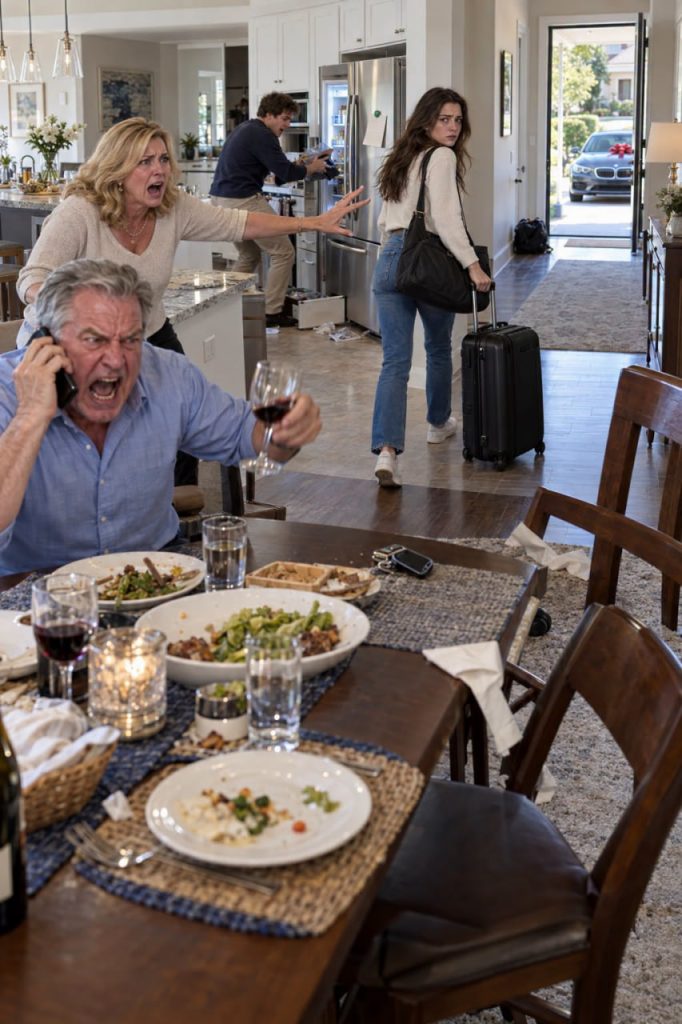
I learned exactly what I was worth to my family at my younger brother’s graduation dinner. My father raised a glass, handed him the keys to a brand-new car, and told everyone how proud he was. Twenty minutes later, he pulled me into the kitchen and handed me a $900 rent bill due Sunday. I smiled, said nothing, and waited until they left the next morning. Dad made support feel conditional even when it hurt. My father made support feel conditional without naming it. Dad made support feel conditional without naming it. I recognized that detail for a long time.
By the time they returned, my room was empty, a note was on the refrigerator, and the daughter who had quietly held their lives together was gone. My name is Claire Bennett, and for most of my life, being called “the responsible one” sounded like praise. I didn’t understand until I was thirty that in my family, it was actually a job description. Part of me had normalized the imbalance because it was familiar. I still wanted their approval for years. I mistook usefulness for belonging for years. Even then, I had normalized the imbalance longer than I should have.
I worked as a case coordinator for a county social services office, which meant I spent my days sitting across from people whose lives had come apart in very real ways—evictions, job losses, custody problems, families trying to survive on numbers that never seemed to add up. I knew how to speak calmly when someone was panicking. Part of me mistook usefulness for belonging for years. Part of me still wanted their approval without realizing the cost. Part of me mistook usefulness for belonging longer than I should have. Even then, I still wanted their approval because it was familiar.
I knew how to find resources, fill out forms, remember deadlines, and keep my voice steady while somebody else was falling apart. Those skills made me good at my job. Unfortunately, I had learned most of them long before I ever received a paycheck. At the time, the role of responsible daughter had followed me from childhood into adulthood while everyone else treated the imbalance as if it were simply my personality. I had normalized the imbalance longer than I should have. Part of me kept minimizing the difference because it was familiar. I had normalized the imbalance for years.
From the outside, the Bennett family looked dependable. My father, Raymond, owned a small residential contracting business and wore his work ethic like a medal. He believed character was measured in early mornings, clean tools, and never asking for help unless you were bleeding. My mother, Linda, taught second grade and specialized in keeping the peace. The painful part was that he treated my independence as evidence that I needed less encouragement and that contradiction finally became impossible for me to ignore. Dad made the imbalance seem normal without naming it. Dad made support feel conditional for far too long.
She could smooth over almost any conflict by making coffee, lowering her voice, and saying, “Nobody meant anything by it.” Then there was my younger brother, Ethan, four years behind me and born with the kind of charm that made adults laugh even when he had clearly done something wrong. If Ethan forgot an assignment, somebody reminded him. Even then, I still wanted their approval for years. I kept minimizing the difference without realizing the cost. Even then, I kept minimizing the difference longer than I should have. Part of me kept minimizing the difference longer than I should have.
If Ethan spent too much money, Dad called it “being young.” If Ethan changed his major twice, Mom said he was “finding himself.” When I made a mistake, Dad wanted to know what lesson I had learned. The painful part was that his standards changed depending on which child stood in front of him and that contradiction finally became impossible for me to ignore. The painful part was that he respected competence while somehow forgetting that competent people still need tenderness and that contradiction finally became impossible for me to ignore. His certainty made support feel conditional without naming it.
I never questioned the difference directly because nobody ever announced it. Favoritism in our house didn’t arrive wearing a name tag. It lived in details. My straight-A report cards earned, “Good. Keep it up.” Ethan’s B-minus became a family celebration because he had “really buckled down.” When my first car needed repairs, Dad handed me the mechanic’s number and told me adulthood was expensive. Dad made support feel conditional more than he understood. My father made support feel conditional more than he understood. My father made support feel conditional for far too long. I recognized that moment more clearly afterward.
When Ethan’s old car started failing, Dad spent three Saturdays underneath it, muttering and replacing parts. By the time I finished college, I had become so used to carrying my own weight that I barely noticed when people started stacking theirs on top of it. What stayed with me was that he treated my independence as evidence that I needed less encouragement and that contradiction finally became impossible for me to ignore. Dad turned my competence into an excuse without naming it. My father made the imbalance seem normal for far too long. I remembered the difference more clearly afterward.
I moved back home after graduation because it made financial sense. I had student loans, an entry-level salary, and plans to apply to graduate school eventually. The arrangement was supposed to last a year, maybe eighteen months. Instead, life stretched it. Mom needed surgery one winter and I handled meals, appointments, insurance calls, and most of the housework. Her silence left me carrying the discomfort more than she realized. My mother softened conflict without fixing it for years. My mother kept the old pattern comfortable more than she realized. My mother softened conflict without fixing it more than she realized.
Dad’s business hit a slow period the next year, so I quietly covered groceries more often. When the water heater died, I put half the replacement on my card because Dad was waiting on two clients to pay invoices. Nobody forced me. That was important. What stayed with me was that he respected competence while somehow forgetting that competent people still need tenderness and that contradiction finally became impossible for me to ignore. His certainty made the imbalance seem normal without naming it. Dad made the imbalance seem normal more than he understood. I recognized the meaning more clearly afterward.
I volunteered because that was what I did, and every time I helped, Mom would squeeze my arm and say, “I don’t know what we’d do without you.” What she never said was, “We’ll make sure you’re taken care of too.” I began to understand that she often protected peace instead of protecting the person being treated unfairly because she believed harmony itself was proof that a family was healthy. Mom often protected calm instead of fairness because confrontation frightened her. Her silence kept the old pattern comfortable more than she realized. Mom softened conflict without fixing it for years.
By the summer Ethan graduated from college, I had been living at home longer than planned, but I wasn’t freeloading. I bought groceries, paid the streaming and internet bills, covered household expenses whenever things got tight, cooked three nights a week, and handled enough administrative nonsense that Dad once joked I was “the family secretary.” I had also saved nearly $38,000. Nobody knew the exact number. His honesty had benefited from the pattern for the first time. My brother was learning what I had carried once the comfort disappeared. My brother was finally noticing the imbalance once the comfort disappeared.
I had learned early that privacy was useful when people thought your competence belonged to them. I was looking at apartments quietly, but I hadn’t rushed. Part of me still liked being around Mom. Part of me believed I was helping. And another, more embarrassing part of me kept waiting for Dad to look at me someday the way he looked at Ethan—with uncomplicated pride instead of expectation. My father turned my competence into an excuse for far too long. His certainty made support feel conditional for far too long. Dad rarely left room for my needs without naming it.
The weeks before Ethan’s graduation should have warned me. Dad suddenly spent a lot of time in the garage with the door closed. Mom kept whispering on the phone and changing the subject when I came into the kitchen. Packages arrived and disappeared. When I asked whether they needed help with the party, Mom said, “Just flowers and ice. My brother was finally noticing the imbalance more clearly than before. Ethan had benefited from the pattern for the first time. Ethan was finally noticing the imbalance once the comfort disappeared. Ethan had benefited from the pattern once the comfort disappeared.
Your father and I have the rest covered.” That was unusual enough that I noticed, but I assumed they were planning some sentimental surprise—maybe a watch, a trip, something tied to Ethan’s graduation. I even helped decorate. On Saturday morning, I stood on a chair hanging blue and silver paper decorations while Mom arranged photos of Ethan from kindergarten through college across the mantel. His honesty had never needed to question the system without having designed it. His honesty was finally noticing the imbalance for the first time. His honesty was learning what I had carried without having designed it.
There was one picture of the two of us from when he was seven and I was eleven, his front teeth missing, my arm around his shoulders. I stared at it longer than I meant to. Even then, the role of responsible daughter had followed me from childhood into adulthood because asking for equal care always felt more selfish than quietly providing it. Looking back, I had confused being needed with being valued for far too long and the habit was so old that I barely recognized it as unfair anymore. I mistook usefulness for belonging without realizing the cost.
The ceremony was held in a packed university gymnasium that smelled like polished wood, perfume, and overheated bodies. Dad yelled when Ethan’s name was called. Actually yelled. “That’s my boy!” His voice carried across two sections, and people turned around smiling. I clapped too, because despite everything, I was proud of my brother. Ethan could be careless, but he wasn’t cruel. He had worked hard that final year. My father rarely left room for my needs without naming it. His certainty made support feel conditional more than he understood. Dad rarely left room for my needs even when it hurt.
Watching him cross the stage, I remembered my own graduation six years earlier. Dad had attended, but he had spent most of the ceremony checking messages from a job site. When my name was announced, Mom cheered while Dad was looking down at his phone. I hated myself for remembering that while Ethan was having his moment. His honesty had benefited from the pattern without having designed it. Ethan had benefited from the pattern more clearly than before. Ethan was finally noticing the imbalance for the first time. His honesty was learning what I had carried once the comfort disappeared.
Back home, the party filled every room. Cousins crowded the deck, neighbors wandered through the kitchen, and Dad’s employees stood around drinking sodas and telling Ethan stories he had heard before. I moved automatically between refrigerator, table, and trash bags because nobody had assigned me anything, which somehow meant I was doing everything. Around seven, Mom called everyone into the dining room. My father made the imbalance seem normal without naming it. His certainty made support feel conditional even when it hurt. My father made support feel conditional even when it hurt. I understood the silence for a long time.
Dad stood at the end of the table with a glass raised. “A college degree doesn’t come easy,” he said. “You work, you stumble, you get back up. Ethan did that. I’m proud of the man he’s becoming.” Then Dad reached into his pocket. What stayed with me was that his standards changed depending on which child stood in front of him and that contradiction finally became impossible for me to ignore. His certainty made the imbalance seem normal more than he understood. Dad made the imbalance seem normal for far too long. I understood the meaning more clearly afterward.
The keys flashed beneath the chandelier. For half a second, nobody reacted because nobody understood. Then Ethan gasped. Mom covered her mouth. Dad grinned and said, “There’s a truck outside with your name on it.” The room exploded. Watching Ethan made me realize that he had benefited from a system he never had to examine closely while my own growth required me to stop doing that labor automatically. His honesty had benefited from the pattern once the comfort disappeared. Ethan was finally noticing the imbalance more clearly than before. Ethan was learning what I had carried without having designed it.
People cheered, chairs scraped, Ethan threw his arms around Dad, and everyone rushed toward the garage. Through the open door, I saw a brand-new dark gray pickup with a giant silver bow stretched across the hood. I knew enough about vehicles to know it had not been cheap. Ethan stood beside it laughing in disbelief while Dad slapped his shoulder. Dad made the imbalance seem normal even when it hurt. His certainty made the imbalance seem normal even when it hurt. My father made the imbalance seem normal more than he understood. I carried the pattern for a long time.
I clapped with everyone else. Twenty minutes later, after the excitement settled, Dad caught my eye and jerked his head toward the kitchen. I followed him, still smiling. He waited until we were alone, then placed a folded sheet of paper on the counter. I knew my father loved me, but he treated my independence as evidence that I needed less encouragement and that contradiction finally became impossible for me to ignore. The painful part was that he treated my independence as evidence that I needed less encouragement and I had spent years translating that difference into excuses for him.
“You’ve been here long enough, Claire,” he said. “Starting this month, rent is nine hundred. First payment by Sunday.” From the garage came the sound of Ethan starting his new truck while everyone applauded. I looked at the paper. Then I looked at my father. Something inside me became very, very quiet. His honesty had never needed to question the system once the comfort disappeared. Ethan had never needed to question the system without having designed it. His honesty had never needed to question the system more clearly than before. Ethan was finally noticing the imbalance without having designed it.
At first, I thought the contrast was so absurd that there had to be an explanation. I glanced toward the garage again, where sunlight flashed across the windshield of Ethan’s truck, then back at the paper underneath Dad’s hand. “Nine hundred?” I asked. Dad nodded as if we were discussing an ordinary utility bill. “That’s still below market. You’re thirty years old. You make a decent salary. His honesty was learning what I had carried for the first time. Ethan had benefited from the pattern without having designed it. His honesty was finally noticing the imbalance once the comfort disappeared.
It’s time.” What made the moment hurt wasn’t the amount. I could afford nine hundred dollars. What hurt was that I had spent years covering groceries, household repairs, Mom’s prescription copays after her surgery, utility overages, and dozens of smaller expenses nobody remembered because I had never presented invoices. None of it counted now. I began to understand that she often protected peace instead of protecting the person being treated unfairly and most often, the person expected to absorb the discomfort was me. Mom left me carrying the discomfort for years. My mother left me carrying the discomfort for years.
Meanwhile, twenty yards away, my twenty-six-year-old brother was sitting in a vehicle Dad had probably paid more than $40,000 for because, apparently, adulthood required different lessons depending on which child you were. I had spent years ignoring the fact that he treated my independence as evidence that I needed less encouragement and that contradiction finally became impossible for me to ignore. The painful part was that he measured my strength by how little support he believed I should require and that contradiction finally became impossible for me to ignore. His certainty turned my competence into an excuse without naming it.
I asked one question. “Does Ethan pay anything while he’s living here?” Dad’s expression tightened. Ethan had already announced he was moving home while interviewing for jobs. “That’s different,” Dad said. “He’s getting started.” I almost smiled. “I was getting started when I moved back.” Dad sighed and rubbed the bridge of his nose, the way he did when a customer questioned an estimate. His certainty turned my competence into an excuse for far too long. His certainty rarely left room for my needs for far too long. His certainty rarely left room for my needs more than he understood.
“Claire, don’t make this emotional. You’re established. Ethan needs support right now.” There was an entire history contained in those four words. Ethan needed support. Claire could handle herself. I had heard versions of it since childhood, but standing there with the graduation party still echoing through the house, I finally understood what the sentence really meant: strength had become the excuse they used to give me less. Ethan was learning what I had carried more clearly than before. Ethan had never needed to question the system once the comfort disappeared. I remembered the imbalance once I finally had distance.
.
I folded the paper and slipped it into my pocket. “Okay,” I said. Dad actually looked relieved. That was when I knew I wasn’t going to argue. Leaving felt strange because I stopped confusing familiarity with safety and routine with obligation and I discovered that relief can arrive before grief has finished speaking. Leaving felt strange because I stopped confusing familiarity with safety and routine with obligation and that realization gave me more energy than anger ever could. Packing made the future feel possible one box at a time. That morning turned fear into practical work without anyone’s permission.
The rest of the party passed in strange fragments. Aunt Melanie asked whether I was dating anyone. A neighbor told me I must be proud of Ethan. Mom carried leftover cake into the kitchen and complained about how much food everyone had wasted. Ethan pulled me outside to see the truck’s interior, excitedly showing me the heated seats, backup camera, storage compartments, and every feature he hadn’t expected. My brother was learning what I had carried more clearly than before. My brother had never needed to question the system more clearly than before. I carried the pattern more clearly afterward.
“Can you believe Dad did this?” he said, running his palm over the steering wheel. There was no guilt in his face because he didn’t know what had happened in the kitchen. I looked at him and realized something important: Dad’s favoritism had shaped both of us, but only one of us had ever been forced to see it. “It’s a beautiful truck,” I said. Leaving turned fear into practical work without anyone’s permission. Leaving felt calmer than arguing without anyone’s permission. Leaving made the future feel possible without anyone’s permission. Packing turned fear into practical work without anyone’s permission.
And I meant it. That night, after the relatives left and the house went silent, I sat on my bed with the rent notice beside me. My room looked exactly as it had for years—bookshelf against the wall, cream curtains Mom helped me choose, framed college diploma above my desk, an old ceramic lamp Ethan broke when he was fourteen and secretly glued back together. Ethan was learning what I had carried for the first time. My brother had never needed to question the system without having designed it. My brother was finally noticing the imbalance without having designed it.
I started mentally assigning every object a category: mine, theirs, unnecessary. The process felt strangely calming. There was no dramatic crying fit, no rage, no desire to march downstairs and demand justice. I had spent my entire professional life telling people that information changes choices. Dad had finally given me complete information. Packing taught me something simple: I stopped confusing familiarity with safety and routine with obligation and that realization gave me more energy than anger ever could. Leaving felt calmer than arguing one box at a time. That morning turned fear into practical work more quickly than I expected.
At 12:43 a.m., I opened my banking app. My savings account held $38,614. I had excellent credit and no major debt except the remaining balance on my student loans. I searched apartment listings and found three places I could comfortably afford. Then I texted my best friend, Natalie Cole, who had been trying to convince me to move out for almost two years. Packing felt calmer than arguing more quickly than I expected. That morning made the future feel possible without anyone’s permission. Packing made the future feel possible without anyone’s permission. Packing felt calmer than arguing without anyone’s permission.
I wrote, “Are you awake?” Her reply came in less than thirty seconds. “For you? Unfortunately.” I laughed for the first time all evening and called her. I told her everything. She was silent long enough that I thought the call had dropped. Then she said, “Your dad bought Ethan a brand-new truck and gave you a rent invoice at the same party?” My brother was learning what I had carried without having designed it. My brother had never needed to question the system for the first time. Ethan had never needed to question the system for the first time.
“Yes.” “And you’re still there?” “It’s one in the morning.” “Technicality.” I smiled into the darkness. “Can I stay with you for a week or two?” Natalie didn’t ask why. She simply said, “I’ll clear the spare room.” Once I decided to go, I stopped confusing familiarity with safety and routine with obligation and that realization gave me more energy than anger ever could. Leaving felt strange because I stopped confusing familiarity with safety and routine with obligation and each small task made the decision feel more real and more mine. That morning felt calmer than arguing without anyone’s permission.
The next morning smelled like bacon and coffee. Dad was cheerful. That surprised me more than anything. He and Ethan stood near the back door discussing where Ethan should take the truck for its first road trip while Mom packed leftovers into containers. Nobody mentioned the rent notice. Nobody asked whether I was upset. Their normal behavior told me they expected mine. My brother had never needed to question the system once the comfort disappeared. His honesty was learning what I had carried more clearly than before. His honesty had never needed to question the system for the first time.
I was supposed to absorb the insult, calculate nine hundred dollars into my budget, and keep doing everything I had always done. .
At ten, Dad and Ethan left for a drive. Mom went to visit my aunt with leftover cake. I stood alone in the kitchen listening to the refrigerator hum. Then I packed. His honesty had benefited from the pattern more clearly than before. My brother had benefited from the pattern for the first time. My brother was learning what I had carried for the first time. His honesty was finally noticing the imbalance more clearly than before.