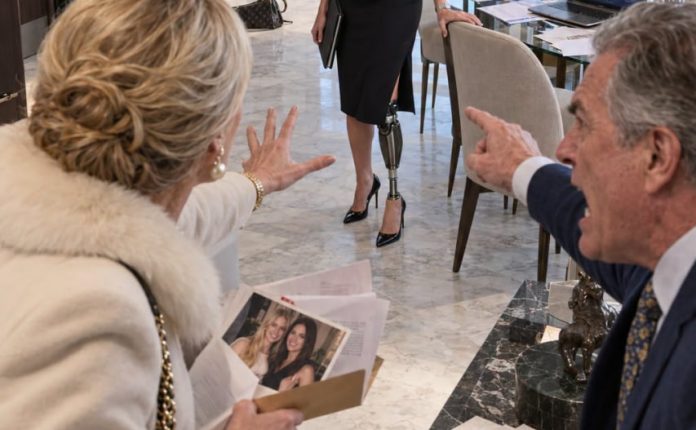
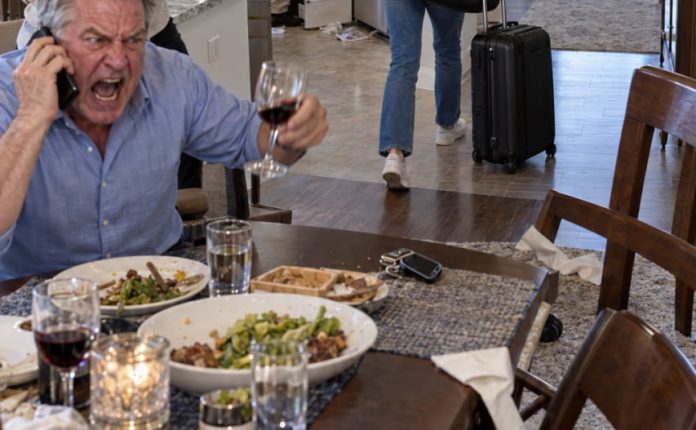
The CEO ordered me to pick up his daughter at the airport after she returned from studying abroad. I was just 15 minutes late because I stopped to save an elderly man after a terrible accident. She didn’t care. She demanded her father fire me on the spot. Three days later, that same old man walked into the CEO’s office…
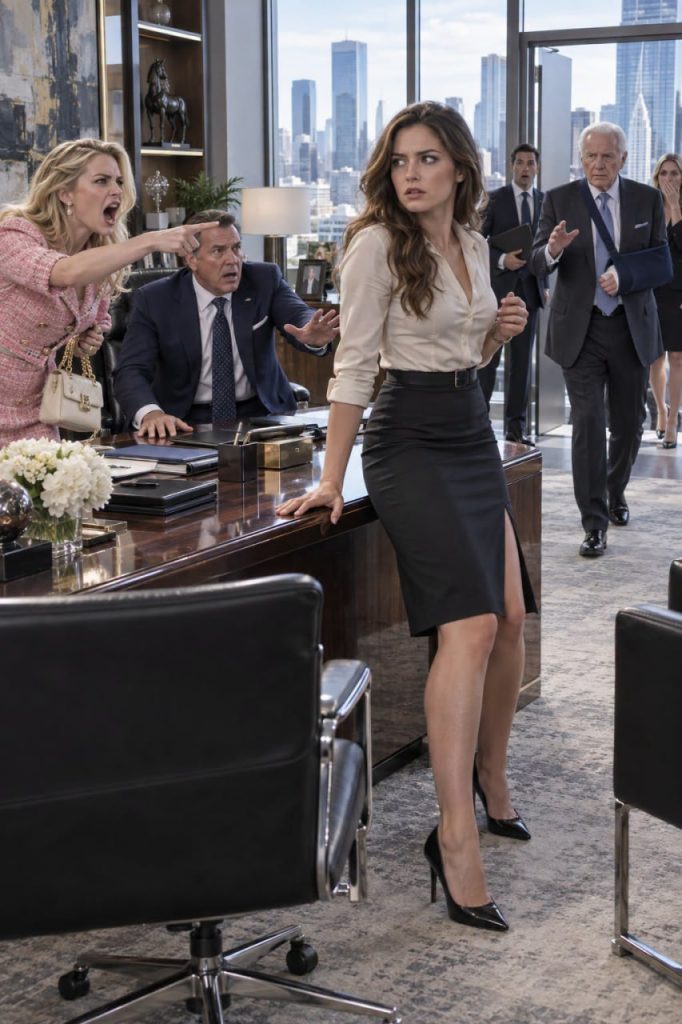
The first thing Caroline Vale looked at was her watch. Not the dark red smear drying across the cuff of my white blouse. Not the scrape along my wrist. Not the tiny flecks of safety glass still caught in the fabric near my elbow. Her watch. “You’re fifteen minutes late.” She said it beside the curb at JFK with three expensive suitcases arranged around her like barricades. The blood on my sleeve made the argument feel unreal. Caroline’s impatience exposed how differently she valued other people’s time. The airport delay was small compared with what had happened on the highway.
A black coat hung over one arm, oversized sunglasses sat on top of her head, and her mouth had already tightened into the expression people wear when they believe the world has personally inconvenienced them. I stopped in front of her, still breathing a little too fast. “I know. I’m sorry.” She looked me up and down. “What happened to you?” I glanced at my sleeve. I had spent six years believing performance created security. Stopping had not seemed heroic; it had seemed necessary. Jonathan’s reaction made the company suddenly feel unfamiliar. Howard’s recognition made Jonathan’s confidence disappear almost instantly.
“That isn’t my blood.” Her expression changed, but not in the way I expected. She took half a step backward. “What?” “My name is Claire Morgan,” I said, “and I’m the executive operations director your father sent to pick you up.” “I know who you are.” Of course she did. Everyone at Vale Dynamics knew who Caroline Vale was, even though she had never worked a single day there. I had never imagined one humane choice could be reframed as misconduct. Handing over my badge made the firing feel painfully real. By the third day, shock had hardened into clarity.
She was CEO Jonathan Vale’s only daughter. Twenty-six years old. Eighteen months in London studying international business. She appeared frequently in framed photos in Jonathan’s office, usually beside yachts, horses, charity dinners, or old stone buildings that looked expensive enough to have their own weather. I had been seven minutes from the terminal when the accident happened. Traffic had been moving badly but steadily. Horns. Brakes. The low growl of trucks. The empty box felt heavier than it should have. I watched power move across the room without anyone raising a voice. That mattered to me. I noticed that immediately.
Gray afternoon light bouncing off wet pavement from a shower that had passed less than an hour earlier. Then a dark sedan two lanes ahead of me jerked sharply. It clipped another vehicle, spun sideways, crossed toward the median, and hit the concrete barrier hard enough that I felt the impact through my steering wheel. I pulled over before I had time to debate it. Other cars slowed. People looked. I told myself that six years of work had to matter. Caroline looked frightened only when someone more powerful challenged her assumptions. I remembered it clearly. The silence felt different.
Then they kept moving. I remember the smell most clearly. Hot rubber. Rain on asphalt. Something metallic. The driver was an older man, silver-haired, maybe late sixties. His forehead was bleeding. His head had fallen toward the steering wheel, and one hand was twitching against his coat. I tried the driver’s door. Jammed. I ran around the car. The passenger door opened only a few inches. “Sir, can you hear me?” I still did not know that the firing hid another motive. I did not look away. I let that settle. I knew what it meant. I trusted my judgment.
His eyelids moved. I called emergency services, put the phone on speaker, and did what the dispatcher told me. Keep him awake. Don’t move him unless there was immediate danger. Watch his breathing. Tell him help was coming. He tried to reach for the seat belt but couldn’t seem to make his fingers cooperate. “It’s okay,” I told him. “Don’t fight it. Stay still.” His eyes found mine. “You stopped.” I stayed with the facts. I did not need permission. I could feel myself changing. That was new for me. I kept my voice steady. I could live with that.
“Anyone would.” Even then, disoriented and bleeding, he gave a faint shake of his head. “No.” Cars streamed behind me. He looked toward them. “They didn’t.” The paramedics arrived quickly, although it didn’t feel quick while I was crouched beside a stranger listening to him breathe. One of them asked questions. Had he lost consciousness? Did he say anything unusual? Was he taking medication? I knew almost nothing. I let them react. The truth remained simple. I did not apologize. I did not obey it. I stayed where I was. I let the moment stand. I refused the old role.
Before they moved him onto the stretcher, the man caught my hand. His grip was surprisingly strong. “Your name?” “Claire.” “Thank you, Claire.” Then they were gone. I stood beside my car afterward, shaking harder than I had while the accident was happening. Only then did I remember Caroline Vale. My phone showed missed calls. Three from her. Two from Jonathan’s assistant. One text from Caroline. WHERE ARE YOU? I called immediately. “I’m coming now. I had heard enough. I chose clarity instead. The old doubt surfaced. I held the boundary. I knew better now. I no longer felt trapped.
There was an accident.” “You were in an accident?” “No. I stopped for one.” Silence. Then: “You stopped?” “A man was hurt.” Another silence. Not concern. Disbelief. By the time I reached the terminal, fifteen minutes had passed beyond our agreed pickup time. Caroline listened to my explanation with both arms crossed. I showed her the emergency call log because something about her expression made me feel ridiculous enough to prove myself. I stopped explaining. I could finally breathe. I let reality speak. I stayed calm anyway. The answer became obvious. I trusted the process. I could see the pattern.
She barely looked at the screen. “That’s not really the issue.” I stared at her. “I’m sorry?” “The issue is that Dad sent someone from the company to get me, and you decided something else was more important.” “A man had just crashed into a barrier.” “There are emergency services for that.” “They weren’t there yet.” She lifted one shoulder. “They got there.” I remember thinking I must have misunderstood her. The airport delay was small compared with what had happened on the highway. The distinction mattered. I watched carefully. I let the evidence lead. I did not rescue anyone.
Then she picked up the handle of the largest suitcase. “Can we go?” The drive into Manhattan should have been quiet. It wasn’t. Caroline spent the first few minutes on her phone, tapping angrily at the screen. Then she called her father. Not his assistant. Not the office. Him. “Dad?” A pause. “Yes, she finally got here.” I kept my eyes on traffic. Caroline glanced at me. “No. You don’t understand. The blood on my sleeve made the argument feel unreal. I had never imagined one humane choice could be reframed as misconduct. That changed everything. I kept moving forward.
She decided to stop on the highway for some accident.” I gripped the steering wheel harder. There was another pause. Then Caroline said, with the casual impatience of someone asking for the wrong appetizer to be removed from a table: “Just fire her.” I looked at her. She looked straight back. “Caroline,” I said, “I’m sitting right here.” She turned toward the window. “I know.” That was the moment I realized she was serious. I had spent six years believing performance created security. Stopping had not seemed heroic; it had seemed necessary. Jonathan’s reaction made the company suddenly feel unfamiliar.
I had worked at Vale Dynamics for six years. I had started as a project manager when the company still occupied four floors instead of eleven. I had helped open two regional offices, rebuilt our vendor-control system after an audit, worked through three restructurings, and once slept on a conference-room couch during a systems migration because nobody else understood why the logistics platform kept rejecting the warehouse feeds. My annual reviews were excellent. Caroline’s impatience exposed how differently she valued other people’s time. By the third day, shock had hardened into clarity. Howard’s recognition made Jonathan’s confidence disappear almost instantly.
Jonathan had personally handed me a leadership award the previous year. Two weeks earlier, he had asked me to coordinate operational readiness for the largest acquisition in the company’s history. And that afternoon, he had ordered me to leave that work because his daughter’s driver canceled. I told myself that mattered. I told myself six years mattered. I told myself a rational man would hear what happened and say, “Of course you stopped.” I told myself that six years of work had to matter. I watched power move across the room without anyone raising a voice. That mattered to me.
When we pulled up to Vale Dynamics headquarters, Jonathan was waiting in the lobby. That was unusual enough to make my stomach tighten. Jonathan Vale was fifty-eight, silver at the temples, always controlled, always immaculate. He had the kind of calm voice that made people lean toward him in meetings. Caroline walked straight to him. “She was late.” Jonathan looked at my blouse. “What happened?” I explained. I had never imagined one humane choice could be reframed as misconduct. Handing over my badge made the firing feel painfully real. Caroline looked frightened only when someone more powerful challenged her assumptions.
Briefly. Accident. Injured driver. Emergency call. Paramedics. Fifteen minutes. Jonathan listened without interrupting. Then Caroline said, “I told you. She made a decision that wasn’t hers to make.” I waited for him to correct her. Instead, he looked at me. “Claire, clear your office.” For several seconds, I genuinely thought he meant clear my schedule. “What?” “You’re done here.” The lobby seemed to lose sound. The airport delay was small compared with what had happened on the highway. I told myself that six years of work had to matter. I still did not know that the firing hid another motive.
Even the security desk felt far away. “You’re firing me?” Caroline looked almost bored. Jonathan kept his voice low. “You were given a direct assignment.” “I stopped because a man could have died.” “You made the company secondary.” “For fifteen minutes.” “You exercised poor judgment.” I stared at him. Poor judgment. The words landed harder than being fired. “I exercised human judgment.” His expression tightened. “Don’t make this more difficult.” I had spent six years believing performance created security. The empty box felt heavier than it should have. I watched power move across the room without anyone raising a voice.
“You’re ending six years because I was fifteen minutes late after helping an injured stranger?” Caroline sighed. “Why are you acting like the fifteen minutes are the only issue?” I turned toward her. “What is the issue?” “Reliability.” I nearly laughed. Instead, I looked back at Jonathan. He said nothing. That hurt more. Human Resources asked me not to remove company material that day because some of my current work touched confidential acquisition files. Caroline looked frightened only when someone more powerful challenged her assumptions. I still did not know that the firing hid another motive. I noticed that immediately.
I would return later to pack under supervision. I handed over my badge. The plastic card made a tiny clicking sound against the security desk. That sound stayed with me all night. Three days later, I returned to Vale Dynamics carrying an empty cardboard box. By then I had moved from shock to anger and from anger to something colder. I had already updated my résumé. Already called two former colleagues. The blood on my sleeve made the argument feel unreal. Caroline’s impatience exposed how differently she valued other people’s time. Stopping had not seemed heroic; it had seemed necessary.
Already decided that if Jonathan Vale believed stopping at an accident made me unreliable, then I wanted no part of whatever definition of loyalty he used. The executive floor smelled like coffee, printer toner, and the lemon oil the cleaning crew used on the conference tables. Melissa Reed, our HR director, met me near reception. She looked uncomfortable. “I’m sorry, Claire.” “You didn’t fire me.” “No.” Handing over my badge made the firing feel painfully real. By the third day, shock had hardened into clarity. I did not look away. I knew what it meant. I stayed with the facts.
Something in the way she said it made me look at her. “Is there something else?” Her mouth opened. Before she could answer, the elevator chimed. Every head near reception turned. The doors opened. The older man from the crash stepped out. There was a pale bandage above his eyebrow. For one second, I thought my exhausted brain had created him. Then Jonathan came out of his office. And everything about him changed. The airport delay was small compared with what had happened on the highway. The empty box felt heavier than it should have. I did not need permission.
He didn’t wave. He didn’t call a greeting from across the room. He stood immediately. Then he buttoned his jacket. I had watched Jonathan Vale greet senators, venture partners, famous investors, and clients who could move our stock price with a phone call. He usually made them come to him. This time, he walked across the entire executive floor. “Mr. Holloway.” The name moved through the room almost invisibly. I saw Melissa’s eyes widen. Jonathan’s reaction made the company suddenly feel unfamiliar. Howard’s recognition made Jonathan’s confidence disappear almost instantly. I could feel myself changing. That was new for me.
Caroline was sitting inside her father’s office with the door open. She heard it too. She stepped out. And whatever confidence she had been wearing disappeared. The older man shook Jonathan’s hand. Then he looked over Jonathan’s shoulder. He saw me. His face changed. “Claire.” Jonathan turned so quickly I heard the leather sole of his shoe scrape against the floor. “You know her?” Mr. Holloway touched the healing cut above his eyebrow. I had never imagined one humane choice could be reframed as misconduct. I kept my voice steady. I could live with that. I did not obey it.
“She saved my life.” Nobody moved. I was still holding my empty cardboard box. And Jonathan Vale was staring at it as if, for the first time, he had begun to wonder what exactly he had done. For several seconds, all I could hear was the hum of the air-conditioning. Mr. Holloway walked toward me. “You’re all right?” “I’m fine.” His eyes dropped to the cardboard box. “What is that?” The personnel process looked worse each time Melissa answered honestly. My record showed years of trust destroyed by one impulsive command. It could have followed me far beyond Vale Dynamics.
I almost said, “Nothing.” That was habit. Six years at Vale Dynamics had trained me to smooth things over, answer efficiently, and avoid creating problems on the executive floor. But I wasn’t an employee anymore. “My office,” I said. “I’m packing it.” His brow furrowed. “Why?” Jonathan moved before I answered. “Perhaps we should talk privately.” Mr. Holloway didn’t look at him. “Why is she packing?” Caroline answered. “She was fired.” The misconduct notation frightened me more than losing the job itself. The acquisition changed the stakes without changing the facts. Howard kept returning to the same question: why me?
Mr. Holloway turned toward her. “For what?” She folded her arms. “I already explained this.” “No,” I said quietly. “You explained it to your father.” Her eyes snapped toward me. Mr. Holloway looked between us. Jonathan’s jaw had begun to tighten. I said, “I was sent to pick Caroline up from the airport. I stopped when I saw your accident. I arrived fifteen minutes late.” Mr. Holloway stared at me. Jonathan now had to defend both his judgment and his process. Melissa’s disclosure about my risk memorandum changed the conversation completely. I had submitted it because unresolved controls bothered me.
Then at Jonathan. “You fired a six-year employee because your adult daughter waited fifteen minutes beside her luggage?” Caroline’s cheeks reddened. “That’s not what happened.” “Then tell me what happened.” “She abandoned an assignment.” “No,” I said. “I was late completing it.” She looked furious that I had corrected her. Mr. Holloway’s eyes moved to Jonathan. “And you agreed with this?” Jonathan lowered his voice. “Howard, this is an internal personnel matter.” That question exposed how casually Jonathan blurred company and family boundaries. The vendor payments were unusual because the documentation did not match the money. I remembered it clearly.
That was when I learned the older man’s first name. Howard Holloway. The name sounded familiar. Not from newspapers. Not exactly. From meetings. Acquisition calls. Documents where certain parties had been described only as “buyer representatives.” Howard looked at Caroline. “Why did you want her fired?” Caroline exhaled sharply. “Because I had been traveling for nine hours, Dad specifically sent someone to meet me, and I was left standing there.” It could have followed me far beyond Vale Dynamics. I had not accused anyone; I had asked for review. Jonathan’s anxiety became most visible when the memorandum entered the room.
Howard studied her for a long moment. Then he said, “Anger is useful.” Caroline blinked. “What?” “It tells you what people believe they’re entitled to.” Her arms slowly lowered. Before she could answer, Howard turned to Jonathan. “I came here because we were supposed to review Thursday’s acquisition meeting.” My stomach tightened. Jonathan glanced at me. A tiny movement. Almost nothing. But I noticed. Howard continued. Howard’s questions forced everyone to examine what Jonathan had treated as obvious. The personnel process looked worse each time Melissa answered honestly. The question was no longer simply whether I deserved my job back.
“Apparently, we have something else to review first.” He handed Jonathan a sealed folder. I knew that folder. Not the exact one, but the format. Legal review packets for the acquisition used the same heavy cream paper and black security seal. Vale Dynamics had spent eight months preparing for a confidential transaction that could double the company’s size. Revenue had flattened. Two large clients had moved part of their business elsewhere. My record showed years of trust destroyed by one impulsive command. The acquisition changed the stakes without changing the facts. Howard kept returning to the same question: why me?
Our expansion plan was delayed. Jonathan had repeatedly told senior leadership that the acquisition would “define the next decade.” Only a handful of people knew the buyer’s identity. I wasn’t one of them. Jonathan opened the folder. His hands stopped. Howard looked at me. “I suppose they never told you.” “Told me what?” He turned slightly so the room could hear him. “My family controls the company acquiring Vale Dynamics.” The misconduct notation frightened me more than losing the job itself. Melissa’s disclosure about my risk memorandum changed the conversation completely. I had submitted it because unresolved controls bothered me.
Caroline’s face drained of color. So did Jonathan’s. I thought about the accident. About the man bleeding behind the wheel. About the fact that I had nearly driven past the person whose signature might determine the future of thousands of employees. It was absurd enough to feel unreal. Jonathan cleared his throat. “Howard, we really should continue privately.” Howard nodded toward my box. “Was Claire terminated according to company policy?” Howard’s questions forced everyone to examine what Jonathan had treated as obvious. The vendor payments were unusual because the documentation did not match the money. I stayed where I was.
Jonathan’s expression changed. Not much. But enough. He looked toward Melissa. She had been standing near the reception desk the entire time. “Melissa?” She hesitated. “No formal review was conducted.” I stared at her. “What?” Melissa looked miserable. “Jonathan instructed HR to process the separation after the decision had already been made.” Howard’s face hardened. “So there was no investigation?” “No.” “No disciplinary history?” Melissa shook her head. “No.” “Previous warnings?” The vendor payments were unusual because the documentation did not match the money. The question was no longer simply whether I deserved my job back. The silence felt different.
“No.” Jonathan stepped in. “This is not relevant to the acquisition.” Howard gave him a cool look. “We are assessing whether to place hundreds of millions of dollars under the leadership of this executive team. Judgment is relevant.” Caroline looked at her father. I saw something new in her face. Fear. Howard turned back to Melissa. “And what role does Miss Vale hold here?” Caroline answered before Melissa could. It could have followed me far beyond Vale Dynamics. Jonathan now had to defend both his judgment and his process. That question exposed how casually Jonathan blurred company and family boundaries.
“None yet.” Howard’s eyes moved toward her. “Yet?” Jonathan spoke reluctantly. “She is expected to join corporate strategy next month.” I had heard rumors. Nothing official. Caroline’s return from London apparently wasn’t simply a homecoming. Howard gave a slow nod. Then he looked at me. “Why was an executive operations director sent to the airport?” I almost smiled. It was the question nobody inside Vale had bothered asking. My record showed years of trust destroyed by one impulsive command. I had not accused anyone; I had asked for review. Jonathan’s anxiety became most visible when the memorandum entered the room.
“Caroline’s driver canceled. Jonathan called me while I was reviewing acquisition readiness with Finance.” Howard looked genuinely confused. “He removed the person coordinating operational readiness from acquisition work to pick up his daughter?” Jonathan’s voice sharpened. “It was temporary.” “So was the delay.” Nobody answered. Melissa shifted the file in her hands. Then she said, “Claire, there is something you should know.” A strange sensation moved through my chest. Howard’s questions forced everyone to examine what Jonathan had treated as obvious. The personnel process looked worse each time Melissa answered honestly. The acquisition changed the stakes without changing the facts.
Not fear yet. The moment before fear. She opened the folder. My personnel file. “Jonathan didn’t only authorize your termination.” I stared at her. “What else?” Melissa swallowed. “He approved a misconduct notation.” Jonathan turned toward her. “Melissa.” She kept going. “It states that you abandoned a critical company assignment and demonstrated serious failure of executive responsibility.” The cardboard box slipped slightly in my hands. I caught it. The misconduct notation frightened me more than losing the job itself. Jonathan now had to defend both his judgment and his process. Melissa’s disclosure about my risk memorandum changed the conversation completely.
For the first time since being fired, I felt genuinely sick. A termination was one thing. A misconduct notation was another. Executive background checks often went deeper than normal reference calls. A notation like that could follow me. It could make future boards wonder whether I had been fired for negligence, insubordination, or mishandling confidential work. “You put that in my file?” I looked at Jonathan. He didn’t answer. Howard kept returning to the same question: why me? That question exposed how casually Jonathan blurred company and family boundaries. Jonathan’s anxiety became most visible when the memorandum entered the room.
Howard did. “Remove it.” Jonathan’s head snapped toward him. “You can’t order that.” “No.” Howard’s voice stayed calm. “But your board can.” Something passed across Jonathan’s face. Fast. Alarm. Howard saw it. So did I. He asked Melissa whether the board had been notified of my termination. “An automated executive personnel notice went to the board chair this morning.” Jonathan stepped forward. “This is becoming unnecessarily dramatic.” Howard’s questions forced everyone to examine what Jonathan had treated as obvious. I had submitted it because unresolved controls bothered me. The question was no longer simply whether I deserved my job back.