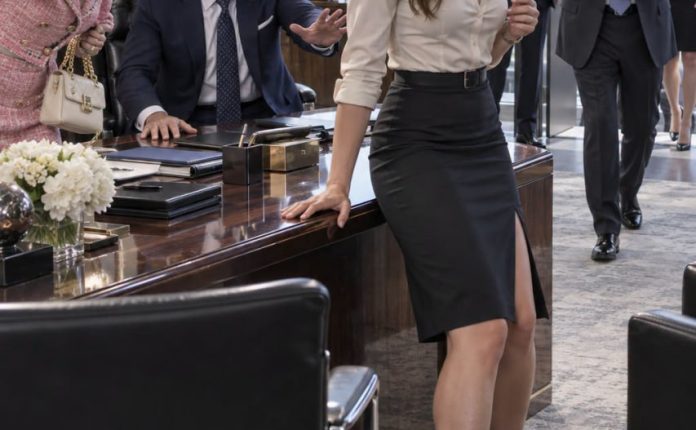
Before I could answer, my office doors opened. Sloane marched in wearing a cream designer dress, oversized sunglasses pushed into her hair, and the same perfume I remembered from adolescence, floral and expensive enough to announce her before she spoke. She had been beautiful as a teenager and had matured into the kind of woman magazine profiles described as effortlessly elegant, though nothing about her looked effortless now. The metal joint beneath my clothes was not a tragedy, and I refused to let anyone turn survival into a weakness again. I could feel the difference between compassion and surrender now.
Her face was pale beneath perfect makeup. “Did they tell you?” she demanded. I remained seated. “Tell me what?” Her eyes narrowed. “Don’t play games, Evelyn. Mom and Dad said you refused.” “They asked for a million dollars. They neglected to mention why.” She planted both palms on my desk. Money had always been their favorite shortcut, a way to avoid responsibility while preserving the appearance that nothing serious had happened. They saw my wealth as proof that helping them would cost me nothing, ignoring that the real price was becoming complicit. Nothing improved when I translated betrayal into misunderstanding.
“It is temporary. I just need a bridge until some financial issues are corrected.” “Financial issues.” I repeated the words slowly. “Interesting description.” Her posture stiffened. That small reaction told me Daniel’s information was accurate. “You have more money than you could spend in five lifetimes,” she snapped. “And you know what I’ve been through.” The million dollars was only a number until I understood what they wanted it to erase, and then it became evidence of the same old pattern. I had spent too many years softening facts so other people would not have to feel responsible for them.
I couldn’t help it. I laughed. “What you’ve been through?” Sloane leaned closer. “You think being the favorite was easy? They expected perfection from me every second.” For half a heartbeat, I almost felt something resembling pity. Then she added, “And now you’re enjoying watching me fail because you’ve always been jealous.” There she was. I had spent childhood watching doors open for Sloane while mine closed, but I no longer needed her life to become smaller for mine to matter. I had spent too many years softening facts so other people would not have to feel responsible for them.
The girl on the sofa while our father threw me into snow. “Leave my office.” Her eyes widened. “You don’t understand. If certain information becomes public, Adrian’s father will destroy me. My marriage will be over. My career will be finished.” “Then perhaps you shouldn’t have done whatever created that information.” She lowered her voice. What hurt most was not the request itself, but how naturally my family expected the old hierarchy to resume the moment they needed something from me. Their version of loyalty always seemed to flow in one direction, toward whoever they had already decided mattered most.
“If you don’t help me, I’ll tell reporters exactly what kind of person you are. I’ll tell them the CEO of Emberstone abandoned her parents and refused to help her own sister because she’s been bitter about her disability her whole life.” My coffee tasted suddenly metallic. Not because the threat frightened me, but because she still believed my missing leg was the easiest weapon to use against me. My work had given me something my family never could: confidence rooted in evidence instead of approval. Some consequences feel cruel only to people who expected someone else to prevent them.
I pressed the intercom. “Security, please come to my office.” Sloane stared at me. “You’re serious?” “Completely.” She backed toward the door as two security officers arrived. “You’re going to regret humiliating me,” she shouted. “You think Everett Hale respects you? She had inherited our parents’ most dangerous belief: that someone else should absorb the cost whenever her choices became inconvenient. Even now, facing consequences of her own making, Sloane seemed more offended by my refusal than ashamed of what she had done. I stopped asking what explanation would keep the peace and started asking what the evidence actually showed.
Wait until he learns what kind of family you come from.” I smiled. “That’s the first sensible thing you’ve said. I think he should learn exactly what kind of family I come from.” Her face changed. Fear flashed so quickly most people would have missed it. I didn’t. After she was escorted downstairs, I called Daniel again. “Find Nora Bennett. Family had been used as a command whenever they wanted access to me, but rarely as a reason to protect me. Their version of loyalty always seemed to flow in one direction, toward whoever they had already decided mattered most.
I want to speak with her personally.” He was silent for a moment. “There may be legal sensitivities.” “Then arrange it legally.” I ended the call and opened the acquisition calendar on my desk. Saturday’s signing dinner at the Hale estate had one notation beneath it that I hadn’t noticed before. Family engagement celebration immediately following contract dinner. For years I had remembered their faces after my amputation more clearly than the pain, because disgust from family can outlast physical wounds. They had confused difference with damage, and I had spent adulthood proving to myself that neither required their permission.
My hand froze over the screen. Sloane’s engagement party and my biggest business deal of the year were happening in the same house, on the same night. . Nora Bennett lived in a modest apartment building west of the city where the automatic entrance door opened too slowly and the hallway smelled faintly of detergent from the laundry room downstairs. The more she spoke, the clearer it became that she still believed my success existed primarily as a resource she could claim when necessary. That moment became another line between the life I had survived and the one I was building.
When she answered my knock from her wheelchair, her face changed the instant she saw my suit. “If Sloane sent you, I’m not signing anything else.” Her voice was flat, but one hand had already moved toward the phone on her lap. “She didn’t send me,” I said. “My name is Evelyn Whitmore.” Sloane had grown up protected from consequences so completely that accountability sounded to her like persecution. She had inherited our parents’ most dangerous belief: that someone else should absorb the cost whenever her choices became inconvenient. I was finally learning that patience has limits when respect disappears.
Recognition came slowly, followed by suspicion. “Whitmore?” “I’m her sister.” Nora began closing the door. I put my palm against the frame but didn’t force it. “I haven’t spoken to her voluntarily in nineteen years. I am not here to protect her.” The door stopped. I was learning that a boundary does not become cruel simply because someone had benefited from its absence. Saying no felt almost peaceful once I stopped treating another person’s panic as proof that I had done something wrong. Distance was not punishment; it was the structure that kept old patterns from returning under new excuses.
Her apartment had been modified in practical ways that still looked temporary: a lowered kitchen shelf, grab bars, furniture pushed farther apart to create wider paths. Boxes of medical supplies sat neatly against one wall. Nora was twenty-six, younger than Daniel’s initial report had suggested, with dark curls tied loosely behind her head and the exhausted eyes of someone who had spent too much time explaining pain to strangers. Her wheelchair, medical supplies, and careful movements turned an abstract cover-up into consequences I could see directly. The silence after a firm answer often revealed more than another hour of arguing.
I told her about my parents’ demand, the missing foundation money, and my intention to expose anything that could be proven lawfully. She studied my titanium leg. “She did this to you too?” “No. Cancer did this. My family just decided it made me disposable.” Something in her face softened. Nora told me what happened that night. I had spent too many years wondering what I could have done differently before realizing the cruelty had never required my cooperation. Family had been used as a command whenever they wanted access to me, but rarely as a reason to protect me.
She had left Hale Meridian’s accounting department after staying late to finish quarter-end work. At an intersection less than ten minutes from home, Sloane’s SUV entered against the light and struck the driver’s side of Nora’s car. Nora remembered shattered glass, the smell of deployed airbags, and someone outside yelling not to move her. Nora’s life made every argument about family loyalty feel obscene because she was living with injuries created by choices Sloane wanted money to hide. I could not undo what happened to Nora, but I could refuse to become another person who helped make the truth disappear.
At the hospital, she learned her spinal cord had been badly damaged. Within days, a man representing Sloane approached her family. He implied that fighting wealthy people could become expensive and unpleasant. He offered money in exchange for confidentiality. “Ten thousand dollars,” Nora said bitterly. “My first week of medical bills was more than that.” The hardest part was accepting that one clear fact could expose years of assumptions. The records kept pulling us back to reality whenever emotions threatened to blur it. Her wheelchair, medical supplies, and careful movements turned an abstract cover-up into consequences I could see directly.
When she refused, strange things happened. Her father received anonymous calls. Her younger brother was followed from work twice. Whether those incidents could be directly connected to the fixer was uncertain, but the fear was enough. Nora signed. Then she told me something Daniel hadn’t discovered. Before the crash, Nora had noticed irregular invoices inside Hale Meridian’s charitable foundation while helping reconcile accounts. Her wheelchair, medical supplies, and careful movements turned an abstract cover-up into consequences I could see directly. Listening to Nora reminded me that wealth is most dangerous when people begin believing it should protect them from accountability.
Nothing conclusive, but several payments had been routed through a communications vendor Sloane frequently used. After the crash, Nora’s employee access vanished while she was still hospitalized. “I thought it was because I couldn’t return to work,” she said. “Now I’m not so sure.” I felt the story shift beneath my feet. She did not need another powerful family deciding what her silence was worth; she needed room to choose for herself. Listening to Nora reminded me that wealth is most dangerous when people begin believing it should protect them from accountability. Nothing improved when I translated betrayal into misunderstanding.
“Did you keep copies?” Nora stared at me. “I kept screenshots because the numbers bothered me.” She wheeled toward a desk and opened a drawer. “I never knew whether they mattered.” They mattered. Daniel and our outside counsel spent the next two days authenticating records, preserving metadata, and coordinating with attorneys experienced in white-collar reporting. Justice became less about watching someone suffer and more about refusing to participate in another lie. The law could not repair childhood, but it could establish responsibility for choices made in the present. I did not need another promise before deciding what I would protect.
I refused to turn evidence into some theatrical revenge stunt that could compromise a legitimate investigation. The more we verified, the worse it looked. Foundation funds had moved through fabricated consulting invoices. Portions went to legal intermediaries connected to the settlement and crisis management. Other transfers matched payments made around the time witnesses changed statements. The metal joint beneath my clothes was not a tragedy, and I refused to let anyone turn survival into a weakness again. For years I had remembered their faces after my amputation more clearly than the pain, because disgust from family can outlast physical wounds.
The information was provided through counsel to the appropriate authorities, along with Nora’s account and the preserved records. I didn’t know whether arrests would happen Saturday night, next month, or after a grand jury reviewed everything. Real justice rarely operated on a dramatic schedule. But Everett Hale deserved to know before signing a massive transaction with me, especially when the suspected theft came from his foundation. What they wanted was not assistance but concealment, and there was no amount of family history that could make that acceptable. I could care about everyone involved without volunteering to absorb the consequences again.
I requested a private discussion before Saturday’s contract signing and told his chief legal officer the issue involved potential financial misconduct requiring urgent review. I did not mention Sloane by name over unsecured channels. Then I created three binders: one for Everett and counsel, one for authorities if requested, and one for my own records. Justice became less about watching someone suffer and more about refusing to participate in another lie. The law could not repair childhood, but it could establish responsibility for choices made in the present. The facts were easier to trust than the shifting explanations around them.
June called them the apocalypse folders. “Too dramatic?” she asked. “Coming from our family?” I said. “Not remotely.” Friday evening, Meredith called from a number I didn’t recognize. I almost ignored it, then answered because some part of me wanted to know how desperate they had become. I had spent too many years wondering what I could have done differently before realizing the cruelty had never required my cooperation. Every boundary felt more natural once I stopped treating someone else’s disappointment as an emergency. Once I saw the pattern clearly, I could no longer pretend the latest incident stood alone.
“Evelyn, please,” she began. Her voice had lost its commanding sharpness. “Sloane made mistakes.” “Crashing into someone is a mistake. Moving money and pressuring people afterward requires several decisions.” Meredith went silent. “You don’t know everything.” “Then tell me.” She couldn’t. Instead she changed tactics. “Your father hasn’t been sleeping. I’m sick with worry. We are still your parents.” What hurt most was not the request itself, but how naturally my family expected the old hierarchy to resume the moment they needed something from me. The truth did not become cruel simply because someone disliked hearing it spoken without excuses.
The old words should have hurt. They didn’t. “Parents don’t steal their child’s identity to fund another child’s luxury life.” “We paid for necessities.” “Sloane’s European trip was not a necessity.” “You had scholarships. You were always resourceful.” I actually closed my eyes. Even now, she had found a way to make surviving their abuse sound like evidence that it hadn’t mattered. The million dollars was only a number until I understood what they wanted it to erase, and then it became evidence of the same old pattern. I did not need another promise before deciding what I would protect.
I told her never to call again unless through an attorney. Before hanging up, she whispered, “If you destroy your sister, you’re destroying us too.” I looked around my quiet office, at the skyline reflected in black glass. “You erased me when I was sixteen. Whatever happens to you now isn’t destruction by me. The more she spoke, the clearer it became that she still believed my success existed primarily as a resource she could claim when necessary. Even now, facing consequences of her own making, Sloane seemed more offended by my refusal than ashamed of what she had done.
It’s consequence.” Saturday afternoon, I dressed slowly. I chose a midnight-blue suit tailored so the left trouser leg sat slightly higher than usual, leaving the polished titanium joint of my prosthetic unmistakably visible. Not as a statement of defiance. I had stopped dressing for their comfort years ago. My prosthetic had once been the symbol they used to measure everything they thought I lacked, but it had become evidence of how completely they misjudged me. I no longer carried shame about the leg they treated as an inconvenience; the shame belonged to the people who made a child feel disposable.
When I arrived at the Hale estate, the long driveway curved through bare trees toward a stone mansion lit by cool white exterior lamps. Valets moved between luxury cars while guests entered beneath a covered portico. Inside, crystal lights reflected across pale marble floors, and soft music drifted from a string quartet near the ballroom. Everett met me outside his private study before the signing. Their version of loyalty always seemed to flow in one direction, toward whoever they had already decided mattered most. I no longer believed that keeping the family together was a job assigned only to me.
He was a tall man in his early sixties with silver hair and the controlled manner of someone accustomed to deciding whether entire projects lived or died. “Your counsel said the issue was serious.” I handed him the first binder. “It involves your foundation, your future daughter-in-law, and a former employee named Nora Bennett.” I had built financial security precisely because I learned early what happened when other people believed they could use my name and resources. I wanted honesty more than appearances, because appearances had hidden too much already. Every new fact made the earlier explanations harder to believe.
Everett stopped breathing for half a second. Then he looked at me. “Nora was injured in a traffic collision.” “Yes,” I said. “And I believe the collision is connected to the missing money.” From the ballroom beyond the study doors, applause suddenly erupted as someone announced Sloane and Adrian’s arrival. Nora’s life made every argument about family loyalty feel obscene because she was living with injuries created by choices Sloane wanted money to hide. I could not undo what happened to Nora, but I could refuse to become another person who helped make the truth disappear. That stayed with me.
. Everett lowered his eyes to the first page. His expression changed before he reached the bottom. Everett read in silence while his general counsel, Monica Price, stood beside him turning pages as though each one carried more weight than the last. I remained across the desk and resisted every temptation to fill the room with explanations. The documents could speak for themselves. I did not need a public spectacle to prove what happened; documents, witnesses, records, and patient investigation were stronger than humiliation. The law could not repair childhood, but it could establish responsibility for choices made in the present.
Eventually Everett stopped at a transfer schedule and asked, “How certain are you?” Monica answered before I could. “We need forensic verification, but these routing numbers align with the foundation accounts. The supporting invoices should be compared immediately against approved vendor contracts.” He turned another page and found Nora’s preserved screenshots. His jaw tightened. Money had always been their favorite shortcut, a way to avoid responsibility while preserving the appearance that nothing serious had happened. The more calmly I looked at the facts, the less complicated the situation became. Nothing about the situation improved when everyone avoided the obvious question.
“She worked for us.” “Junior accounting,” I said. “She was driving home from your office when the collision happened.” A knock sounded. Adrian stepped into the study wearing a tuxedo and a confused smile. “Dad, everyone’s asking where you are. Sloane wants the toast in ten minutes.” Everett looked at his son for a long moment. The more she spoke, the clearer it became that she still believed my success existed primarily as a resource she could claim when necessary. She had inherited our parents’ most dangerous belief: that someone else should absorb the cost whenever her choices became inconvenient.
I watched Adrian’s smile disappear. “What’s wrong?” Everett closed the binder. “Get Sloane. Quietly.” Adrian glanced at me. “Is this about the Emberstone deal?” “Get her.” Something in his father’s tone sent him out without another question. Monica immediately began making calls to the foundation’s audit committee and outside counsel. I stood near the window, listening to faint laughter from the ballroom below. They still spoke as if nineteen years of silence were a technicality instead of a choice they had made repeatedly. That detail stayed with me because it connected too many earlier moments I had once explained away.
Somewhere out there, Meredith and Grant were celebrating the future they had built around Sloane, still believing one million dollars was the only thing between them and disaster. Sloane entered five minutes later with Adrian behind her. Meredith and Grant followed despite clearly having been told not to. I had spent too many years wondering what I could have done differently before realizing the cruelty had never required my cooperation. I stopped asking what explanation would keep the peace and started asking what the evidence actually showed. I had learned how expensive it could be to ignore my own uneasiness.
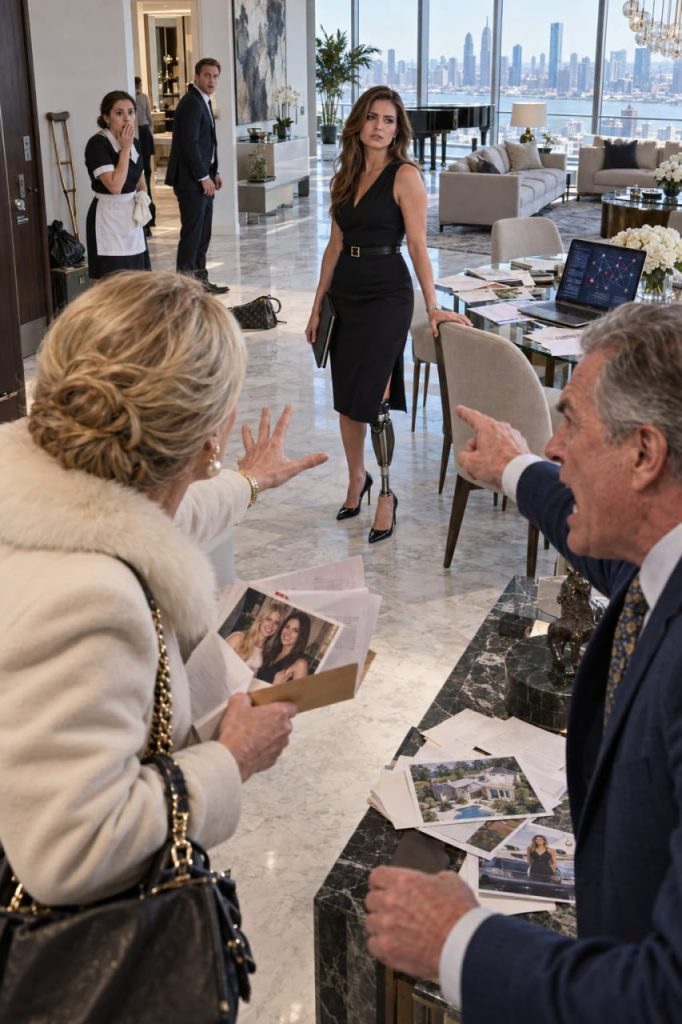
The instant Sloane saw me, she stopped so abruptly Adrian nearly walked into her. “What is she doing here?” Meredith demanded. Grant looked at Everett. “There must be some misunderstanding.” Everett opened the binder again. “Did Sloane authorize payments from my charitable foundation through Langford Communications and two associated consulting entities?” Nobody answered. Sloane’s face went pale. I had spent childhood watching doors open for Sloane while mine closed, but I no longer needed her life to become smaller for mine to matter. That moment became another line between the life I had survived and the one I was building.
“Those were legitimate crisis expenses.” Adrian stared at her. “Crisis expenses for what?” She turned toward him, lips parting, and I watched the moment she realized there was no answer that didn’t open another door. Meredith pointed at me. “This is revenge. Evelyn has hated her sister since childhood.” Everett barely looked at her. “Mrs. What hurt most was not the request itself, but how naturally my family expected the old hierarchy to resume the moment they needed something from me. I had spent too many years softening facts so other people would not have to feel responsible for them.
Whitmore, my counsel is reviewing bank records. Your daughter’s sister did not create them.” Grant stepped forward. “Let’s all calm down. Whatever happened can be corrected privately.” The phrase corrected privately was almost elegant in its ugliness. Money had always been their solvent. Stain on a rug? Punish the inconvenient child. Debt? Put it in Evelyn’s name. The million dollars was only a number until I understood what they wanted it to erase, and then it became evidence of the same old pattern. That detail stayed with me because it connected too many earlier moments I had once explained away.
Crime threatening the golden daughter’s marriage? Replace the million and move forward. Then another knock came. Monica opened the door, and Nora rolled inside. Sloane made a sound so small I almost didn’t hear it. Adrian turned. “Nora?” That single word told me he recognized her. Nora held herself straighter than she had in her apartment. “Hello, Mr. I could not undo what happened to Nora, but I could refuse to become another person who helped make the truth disappear. She did not need another powerful family deciding what her silence was worth; she needed room to choose for herself.
Hale.” Everett moved toward her. “Nora, I was told your injuries came from a hit-and-run investigation with no confirmed driver.” She looked directly at Sloane. “There was a driver.” Adrian slowly turned toward his fiancée. Sloane backed toward the wall. “She signed an agreement.” Monica’s eyes sharpened. Sloane had grown up protected from consequences so completely that accountability sounded to her like persecution. Every boundary felt more natural once I stopped treating someone else’s disappointment as an emergency. Even now, facing consequences of her own making, Sloane seemed more offended by my refusal than ashamed of what she had done.