Part 4
I read the email three times.
Not because the offer was confusing.
Because of the number.
$1.4 million.
Two hundred thousand dollars more than Ethan had tried to steal.
I was sitting inside the farmhouse barn during a corporate retreat when Vanessa’s message arrived.
Fifty executives from a software company had rented the entire property for the weekend.
They were paying $35,000.
Outside, caterers moved trays between the commercial kitchen and a tent beside the orchard.
The smell of smoked brisket drifted through the open doors.
Someone tested microphones near the small stage.
Glasses clinked.
Laughter rose toward the rafters Ethan had once claimed were part of “his” accomplishment.
I reread Vanessa’s message.
The buyers remembered the property.
They understood what had happened.
They remained interested.
There was no pressure.
I could accept.
Counter.
Ignore it.
Archive it.
That freedom mattered more than the number.
I pressed Archive.
Not now.
Maybe not ever.
That afternoon I walked across the property alone.
The farmhouse itself had white clapboard siding and a deep wraparound porch. I had replaced the rotting sections without changing the original proportions.
Behind it stood the barn.
Beyond that, the caretaker’s cottage where my property manager, Daniel, lived with his wife.
Farther downhill was a meadow where couples often held ceremonies beneath two enormous sycamores.
I remembered my first visit.
Rain had been dripping through three places in the barn roof.
The kitchen hadn’t been updated since the early 1980s.
The upstairs windows rattled when trucks passed on the county road.
The seller thought I was crazy.
My parents thought I was crazier.
Ethan thought I’d get bored.
“You’re an event planner,” he had told me. “You’re not a real estate person.”
Three years later, he had decided he was enough of a real estate person to sell it.
The irony almost made me smile.
Almost.
My relationship with the family didn’t heal.
That surprised some people.
Apparently they expected time to soften everything.
Time did soften my anger.
It did not change the facts.
Dad emailed twice from new addresses after I blocked his main account.
The first message blamed me.
The second was worse because it pretended not to.
He wrote that he hoped “one day we could all acknowledge our mistakes.”
Our mistakes.
As though I had accidentally participated in Ethan’s fraud.
I never responded.
Mom sent birthday cards.
They became increasingly sentimental.
“We miss our daughter.”
“Life is too short.”
“Families should not stay divided.”
Nothing about the farmhouse.
Nothing about the forged signature.
Nothing about asking me to lie.
Nothing about throwing me out of their house after their son tried to steal from me.
They wanted reconciliation without accountability.
I wasn’t interested.
Rachel was.
Not in reconciling with them.
In building something new with me.
She invited me to dinner one Thursday evening.
Just the two of us at first.
Then another cousin joined.
Then two more.
Eventually, five of us started meeting every few months.
No formal rule.
No speeches.
Just dinner.
People who had grown tired of being told that family hierarchy mattered more than basic respect.
At one dinner, my younger cousin Emily handed me a card.
Inside she had written:
Watching you refuse to be guilted into protecting Ethan helped me realize I could say no to my parents too.
I sat in the restaurant parking lot afterward and cried.
Not because I regretted anything.
Because for most of my life, setting boundaries had been described to me as selfishness.
Suddenly someone was telling me my boundary had given her permission to create her own.
That mattered.
Meanwhile, my business expanded.
Property number eight was a historic inn in Vermont.
The building had thirteen guest rooms, fireplaces with green marble surrounds, and a dining room overlooking a river.
I purchased it with two investors.
Property number nine was a warehouse conversion in Portland.
Exposed brick.
Tall factory windows.
Enough open floor space for 400-person events.
My company landed three new corporate contracts worth nearly $900,000 combined.
I hired two senior planners so I could stop living inside airports.
For the first time in years, growth didn’t feel like proving something.
I wasn’t trying to impress my parents anymore.
That changed everything.
I also changed how I protected myself.
The farmhouse fraud exposed weaknesses I had never considered because I had never imagined needing protection from my own brother.
I hired an estate attorney.
We restructured ownership.
Created trusts where appropriate.
Added verification requirements.
Updated access controls.
Removed old personal documents from shared property offices.
Changed accounting permissions.
Created succession plans.
The locks changed too.
Not just literal locks.
Digital ones.
Financial ones.
Emotional ones.
I stopped confusing generosity with unlimited access.
Daniel, my farmhouse manager, noticed.
“You seem calmer,” he told me one morning.
We were standing near the barn while workers installed new outdoor lights.
“Do I?”
“Definitely.”
“I’ve had a strange year.”
He laughed.
“That’s one word for it.”
Daniel had testified during the investigation about Ethan’s limited role at the property.
He had apparently told investigators exactly what Ethan did.
Answered booking emails.
Occasionally met clients.
Passed information along.
Collected commission.
Nothing close to ownership.
One afternoon, I asked him something I’d avoided.
“Did Ethan ever act like the place was his?”
Daniel hesitated.
“That depends.”
“On what?”
“Who he was talking to.”
I felt my stomach tighten.
“What do you mean?”
“With vendors, usually no. With clients sometimes… he’d say things like ‘my venue’ or ‘my property.’ I assumed it was sales talk.”
“Why didn’t you tell me?”
“I didn’t think it mattered.”
Neither had I.
That was the frightening part.
Clues had existed.
I just didn’t know they were clues.
Ethan had once asked me what I thought the farmhouse would sell for.
Another time he asked if I’d ever considered transferring property to family “for tax reasons.”
He had asked where I kept original closing documents.
I thought he was curious.
In hindsight, curiosity and preparation can look identical.
I didn’t blame myself.
That lesson took time.
Trusting someone was not the same as inviting them to betray you.
But I did learn something.
People reveal entitlement in small sentences long before they act on it.
“You have plenty.”
“You don’t need all that.”
“Why can’t you just share?”
“It’s basically ours.”
“You owe family.”
Those phrases sound harmless until someone begins treating your boundaries like paperwork they’re entitled to rewrite.
A year after the attempted sale, Ethan sent me a letter from prison.
I almost threw it away unopened.
Instead, I sat at my kitchen table and read it once.
He apologized.
Sort of.
He said prison had given him “perspective.”
He said he now understood “how things looked from my side.”
My side.
As though we’d disagreed over a parking space.
Then came the sentence that told me everything.
“I wish you could understand how desperate I felt watching you have everything while I had nothing.”
I put the letter down.
There it was.
Even after a year.
My success remained something that had happened to him.
He hadn’t written:
I betrayed you.
I stole your identity.
I forged your signature.
He wrote about watching me have everything.
My achievements were still an injury.
His envy was still an explanation.
I folded the letter carefully and placed it back into the envelope.
Then I threw it away.
I didn’t write back.
A few weeks later, Rachel asked whether I planned to forgive him someday.
“I already stopped hating him,” I said.
She looked surprised.
“That sounds like forgiveness.”
“It isn’t.”
“What’s the difference?”
I thought about it.
“Forgiveness would imply I’m interested in rebuilding something.”
“And you’re not?”
“No.”
I looked across the restaurant at rain streaking the window.
“I just don’t want to carry him anymore.”
That was the truth.
Ethan could regret it.
My parents could regret it.
They could spend the next twenty years realizing exactly what they had lost.
None of that required me to return.
And just when I thought they finally understood that, my father showed up at the farmhouse without warning.
Part 5
I was inspecting a new stone walkway when Daniel called me.
“Natalie?”
“What’s wrong?”
“There’s someone at the front gate asking for you.”
“Who?”
A pause.
“Your father.”
I stopped walking.
Late autumn wind moved through the sycamore branches above me.
Dry leaves scraped across the stone.
I hadn’t seen Dad since the night Ethan was arrested.
Almost two years.
“Did he say why?”
“No.”
I considered telling Daniel to send him away.
Instead, I surprised myself.
“Let him in.”
Not because I wanted reconciliation.
Because I no longer feared the conversation.
Dad parked near the farmhouse and climbed out slowly.
He looked smaller.
That was my first thought.
Not physically smaller.
Reduced somehow.
His hair had gone almost entirely gray.
His old tailored coat had been replaced by a plain brown jacket.
He stood beside the car for a moment before walking toward me.
“Hi, Natalie.”
“Dad.”
His eyes moved toward the barn.
“It looks good.”
“It always did.”
He nodded.
Fair enough.
For several seconds neither of us spoke.
Then he said, “Your mother doesn’t know I’m here.”
I almost smiled.
“That sounds familiar.”
He understood.
His face tightened.
“I deserved that.”
Maybe.
But I hadn’t said it to hurt him.
I had simply stopped cushioning reality.
“What do you want?”
He looked toward the fields.
“I wanted to see you.”
“You could’ve emailed.”
“You don’t answer.”
“That’s true.”
He rubbed his hands together against the cold.
“Ethan wrote to us.”
“I know.”
“He said he wrote to you too.”
“He did.”
“You didn’t answer.”
“No.”
Dad nodded.
“He’s changed.”
“Maybe.”
“He’s had a lot of time to think.”
“I’m sure.”
“You don’t sound interested.”
“I’m not.”
He looked hurt.
Once, that expression could have controlled me completely.
Now I saw it for what it was.
An emotion.
Not an obligation.
“Your mother thinks we should all meet when he gets out.”
“No.”
“Natalie—”
“No.”
“He’s still your brother.”
“And what does that require me to do?”
Dad opened his mouth.
Then closed it.
Exactly.
We had finally reached the question nobody in my family had ever been willing to answer.
What did blood actually entitle them to?
My money?
My property?
My forgiveness?
My silence?
My future?
Dad looked toward the farmhouse.
“I was wrong.”
The words were so unexpected that I didn’t respond immediately.
He continued.
“I thought Ethan needed confidence.”
A cold gust moved between us.
“I thought if we praised him enough, encouraged him enough, eventually he’d find his footing.”
“And I was the price?”
Dad lowered his eyes.
“I didn’t see it that way.”
“I know.”
That was the tragedy.
He really hadn’t.
Parents can hurt one child while believing they’re rescuing another.
They can call favoritism support.
They can call enabling compassion.
They can call neglect independence.
“You were always capable,” he said.
That sentence nearly made me laugh.
Not because it was false.
Because I finally understood how often capable children are punished for being capable.
Ethan fell down.
Everyone ran toward him.
I stood up.
Everyone assumed I didn’t need anyone.
“I thought you could handle things,” Dad said.
“I could.”
“I know.”
“That didn’t mean I deserved less.”
He looked at me.
“No.”
For the first time in my life, he said it without argument.
No explanation.
No “but.”
Just no.
I appreciated that.
It didn’t erase anything.
But I appreciated it.
“Your mother is having a harder time,” he said.
“That’s hers to work through.”
“She misses you.”
“I believe you.”
“She wants her family back.”
I looked around the property.
Staff were preparing the barn for a wedding the following day.
White chairs stood stacked beneath the overhang.
A delivery van rolled slowly toward the service entrance.
Somewhere near the cottage, a leaf blower started.
“This is my family too.”
Dad followed my gaze.
“The business?”
“The people who respect me.”
That hurt him.
I could tell.
But pain is not always evidence that someone has been wronged.
Sometimes pain is the cost of finally understanding what you lost.
“I don’t hate you,” I said.
His eyes came back to mine.
“But I’m not coming back to the old relationship.”
“What does that mean?”
“It means I don’t want family dinners where everyone pretends nothing happened. I don’t want holidays built around protecting Ethan’s feelings. I don’t want calls asking me to forgive because everyone else is uncomfortable with the consequences.”
He nodded slowly.
“And your mother?”
“She asked me to lie for him.”
His face tightened.
“I know.”
“She told me not to come back.”
“I know.”
“So I didn’t.”
There was nothing else to say.
Dad stood there another minute.
Then he reached into his coat pocket.
For one terrible second I thought he might hand me some emotional letter.
Instead, he pulled out an old brass key.
The original farmhouse key.
The one I had given Ethan years earlier.
“I found this in some of his things after the investigation.”
He held it out.
I stared at it.
A cheap brass key.
Maybe three dollars at a hardware store.
Yet it represented the entire problem.
I had given access.
Ethan had mistaken access for ownership.
I took the key.
“Thank you.”
Dad nodded.
Then he walked back to his car.
Before getting in, he turned.
“I am proud of you.”
Two years earlier, I would have given almost anything to hear that.
Now the words landed softly.
Pleasant.
But late.
“I’m proud of me too,” I said.
He smiled sadly.
Then he left.
I never returned to the family structure we had before.
Ethan eventually finished his sentence and moved to another state after his release.
He sent two more letters.
I returned them unopened.
Mom continued mailing birthday cards for another year.
Eventually, they stopped.
Dad and I exchanged occasional emails.
Nothing intimate.
Nothing hostile.
A strange peace built from distance.
I didn’t forgive them in the way they wanted.
I simply stopped organizing my life around what they wanted.
Three years after the attempted fraud, I received another email from Vanessa.
The California buyers had moved on long ago, but another investment group wanted the farmhouse.
Offer: $1.85 million.
I laughed when I saw it.
Not because I intended to sell.
Because the property Ethan had tried to steal had appreciated by another $650,000 since his fake closing.
For two days I considered the offer.
Then I declined.
The farmhouse was producing more revenue than ever.
More importantly, I still loved owning it.
Not sentimentally.
I loved what it represented.
Choice.
I could keep it.
Sell it.
Refinance it.
Leave it to someone.
Turn it into something else.
Whatever happened next would happen because I decided.
Today I own eleven properties.
My company has expanded into corporate retreats, destination events, and venue consulting.
The farmhouse remains one of our flagship locations.
On certain evenings, after guests leave, I walk through the empty barn alone.
The polished floors reflect the hanging lights.
The old beams disappear into shadow overhead.
The place smells faintly of cedar, linen, and whatever flowers the weekend’s wedding left behind.
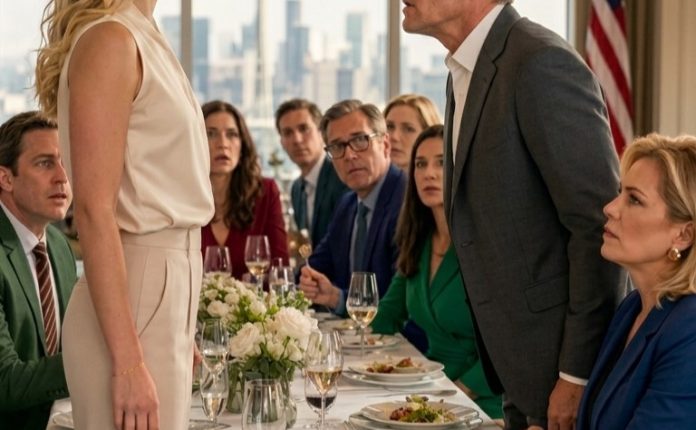
Sometimes I remember that dinner.
Champagne.
Crystal.
My brother standing beneath my parents’ chandelier, celebrating the sale of something that never belonged to him.
For years, my family treated my success as communal property and my boundaries as selfishness.
Ethan simply took that belief farther than anyone expected.
He thought access meant ownership.
My parents thought love meant surrender.
My relatives thought success meant I could afford to be robbed.
They were all wrong.
I used to think the worst thing that happened that night was discovering my brother had forged my signature.
It wasn’t.
The worst thing was realizing how many people at that table believed I should let him.
But there was a gift buried inside that humiliation.
Once someone tries to steal a million-dollar property from you and your family asks why you can’t just give it to him, you stop worrying whether saying no makes you difficult.
You stop apologizing for locked doors.
You stop shrinking your accomplishments so insecure people can stand taller beside you.
You stop confusing family with ownership.
Ethan wanted the farmhouse because he believed my success could repair his failures.
My parents wanted me to surrender it because keeping their son comfortable mattered more than protecting their daughter.
I wanted something simpler.
What was mine.
And I kept it.
The farmhouse.
The business.
The future.
Most importantly, the right to decide who gets access to any of them.
My brother thought the closing documents would make him the owner.
Instead, one phone call from the title company exposed exactly who owned the farmhouse—and exactly who had never earned the right to stand beside me.
The money was never the most valuable thing I protected.
It was my life.
And once I understood that, nobody in my family ever got to put their name on it again.
THE END!
Disclaimer: Our stories are inspired by real-life events but are carefully rewritten for entertainment. Any resemblance to actual people or situations is purely coincidental.