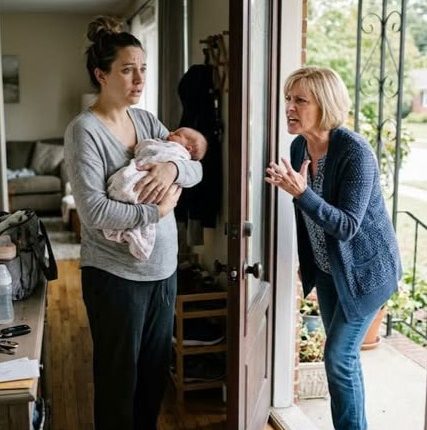
My own mom said: “I wish you were never born…” I stood tall and said: “Consider me as if I never existed. Live your lives as thought there was never a daughter named Lisa.” They went silent. The whole party froze.
We gathered at Del Monaco’s, one of Seattle’s most elegant restaurants. Crisp white tablecloths, golden chandeliers, and the low murmur of wealth filled the room. I had reserved the private dining space myself, paying for every meal, every bottle, every detail.
It wasn’t about showing off. After years of side jobs, student loans, and relentless work, I simply wanted one evening to celebrate something I had truly earned.
I greeted each guest with a polite smile that never quite reached my eyes. Professors, colleagues, my supervisor from the consulting firm where I had just secured a full-time role, and classmates who seemed genuinely proud to be there.
Then my parents arrived.
Susan and Robert Adams looked polished as always, perfectly dressed and composed, as though the celebration somehow belonged to them instead of me.
They brought no flowers.
Not even a card.
Ashley wasn’t there either.
She was supposedly working a hospital shift, although I suspected she simply didn’t want to attend an event that wasn’t centered on her.
I made the introductions and watched my parents exchange handshakes and polite smiles.
Compliments began flowing—the kind I had secretly hoped they would hear one day.
One of my professors smiled and said, “You must be incredibly proud of Clare. A Stanford MBA is no easy accomplishment.”
My mother gave a light laugh and replied, “We’re proud of both our girls, but Ashley, our youngest, she’s in med school now, pulling long hours in the ER, saving lives. That’s what truly matters.”
Silence followed.
It felt as though even the cutlery had paused.
My smile stayed in place, rigid and practiced, like something I had learned to wear for survival.
A few minutes later, my manager stood to give a toast.
He spoke about my determination, how I had guided our intern team and kept things moving when deadlines became overwhelming.
“Claire is among the most capable young consultants I’ve ever worked with,” he said proudly. “She’s destined for great things.”
The applause was warm and sincere.
I turned toward my parents, still hoping to see even the smallest trace of pride.
My father gave a short laugh. “She’s clever, sure, but Ashley, she’s saving lives every day. That’s the kind of pride that really matters.”
The words sounded rehearsed.
As if my entire life existed only as an introduction to Ashley’s accomplishments.
Ashley the hero.
Ashley the healer.
Ashley the daughter who mattered.
Around the table, people shifted uncomfortably.
One of my coworkers tried to ease the tension. She leaned toward my mother and said gently, “Still, you must be very proud of Clare. What she’s done is incredible.”
My mother’s smile remained cool and dismissive. “I suppose it’s fine,” she said.
Then my father redirected the conversation toward Ashley again—her night shifts, rotations, and patients.
“Compared to a doctor,” he added with a casual shrug, “an MBA doesn’t quite measure up.”
That was my breaking point.
I pushed my chair back, the sound cutting sharply through the room.
Every conversation stopped.
My voice came out steadier than I expected.
“Do you have any idea what it took for me to get here? How many nights I went without sleep? How many hours I worked while studying so I wouldn’t cost you a scent?”
My mother pressed her lips together in silent disapproval.
My father looked at me as though I were the one creating a scene.
“I paid Ashley’s tuition. I sent money when the power was cut off. I went without so this family could survive. And still, I’m dismissed as just the one behind a desk.”
The room seemed to hold its breath.
By then, I wasn’t speaking to anyone else.
Only to the two people who had spent years refusing to truly see me.
“If I’m as useless as you think, then who do you believe kept this family from falling apart all these years?”
My father stood, his face flushing with anger.
He didn’t raise his voice.
He didn’t have to.
“We wish we never had a daughter like you.”
A collective gasp moved through the room.
A spoon struck a plate.
For a moment, my vision blurred—not from tears, but from sudden, painful clarity.
I looked around the table at all the shocked faces, at people who valued what I had accomplished.
Then I looked back at the two people who had just erased me with one sentence.
When I spoke again, my tone was calm.
“If that’s truly what you wish, then maybe it’s time I start living as though I never belong to you at all.”
And I left.
If I had never truly been wanted, maybe it was time to stop living as if I belonged to them.
I didn’t cry that night.
Not when I walked out of the restaurant.
Not when my heels clicked across the wet Seattle pavement beneath a soft drizzle.
Not even when I reached home, removed my shoes, and sat alone in the darkness of my apartment.
But the next morning, I unlocked my phone and saw eleven missed calls from my parents and a single message:
“You embarrassed us. I hope you’re proud of yourself,”
That was when something inside me finally gave way.
Not sadness.
Exhaustion.
Because the dinner wasn’t an isolated incident.
It was simply the latest scene in a lifelong pattern I had finally stopped pretending was normal.
I wasn’t shocked anymore.
I was finished.
Throughout childhood, I had been the quiet girl fading into the background while Ashley stood under every spotlight.
We were only two years apart.
Yet the way we were loved often felt separated by decades.
Ashley had piano recitals, participation ribbons, birthday parties with towering cakes and golden balloons spelling out her name.
One year, my cake read, “Happy birthday, Ashley O and Claire,” with my name squeezed awkwardly into the corner.
It became a family joke.
They laughed.
I didn’t.
But I smiled, because that was what I always did.
I learned early that success only mattered if it matched what my parents valued.
When I came home with a first-place certificate from a regional math competition, glowing with pride, I genuinely believed it might finally mean something.
Mom barely looked up from the laundry basket.
“That’s nice,” she said casually. “But Ashley’s volunteering at the hospital.”
That idea—real impact—became their constant measuring stick.
Apparently nothing truly mattered unless it involved a stethoscope.
Still, I kept trying.
I convinced myself that if I achieved enough, eventually they would say the sentence I had waited my whole life to hear.
“We’re proud of you, Claire.”
So I pushed through college while juggling three jobs.
I opened a coffee shop at dawn, cleaned offices after evening classes, and spent weekends tutoring neighborhood kids.
Every paycheck disappeared into household bills and Ashley’s endless medical school expenses.
Nobody ever asked how I managed.
They simply accepted my help as though it were expected.
Michael used to joke that I could balance the family budget faster than I could recognize my own worth.
He said it with a grin, but there was always tenderness behind it.
Michael.
He had been my closest friend since college, the one person who always saw through every mask I wore.
His family story wasn’t identical to mine, but it carried a similar pattern.
His father, a former military man, demanded absolute obedience.
When Michael chose art instead of engineering, his father disowned him.
But unlike me, Michael didn’t spend years chasing approval afterward.
“You can’t water dead roots, Clare,” he once told me. “It’s not your fault when nothing grows.”
At the time, I dismissed it.
I thought he was bitter.
I still believed loyalty meant giving until there was nothing left.
But after that dinner, his words finally began to make sense.
Michael called that night.
I couldn’t answer.
But I listened to his voicemail repeatedly.
“Claire, I’m proud of you, not just for speaking up, but for finally walking away. Call me when you’re ready to breathe again.”
I wasn’t ready yet.
Not completely.
But something had shifted.
For years, I had held onto the fragile hope that if I stayed quiet, worked harder, and kept giving, my parents would eventually turn toward me and finally see me.
That hope had kept me going.
Now I was beginning to understand that freedom might begin when you stop begging for love from people determined not to give it.
When I left my old apartment, I didn’t take much.
My laptop.
A few worn clothes.
Books I couldn’t bear to leave behind.
And one framed college photograph of Michael and me sitting on campus with coffee cups, grinning at a world that still felt wide open.
That picture was from before everything became complicated.
Before I forgot how naturally I used to smile.
I found a small one-bedroom apartment in Bellevue.
It was simple but comfortable, with hardwood floors, white walls, and a wide window overlooking a quiet maple-lined street.
It wasn’t extravagant.
But it was mine.
Paid for with my own earnings.
Chosen and arranged by me.
No Ashley.
No Susan.
No Robert.
Just Clare.
The first night, I barely slept.