I was sixteen when my parents put two trash bags of clothes on the porch and told me not to come back. There was no dramatic storm, no police car, no screaming neighbor. It happened on a dry August afternoon in Columbus, Ohio, while my mother watered petunias and my father refused to look at me.
Their reason was simple enough to fit into one cruel sentence: I had become inconvenient. I had refused to quit school and work full-time at my father’s failing auto-parts store after he fired two employees. He called me selfish. My mother said family loyalty meant sacrifice. I said finishing school mattered too.
My father carried my bags outside. “Then choose school,” he said. “But don’t expect us to finance your choices.” I thought he was bluffing. I stood on the porch for twenty minutes waiting for one of them to open the door. Neither did. Eventually I called the only adult I trusted.
My uncle Martin arrived forty-five minutes later in an old gray pickup. He was my mother’s older brother, a quiet man who owned three warehouses and wore the same work boots everywhere. He did not ask me to explain myself in the driveway. He loaded my bags, handed me a bottle of water, and said, “You’re coming home.”
Home turned out to be the spare bedroom in his modest brick house outside Dayton. Martin gave me a key on the first night. “Nobody who lives here has to wonder whether the door will open,” he said. I kept that key for eighteen years, even after he moved and I bought a place of my own.
My parents did not call the next morning. They did not call on my seventeenth birthday, at graduation, or when I started community college. I sent Christmas cards for three years. None were answered. Eventually I stopped. Martin never encouraged me to hate them. He simply stopped making excuses for people who had made their choice.
He helped me finish high school, but he did not spoil me. I worked evenings at a grocery store and weekends filing invoices at one of his warehouses. He charged me fifty dollars a month in “rent,” then handed every dollar back when I graduated. The envelope contained enough to cover my first semester’s books.
At twenty-one, I transferred to Ohio State and studied accounting. Martin attended my graduation wearing a suit I knew he hated. When my name was called, he stood before anyone else and clapped so loudly strangers turned around. I searched the crowd once for my parents anyway. Their seats, of course, were empty.
I built a quiet life. I became a forensic accountant, married a patient man named David, and eventually had a daughter, Sophie. Martin became the grandfather she did not technically have. He attended school concerts, taught her to fish badly, and kept emergency popsicles in his freezer because she believed every scraped knee required one.
Meanwhile, Martin’s business grew far beyond those first warehouses. He bought struggling logistics properties, modernized them, and leased space to regional manufacturers. He reinvested everything. By his late sixties, people who remembered his rusty pickup would have been shocked to learn his companies and investments were worth tens of millions.
He still drove a six-year-old Ford.
My parents apparently knew about the money. I learned later that my mother occasionally called Martin, usually after local business articles mentioned him. She never asked about me. According to Martin, she asked whether he had “done anything about succession” and reminded him that siblings should look after each other.
Martin usually changed the subject.
When he was seventy-one, doctors found pancreatic cancer. He told me after the second appointment, not the first, because he wanted facts before emotion. I sat beside him at his kitchen table while Sophie’s crayon drawing hung on the refrigerator. “How long?” I asked. He answered, “Not long enough,” and reached for my hand.
The next nine months were brutal and strangely precious. David and I rearranged our schedules. I drove Martin to treatments, managed medication charts, and helped his longtime business manager prepare transition documents. We talked about ordinary things more than death. Baseball. Property taxes. Sophie’s terrible clarinet practice. Whether hospital coffee qualified as coffee.
My parents never came.
Martin told my mother he was sick. She sent a fruit basket through a delivery service. There was no card for me, no question about whether I needed help, and no visit until after he died. He passed away on a Tuesday morning with me holding one hand and Sophie holding the other.
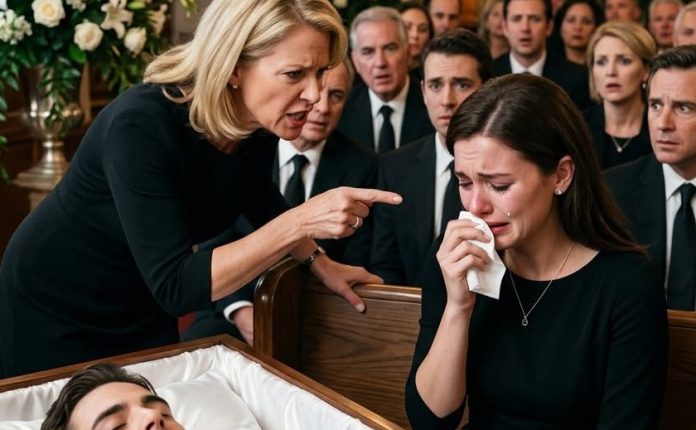
At the funeral, I saw my parents for the first time in nearly eighteen years.
My mother, Denise, hugged me before I could step away. “Look at you,” she whispered, as though we had merely missed a few holidays. My father, Walter, patted my shoulder and told David, “We’re hoping this tragedy can bring the family back together.” I could barely process the audacity.
They stayed close to Martin’s attorney throughout the reception.
His name was Julian Price, and he had represented Martin for twenty-three years. Every time Julian crossed the room, my father found a reason to stand nearby. My mother asked twice when “the estate meeting” would happen. She never asked me how Sophie was coping with losing the man she called Grandpa Martin.
Julian scheduled the formal meeting twelve days later. Most of Martin’s assets were held through trusts and business entities, so it was not a theatrical reading of a simple will. Still, Martin had requested that several beneficiaries gather together because he had left personal instructions that he wanted read aloud.
I arrived early with David. My parents were already there.
My mother wore a cream suit and carried a designer handbag I recognized from online advertisements. My father had brought a leather portfolio and a yellow legal pad. He looked like a man attending a closing, not a memorial proceeding. When I entered, Mom smiled brightly.
“There she is,” she said. “Our girl.”
I sat across from them without responding.
Mom leaned toward me. “Whatever Martin decided, there’s no reason for awkwardness. We’re family. Of course we’ll share everything.” Dad smiled and tapped his pen against the legal pad. “Forty-two million is more than enough for everyone,” he said. “No sense letting old disagreements complicate this.”
Forty-two million. Until that moment, I had not known the approximate total. Martin had never discussed his net worth with me. The number made my stomach tighten, not because I wanted it, but because my parents clearly knew it before they knew whether I had survived the years they abandoned me.
Julian entered carrying a thick binder and one cream-colored sealed envelope.
He reviewed the structure first. Martin’s companies had been sold to a management group, several longtime employees had received bonuses, and charitable gifts had already been funded. The remaining trust assets, after taxes, obligations, and designated gifts, were valued at approximately forty-two million dollars.
My mother squeezed my father’s arm beneath the table.
Then Julian picked up the envelope. “Martin instructed me not to open this until Denise, Walter, and Elena were physically present together,” he said. My mother gave a small laugh. “That sounds like Martin. Always dramatic at the finish.” Julian did not smile.
He broke the seal.
[PAGE BREAK]
He read silently for several seconds. Then he stopped, lifted his eyes, and looked directly at my parents. The room changed before he said another word. My father’s pen stopped tapping. My mother’s smile disappeared. Julian placed the letter flat on the table and began again, this time aloud.
“Denise and Walter, if you are hearing this, then you came for my money more quickly than you ever came for your daughter.”
My mother inhaled sharply.
Julian continued. Martin wrote that he had spent eighteen years waiting for them to make one sincere attempt to repair what they had done. They had known where I lived. They had his telephone number. They had been told about my graduation, marriage, Sophie’s birth, and every major milestone.
“They chose absence repeatedly,” the letter said.
Dad interrupted. “This is inappropriate.” Julian calmly told him Martin had specifically instructed that the letter be read without interruption. My father leaned back, jaw tight.
The next paragraph was worse.
Martin revealed that my parents had contacted him seven times during his final decade. Every contact concerned money, property, or inheritance. He had kept notes. Once, my mother asked whether he planned to leave his warehouses “inside the bloodline.” Another time, Dad proposed managing Martin’s investments for a fee.
Not once had they asked Martin to help them contact me.
Mom turned toward me. “Elena, you know there are two sides to every story.” I looked at her and said the first words I had spoken directly to her that day. “I was sixteen.” She looked away.
Julian continued reading.
Martin explained that the forty-two million would not be divided equally. My parents were not beneficiaries of his trust. He had left my mother one personal item: their grandmother’s recipe box, which she had once accused him of stealing. My father received nothing.
My mother’s face went pale.
The majority of the trust, twenty-eight million dollars, was left to me. Seven million funded an employee retirement and emergency assistance trust. Five million created a scholarship program for teenagers facing housing instability or family abandonment. The remaining two million went to hospice organizations and local food banks.
I stopped hearing clearly after twenty-eight million.
I had known Martin loved me. I had never imagined he intended to leave me wealth on that scale. My first emotion was not excitement. It was panic. I wanted him back. I wanted his battered coffee mug, his terrible jokes, and one more argument about whether Sophie needed another fishing rod.
My father’s reaction was simpler. “That cannot be valid.”
Julian closed the binder. “It is valid.”
Dad claimed Martin had been medically impaired. Julian explained that Martin had completed multiple estate reviews before and after his diagnosis, with independent counsel and capacity documentation. The trust had also existed years before the cancer. Its final amendments changed charitable allocations, not my status as primary beneficiary.
My mother began crying, but her tears were angry. “He poisoned her against us.”
I almost laughed. Martin had done the opposite. For years, he told me bitterness could become another kind of prison. He encouraged me to leave the door unlocked emotionally without standing in the doorway waiting. My parents had not needed anyone’s help losing me.
Then Julian said there was one final section.
Martin had anticipated they might challenge the estate plan. He had included documentation showing exactly how often they had contacted him and why. More importantly, the trust directed Julian to defend its terms aggressively and permitted reasonable legal expenses to come from a separate litigation reserve, not from my personal distribution.
Dad’s confidence finally cracked.
He asked whether they could speak privately. Julian said anything concerning the estate could go through their own attorney. Mom turned to me instead. “You aren’t really going to keep all that money while your parents get nothing.”
There it was. Not I’m sorry. Not we failed you. Not how did you survive?
Money.
I folded my hands to stop them trembling. “You had eighteen years to ask me for something that cost nothing,” I said. “You could have asked how I was.”
Mom stared at me.
“You didn’t.”
They left before the meeting ended.
In the parking lot, my father sent me a text for the first time in my adult life. It contained three sentences. He said Martin had manipulated me, families should forgive, and he expected me to “do the honorable thing” once emotions settled.
I blocked his number.
[PAGE BREAK]
Two weeks later, an attorney representing my parents sent Julian a letter questioning Martin’s capacity and alleging undue influence. I was furious, but Julian was not surprised. He reminded me that threats and actual litigation were different things. We provided nothing informally and let the attorneys handle it.
The challenge never became the courtroom spectacle my parents apparently expected. Their own lawyer reviewed the documents, medical evaluations, years of trust history, and Martin’s correspondence. Within weeks, the tone changed from accusation to negotiation. Julian refused to pay them simply to disappear.
Eventually, they withdrew.
My mother mailed the recipe box back to Julian.
Inside was a note addressed to me. “You always were his favorite.”
That sentence told me she still understood nothing.
I kept the box anyway. Not because of her, but because Martin remembered its history. Inside were handwritten recipes from my grandmother, including the cinnamon bread Martin used to make every December. Sophie and I baked it that Christmas. We burned the first loaf and laughed until we cried.
The inheritance did not transform my life overnight. I kept working for another year while assembling a team of financial, tax, and legal advisers. David continued teaching high school history. We paid off our mortgage, established education funds, and replaced my twelve-year-old car only after the transmission finally surrendered.
Most of the money stayed invested.
What changed was the scale of what I could choose to do.
The weeks after the withdrawal were quieter than I expected. A few relatives called to tell me I should give my parents something anyway, mostly because forty-two million sounded unreal to them. I asked each caller the same question: where were you when I was sixteen and sleeping in Martin’s spare room?
Most conversations ended there. One aunt admitted she had known my parents threw me out but believed their version that I had chosen to leave. Another cousin apologized for never checking. I did not punish anyone for being misled, but I stopped accepting the idea that blood automatically created access to my life.
David worried the inheritance would attract people who had ignored us before. He was right. Old classmates sent investment proposals. Distant relatives suddenly remembered childhood stories involving me. Martin had anticipated that too. In another note, he wrote, “Money does not reveal character. It gives character a larger stage.”
I kept that sentence taped inside my desk drawer. Whenever guilt made me wonder whether refusing my parents was selfish, I remembered the attorney’s office. They had walked in discussing shares before asking a single question about Martin’s final days. Their priorities had announced themselves more clearly than any accusation could.
Sophie noticed the changes around us, but David and I tried hard not to let wealth become her identity. She still had chores. She still saved allowance money for things she wanted. When she complained once, I told her Uncle Martin had believed security should create choices, not entitlement. She rolled her eyes, then emptied the dishwasher. That lesson stayed with us all.
Martin’s scholarship fund became the part of his estate I cared about most. I volunteered during the selection process but refused to control it. The first recipients included teenagers living with relatives, students aging out of foster care, and young people working nights because their families could not support them.
At the first scholarship dinner, a seventeen-year-old girl named Jasmine told me she had been sleeping on her aunt’s sofa after being thrown out by her stepfather. She wanted to become a nurse. When she thanked me, I told her the money came from a man who once drove forty-five minutes to pick up a frightened teenager with two trash bags.
I could barely finish the sentence.
Three years passed before I heard from my parents again.
My father died unexpectedly from a stroke. Claire, a cousin I had not seen in years, found my email through Martin’s foundation and told me. I attended the funeral quietly, sitting near the back with David. My mother saw me but did not approach until almost everyone had left.
She looked much older.
“I thought you wouldn’t come,” she said.
“I came for myself,” I answered.
She nodded. For once, there was no argument.
Then she said something I had waited half my life to hear. “We were wrong to put you out.”
Not everything. Not enough. But true.
I asked why they had never called. Mom looked toward the empty chairs and admitted pride had hardened into shame. Every passing year made the first apology more difficult, so they convinced themselves I was the one who had rejected them. Martin’s success then turned regret into resentment.
“And when he died,” she whispered, “we saw money before we saw you.”
“Yes,” I said. “You did.”
She cried quietly.
I did not rush to forgive her. I had learned that compassion did not require pretending consequences were cruel. We exchanged email addresses. Over the following year, she wrote occasionally. I answered when I wanted to. There were no loans, allowances, or financial rescue.
She never asked.
That mattered.
On what would have been Martin’s seventy-sixth birthday, Sophie and I visited his grave carrying a thermos of the awful coffee he loved. Sophie was fourteen then, nearly the age I had been when he rescued me. She asked whether inheriting his money had made me happy.
I thought about it carefully.
“No,” I said. “Being loved by him made me happy.”
The fortune had given me security and the ability to help people. But the most valuable thing Martin left me could never have been written into a trust. He had shown a sixteen-year-old girl that someone else’s rejection did not define her worth.
My parents believed his estate meeting would finally prove they still belonged at the center of the family.
Instead, one sealed envelope exposed the truth.
Family was never the people who appeared when forty-two million dollars was on the table.
Family was the man who appeared when all I had were two trash bags on a porch.