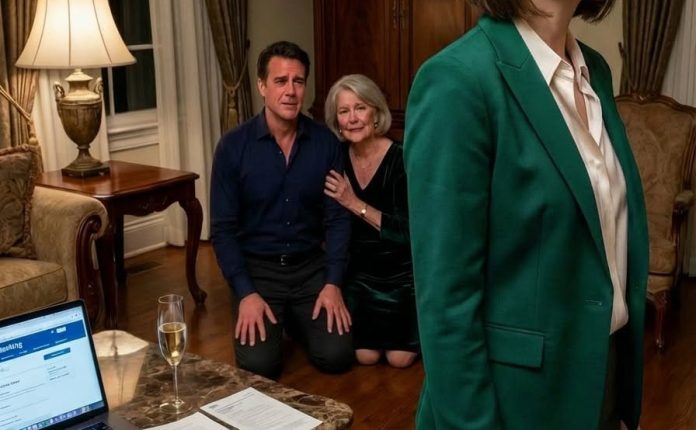
After Four Daughters My Husband Finally Held Our Son, Then His First Words Exposed Everything
Part One Aaron and I had been together for eight years, and from the beginning, we both said we wanted a big family. I imagined noisy breakfasts, mismatched socks, school concerts, and children piled across the sofa on movie nights. Aaron imagined all of that too, but there was always one detail he returned to more than anything else: a son.
Even before our wedding, he talked about carrying on the Mercer name. He grinned whenever he saw fathers playing baseball with sons and said, “That’ll be me someday.” I thought it was harmless, just another picture of family life that reality might eventually reshape.
Our first pregnancy happened quickly. Aaron was certain it was a boy. He bought a tiny blue baseball cap before our twelve-week scan and kept it tucked inside his dresser. When the ultrasound technician told us we were having a girl, he smiled, kissed my forehead, and said all the right things. Still, I noticed the silence afterward.
We named her Sophie. She had Aaron’s dark eyes and my stubborn chin, and for the first year he adored her openly. Yet whenever anyone joked about us giving her a brother, his whole face brightened. “Absolutely,” he would say. “She needs somebody to scare her future boyfriends.” I laughed then. I wish I had listened more carefully.
Two years later came Grace, another beautiful girl. Aaron held her after delivery and whispered that she was perfect. That night, while I was half asleep, I heard him tell his father on the phone, “We’ll try again.” Not “maybe.” Not “if Claire wants to.” We. Try. Again. I convinced myself it was excitement, not entitlement.
Our third daughter, Mia, arrived eighteen months later. Pregnancy had become harder on my body, and severe anemia left me exhausted through the final trimester. Aaron helped with the children, but he also started joking about his “all-girl curse.”
People laughed. I smiled because correcting him felt dramatic. At Mia’s first birthday, his mother, Diane, toasted “the future little prince who will finally complete this family.” My sister looked at me across the table. I shrugged as though it did not bother me. Inside, something tightened.
Then came Evelyn. Four daughters under seven. Four car seats, four bedtime routines, four sets of tiny hands reaching for us. She was born after a complicated pregnancy that ended with an emergency procedure and a doctor telling me gently that another pregnancy would require careful monitoring. Aaron stood beside the hospital bed and heard every word.
For several months afterward, he stopped talking about sons. I thought the subject had finally settled. Our house was chaotic and happy. Sophie read to the younger girls, Grace wore princess dresses with rain boots, Mia drew everywhere, and Evelyn followed everyone carrying a wooden spoon.
Then Aaron’s father, Richard Mercer, died unexpectedly from a heart attack.
Richard and I had always gotten along. He was a reserved man who owned several auto-parts stores and had built his money slowly. He loved his granddaughters without apology. Whenever Aaron complained about wanting a boy, Richard would say, “A child is not a missing item on a shopping list.”
After the funeral, something in Aaron changed. He began talking about legacy more intensely. “Dad’s gone,” he said one night. “It’s just me carrying the name now.” I reminded him our daughters carried his name too. He answered, “You know what I mean.”
I knew. That was the problem.
Six months later, I found out I was pregnant again. The test turned positive while I stood barefoot in our bathroom at six in the morning, staring at those two lines with fear rather than joy. I loved every child we had, but I remembered the doctor’s warning. My hands shook when I showed Aaron.
His reaction was immediate. He lifted me off the floor and laughed. “This is him. Claire, I swear, I can feel it. This is finally my son.” I told him we did not know that. He kissed me. “I know.”
The pregnancy was exhausting. My blood pressure rose, I developed pelvic pain, and my doctor restricted several activities. Aaron became attentive in a way that almost made me feel guilty for doubting him. He came to appointments, cooked dinner, and took over school drop-offs. He also talked constantly about the baby being a boy.
At fourteen weeks, we received genetic screening results. The nurse asked whether we wanted to know the sex. I hesitated. Aaron answered before I could.
“Yes.”
The nurse smiled. “You’re having a boy.”
Aaron cried.
He covered his face and sobbed with relief, then hugged me until the nurse asked him to loosen his arms. His happiness was contagious. For a moment, I wondered whether his fixation had simply been a childish dream finally reaching its ending.
He called everyone. His mother screamed. His friends sent blue balloons. At dinner that night, he told the girls they were getting a little brother.
Sophie, who was seven, frowned. “Were we not enough?”
The room went silent.
Aaron recovered quickly. “Of course you were enough. This is just different.”
She nodded, but I saw the question remain in her face.
From that day forward, our unborn son became the center of Aaron’s imagination. He painted the nursery himself, bought a miniature baseball glove, and ordered a wooden sign that read MERCER MEN. I made him return it. “He has four sisters,” I said. “His room is not a clubhouse against them.”
Aaron laughed, but I was serious.
Diane became worse. She called the baby “the heir” until I finally told her to stop. “He is a baby,” I said. “Not a title.” She gave me a strange look and replied, “You’ll understand soon.”
I asked Aaron what she meant.
“Mom is old-fashioned.”
I believed him because believing him was easier than admitting there might be a conversation about my pregnancy happening without me.
The delivery came at thirty-eight weeks after my blood pressure climbed dangerously high. Labor lasted fourteen hours. By the time our son arrived, I was so tired I could barely keep my eyes open. The doctor lifted him, announced that he was healthy, and the room filled with the sharp, beautiful sound of his crying.
I cried too.
“Benjamin,” I whispered.
The nurse cleaned him, wrapped him, and placed him against my chest. He was warm and furious, with dark hair plastered against his head. I kissed his forehead and felt every miserable month become worth surviving.
Aaron stood beside the bed crying again. “My son,” he kept saying.
After several minutes, the nurse asked whether Dad wanted to hold him.
Aaron reached out.
I expected joy. Relief. Maybe even the ridiculous “finally” I had prepared myself to forgive.
Instead, he studied Benjamin’s face, then looked toward his mother, who had been allowed into the room after the birth.
His excitement disappeared.
Diane’s expression changed too.
Aaron looked back at our newborn and whispered, almost too softly for anyone else to hear, “Thank God. The Mercer trust is safe now.”
My entire body went cold.
I stared at him. “What trust?”
Aaron froze.
Diane closed her eyes.
The nurse glanced between us and quietly stepped away.
“What trust?” I repeated.
Aaron tried to smile. “Claire, not now.”
But I had just carried his fifth child through a dangerous pregnancy, and the first thing he had said while holding our son was not about love.
It was about money.
Part Two I asked the nurse to take Benjamin for his newborn checks, then told Aaron and Diane to explain themselves. Aaron looked annoyed, which frightened me more than guilt would have. “You just gave birth,” he said. “You’re exhausted. We can discuss family finances when you’re home.”
“Family finances?” I repeated. “You said a trust was safe because we had a son.”
Diane stepped forward with the soothing voice she used whenever she wanted control disguised as kindness. “Richard created an old-fashioned estate structure years ago. It is complicated, sweetheart. Nobody hid anything maliciously.”
“Then explain it simply.”
Aaron put both hands on his hips. “Dad’s business interests were placed into a family trust. There’s a provision regarding a male descendant. Benjamin satisfies it.”
I stared at him. “What happens if there is no male descendant?”
Neither answered.
My heart began pounding hard enough to make the monitor beside me beep faster.
“Aaron.”
He exhaled. “Certain voting rights and property interests would move to a charitable foundation after a deadline.”
“What deadline?”
Diane whispered, “Richard’s youngest grandchild turning five.”
Evelyn had turned four two months earlier.
I felt sick.
“So this pregnancy happened before a deadline connected to millions of dollars?”
Aaron’s face hardened. “Do not make it sound disgusting.”
“I am asking you a question.”
“We wanted another child anyway.”
I remembered standing in our bathroom terrified by a positive test. I remembered Aaron’s certainty from the first moment. I remembered Diane saying I would understand soon.
“How much money?”
Aaron looked toward the door.
“How much?”
“About twelve million in controlling assets,” he said.
For several seconds, the only sound was the blood-pressure monitor.
Then I asked the question that terrified me most. “Did you know before I got pregnant?”
Aaron did not answer quickly enough.
Diane stepped in. “Claire, Richard told Aaron about the provision after he became ill years ago. That does not mean anyone forced you to have another child.”
Richard had never been seriously ill while I knew him. She realized her mistake immediately.
“What do you mean after he became ill?”
Diane looked at Aaron.
He muttered, “Dad had a cardiac episode three years ago. He kept it private.”
Three years ago. Before Evelyn. Before Aaron resumed talking about a son. Before my birth control suddenly caused months of irregular bleeding and I switched methods.
I felt the room narrowing around me.
I had used prescription contraceptive pills after Evelyn because my doctor strongly recommended avoiding pregnancy for at least eighteen months. Aaron usually picked them up with the family prescriptions. Twice, the pharmacy told me my refill had been collected earlier than expected. Aaron said he was being helpful.
A thought entered my mind so ugly I tried to reject it.
“Did you ever touch my birth control?”
Aaron’s face changed.
Diane said sharply, “That is an outrageous accusation.”
“I asked him.”
Aaron stared at the floor. “No.”
The answer should have reassured me.
It did not.
I asked both of them to leave.
Aaron protested. I called the nurse. Within minutes, hospital security escorted him and Diane from the maternity floor while I sat shaking beneath a thin blanket, wondering whether my marriage had been built around a countdown I never knew existed.
My sister, Nora, arrived an hour later. I told her everything. She listened without interrupting, then asked whether I had access to our financial records.
“Some.”
“Do you know what Aaron owes?”
I looked at her. “Why would that matter?”
“Because men who count unborn children as financial solutions usually have a problem waiting for the money.”
That sentence stayed with me.
The next morning, while Benjamin slept beside me, I logged into our joint banking accounts. At first, everything looked normal. Mortgage. Utilities. School fees. Groceries. Then I noticed transfers from our savings account into a brokerage account I did not recognize.
Over eighteen months, almost ninety thousand dollars had moved out.
I called Aaron.
“What is Mercer Strategic Holdings?”
Silence.
Then, “An investment vehicle.”
“Whose?”
“Mine.”
“Why did you move our savings into it?”
“It’s temporary.”
That word made Nora, sitting beside me, look up sharply.
“What did you invest in?”
Aaron’s irritation returned. “Claire, can we not do this while our son is one day old?”
“Our son is exactly why we are doing this.”
He hung up.
I called an attorney before I left the hospital.
Her name was Maya Reynolds, recommended by Nora’s employer. She told me not to accuse Aaron publicly, not to move large sums impulsively, and not to sign anything he brought me. She also recommended a forensic accountant because the trust provision might intersect with marital finances.
Two days later, I went home with Benjamin.
Aaron had filled the living room with blue balloons.
Our daughters ran toward me first. Sophie hugged my waist carefully. Grace wanted to hold the baby. Mia asked whether he could eat pancakes. Evelyn simply stared at him and announced, “He has tiny ears.”
Aaron watched us from the doorway.
For a moment, he looked like the husband I had loved.
Then I saw a folder beneath his arm.
“After the girls go to bed,” he said, “we need to sign a few estate documents.”
I almost laughed.
“No.”
His jaw tightened. “Claire.”
“No documents.”
Diane appeared from the kitchen carrying a casserole. I had not invited her. “These are routine acknowledgments,” she said. “Benjamin’s birth triggers administrative changes.”
“My lawyer will review them.”
The room went still.
Aaron’s expression shifted. “You hired a lawyer?”
“Yes.”
“For what?”
“To understand the financial situation you kept from me.”
Diane placed the casserole down too hard. “This is how families get destroyed. Outsiders start feeding suspicion to emotional women.”
Sophie was standing in the hallway.
I saw her hear every word.
“Leave,” I told Diane.
Aaron stepped between us. “Do not speak to my mother like that.”
I looked at him. “Then stop letting your mother speak about me like I am mentally incapable of understanding my own marriage.”
Diane left.
Aaron followed me upstairs after the girls were asleep. “You are blowing this out of proportion.”
“Then show me the trust.”
He hesitated.
“Show me the original instrument, Dad’s estate documents, Mercer Strategic Holdings, and every transfer from our savings.”
“I do not have to hand my wife business records because she became paranoid in a hospital.”
There it was.
Not concern. Not explanation.
Paranoid.
I remembered Diane calling me emotional. Aaron telling me I was exhausted. Their language matched too easily.
“Sleep in the guest room,” I said.
He laughed. “This is my house too.”
“Then choose another bedroom in it.”
The next morning, Maya called with preliminary findings from the public records my accountant had reviewed. Mercer Strategic Holdings had been created two years earlier, shortly after Richard’s private cardiac episode.
The company had borrowed against Aaron’s expected interest in the trust.
“How much?” I asked.
Maya paused.
“Three point four million dollars.”
My knees weakened.
Aaron had borrowed millions against money he would receive only if he produced a qualifying male descendant before Evelyn’s fifth birthday.
And our son had arrived with ten months to spare.
The loan documents contained another surprise.
One of the personal guarantees carried my electronic signature.
I had never seen it before.
For the first time, I understood why Aaron had rushed every conversation. He did not need my agreement; he needed my name attached before anyone examined how the money moved.