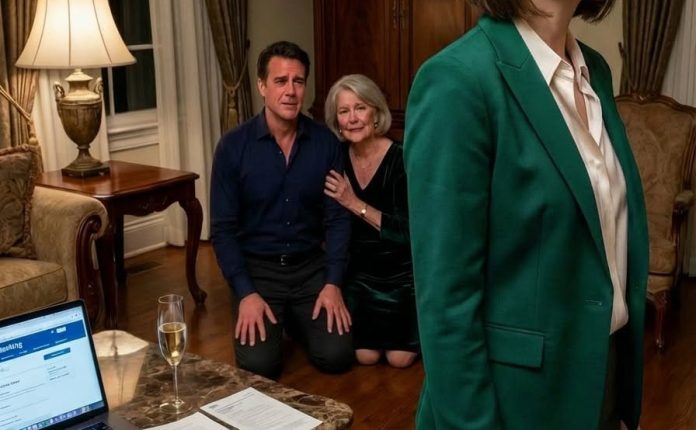
Part Three Mom sat down as though her knees had stopped working. Two years earlier, she had spent four days at Presbyterian Hospital after emergency gallbladder surgery. Dad visited twice, complained about parking, and brought papers he described as insurance forms. She remembered signing one hospital release, but the signature on the guarantee looked carefully imitated.
I wanted to tell her everything would be fine, yet false comfort had helped create the crisis. If the guarantee was forged, it could be challenged, but the investigation would be painful. The family home might remain protected; other jointly held assets could become disputed. Dad also faced consequences extending far beyond a loan default.
When he returned to the office, Mom placed the document before him. “Did you sign my name?” she asked. Dad glanced at Victor, which was answer enough. Then he insisted the company needed temporary support and said he had acted for their future. Mom repeated the question, louder. Employees outside became silent.
Dad closed the blinds. He said a closing deadline had arrived while Mom was ill, and the lender would have withdrawn without both signatures. He had planned to replace the guarantee after Hawthorne Commons refinanced. “So you forged it,” she said. “Don’t use that word,” he snapped. “I had authority as your husband.”
Mom removed her wedding ring and set it on the conference table. There was no speech and no theatrical slap. She simply asked Madison to collect clothes from the house and take her to Aunt Joan’s apartment. Dad told her she was overreacting. She answered, “I spent thirty-seven years underreacting,” and walked out.
The next morning, I met Mom at Aunt Joan’s apartment with copies of every document bearing her name. We built a timeline from hospital records, loan emails, and bank notices. For years, Dad had made her fear financial language, saying questions proved she did not trust him. Now she read every page slowly and wrote detailed questions in the margins. Watching her reclaim that authority changed something in me. The audit was uncovering more than missing money; it exposed a system built on confusion, silence, and dependence.
The criminal implications belonged to prosecutors, not to me. Elena preserved the original records and notified the court. Naomi recommended that Rowan Bridge cooperate fully and separate our recovery decisions from the forgery investigation. I agreed. Personal anger could not determine which invoices were paid or whether innocent workers kept health insurance.
The audit continued. Queen City had bought Evan a boat, covered Patricia’s kitchen renovation, and paid private-school tuition for his two children. Piedmont Strategic Consulting paid Victor’s girlfriend and funded frequent casino trips. More than 1.4 million dollars had left Hayes Development through unsupported or inflated invoices over three years.
Dad claimed Victor had deceived him. The records told a more complicated story. Victor created most invoices, but Dad approved them and received benefits from other questionable transactions, including payments on a lake property titled through a trust. He had not stolen everything. He had tolerated theft because exposing Victor would reveal his own misuse.
Madison’s video from the restaurant spread through the family before she could stop it. She had sent it to herself and a friend, but Evan took a copy from the shared family chat and posted a cropped version portraying my documents as revenge. Someone forwarded the complete recording to an employee, and soon the entire company had watched it.
I hated seeing my humiliation replayed online. Strangers debated whether I was brave, cruel, secretly wealthy, or insufficiently respectful. The truth was less glamorous. Rowan Bridge’s purchase used investor capital and borrowed funds. If the company collapsed, I could lose my savings, reputation, and the trust that had taken years to earn.
Several employees resigned during the first week, worried that payroll would stop. One superintendent took a competing offer and brought two foremen with him. Suppliers demanded cash on delivery. Elena estimated Hayes Development needed 900,000 dollars in immediate liquidity to complete its strongest projects and avoid cascading contract penalties.
Our partners met for three hours. One wanted rapid liquidation, arguing the equipment and property could cover our investment. Another preferred financing a turnaround. I presented project-level margins, staffing risks, and sale options. Then I recommended advancing limited funds under receiver control, even though doing so increased Rowan Bridge’s exposure.
“Is this because he is your father?” my partner Samuel asked. “No,” I said. “It’s because the electrical contractor, the receptionist, and the concrete crew are not.” The profitable projects still had value, and a controlled finish would recover more than an auction. The partners approved 950,000 dollars with strict milestones.
Dad refused to accept that I had helped. Through his attorney, he filed an objection accusing Elena of favoring Rowan Bridge and me of sabotaging the company to acquire it cheaply. He sought to terminate the receivership. The filing forced us into a public hearing where our decisions and my prior employment would be examined.
At the hearing, Dad’s lawyer emphasized our history. He displayed emails from three years earlier in which I called the promotion process unfair and said I would build something Dad could not dismiss. Read alone, the messages sounded angry. I had been angry. The lawyer asked whether buying the loan fulfilled my old promise.
“No,” I answered. “Building a responsible company fulfilled it.” I explained how the debt had been marketed, how independent partners approved the purchase, and why we offered restructuring before enforcement. Naomi introduced the torn agreement recovered from the restaurant. Madison’s complete recording established that Dad rejected it and threatened to remove assets.
Elena testified about the equipment transfer, unsupported payments, and forged guarantee. The judge upheld the receivership and expanded her authority to pursue insider recoveries. He ordered Evan’s company and Victor’s consulting vendor to preserve assets. Dad left through a side door while reporters waited near the main entrance.
That evening, I found Madison outside my Raleigh apartment. She had driven ninety minutes and brought cold noodles because she knew I forgot meals during crises. “I should have defended you sooner,” she said. I reminded her that Dad punished disagreement by withdrawing affection, money, or both. We had learned survival differently.
Madison admitted he had telephoned her after the hearing. He demanded that she sign a statement claiming I knew about his financial trouble before the loan sale and had manipulated the bank. She refused. Then he threatened to expose a debt she owed him for graduate school. “He said he kept records on everyone,” she whispered.
She handed me a flash drive. Years earlier, Dad had asked her to organize family files on his home computer. After the restaurant, she copied a folder labeled Legacy before he could delete it. It contained tuition notes, property records, private emails, and signed acknowledgments. He had documented favors as leverage against relatives.
One subfolder carried my name. Inside were emails between Dad and an executive at the original lender dated months before the loan sale. The executive warned Dad which bidders had expressed interest and offered to steer the debt away from Rowan Bridge in exchange for a future construction contract.
The messages showed Dad knew our firm was bidding. Worse, his final reply said, “Let Caroline buy it. Victor will empty the collateral, and she’ll take the blame when everyone loses their jobs.” The restaurant humiliation had not triggered his plan. It had been bait designed to make my response look personal.