The coffee shop across from the Grand Cascade had floor-to-ceiling windows. Perfect view. That was accidental. Mostly. Rachel sat beside me while the banker organized documents into a leather folder. “Once this is acknowledged,” he said, “Bennett Wellness will receive formal notice.” “I understand.” “We’re required to give them thirty days.” “I know.”
He studied me. People often did that after learning my age. Maybe they expected someone with Northstar’s balance sheet to look older, louder, or expensive. I signed. The pen scratched across the paper. That tiny sound carried more financial weight than anything my family had ever heard me say. The banker shook my hand and left.
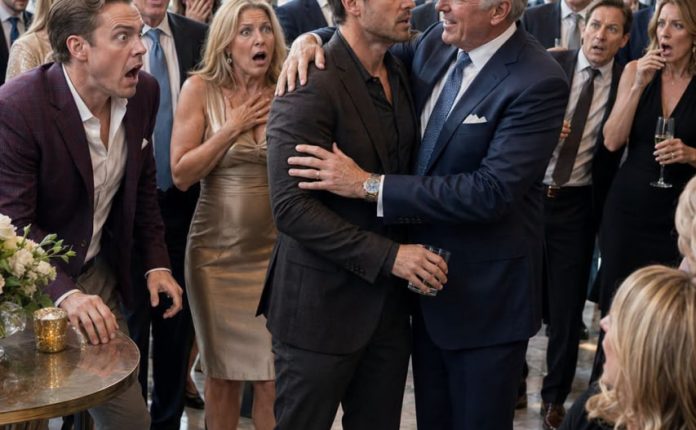
Rachel stayed. “You can still offer replacement terms.” “I know.” “Do you want to?” “I don’t know yet.” She nodded. That was why I liked Rachel. She never confused silence with indecision. Through the ballroom windows across the street, I could see flashes of chandeliers and black tuxedos. Mom loved that room.
Crystal lights. Cream-colored flowers. Champagne towers. Every detail designed to say Bennett Wellness had arrived. My phone buzzed. Rachel looked at it. “That was fast.” The message came from an unfamiliar number. Ms. Bennett, this is Daniel Park, CFO Operations at Bennett Wellness Group. We received urgent notification regarding Northstar Holdings and our loan guarantee. Please contact me immediately.
I smiled faintly. Daniel had apparently found my number through the bank. Interesting. A second message appeared. Apologies. I may have contacted the wrong Ms. Bennett. I replied: You have the right person. Three dots appeared, stopped, then appeared again. Before Daniel answered, movement caught my eye. Grant emerged from the ballroom, phone against his ear.
His shoulders were rigid. He paced, stopped, and pressed his free hand against his forehead. Rachel followed my gaze. “Looks like someone got the email.” Five minutes later, Mom came out. Even from across the street, I recognized her furious walk. She grabbed Grant by the elbow and pulled him toward a quiet corner.
They argued. Grant showed her his phone. Mom’s face changed. Then mine rang. MOM. I answered. “Hi.” “Where are you?” Interesting opening. “Why?” “I need you at the hotel.” I looked at Rachel. She raised an eyebrow. “I thought I wasn’t supposed to be there.” “Claire, please don’t do this right now.” “Do what?” “Make everything about your feelings.”
I nearly laughed. “What happened?” “Our loan guarantor pulled out.” I let the silence stretch. Mom lowered her voice. “It’s catastrophic.” “That sounds bad.” “Three hundred forty million dollars bad.” “Wow.” “Grant says someone may have triggered this because of the audit. We need to identify the guarantor and negotiate before the bank panics.”
“Why call me?” I asked. “You work for the government.” There it was again. Only now my unimpressive government job had suddenly become useful. “You know financial regulators. Banking people. Maybe somebody can tell us who Northstar is.” Rachel pressed her lips together to keep from smiling. “I thought business wasn’t really my thing.”
“Claire.” “What?” “Please.” That word mattered. Not enough, but it mattered. “I’m across the street.” Mom went silent. “You’re what?” “Coffee shop.” “Come here.” I looked at the ballroom doors. “No problem.” I crossed the street alone. The lobby smelled like expensive perfume and fresh lilies. Inside the ballroom, a jazz trio was still playing while rumors moved faster than the music.
Board members clustered near the stage. Donors whispered behind champagne glasses. Grant saw me first. “Finally.” Mom took my arm. “Conference room.” She led me through a side door. Grant followed, as did Daniel Park, a thin man with tired eyes who looked like he hadn’t breathed properly since receiving the bank notice. The door shut.
Mom turned immediately. “Daniel. Explain.” He swallowed. “The guarantor withdrew.” “We know that.” “The bank is invoking the replacement-security clause. If we can’t replace Northstar within thirty days, the full facility becomes callable.” Mom stared at him. “Who is Northstar?” “The bank won’t disclose beneficial ownership.” Grant slammed his palm against the table.
“We’ve paid everything on time.” Daniel looked at him. “That isn’t the only issue.” Grant froze. I watched carefully. Mom turned. “What does that mean?” Daniel hesitated. “The audit identified covenant irregularities.” Mom’s eyes narrowed. “What irregularities?” Grant interrupted. “Technical accounting matters.” “Grant.” “Mom, don’t.” That was when I knew. He hadn’t told her.
Suddenly, the biggest secret in that room wasn’t mine. It was his. Mom closed the conference-room blinds, and the ballroom disappeared behind beige slats. Now there were only four of us: Mom, Grant, Daniel, and me. “What did you do?” Mom asked. Grant straightened his jacket. “Nothing.” Daniel looked miserable.
Mom turned toward him. “Daniel.” He exhaled. “Grant reclassified several expansion expenses between reporting periods.” Mom frowned. “In English.” “He moved expenditures so our quarterly coverage ratios appeared stronger.” “I didn’t fabricate anything,” Grant snapped. “Every dollar was accounted for.” Daniel answered quietly, “But the timing mattered.” Mom looked at Grant. “You told me we were meeting every covenant.”
“We were functionally meeting them.” “Functionally?” “It was temporary.” I leaned against the wall. Watching the golden child explain why rules shouldn’t apply to him was almost painful. Grant noticed me. “Why are you just standing there?” “You seem busy.” “This affects you too.” “How?” “This is our family company.”
I almost asked whether it had become my family company before or after I was removed from the guest list. Instead, I said, “What does the bank need?” Daniel answered. “Either Northstar reinstates the guarantee, or we provide equivalent backing.” “Can we?” Mom asked. Nobody answered. She looked around. “Can we?” Daniel’s voice dropped. “Not easily.”
“How much liquidity?” “Sixty-eight million immediately available without disrupting operations.” Mom sat down. The leather chair made a soft hiss. Grant started pacing. “We’ll find another guarantor.” Daniel shook his head. “Anyone performing due diligence will see the audit.” “So?” “So they’ll price the risk accordingly.” “Then we pay more.” “If they agree at all.”
Mom suddenly turned toward me. “Claire, call someone.” I blinked. “Excuse me?” “Someone at Commerce. Banking oversight. Whatever department handles these things.” “You want me to pressure a bank?” “No. I want information.” “About Northstar?” “Yes.” I looked at Daniel. He was staring at me strangely now. Maybe something had clicked.
Mom continued. “If we know who they are, I can speak to them personally. This is probably some hedge fund manager trying to force better terms.” “Maybe.” “Find me a name.” “I already know the name.” The room went quiet. Grant stopped walking. Mom’s eyes narrowed. “What?” “Northstar Holdings.” “Obviously.” “No. I mean I know who controls it.”
Daniel’s face changed first. “Ms. Bennett…” Grant laughed. “You Googled it?” I reached into my bag. “No.” I placed the audit report on the table. Grant looked down, then at me. His face drained. Mom noticed. “What is that?” “The full audit.” Daniel whispered, “You shouldn’t have that.” “Actually, I should.”
I opened to the authorization page: Requested by Northstar Holdings pursuant to guarantor audit rights. Mom read it, then looked at me. “How did you get this?” I met her eyes. “Because I requested it.” Grant stared. “That’s impossible.” “Why?” “Because only the guarantor can invoke that clause.” “Correct.” Nobody moved.
Outside the walls, I could faintly hear applause from the gala. Someone was apparently giving a speech. Mom looked from the report to me again. Her voice was smaller. “Claire.” I took out my phone and opened a document: Northstar Holdings LLC. Beneficial owner: Claire Elizabeth Bennett. I slid the phone across the table.
Daniel picked it up first. He read the screen, then read it again. Grant snatched it from him. “What the hell is this?” “My company.” “No.” “Yes.” “You don’t own Northstar.” “I do.” “You work for the government.” “And?” “You live in a townhouse.” “Also true.” “You drive a Honda.” “Still true.”
He sounded almost offended by every fact. Mom hadn’t spoken. She was staring at me like I had become a stranger. I continued. “I started investing at twenty-four.” Grant shook his head. “With what money?” “Mine.” “You didn’t have money.” “I had savings and an ability to analyze deals.” His mouth opened, then closed.
I looked at Mom. “Three years ago, your bank couldn’t secure institutional backing for the expansion on acceptable terms.” Her lips parted. “No.” “They approached Northstar.” “No.” “I reviewed your company.” “No.” “I reviewed Grant’s structure.” “Claire…” “And I approved the guarantee.” Mom gripped the edge of the table. “Three hundred forty million?” “Yes.”
The silence was almost physical. Daniel finally sat down. Grant still looked like he expected someone to reveal a prank. Mom whispered, “You’ve been backing us?” “For three years.” “Every clinic?” “Every expansion facility tied to the package.” “The telemedicine rollout?” “Covered.” “The equipment leases?” “Included in the structure.” She stared at me.
“But why didn’t you tell me?” I laughed once, not because it was funny. “Would you have believed me?” That landed. Her face changed. Grant found his voice. “Fine. Then put it back.” I looked at him. “What?” “The guarantee. Reinstate it.” He said it as if asking me to turn a light switch back on.
“You can’t be serious.” “This is ridiculous. You proved your point.” “My point?” “That you’re successful. Congratulations. We’re impressed.” I stared at my brother. He had learned absolutely nothing. “Grant, I didn’t withdraw three hundred forty million dollars of backing to impress you.” “Then why?” I tapped the audit report. “Because you lied to the guarantor.”
His expression hardened. “I didn’t lie to you.” “You didn’t know it was me.” “Exactly.” I smiled without humor. “That’s supposed to help your argument?” Mom stood. “Claire, please. We can discuss the audit later.” “No.” “Eight hundred employees depend on this company.” “I know exactly how many employees you have.”
Her voice sharpened. “Then don’t punish them because you’re angry at me.” There it was, the accusation I had expected. I opened my bag again. “I’m not.” I placed a second folder on the table. “I already prepared a plan that protects the clinics.” Mom stared at it. “But it doesn’t protect all of you.”
Grant grabbed the folder first and flipped through the opening pages, then slower. “What is this?” “A restructuring proposal.” Daniel leaned over his shoulder. I explained. “Bennett Wellness sells two underperforming properties and pauses three planned acquisitions. Northstar provides temporary bridge financing directly to the operating clinics.” Mom looked confused.
“So you’re putting the guarantee back?” “No.” “Then how does that help us?” “The operating company gets enough liquidity to protect payroll, patient services, and core locations while you refinance the remaining debt.” Grant turned another page. His jaw tightened. “What happens to the executive holding company?” I looked at him. “It loses control of several assets.”
His eyes snapped up. “My office?” “Potentially.” “My equity?” “Diluted.” “Mom’s ownership?” “Also diluted.” Mom stared at me. “You’ve already worked all this out.” “Before I walked into the gala.” “So you planned this.” “I planned not to let nurses lose their jobs because you hurt my feelings.” Nobody spoke.
I continued. “The employees aren’t responsible for this. Patients aren’t responsible. Vendors aren’t responsible. I’m not trying to burn the company down.” Grant threw the folder onto the table. “You’re trying to take it.” “No.” “This gives Northstar preferred creditor status.” “Because Northstar would be providing new money.” “It gives you board control.”
“Temporary veto rights on major financial decisions.” “Same thing.” Daniel interrupted. “It’s actually standard under distressed refinancing.” Grant glared at him. “Whose side are you on?” Daniel looked exhausted. “The side where we still have a company next month.” Mom sat down again. For years, she had dominated rooms simply by entering them.
Now she looked smaller. Not weak. Just suddenly aware that authority had limits. “How much are you worth?” she asked. Grant scoffed. “Mom, that’s not relevant.” She didn’t look away from me. “Claire.” I hesitated. I hated that question because people treated wealth like personality, but the room had moved beyond hiding.
“Northstar’s controlled assets and investments are currently valued in the high eight figures.” Mom blinked. Grant stared. Daniel said nothing. “How high?” Mom asked. “Enough.” “Claire.” “About ninety-four million depending on private valuations.” Grant laughed sharply, not with amusement but disbelief. “That’s insane.” “No.” “You cannot build ninety-four million dollars while working a government job.”
“My salary didn’t build it.” “What did?” “Compounding.” He looked offended by the word. I almost smiled. “Early investments. Equity exits. Medical real estate. Software. Healthcare partnerships. Some went badly. Enough went extremely well.” Mom whispered, “And you never told us.” “You never asked.” “I asked what you were doing all the time.”
“No, Mom. You asked when I was going to stop doing it.” Her eyes dropped. That finally silenced her. We stayed in the conference room while the gala continued outside. Eventually someone knocked. A board member needed Mom. She didn’t move. Then Grant said something I hadn’t expected. “I’m sorry.” I looked at him.
He stared at the table. “For the audit.” Not for the insults. Not yet. “I thought the ratios would recover next quarter,” he said. “I was trying to avoid alarming the board.” “You hid risk.” “I know.” “You violated a covenant.” “I know.” “You could’ve triggered exactly this without me withdrawing.” His shoulders sagged. “I know.”
It was the first time I had ever heard Grant admit a mistake without attaching an explanation that erased responsibility. Mom looked between us. “What happens if we reject your plan?” “Then Northstar walks away completely.” “And the bank?” “Does whatever the contract permits.” “What happens to Bennett Wellness?” Daniel answered instead of me.
“Probably forced asset sales. Possibly a control transaction. Worst case, bankruptcy protection.” Mom shut her eyes. I picked up my bag. “I’m going home.” She stood quickly. “Claire.” “What?” “Can I have until tomorrow?” “The bank already gave you thirty days.” “No. I mean before I respond to your proposal.” “Of course.”
I opened the door, and music flooded in. Guests were laughing twenty feet away, unaware that the company’s future had just been reduced to a folder on a conference-room table. As I stepped into the hallway, Mom called my name again. I turned. She looked at me for a long moment.
Then she said, “I really didn’t know.” I understood what she meant. She hadn’t known about Northstar, my portfolio, or that I understood more about her company’s financing than almost anyone in that ballroom. But ignorance wasn’t the same as innocence. “You didn’t know,” I said, “because you decided a long time ago that there was nothing about me worth learning.”
Then I walked away.