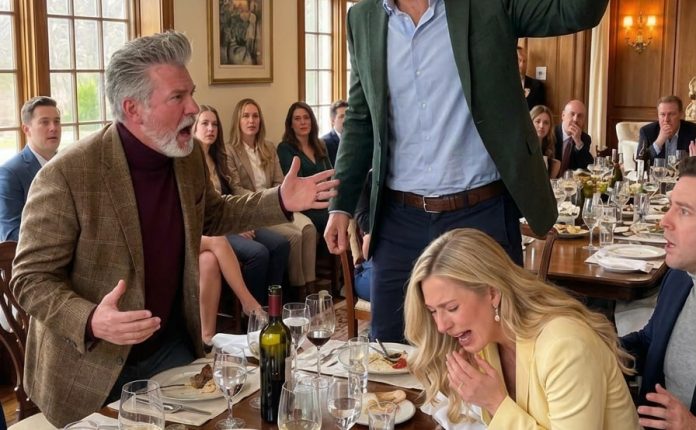
My son didn’t invite me to his wedding. He sent a group text to thirty people thanking everyone who had supported him, but my name was not on the list. I read the message twice before I understood the omission was not accidental, then once more because disbelief can imitate hope.
My name is Laura Bennett, and my son, Mason, was twenty-nine when he married Emily Hart. Six months before the ceremony, Mason had called me sounding nervous and embarrassed. The vineyard venue required a fourteen-thousand-dollar deposit immediately, and he said their savings were tied up in moving expenses and wedding vendors.
“Mom, I hate asking,” he told me. “But if we lose this date, Emily will be devastated.”
I did not make him beg. I transferred the money that afternoon. He promised to repay half within a year, and I told him not to worry until after the honeymoon. I thought I was helping my only child begin his marriage without debt pressing against the first months.
Mason thanked me then. Emily sent flowers the next day with a note saying she could not wait to celebrate with me. I placed the note inside my desk drawer because I was foolish enough to believe gratitude written on cream stationery meant I belonged in whatever came next.
The months after that became strangely quiet. I knew wedding planning could consume people, so I ignored delayed replies. When I asked whether they needed help with seating cards, Mason said Emily’s mother had everything covered. When I offered to host the rehearsal dinner, he said plans were still changing.
Then the invitation never came.
At first, I assumed mine had been lost. I waited because asking your own child whether you are invited to his wedding feels humiliating before the answer even arrives. Three weeks before the ceremony, I finally texted Mason and asked what time family needed to arrive.
He replied six hours later.
Mom, things got complicated. We had to make hard choices. I need you to respect that.
I stared at the screen until my eyes burned. I called him. He did not answer. I called again the following morning. Voicemail. That evening he sent another message asking me not to “create additional stress for Emily.”
I had not spoken to Emily once.
Two days later came the group text. Thirty names. Parents, stepparents, grandparents, cousins, friends, coworkers, Emily’s college roommate, Mason’s former baseball coach, even Daniel’s neighbor from Florida. Mason thanked every person “who had supported us through this beautiful season.”
My name was absent.
Daniel is my ex-husband. He and I divorced when Mason was seventeen after twenty-one years together. The marriage ended quietly by courtroom standards and loudly by family standards. Daniel had spent eighteen months having an affair with a woman named Valerie Crane, whom he married less than a year after our divorce.
Mason knew exactly why the marriage ended. He had found one of Daniel’s messages before I did. For years afterward, he refused to spend holidays with his father if Valerie attended. I never encouraged that anger. I told him his relationship with Daniel had to become his own.
Eventually, it did.
By Mason’s mid-twenties, he and Daniel were close again. Valerie became “Val” in stories. I was glad, or at least I tried to be. Carrying resentment on behalf of your adult child is another way of refusing to let him become an adult.
Still, I noticed changes.
Daniel began telling Mason that I had “done well out of the divorce,” although I had received no alimony and kept only the house I had helped pay for. Valerie told him I was “controlling” because I asked questions before lending money. Mason started repeating phrases that did not sound like him.
I ignored those too.
Yesterday, one week before the wedding, the venue manager called my house. Her name was Anita Morales, and she sounded cheerful.
“Mrs. Bennett, I’m confirming the final setup with the primary host.”
I almost corrected her. Instead, something made me ask, “What setup?”
There was a pause.
“The Bennett-Hart wedding next Saturday?”
My fingers tightened around the phone.
“I’m not attending.”
The silence on her end changed.
“Oh.”
I could hear papers moving.
“I’m sorry. I may have an outdated contact note.”
“You called the person who paid the deposit.”
Another pause.
“Yes. Your original agreement lists you as financial guarantor and primary host contact.”
Original agreement.
The phrase landed strangely.
“What do you mean original?”
Anita hesitated.
“Your son stopped by yesterday to change the primary host name on the event profile. Because the deposit was paid from your account, our system still generated the confirmation call to you.”
I sat down at the kitchen table.
“Whose name did he put down?”
She read it from the screen.
“Valerie Bennett.”
For several seconds, I could not speak.
My ex-husband’s new wife had replaced me as primary host on a wedding I was not invited to attend, at a venue secured with fourteen thousand dollars from my account.
Anita said carefully, “Mrs. Bennett?”
“I’m here.”
“I’m sorry if there has been a misunderstanding.”
“There has.”
I thanked her and hung up.
Then I sat at my kitchen table for ten minutes without moving.
I did not cry. That surprised me. I had cried when Mason ignored my first call. I had cried when the invitation never arrived. I had cried after seeing the group text. But something about Valerie’s name on the contract moved me past hurt into clarity.
I called Anita back.
She answered quickly.
“Mrs. Bennett?”
“I have one instruction.”
“All right.”
“Freeze every change to that contract until ownership is verified.”
She became silent.
Then she said, “I can do that.”
“I am not canceling the wedding. I am not asking you to hurt the staff, the vendors, or the bride. I want the contract frozen exactly where it is until your legal department confirms who has authority to alter it.”
“Yes, ma’am.”
“And send me a complete copy of every amendment submitted since my payment.”
“I’ll need written authorization.”
“You’ll have it in five minutes.”
I hung up and emailed her from the address attached to the deposit agreement.
Then I called my attorney.
Not because I wanted revenge.
Because fifteen years working as a commercial loan underwriter had taught me one thing my family never seemed to understand: when somebody changes a name on a document connected to your money, you stop talking about feelings and start preserving paper.
My attorney, Priya Shah, had handled the sale of my consulting practice the previous year. She answered while walking into another meeting.
“Laura?”
“I need you to review a wedding contract.”
She laughed once.
“That is not a sentence I expected today.”
“Neither did I.”
I explained.
By the time I reached Valerie’s name, Priya was no longer amused.
“Send me everything.”
“Am I overreacting?”
“No.”
That answer came too quickly to comfort me.
“Why?”
“Because replacing the host contact may be harmless administratively. But if your payment agreement gives the primary host refund rights, vendor authority, or access to balances, then someone may have tried to shift control over money you supplied.”
I opened the contract while we spoke.
I had signed it quickly six months earlier because Mason said the venue would release the date by five that afternoon.
Priya asked me to find the cancellation provision.
I read aloud.
“Initial deposit refundable only to contracting host under defined force majeure conditions. Final balance responsibility remains with contracting host unless transferred by written consent.”
Priya interrupted.
“Who is listed as contracting host?”
I scrolled.
My name.
“Laura Bennett.”
“And did you sign any transfer?”
“No.”
“Then Mason cannot simply replace you.”
My stomach tightened.
“Why would he try?”
“That is what I want to know.”
The venue emailed the amendment packet forty minutes later.
There were three changes.
The first updated the estimated guest count from one hundred twelve to one hundred sixty-eight.
The second added an upgraded wine package costing nearly nine thousand dollars.
The third requested that the contracting host be changed from Laura Bennett to Valerie Bennett.
At the bottom of the transfer page was my signature.
Except I had never signed it.
I stared at the screen.
The signature was close. Whoever copied it had used an older version from before arthritis changed the way I looped the B in Bennett. Most people would never notice.
I noticed immediately.
Priya noticed too.
“Is that yours?”
“No.”
“Are you certain?”
“Yes.”
“Then do not call Mason yet.”
I stood up.
“Why not?”
“Because we have crossed from family disrespect into possible forgery.”
My legs felt weak.
The wedding disappeared from my mind for a moment.
Not emotionally.
Legally.
Someone had submitted a false signature to transfer contractual authority over an event account funded with my money.
Priya asked, “Does your son have access to other signatures?”
“Of course. Tax forms, old college paperwork, the power-of-attorney documents from when I had surgery.”
“Any current financial authority?”
“No.”
“Joint accounts?”
“Not anymore.”
“Not anymore?”
I hesitated.
Three years earlier, I had helped Mason buy his first condominium. He could not qualify for the mortgage alone because his freelance marketing income fluctuated, so I co-signed. When he sold it eighteen months later, the proceeds went into an account created for closing.
I had assumed it was closed.
“Priya?”
“Yes?”
“I need to check something.”
I logged into my bank.
The old joint account still existed.
Balance: $418,603.22.
I stopped breathing.
That was impossible.
The closing proceeds had been less than seventy thousand dollars.
I clicked transaction history.
Large deposits had entered during the previous year. One hundred twenty thousand. Ninety-five thousand. Sixty thousand. Smaller transfers followed by outgoing wires.
My name remained on the account.
So did Mason’s.
“Laura?” Priya said.
“There’s four hundred eighteen thousand dollars in an old joint account.”
“Was it yours?”
“No.”
“Was it his?”
“I don’t know.”
That was the first moment fear entered.
I had spent days asking why my son did not want me at his wedding.
Now I was asking why hundreds of thousands of dollars were moving through an account connected to both our names.
I downloaded the statements.
The deposits came from companies I did not recognize: Hart Ridge Media, Bellweather Events, Northstar Property Group, Cobalt Consulting.
The withdrawals went to Daniel Bennett Holdings.
My ex-husband.
I called Priya back after sending the statements.
She opened them while we spoke.
“Do you know these businesses?”
“No.”
“Does Mason?”
“He works in marketing. He could.”
“And Daniel Bennett Holdings?”
“Daniel’s real-estate company.”
Priya went quiet.
“What?”
“There are round-dollar transfers. Repeated amounts just below internal review thresholds.”
My old underwriting instincts woke fully.
Structuring.
Layering.
Potential fraud.
“What has Daniel been doing lately?” Priya asked.
“Property development in Florida. At least that is what Mason says.”
“Do you know whether he has investors?”
“No.”
“Any reason your son would route money to him?”
“No.”
Then memory surfaced.
Four months earlier, Mason had asked me to sign a tax document because, he said, the old condo account needed to be formally removed from my reporting profile. He sent it electronically.
I had been traveling.
I signed.
I searched my email.
Found the message.
The attachment was not a bank closure form.
It was an authorization adding expanded transfer privileges.
My chest went cold.
I had signed that one myself.
I simply had not read it carefully.
Priya said, “Do not blame yourself.”
“I taught clients for fifteen years never to sign financial documents without reading them.”
“You trusted your son.”
“That does not make the signature safer.”
“No, but it explains how it happened.”
I stared at the wedding group text still open on my phone.
Thirty people thanked.
My name absent.
Suddenly, exclusion looked less like cruelty and more like distance management.
Keep Laura away.
Keep her hurt.
Keep her emotional.
Make her focus on the wedding instead of the paperwork.
The thought sickened me.
I called the bank’s fraud department.
Within an hour, outgoing transfers from the joint account were restricted pending verification.
At 4:18 that afternoon, Mason called me for the first time in eleven days.
I let it ring twice.
Then answered.
“Mom.”
His voice was tight.
“Yes.”
“Did you freeze my account?”
“Our account.”
“What?”
“My name is on it.”
Silence.
Then, “That’s just because of the condo.”
“Then why is Daniel Bennett Holdings receiving transfers?”
His breathing changed.
“It’s complicated.”
“So explain it.”
“I can’t right now.”
“Why not?”
“Because I’m getting married in a week.”
“You had time to forge my signature.”
Complete silence.
There are moments when the absence of denial becomes louder than confession.
I closed my eyes.
“Mason?”
He whispered, “You weren’t supposed to see that.”
My hand tightened around the phone.
“Which part?”
“The host change.”
“Not the bank account?”
He swore softly.
I stood from the table because suddenly I could not remain seated.
“What did you do?”
“It’s not what you think.”
“I don’t know what I think anymore.”
“Dad needed temporary liquidity.”
“How much?”
“It was going back.”
“How much, Mason?”
He exhaled.
“About six hundred thousand total.”
I stared at the wall.
“From where?”
“Investors.”
“Whose investors?”
“Dad’s.”
“Then why use an account with my name on it?”
“Because his accounts were under review.”
My entire body became still.
“By whom?”
Another silence.
“Mason.”
“The bank.”
“Why?”
“Dad had a dispute.”
“Over what?”
“Loan covenants.”
That was not a dispute.
That was a warning.
“And you helped him route money around restrictions.”
“I helped my father keep a project alive.”
“You used an account tied to me.”
“You weren’t involved.”
“My name is literally on it.”
“You never use that account.”
I almost laughed.
“That is your defense?”
He became angry.
“You always do this.”
“Do what?”
“Turn everything into a compliance investigation.”
“I spent fifteen years investigating financial risk.”
“Exactly. You never trust anybody.”
“I trusted you.”
He went quiet.
That landed.
Then I asked the question that mattered most.
“Why wasn’t I invited?”
His answer came too quickly.
“Because Emily didn’t want tension with Valerie.”
I waited.
He added, “And Dad said you would make everything about the past.”
“That’s not the whole reason.”
“It is.”
“Mason, somebody forged my signature to transfer the venue contract.”
Silence.
“Was it you?”
“No.”
The answer was immediate.
For the first time, something sounded genuine.
“Was it Daniel?”
“No.”
“Valerie?”
He said nothing.
My stomach tightened.
“Mason.”
“I have to go.”
“Do not hang up.”
“I can’t do this right now.”
“Did Valerie forge my signature?”
The call ended.
I stared at the dark screen.
Five seconds later, a text arrived.
Please don’t destroy my wedding over money.
I read it twice.
Then I forwarded it to Priya.
She called immediately.
“Do you want the comforting interpretation or the useful one?”
“Useful.”
“He thinks the wedding and the money are connected.”
I knew she was right.
That evening, the venue sent security footage from the office visit because its counsel had approved release to my attorney.
Mason had not gone alone.
Valerie sat beside him.
The camera had no audio, but the images were clear.
Mason signed one page.
Valerie signed another.
Then she slid the host-transfer form across the desk.
The venue coordinator pointed at my signature line.
Valerie reached into her handbag.
She removed a document.
My old signature appeared at the bottom.
The coordinator compared the pages.
Then changed the contract.
I watched the clip three times.
At the end, Valerie smiled and hugged Mason.
My son hugged her back.
I felt something inside me break in a place I had not known was still vulnerable.
Then Priya enlarged the document Valerie removed from her bag.
It was not just a sample signature.
It was a photocopy of my durable power of attorney from seven years earlier.
A document I had given Daniel during emergency surgery while we were still married.
The power had expired when our divorce became final.
But someone had altered the date.
And suddenly, the wedding was no longer the biggest thing my family had hidden from me.
The altered power of attorney changed everything. Priya sent it to a forensic document examiner before midnight, then told me to stop communicating directly with Daniel, Valerie, or Mason about money. “You are allowed to be a mother,” she said. “But from this point forward, let counsel handle anyone behaving like a defendant.”
I barely slept. Every hour produced another memory that looked different under new light. Daniel asking for copies of old tax returns after our divorce. Valerie offering to organize family medical files when I had surgery again. Mason requesting archived mortgage documents because he wanted to understand how I had financed his childhood home.
At the time, those requests had seemed ordinary. Now each one felt like a hand quietly trying doors.
The next morning, the bank confirmed that the old joint account had received just over seven hundred thousand dollars during fourteen months. Nearly three hundred thousand had already moved to Daniel’s company. Another seventy-eight thousand had paid vendors connected to the wedding.
I stared at the statement.
“The wedding again.”
Priya nodded.
The florist deposit, photographer, entertainment company, rehearsal dinner, and transportation had all been paid indirectly from the account bearing my name. Mason and Emily believed Daniel and Valerie were covering those expenses as a generous parental gift.
Daniel was apparently using money routed through me to finance the appearance of generosity toward the child excluding me.
That was the part that finally made me angry.
Not because I needed public credit.
Because he had turned my financial identity into a costume he could wear while replacing me.
I called Emily.
Until then, I had avoided involving her. She was twenty-seven, less than a week from her wedding, and I did not know what Mason had told her. She answered after four rings.
“Laura?”
Her voice was cautious.
“Do you have ten minutes?”
A long pause.
“Yes.”
“I need to ask you something, and I need the truth more than I need you to protect Mason.”
She inhaled.
“Okay.”
“Why am I not invited?”
Silence.
Then she whispered, “He said you refused to come.”
I closed my eyes.
“What?”
“He said you were angry that Valerie was helping host.”
I gripped the phone.
“When did he tell you that?”
“About a month ago.”
“And you believed him?”
“He showed me a message.”
“What message?”
“One where you said, ‘If she is hosting, don’t expect me there.’”
I had never sent those words.
“Emily, can you forward it?”
She hesitated.
“Why?”
“Because I didn’t send it.”
The line went silent.
Then I heard her breathing quicken.
“Laura.”
“I paid the venue deposit six months ago. I offered to host the rehearsal dinner. I asked Mason three weeks ago what time family needed to arrive because I thought my invitation had been lost.”
“Oh my God.”
“Send me the screenshot.”
She did.
The image showed a text thread under my contact name. My supposed message appeared between two real ones, but the font spacing differed slightly. Whoever created it had edited a screenshot.
Emily began crying.
“I thought you hated me.”
“I don’t.”
“He said you never accepted me.”
“I bought you a wedding gift in April.”
“What gift?”
That question hurt almost comically.
“A set of antique silver serving pieces that belonged to my grandmother. Mason said you wanted family heirlooms instead of new things.”
Emily made a small sound.
“He told me they came from Valerie.”
I sat down.
For a moment, neither of us spoke.
Then Emily said, “I need to call him.”
“Wait.”
“No.”
“Emily, listen to me.”
“He lied about you.”
“Yes.”
“What else is happening?”
I considered how much I could responsibly say. Priya had warned me not to make accusations unsupported by evidence. But Emily was about to legally join this family.
“There are serious questions about financial transactions connected to Mason and Daniel. My attorney is involved. The bank is involved. The venue has frozen contract changes because someone submitted an altered power-of-attorney document.”
Emily stopped crying.
“What altered document?”
“One that appears to give Valerie authority over my contract.”
“Valerie?”
“Yes.”
“She told me you asked her to take over because wedding planning was too emotional for you.”
I nearly laughed.
The lie had been polished from every angle.
“Emily, where are you?”
“At work.”
“Do you have somewhere safe to stay tonight if you need space?”
Her voice sharpened.
“Do you think Mason would hurt me?”
“No. I have no evidence of that. I mean somewhere you can think without being pressured by thirty relatives asking whether the flowers are arriving.”
She gave a broken laugh.
“My sister’s apartment.”
“Good.”
“Are you going to cancel the venue?”
“No.”
That surprised her.
“You’re not?”
“I paid the deposit because I wanted to help you and Mason marry. What Mason did to me does not give me the right to strand you or the venue staff. I froze authority changes, not the event.”
She became quiet.
“Why are you being nicer to me than he said you were?”
I looked toward the folder containing my forged signature.
“I think that answer is part of the problem.”
Emily left work early and confronted Mason before dinner.
I know because he called me at 5:37.
This time, his anger had disappeared.
“What did you tell her?”
“The truth.”
“She’s staying with her sister.”
“That was her decision.”
“She thinks I forged texts.”
“Did you?”
“It was one screenshot.”
I closed my eyes.
“So yes.”
“I was trying to keep the peace.”
“You created evidence of a conversation that never happened.”
“She was stressed.”
“And your solution was to make her believe I rejected her.”
“You would have fought with Valerie.”
“You don’t know that.”
“I know you.”
“No, Mason. You know the version of me that made your decisions easier.”
He breathed heavily.
“Please stop the bank investigation.”
“No.”
“Dad says the project will collapse.”
“Then Dad can explain the project to his lender.”
“If it collapses, people lose jobs.”
“That is why we have professionals separating legitimate obligations from suspicious transfers.”
“Mom, please.”
The word almost broke me.
Not Laura.
Not you.
Mom.
I remembered him at five years old climbing into my bed during thunderstorms. At fourteen, pretending he did not want me at baseball games, then checking the bleachers until he found me. At twenty-two, calling after his first serious breakup and saying nothing for ten minutes.
Love does not disappear when trust does.
That is one of its cruelest qualities.
“I love you,” I said.
He started crying.
“I know.”
“But I will not protect you from consequences by pretending this did not happen.”
“I didn’t forge the power of attorney.”
“Then help investigators identify who did.”
He became silent.
“Was it Valerie?”
“I don’t know exactly.”
“That is not an answer.”
“She said Dad had authority.”
“Daniel?”
“Yes.”
“And you believed him?”
“I wanted to.”
There it was.
A smaller version of my own mistake.
Trust used as permission not to look.
“Mason, did you know money was moving through our old account?”
“Yes.”
“Did you know my name was still attached?”
“Yes.”
“Did you know your father’s accounts were restricted?”
“Yes.”
Each yes landed more heavily.
“Did you know the wedding vendors were being paid from that money?”
A pause.
“Some.”
“Why didn’t you tell Emily?”
“Because Dad said it was temporary financing.”
“And you believed him?”
“I needed to.”
“No. You wanted to.”
He cried quietly.
“What am I supposed to do now?”
“Tell the truth.”
“To Emily?”
“To everyone.”
“That could ruin Dad.”
“Dad made decisions before you told the truth about them.”
He hung up without saying goodbye.
The forensic examiner issued a preliminary opinion the following morning: the power-of-attorney document had been digitally altered. The signature itself was genuine because it had been lifted from the original document. The expiration language and date had been changed.
Priya contacted local law enforcement because the forged document had been used to alter contractual authority. The bank separately escalated its review of the joint account. Daniel’s lender had already opened an internal investigation into whether restricted funds had been moved through third-party accounts.
By noon, Daniel called from a number I did not recognize.
I sent it to voicemail.
He left a message.
“Laura, whatever you think you found, you don’t understand the whole situation. Valerie was trying to help Mason. Don’t turn this into one of your crusades. Call me before lawyers make it impossible to fix.”
I listened twice.
Then saved it.
At three, Valerie called.
I did not answer.
Her voicemail was more direct.
“You paid a deposit. That does not make you the mother who showed up. Daniel and I have been the ones helping Mason for years. If your pride is hurt because he wanted me listed as host, deal with that privately. Do not destroy their wedding.”
I forwarded that one too.
Priya called within minutes.
“Interesting.”
“What?”
“She did not deny changing the contract.”
“She also thinks motherhood is an attendance award.”
“Laura.”
“I know.”
“Do not call her.”
“I won’t.”
The wedding rehearsal was scheduled for Friday evening.
By Thursday, Emily had not decided whether the wedding would happen.
She called me at breakfast.
“Can I come over?”
An hour later, she sat at my kitchen table holding the invitation I had never received.
My name was not merely absent from the guest list.
On the printed family program, Valerie was identified as Mother of the Groom.
I read the line once.
Then again.
Emily watched me.
“I didn’t approve that wording.”
“Who did?”
“Mason said his dad handled printing.”
I placed the program on the table.
For the first time since the venue manager called, tears came.
Not dramatic tears.
No sobbing.
Just two quiet lines down my face.
Emily cried too.
“I am so sorry.”
I wiped my cheeks.
“You didn’t print it.”
“I believed him.”
“So did I, about other things.”
She looked toward the program.
“Why would Daniel do this?”
I thought about my marriage.
Daniel hated being the villain in any story. During the affair, he told friends we had “grown apart.” After the divorce, he said Valerie entered his life after the marriage was already emotionally over. When Mason withdrew from him, Daniel blamed me for poisoning their relationship.
Years later, Daniel had finally regained Mason’s admiration.
Maybe replacing me in the wedding was not only about money.
Maybe it was proof.
Proof that the family had rewritten itself with Daniel as stable father, Valerie as devoted mother, and me as difficult woman who chose absence.
The financial scheme made exclusion useful.
The emotional history made it satisfying.
Emily touched the program.
“I don’t want this at my wedding.”
“What do you want?”
“I don’t know if there is going to be a wedding.”
I looked at her.
“Do you love him?”
“Yes.”
“Do you trust him?”
She started crying again.
“I don’t know.”
That answer mattered more.
She stayed for lunch. Before leaving, she asked something I did not expect.
“If I marry him, will you come?”
I stared at her.
“Even now?”
“Yes.”
“Why?”
“Because I don’t want to begin my marriage inside somebody else’s lie.”
My throat tightened.
“If Mason asks me himself, and if you still want me there, yes.”
She nodded.
“Thank you.”
At 6:12 that evening, Mason arrived at my door.
He looked exhausted.
No jacket.
Unshaven.
Eyes red.
I opened the door but did not step aside.
“Can I come in?”
“Why?”
“Because I need to tell you what Dad did.”
Something in his face changed the answer.
I let him inside.
He sat where Emily had sat hours earlier and put a flash drive on the table.
“What is this?”
“Dad’s project files.”
“How did you get them?”
“He gave me access last year.”
“Why?”
“Because I was helping him move investor distributions.”
My stomach tightened.
“Through the joint account.”
“Yes.”
“Why?”
“His lender had placed a cash-control agreement on the development. Incoming project revenue had to stay in monitored accounts until certain construction milestones were met.”
I understood immediately.
“He moved money around the controls.”
Mason nodded.
“Using your account because it was old and looked personal.”
“Our account.”
“Yes.”
“How much?”
He looked down.
“More than I told you.”
I waited.
“Two point three million moved through it.”
The room seemed to shrink.
“The statements only show seven hundred thousand recently.”
“There were earlier transfers that were reversed or moved through linked brokerage sweeps.”
“Why is the current balance four hundred thousand?”
“Dad was waiting to move it after the wedding.”
“Why after?”
Mason’s eyes filled.
“Because he planned to use the venue contract.”
I stared at him.
“What does a wedding contract have to do with two million dollars?”
“Nothing by itself.”
His face went pale.
“But the host transfer wasn’t really about the venue.”
He pushed the flash drive toward me.
“It was a test.”
“A test of what?”
“Whether Valerie could use the altered power of attorney without anyone stopping her.”
I stopped breathing.
Mason whispered, “If it worked, they were going to use the same document Monday morning to transfer control of the joint account.”
Every sound in the house disappeared.
“And after that?”
He looked directly at me.
“They were going to empty it.”
For a while, I stared at Mason without speaking. He looked younger than twenty-nine, not because innocence had returned, but because fear had stripped away every practiced explanation. “You knew they were testing the document?” I asked. He shook his head. “Not until tonight.”
He told me Daniel had asked him to accompany Valerie to the venue because staff recognized him. Mason believed the host change was simply another effort to position Valerie publicly as the groom’s mother. He hated that I would be hurt, but by then he had accepted the story that I had chosen not to attend.
“When did you learn the real reason?”
“Dad called after the bank froze the account. He was furious. He said Valerie should have tested the power somewhere less visible first.”
I closed my eyes.
“And you recorded him?”
Mason nodded toward the flash drive.
“The call is there.”
“Why?”
“Because for once I realized you were right to document things.”
That sentence hurt and comforted me at once.
Priya came to my house that night. We listened to Daniel’s recording together. His voice was unmistakable. He cursed the venue manager, complained that the altered document should have passed, and told Mason the money needed to move before “Laura’s lawyers poisoned everything.”
Mason asked where the money would go.
Daniel answered, “Offshore until the lender calms down.”
Priya stopped the recording.
“That is enough for tonight.”
Mason looked at me.
“Am I going to be arrested?”
“I don’t know,” Priya said.
He turned to me instead.
I refused to rescue him with reassurance.
“You need your own lawyer.”
His face fell.
“You won’t help me?”
“I will help you find competent counsel. I will not tell you consequences are impossible.”
He nodded slowly.
That was the first honest boundary I had ever held with my son while watching it hurt him.
Friday morning, Mason retained an attorney and voluntarily met with investigators. He turned over the flash drive, account messages, and access credentials. Daniel and Valerie learned about his cooperation before noon.
At 1:17, Daniel sent me one sentence.
You always destroy everything you cannot control.
I did not answer.
At 1:22, Valerie sent another.
Congratulations. You got your son back by ruining his life.
I did not answer either.
The truth was less satisfying and more complicated.
I had not gotten Mason back.
I had gotten the possibility of knowing him honestly.
Those were not the same thing.
At four that afternoon, Emily called.
“The wedding is tomorrow.”
“I know.”
“I’m still going through with it.”
I sat down.
“Are you sure?”
“No.”
Her honesty surprised me.
“Then why?”
“Because I love him, and because he told me everything before I decided.”
She paused.
“Not because everything is fixed. It isn’t. We postponed the legal marriage license.”
I blinked.
“What?”
“We’re having the ceremony and reception. We are not filing the license until we finish counseling and I understand the financial exposure.”
Despite everything, I smiled faintly.
“That sounds surprisingly sensible.”
“Don’t sound so shocked.”
“I’m learning.”
Then her voice softened.
“I want you there.”
My throat tightened.
“Has Mason asked?”
“He will.”
The doorbell rang thirty minutes later.
Mason stood outside holding an envelope.
He looked terrified.
“I came to invite you.”
I stared at him.
“A week late.”
“I know.”
“After lying about me.”
“I know.”
“After letting Valerie’s name replace mine.”
“I know.”
“After using an account with my name to help your father.”
His eyes filled.
“I know.”
I crossed my arms.
“Why should I come?”
He swallowed.
“Because you are my mother.”
“That wasn’t enough two weeks ago.”
“No.”
His voice broke.
“I don’t have a good reason for what I did. I wanted Dad to respect me. I wanted Valerie to stop saying you made everything difficult. I wanted Emily to have a perfect wedding. Every time telling the truth threatened one of those things, I lied instead.”
He handed me the envelope.
“I’m sorry.”
I did not take it immediately.
“What changed?”
“You stopped paying for the version of me that lied to you.”
I looked at him.
He continued.
“I thought support meant you would keep helping no matter how I treated you. Dad taught me that money was proof of loyalty. You taught me yesterday that loyalty can include saying no.”
That was not forgiveness.
But it was something real.
I took the envelope.
Inside was a new family program.
Parents of the Groom: Laura Bennett and Daniel Bennett.
Valerie’s name appeared separately under Stepparent.
I looked up.
“Did Emily approve this?”
“She insisted.”
“And Daniel?”
“He isn’t coming.”
“What?”
Mason’s jaw tightened.
“His lawyer told him not to attend because investigators may execute warrants.”
The wedding moved under a cloud no florist could hide.
Saturday afternoon, I drove to the vineyard alone. I wore a blue dress I had bought months earlier before realizing I was excluded. Anita Morales met me near the entrance.
“Mrs. Bennett.”
“Laura.”
She smiled carefully.
“I’m glad you’re here.”
“So am I.”
The venue looked beautiful. White flowers lined the aisle. The hills behind the ceremony lawn were washed in late-summer light. Guests whispered when they saw me, and for once I did not care what version of the story they had heard.
Emily’s mother hugged me.
“I should have called you.”
“Yes,” I said.
She looked startled by the directness.
Then I hugged her back.
“We can do better from here.”
Mason waited near the front. When he saw me, his shoulders dropped with visible relief. He walked toward me.
“You came.”
“You asked.”
He nodded.
That simple exchange nearly broke both of us.
The ceremony was smaller emotionally than financially. Everyone knew something had happened. Daniel and Valerie’s empty seats sat in the second row like punctuation marks.
When Emily reached the aisle, Mason cried.
So did I.
I did not forget the lies while watching them exchange vows.
I did not pretend love had erased betrayal.
I simply allowed one truthful moment to exist beside many ugly ones.
At the reception, there were no speeches from Daniel.
Mason asked me whether I wanted to speak.
“No.”
“You sure?”
“Yes.”
“What would you have said?”
I looked at him.
“Ask me next anniversary.”
He laughed weakly.
“That’s fair.”
Three days later, federal agents executed search warrants at Daniel’s office and Florida property. Valerie was questioned regarding the altered power of attorney and venue transfer. Investigators traced more than five million dollars through accounts connected to Daniel’s development projects.
Not all of it was stolen.
Enough was misused.
The joint account in my name became evidence rather than a weapon.
Because it had been frozen before Monday, the remaining four hundred eighteen thousand dollars never moved.
Daniel was eventually charged with bank fraud, wire fraud, conspiracy, and document offenses. Valerie faced charges connected to forgery and false financial instruments. Mason was not charged after prosecutors credited his cooperation and found no evidence he had participated in creating the altered power.
That did not mean he walked away untouched.
His professional reputation suffered. He paid civil penalties related to transactions he had facilitated. He spent two years repaying funds that had covered wedding expenses. Emily insisted they sell several wedding gifts and return money to the account rather than treating fraud-funded luxury as harmless.
Their legal marriage happened eleven months later at the county courthouse.
Six people attended.
I was one.
Daniel pleaded guilty before trial. Valerie accepted a separate agreement. They sold their Florida house to satisfy restitution and lender claims.
I did not celebrate.
Financial consequences are less cinematic than people imagine. There is paperwork, appraisals, hearings, tax questions, attorney invoices, and long stretches where nothing feels resolved.
My recovery was equally uncinematic.
I went to therapy.
I stopped checking whether Mason had mentioned me in family messages.
I closed every joint account.
I revoked every old authorization.
I changed estate documents.
Most importantly, I stopped offering money when what I wanted was closeness.
Mason and I had dinner every other Thursday.
Sometimes we talked about what happened.
Sometimes we discussed movies, work, Emily’s garden, or nothing important.
Trust returned through repetition.
He arrived when he said he would.
He repaid money without being reminded.
He corrected relatives when they repeated Daniel’s version of events.
He apologized without adding explanations.
One evening, nearly three years after the wedding, Mason brought me a framed photograph.
It showed the ceremony just after Emily reached him.
I was visible in the first row.
Not centered.
Not performing.
Simply there.
“I almost made sure you weren’t in this,” he said quietly.
“I know.”
“I don’t understand how I did that.”
“You wanted a story where nobody had to confront what your father was doing.”
He nodded.
“And you were easiest to remove.”
“Yes.”
His eyes filled.
“I’m sorry.”
“I know.”
This time, when I said it, the words did not mean I was excusing him.
They meant his behavior had finally become consistent enough for the apology to have somewhere to land.
Mason looked around my kitchen.
“Do you still have the original group text?”
“Yes.”
“Why?”
I thought about it.
“Because it reminds me how clearly exclusion can speak.”
He winced.
“Fair.”
“But I also kept the venue receipt.”
He looked confused.
“Why?”
“Because paying fourteen thousand dollars did not make me entitled to control your wedding.”
He waited.
“And being your mother did not make me entitled to perfect treatment.”
His shoulders lowered slightly.
“But neither money nor motherhood required me to accept fraud, lies, or erasure.”
He nodded.
“That part took me too long to understand.”
“It took all of us too long.”
Years later, people sometimes asked whether I regretted freezing the contract.
No.
I had not canceled the wedding.
I had not humiliated Mason publicly.
I had not demanded my money back as punishment.
I had simply stopped a forged document from becoming authority.
That one boundary exposed everything beneath it.
The altered host name.
The fake message.
The hidden account.
Daniel’s restricted funds.
Valerie’s false power of attorney.
Mason’s willingness to look away when truth threatened the family story he preferred.
And my own habit of confusing financial rescue with love.
The venue manager had called to confirm table placement.
Instead, she handed me the first loose thread.
I pulled it.
The family story unraveled.
What remained was smaller, less polished, and far more honest.
On Mason and Emily’s fifth anniversary, they returned to the vineyard for dinner and invited me.
There were no one hundred sixty-eight guests.
No printed programs.
No host titles.
Just the three of us at a table overlooking the hills.
Before dessert, Mason raised his glass.
“To Mom.”
I laughed.
“That is dangerously sentimental.”
“Let me finish.”
He looked at me.
“To the person who helped us get started, then had the courage to stop helping when helping became permission.”
Emily reached for my hand.
I looked at my son.
Five years earlier, seeing Valerie’s name where mine had been had felt like proof that I had been replaced.
Now I understood people are not replaced by titles.
They are revealed by choices.
Daniel chose deception.
Valerie chose participation.
Mason chose cowardice, then eventually truth.
Emily chose caution over appearances.
I chose a boundary.
None of those choices erased what came before.
But they determined what came afterward.
I raised my glass.
“To reading contracts before signing them.”
Mason laughed.
Emily groaned.
“Laura.”
“What? It’s excellent advice.”
We drank.
Outside, the vineyard lights came on one row at a time.
I thought about the phone call that began everything.
The manager asking for the primary host.
My confusion.
Valerie’s name.
Ten silent minutes at my kitchen table.
Then the instruction that changed our family.
Freeze every change until ownership is verified.
At the time, I meant the contract.
In the years afterward, I realized I had been asking a larger question.
Who had authority over my money?
Who had authority over my story?
Who had authority to define whether I belonged?
The answer was no longer my ex-husband, my son, a printed program, or a wedding guest list.
I did.
That was not bitterness.
It was recovery.
When dinner ended, Mason walked me to my car.
“Love you, Mom.”
“I love you too.”
No conditions.
No check attached.
No contract requiring my signature.
Just the truth.
And after everything our family had built on altered documents and altered stories, truth was finally enough.